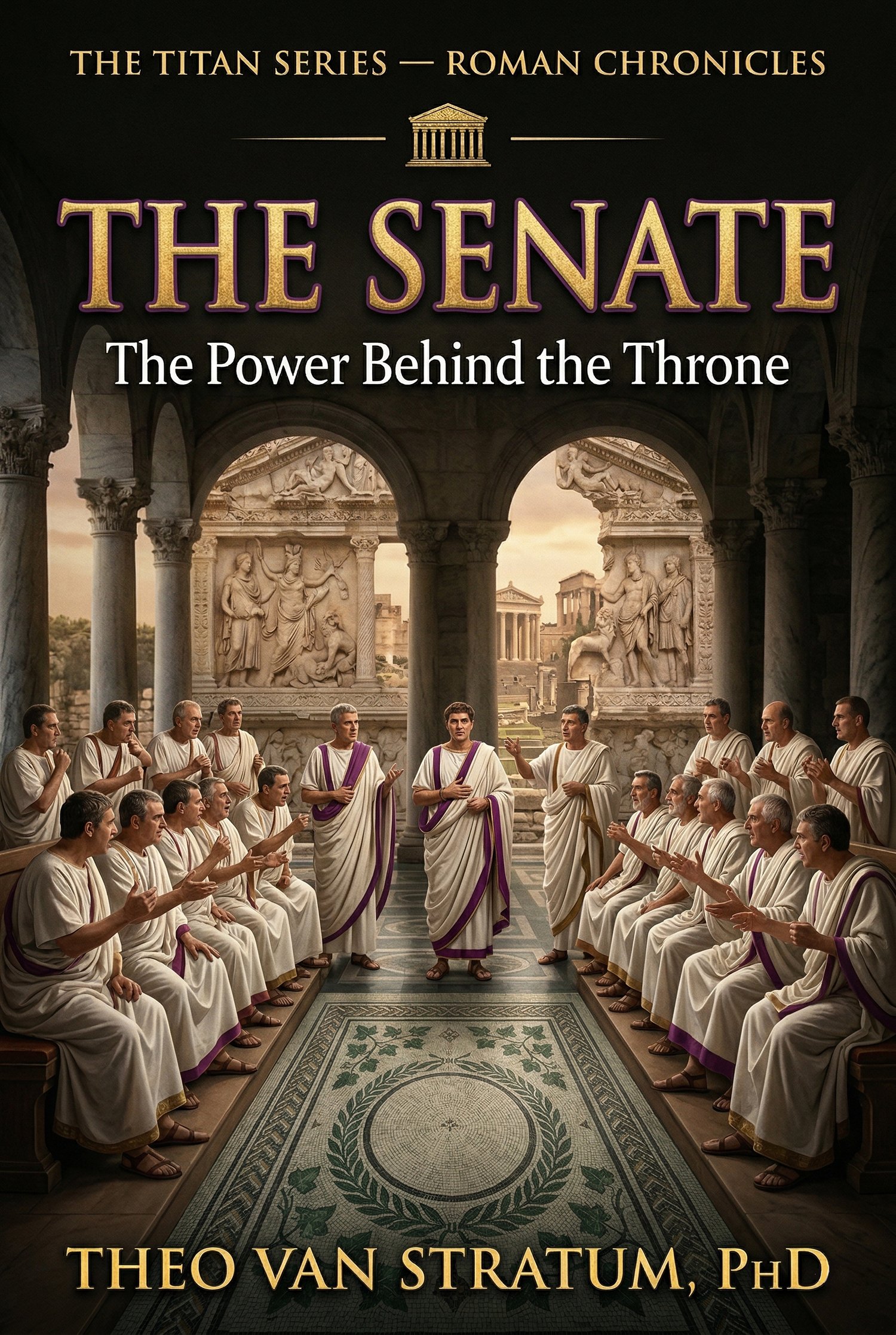
The Roman Chronicles - Titans - The Senate
For a thousand years, it was the most important room in the world.
It began as a circle of old men advising a king. It became the sovereign government of a Mediterranean empire. It survived the murder of Julius Caesar, the rise of the Caesars, the fall of the Western Empire, the arrival of Germanic warlords who could not attend a session without a translator — and it was still meeting, still passing resolutions, still granting legitimacy to men who desperately needed it, in 603 AD.
The Senate: A Thousand Years of Power is the story of the institution that outlasted every emperor, every tyrant, and every crisis the ancient world could produce — and an investigation into why. Because the Roman Senate was never simply a power structure. It was a legitimacy structure. Emperors who ignored it were called tyrants. Germanic kings who consulted it were called Roman. Even when the Senate had no legal authority, no military backing, and no independent wealth, the act of going through it still mattered — to the senators inside it, to the citizens watching from outside, and to the autocrats who formally despised the ritual but could not escape it.
Drawing on voices from across ten centuries — a Greek ambassador baffled by an assembly of old men whose resolutions are technically not binding and yet somehow always obeyed; a senator watching Tiberius Gracchus bypass the chamber for the first time and understanding too late what the method means; Decimus Brutus standing over Caesar's body on the floor of the Curia, realising that removing the dictator was the easy part — this book moves from the monarchy to the Republic to the Principate to the Gothic kingdoms to Byzantium, tracing a single question through each transformation: why did Rome always need the Senate, even when it no longer wanted it?
The answer, earned across a thousand years of history, is one of the most important lessons antiquity has to offer about how power actually works.