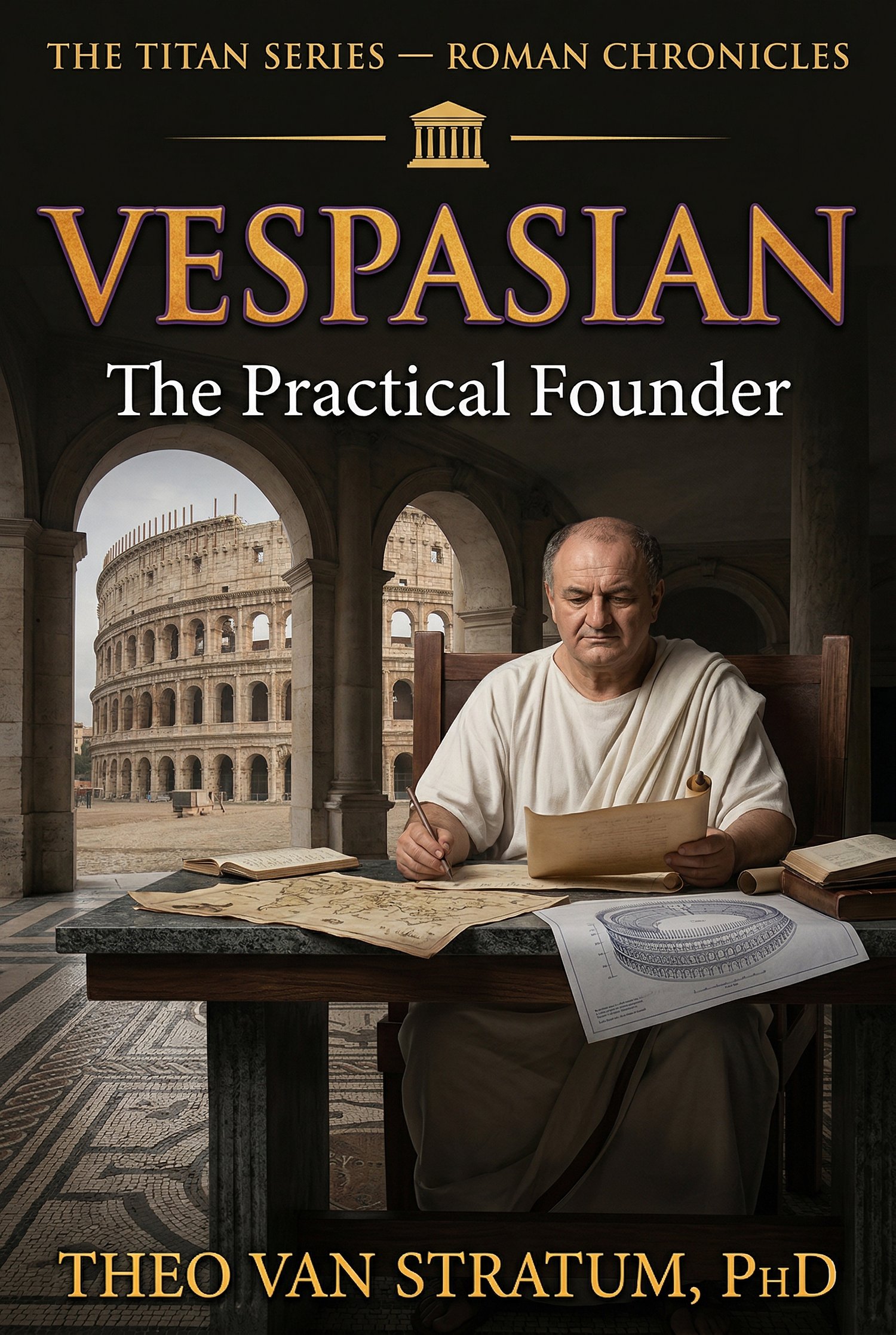
The Roman Chronicles - Titans - Vespasian
He was pelted with turnips in Africa. He fell asleep during Nero's concert in Greece. He taxed urine, rebuilt the treasury from collapse, and died standing in a farmhouse in the Sabine hills with a joke on his lips.
Titus Flavius Vespasianus was the emperor nobody expected to matter.
After the suicides and murders of the Julio-Claudians, after the catastrophic Year of the Four Emperors, the Roman state was insolvent, its Capitol in flames, its governing class hollowed out by a generation of terror. The throne went to a sixty-year-old equestrian from a Sabine farming village whose father had been a tax collector and whose primary qualification was that he had spent four decades doing the unglamorous work of empire — in Thrace, in Britain, in Africa, in Judaea — without catastrophe and without corruption.
What he did with it was remarkable.
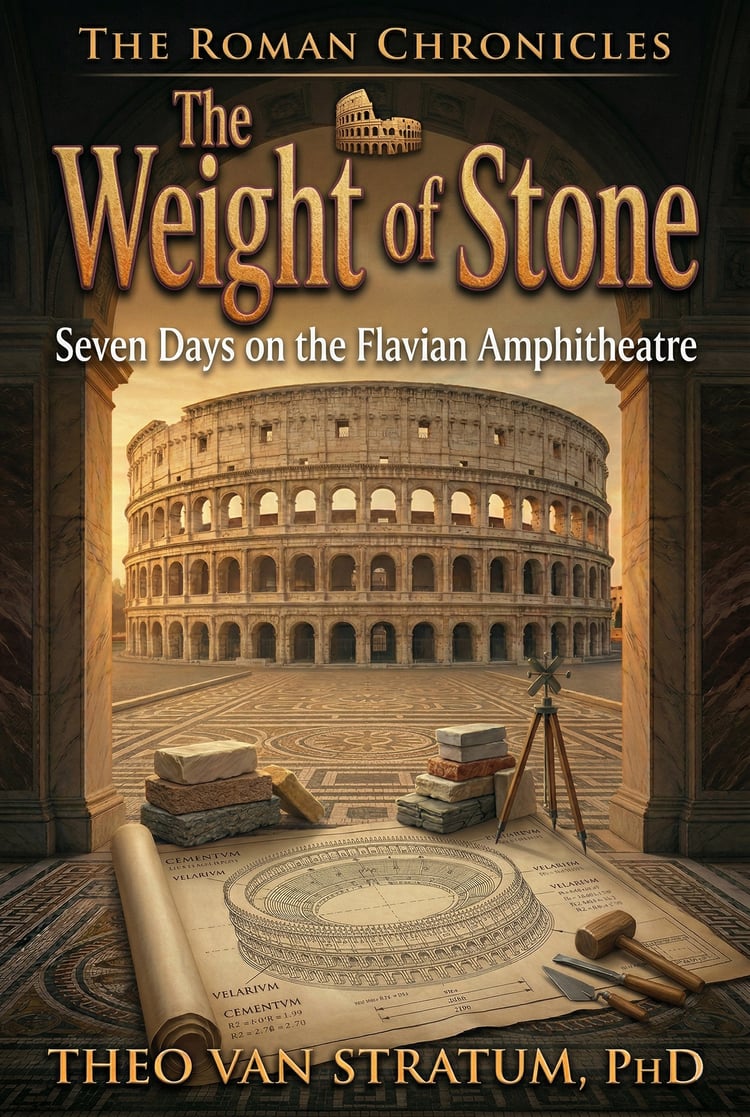
Vespasian: The Practical Founder follows Rome's most underrated emperor through the ten years in which he rebuilt a state on the verge of collapse: the brutal accounting of what had been spent and what remained; the census that found eighteen percent more wealth than the official figures acknowledged; the public amphitheatre constructed on the site of Nero's private lake, returned to the Roman people as a statement not of generosity but of restitution. Alongside the machinery of governance runs the story of the man himself — his long partnership with Caenis, the woman whose memory helped bring down Sejanus; his careful construction of a succession around Titus and his unresolved anxiety about Domitian; his principled tolerance of the Stoic opposition and his single catastrophic failure to maintain it; and finally, the jokes, which were real and which are the most revealing thing about him.
Told in Vespasian's own voice, interwoven with the perspectives of Titus, Domitian, the freedman Philemon, Fannia the philosopher's widow, and the future governor Agricola, this is a portrait of governance as it actually is: unglamorous, relentless, occasionally funny, and more consequential than the histories have acknowledged.
An emperor should die standing. He intended to.