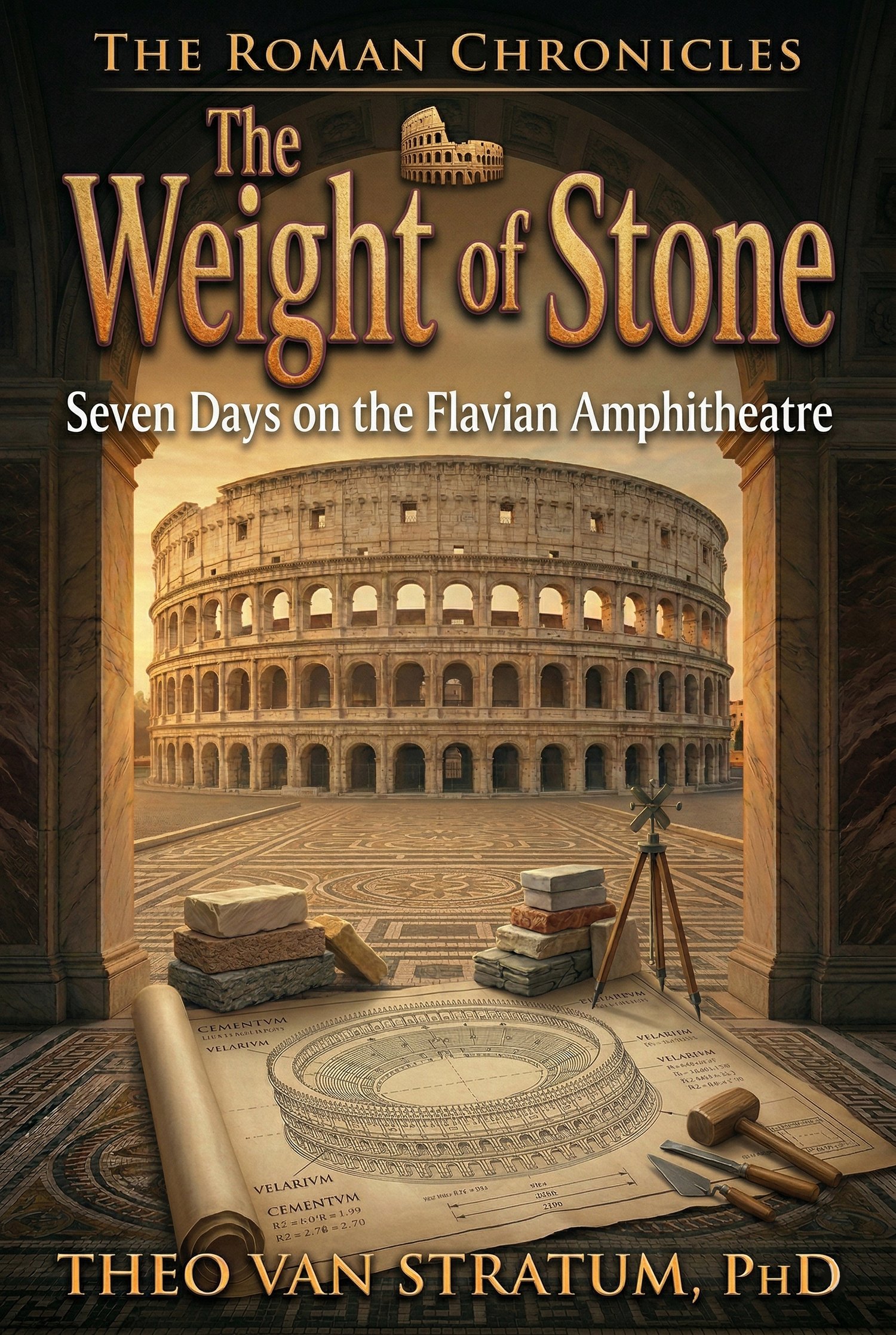
The Roman Chronicles - The Weight of Stone
72 CE, Rome.
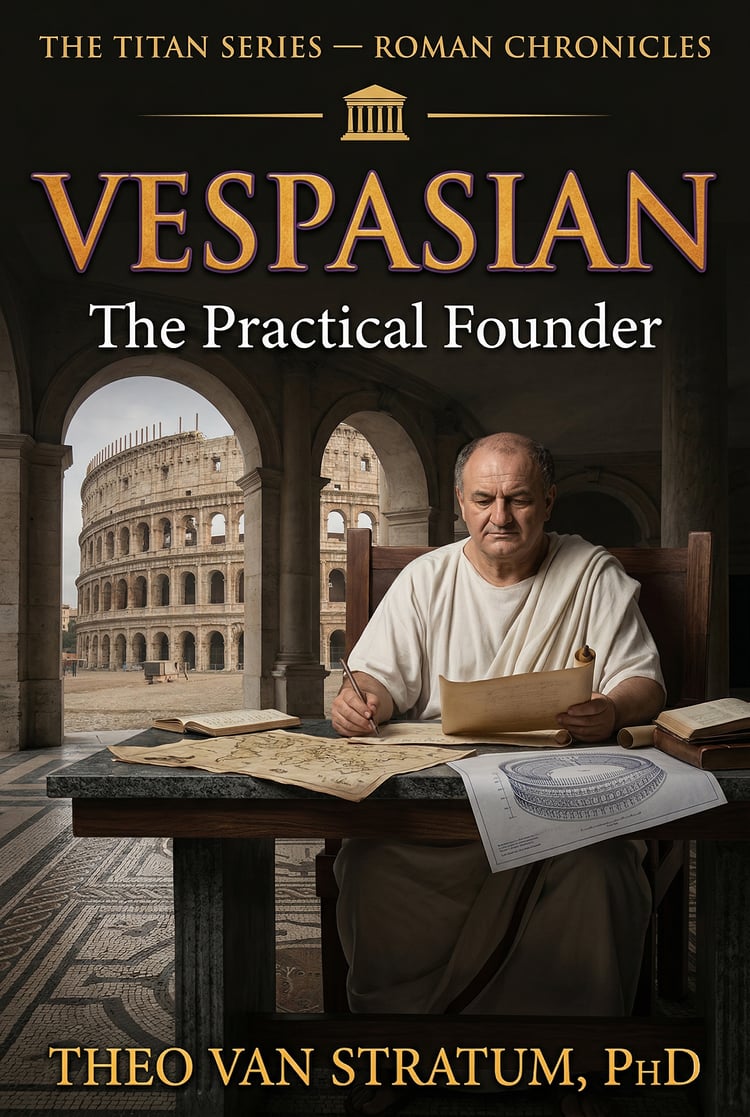
Where a dead tyrant's private lake once stood, the emperor's new amphitheatre is rising from the earth. It will be the largest the world has ever seen. It is being paid for with the gold of a conquered people's holiest site, and built by the hands of their enslaved.
Three men spend seven days building the same structure from three entirely different worlds.
The architect — a freedman's grandson who has spent thirty years becoming one of Rome's finest engineers. He carries the plans in his head and on papyrus rolls he guards like children. The elliptical form is structurally radical. The barrel vault system is elegant. The building is the commission of his career, and he loves it with the precision of a man who understands exactly what is being attempted.
The foreman — a Roman citizen from a family of builders, responsible for a gang of sixty men, forty of them Jewish prisoners of war. He reads buildings the way other men read faces. He cares about the quality of the joints, the mood of his gang, and not losing men — because a dead worker is a gap in the line and a form to fill out, and the form asks questions he does not want to answer.
The prisoner — a woodworker from Jerusalem, captured during the siege, transported to Rome, surviving on skill and the internal maintenance of a faith the Romans around him cannot see. He knows what the building is for. He knows it is funded by the treasury of his destroyed Temple. He builds it anyway, because the alternative is death, and because the part of him that is a craftsman cannot leave a joint unfinished when finishing it is within his power.
The days accumulate. The structure rises. The three lives intersect without ever quite meeting.
The Weight of Stone is narrative nonfiction written in the register of literary fiction — scene-based, sensory, historically precise. The three characters are invented. Everything else — the construction methods, the materials, the workforce, the wages, the conditions — is drawn from the archaeological and scholarly record. Every stone they move is real. The people who move it are the fiction.
A Titan Series Companion. Can be read independently.