

Feelings Point to Needs: Understanding Your Emotions
Feelings Point to Needs: Understanding Your Emotions
What’s Underneath: Understanding Your Emotions
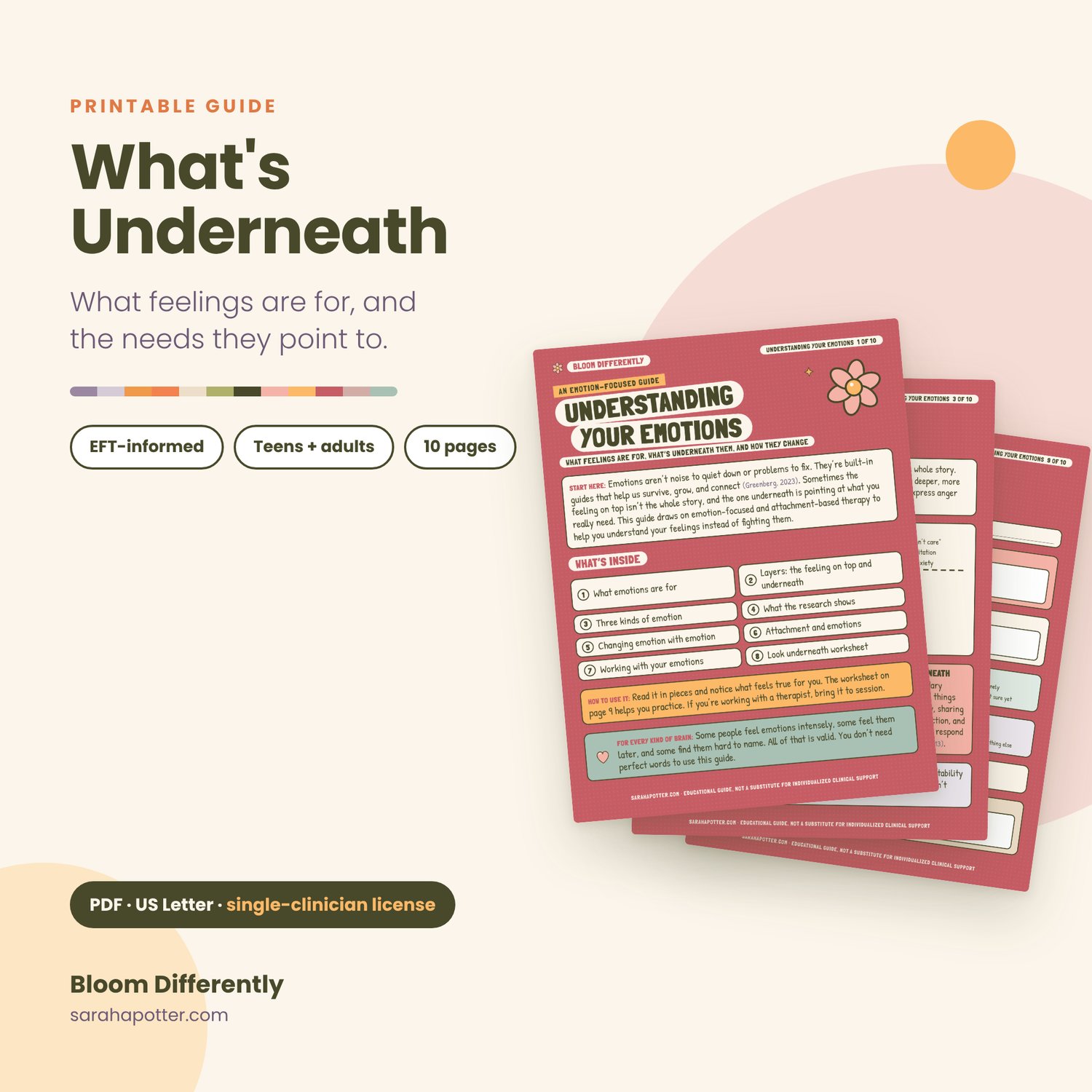
An emotion-focused guide to what feelings are for, what’s underneath them, and how they change.
Emotions aren’t noise to quiet down or problems to fix. They’re built-in guides that help us survive, grow and connect. Sometimes the feeling on top isn’t the whole story, and the one underneath points to what you really need. This 10-page guide draws on emotion-focused and attachment-based therapy to help readers understand their feelings instead of fighting them, with a worksheet for practice.
What’s inside
- What emotions are for: how feelings guide action, carry information and signal needs. Includes a quick chart of anger, sadness, fear, shame and joy, what each often signals, and what each often needs.
- Layers, on top and underneath: secondary emotions like anger, irritation or “I don’t care,” and the hurt, fear, shame or loneliness they often cover.
- A sensory layer, too: for many neurodivergent people, what looks like anger on top is overload or exhaustion underneath, and the need is quiet or rest.
- Three kinds of emotion: primary adaptive, “old pain” and secondary, with examples and what helps for each, plus three questions for telling them apart.
- What the research shows: plain-language findings on why reaching the deeper feeling matters, including research with young people.
- Changing emotion with emotion: why painful old feelings can’t be reasoned away, and how meeting shame or fear with self-compassion or assertive anger helps them shift.
- Attachment and emotions: how early relationships shape the ways we handle feelings, framed as strategies that made sense, not fixed traits.
- Working with your emotions: a step-by-step practice that starts in the body.
- Look Underneath worksheet: what happened, the feeling on top, body clues, what might be underneath, and what you need. Readers can write, draw or check boxes.
- Neurodivergent notes throughout: delayed feelings, alexithymia and expressions that don’t match what others expect.
- Sources: a full APA reference list.
Who it’s for
- Teens and adults who feel stuck in anger, irritability, numbness or “I don’t care.”
- Clients who struggle to name feelings, including those with alexithymia.
- Couples and families who keep fighting about the top layer.
- Therapists using EFT, EFIT, attachment-based or person-centered approaches who want a client-friendly explainer.
Ways to use it
- As psychoeducation when introducing emotion-focused work.
- Assign the Look Underneath worksheet between sessions and explore it together.
- As a parent handout for understanding what’s under a child’s or teen’s anger.
- In couples or family work to slow down conflict and reach softer feelings.
Why it’s different
Most emotion handouts stop at naming feelings. This one goes a layer deeper, to the feeling and need underneath, using emotion-focused therapy concepts rarely translated for clients. It reframes “maladaptive” emotion as old pain that once protected you, and it builds in a neurodivergent and sensory lens throughout.
What you get
- 1 printable PDF, 10 pages, US Letter.
- Psychoeducation pages, a guided practice, the Look Underneath worksheet and full sources.
- Single-clinician license included.
Pairs well with
- Feelings and Needs Inventory
- Feelings Are Information: Understanding Emotional Regulation
- Emotions 101 for Adults
- Love Languages for Adults