
Your Body Is on Your Side: Nervous System Basics
A polyvagal-informed guide to how your body keeps you safe, and how to help it feel safe again.
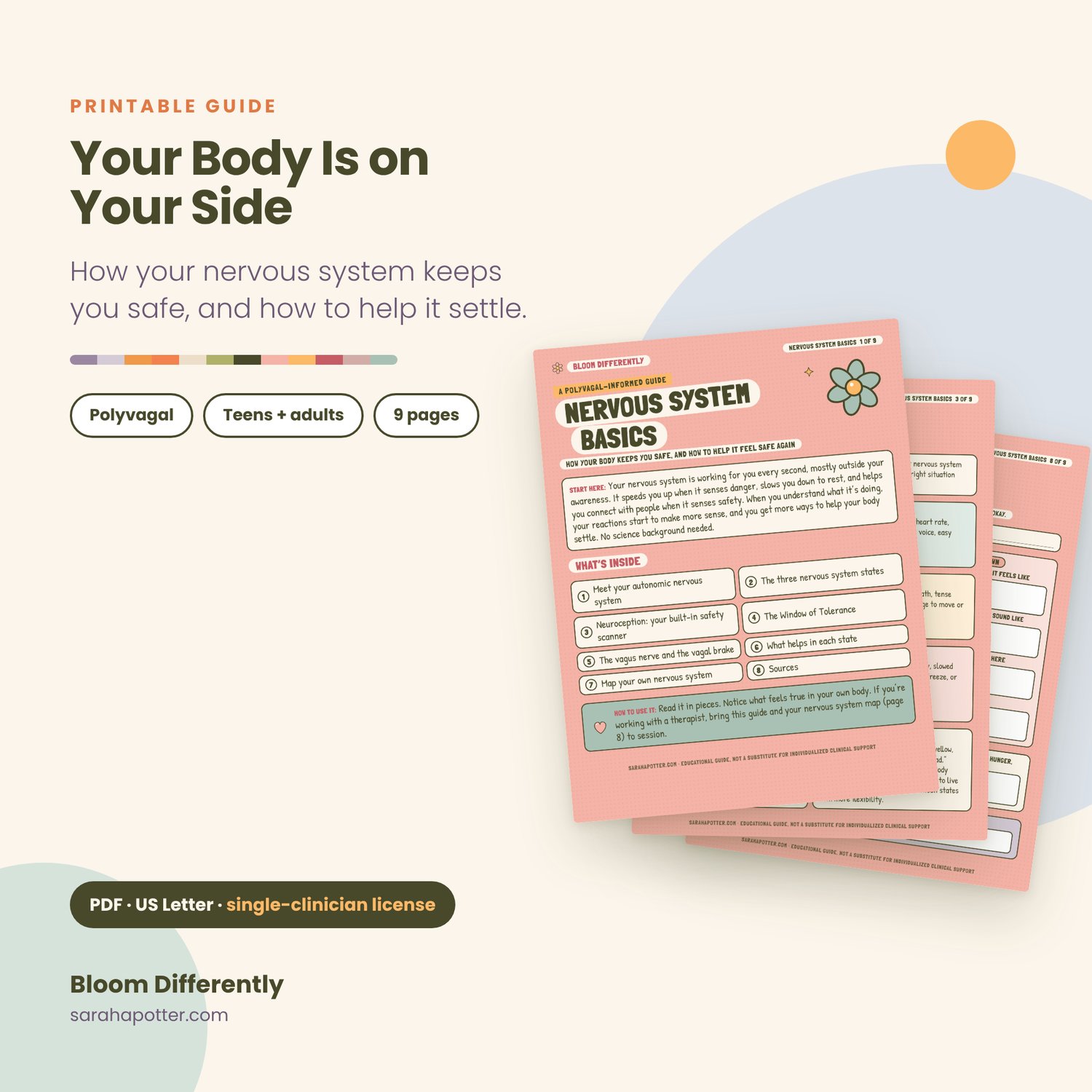
Your nervous system works for you every second, mostly outside your awareness. It speeds you up when it senses danger, slows you down to rest, and helps you connect when it senses safety. Once you understand what it’s doing, your reactions start to make sense, and you have more ways to help your body settle. This 9-page guide explains the autonomic nervous system, polyvagal theory and the Window of Tolerance in plain language. It ends with a personal nervous system map to fill in. No science background needed.
What’s inside
- Meet your autonomic nervous system: the gas pedal and the brake, why they work as a team, and why so much information flows from body to brain.
- The three nervous system states:Safe and social, fight or flight, and shutdown, with what each feels like in the body and mind.
- The ladder: how we move down when safety fades and climb back up one step at a time.
- Why every state is protective.
- Neuroception, your safety scanner: why your body reacts before you know why, how trauma can make the scanner extra careful, and how cues of safety and co-regulation help.
- A neurodivergent note: safety doesn’t have to mean eye contact or lots of talking. Your nervous system gets to define what safe feels like.
- A note on the science: an honest acknowledgment that some details of polyvagal theory are still debated, so the guide offers it as a helpful map rather than the final word.
- The Window of Tolerance: hyperarousal, hypoarousal, why windows change size, and how trauma can narrow them.
- The vagus nerve and the vagal brake: what it is and how it helps you shift states.
- What helps in each state: body-based tools for bringing energy up from shutdown, bringing it down from fight or flight, and staying connected when you’re in your window.
- Map Your Own Nervous System: a fill-in worksheet for what each state feels like, sounds like, what moves you there and what helps. It also covers your personal cues of safety.
- Sources: a full APA reference list.
Who it’s for
- Teens and adults who want to understand why their body reacts the way it does.
- Clients with anxiety, trauma histories, shutdown or burnout.
- ADHD, autistic and AuDHD clients whose cues of safety don’t match the usual advice.
- Therapists, counselors and parents who want a clear, citable polyvagal explainer.
Ways to use it
- As psychoeducation early in trauma-informed or anxiety work.
- Fill in the nervous system map together in session, then return to it as treatment goes on.
- As a reference for parents learning co-regulation.
- In a group or workshop on stress, burnout or regulation.
Why it’s different
Many polyvagal handouts oversimplify the science or present it as settled fact. This guide is accessible and honest. It’s cited throughout, it names where the research is still evolving, and it treats every nervous system state as protective rather than “bad.” The neurodivergent lens on cues of safety is built in, not added on.
What you get
- 1 printable PDF, 9 pages, US Letter.
- Psychoeducation pages, state-by-state coping tools, a personal nervous system map and full sources.
- Single-clinician license included.
Pairs well with
- Feelings Are Information: Understanding Emotional Regulation
- Window of Tolerance
- Guided Body Scan
- When Your Alarm Goes Off (Understanding Panic)