
Understanding Panic: Ride the Wave, Break the Cycle
Understanding Panic
Your body’s alarm system, and how to stop feeding the cycle.
Panic is your body’s alarm system going off when there’s no real danger. It feels terrifying, but the sensations are uncomfortable, not harmful, and they always pass. This four-page guide explains what panic is doing in the body, why avoidance keeps it going, and how mindfulness, kind self-talk and a calm morning routine help break the cycle.
What’s inside
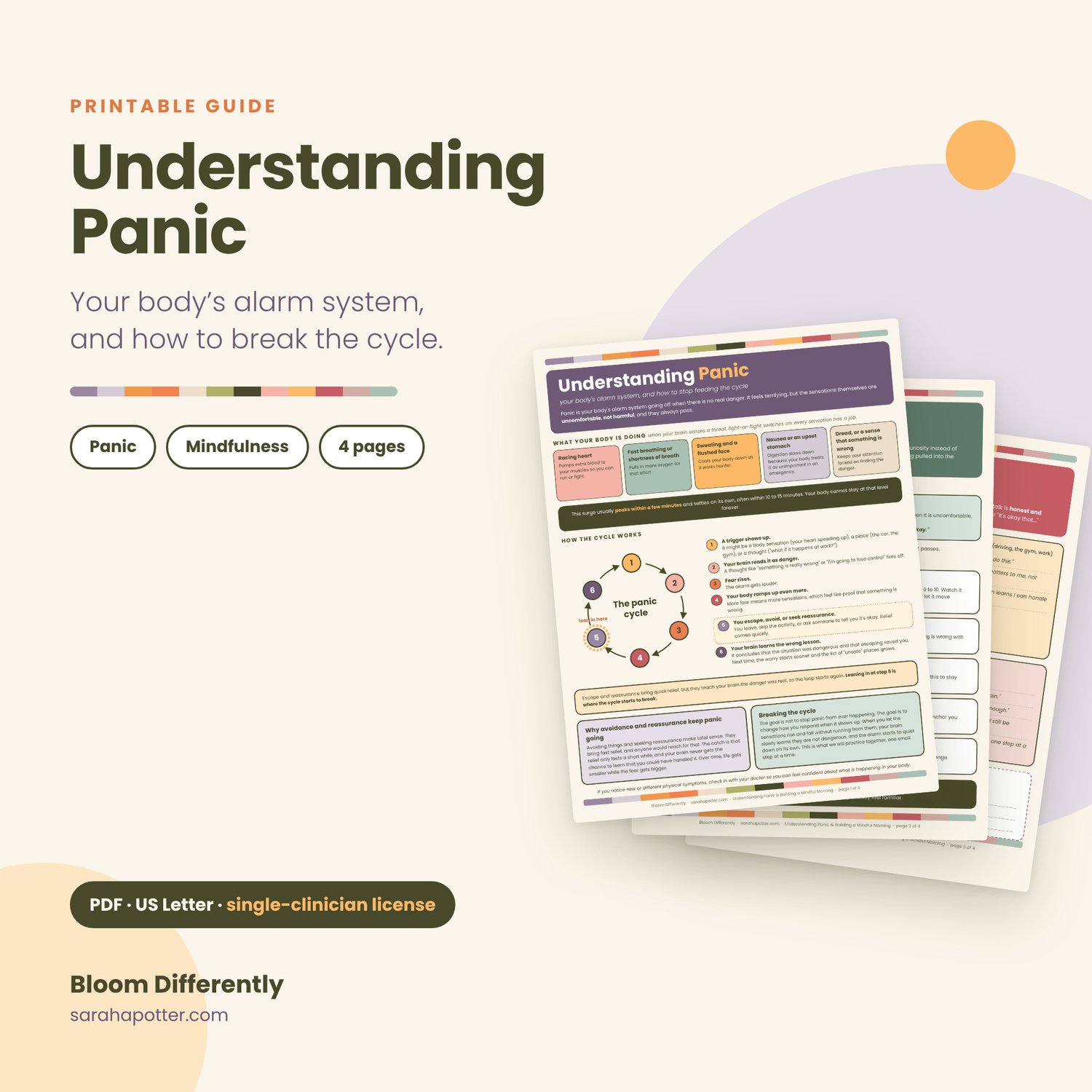
Page 1: Understanding Panic
- What your body is doing: every panic sensation explained by its job, from a racing heart to dread. Plus why the surge usually peaks within minutes and settles on its own.
- The six-step panic cycle, showing exactly where to “lean in.”
- Why avoidance and reassurance keep panic going, explained with compassion, plus what breaking the cycle really means.
Page 2: Mindfulness for Panic
- Fighting panic vs. making room for it.
- Five practices: ride the wave (with 0 to 10 ratings), name the thought, 5-4-3-2-1 grounding, mindful breathing and a body scan.
Page 3: Supportive Self-Talk
- Honest, kind phrases for when panic shows up, before something hard, after a hard moment and for everyday affirmation.
- Space to write your own.
Page 4: Mindful Morning Routine
- A 15-minute, eight-step routine for meeting morning anxiety with steadiness: pause, name it, breathe, scan, move, set an intention, choose a phrase and eat a mindful breakfast.
- A weekly check-in tracker to bring to session.
Who it’s for
Teens and adults with panic attacks, panic disorder or morning anxiety, plus the therapists who support them in CBT, exposure or mindfulness-based work.
Ways to use it
- Teach the panic cycle in an early session.
- Practice the mindfulness skills when calm, so they’re familiar during panic.
- Have clients choose self-talk phrases that feel true to them.
- Use the morning routine and tracker as between-session homework.
Why it’s different
It’s validating (“avoiding things makes total sense”) while still gently encouraging approach over escape. The self-talk is honest, not forced positivity, and the routine allows anxiety to “come along for the morning” instead of demanding calm.
What you get
A four-page printable PDF, US Letter, available as an instant download. Single-clinician license included.
Pairs well with: Anxiety & the Body, Five Minutes of Deep Breathing, A Guided Body Scan
Two things to check in the PDF before listing it:
- Page 1 ends with “This is what we will practice together,” which reads like a note from a therapist to their own client.
- Every page’s footer says “Understanding Panic & Building a Mindful Morning.”