
Skills for the Hard Moments: DBT Skills Toolkit
Skills for the Hard Moments: DBT Skills Toolkit
A practical, neurodivergent-affirming companion for STOP, TIPP, Opposite Action and Radical Acceptance.
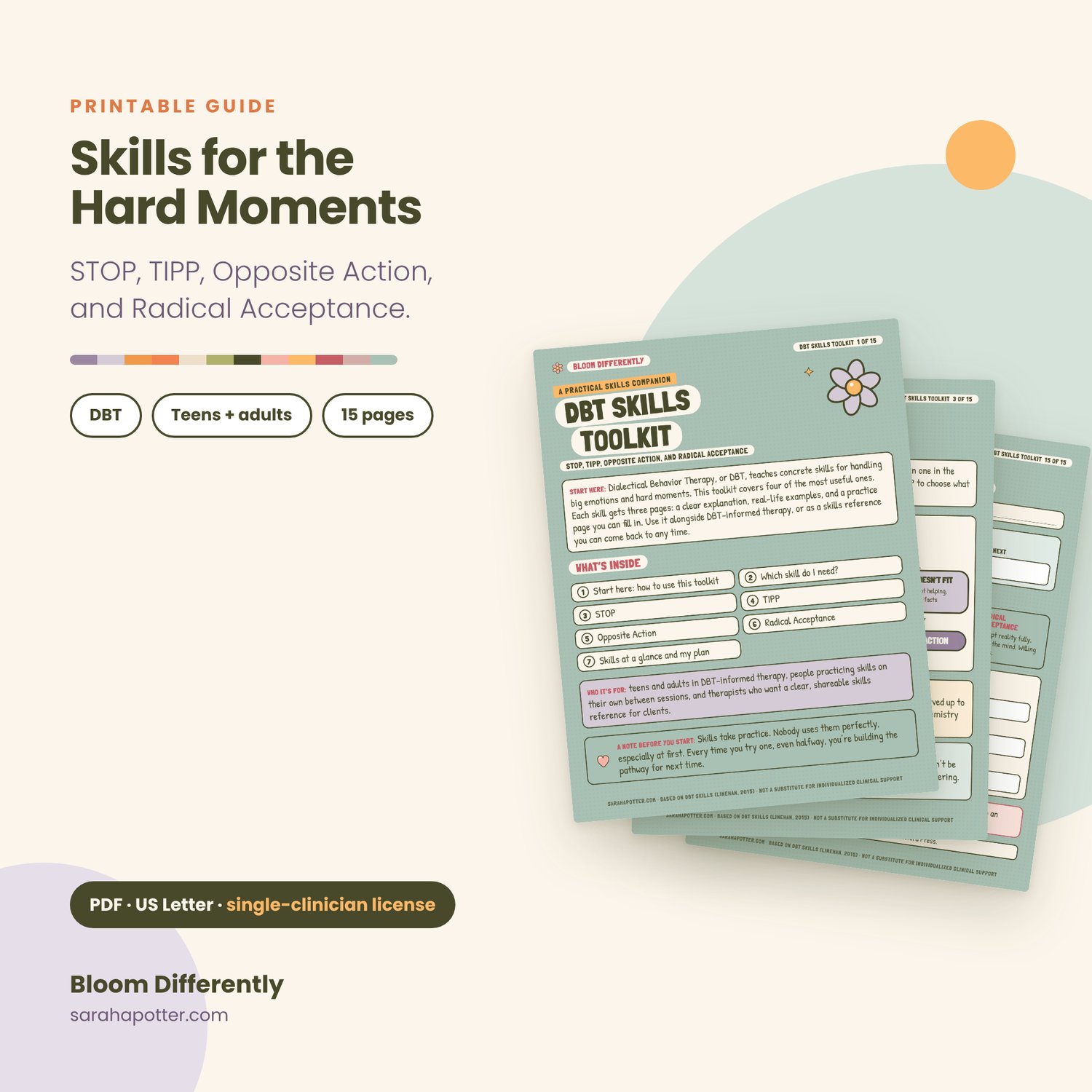
Dialectical Behavior Therapy teaches concrete skills for handling big emotions and hard moments. This 15-page toolkit covers four of the most useful ones. Each skill gets three pages: a clear explanation, real-life examples, and a practice page to fill in. It works alongside DBT-informed therapy, or as a skills reference clients can come back to again and again.
What’s inside
- Start here: how the skills fit into DBT’s modules, why to practice when calm, and how to make the skills your own.
- Neurodivergent-affirming from the start: skills are tools, not tests. Nothing asks you to mask, make eye contact, sit still or act neurotypical, and sensory needs count as facts.
- Which skill do I need? A quick guide for matching the moment to the right tool.
- STOP: pause before you react. Includes examples (like an autistic teen seeing a group chat she was left out of) and a practice page.
- TIPP: change your body chemistry fast with temperature, intense movement, paced breathing and paired muscle relaxation. Includes how-tos, examples and a weekly tracking page.
- Opposite Action: for emotions that don’t fit the facts. Covers doing it “all the way,” with examples and a practice page.
- Radical Acceptance: what it is and isn’t, turning the mind, willingness, and a practice page.
- Skills at a glance and my plan: a one-page summary plus a personal plan for which skill to reach for and when.
Who it’s for
- Teens and adults in DBT-informed therapy.
- People practicing skills on their own between sessions.
- ADHD, autistic and AuDHD clients who need DBT adapted for their brains and bodies.
- Therapists who want a clear, shareable skills reference for clients.
Ways to use it
- Teach one skill per session, then assign its practice page as homework.
- Use it in a DBT skills group or teen group.
- As a take-home reference after skills training.
- Fill out the “my plan” page together as part of coping or safety planning.
Why it’s different
Most DBT handouts are dense and assume a neurotypical client. This toolkit gives each skill room to breathe, with an explanation, relatable examples and practice for every skill. It’s written so that stimming, movement, headphones and processing time are part of the skills, not barriers to them. The before-and-after ratings help clients see what actually works for them.
What you get
- 1 printable PDF, 15 pages, US Letter
- 4 core DBT skills with 3 pages each, a skill-chooser guide, and a summary-and-plan page
- Single-clinician license included.
Pairs well with
- STOP Skill
- Radical Acceptance
- DEAR MAN Skill Guide
- ABC PLEASE for Teens