
Making-AAC-Work-in-the-Functional-Skills-Classroom
Making AAC Work in the Functional Skills Classroom
Give every student a way to communicate, and make it work all day, in every routine.
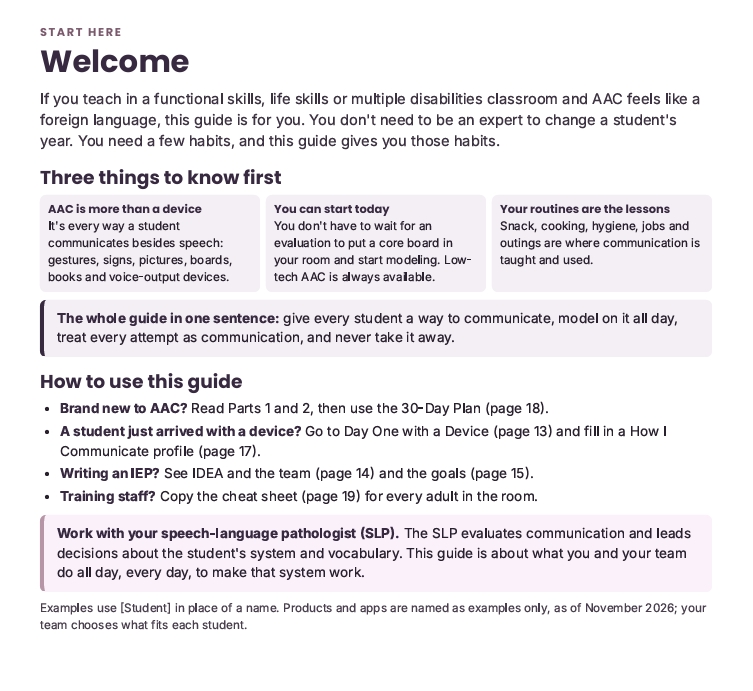
If you teach in a functional skills, life skills or multiple disabilities classroom and AAC feels like a foreign language, this guide is for you. No AAC background is needed. You’ll learn the habits that matter most: getting boards within reach, modeling while you talk, waiting, and treating every attempt as communication. You’ll also learn how to build them into snack, cooking, hygiene, jobs and community outings.
What’s inside:
- What AAC is and isn’t: unaided and aided communication, and five myths that keep students waiting, including “AAC will stop my student from talking” and “students need prerequisites”
- The communication toolbox: no-tech, low-tech, mid-tech and high-tech supports, feature matching, partner-assisted scanning, and why every student needs a low-tech backup
- Core and fringe words: a color-coded core board, a starter word set for functional skills rooms, age-respectful words for teens, and why the alphabet matters
- Modeling, step by step, with do’s and don’ts and what to do when a student says “no”
- Setting up the room: the three-second rule, where every board belongs, and building in reasons to communicate without ever withholding basic needs
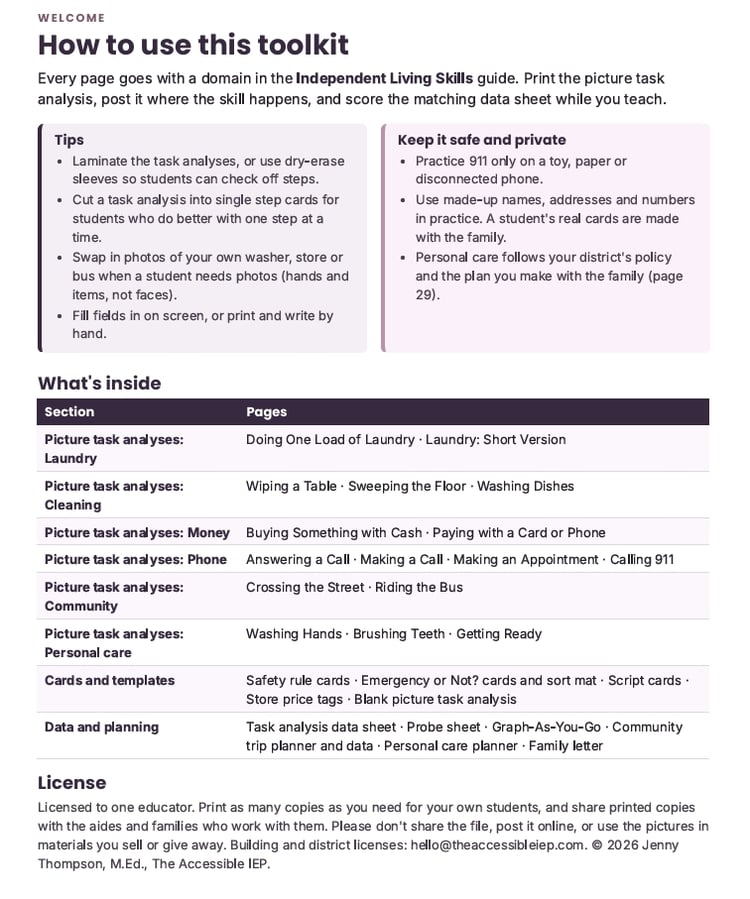
- AAC across the functional skills day: words to model for 10 routines, plus how to add communication to task analysis and community outings
- When behavior is communication: functional communication training basics, matched to the function of the behavior
- Day one with a device: what to learn first, rules that make it work, and common first-year pitfalls
- IDEA and the team: what the law requires, who does what, and how to ask for an evaluation
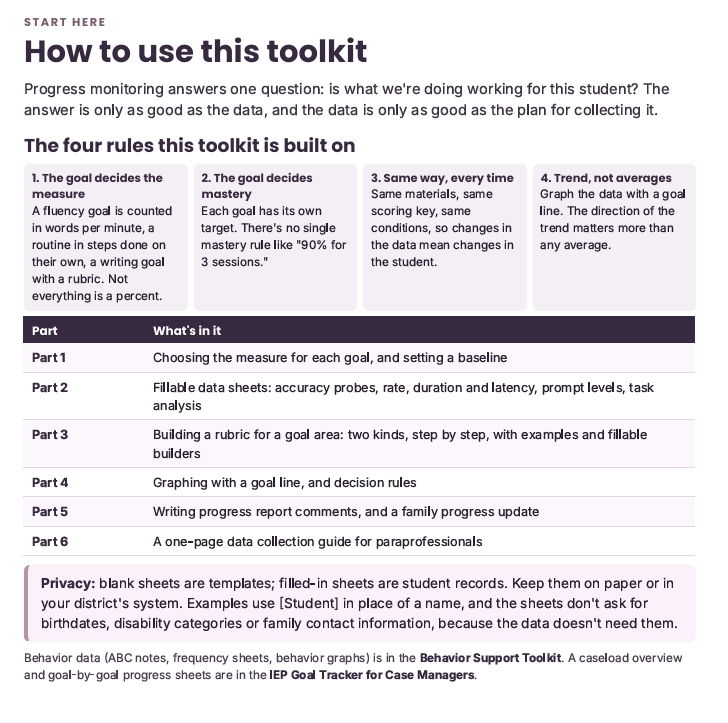
- Four model AAC goals (requesting, asking for help, commenting, saying no), each with a baseline, target and timeframe
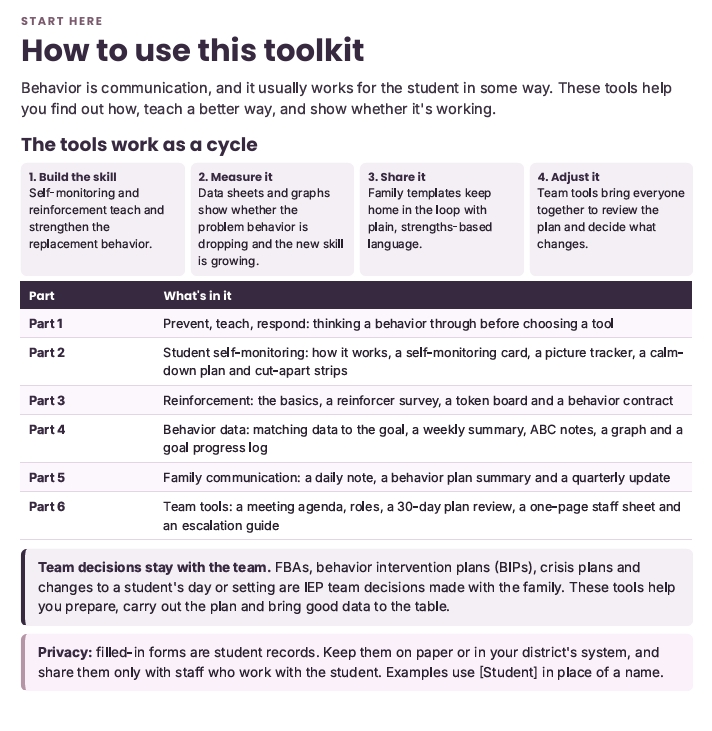
- Fillable tools:Routine Communication Planner
- Communication Data Sheet and Modeling Tally
- How I Communicate student profile for staff and substitutes
- 30-day plan
- Quick reference: a cheat sheet to copy for every adult in the room, a glossary and free resources
Format: 21-page fillable PDF (type in it on screen or print it). Letter size. Includes original illustrations.
License: for one educator’s classroom and team. You can share the cheat sheet and student profiles with the adults who work with your students. Building and district licenses are available at hello@theaccessibleiep.com.
Created by Jenny Thompson, M.Ed., The Accessible IEP, drawing on 30 years in special education.