
Behavior-Support-Toolkit
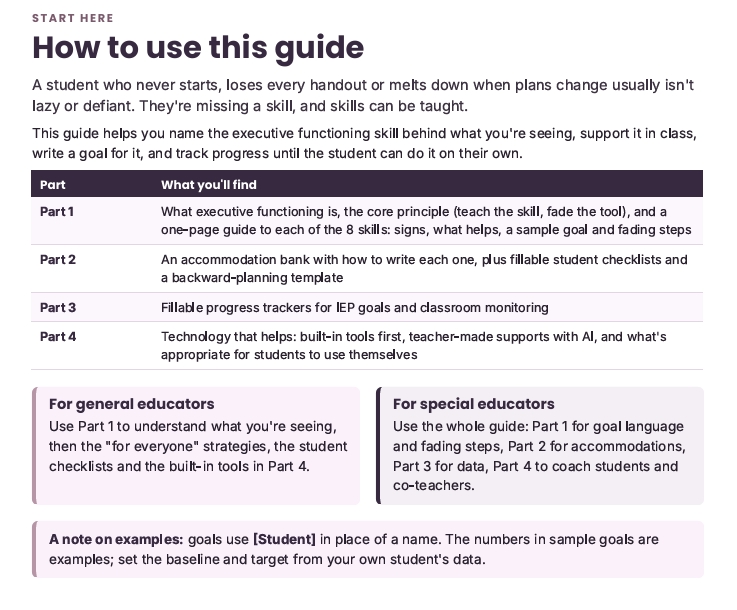
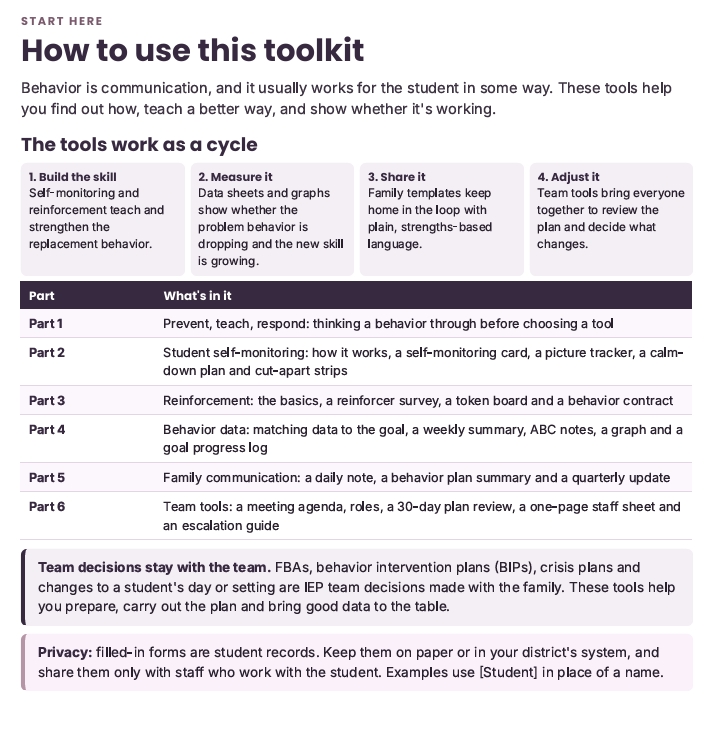
Behavior is communication, and it usually works for the student in some way. This toolkit helps you figure out how, teach a better way and show whether it’s working. It gives you every form you need in one place, from the first tally to the plan review.
What’s inside
Prevent, teach, respond
- Describe a behavior so every adult would see the same thing
- Make a best guess at what the behavior gets the student
- Choose a few strategies to prevent the behavior, teach a replacement skill and respond consistently, and know when to bring it to the team
Student self-monitoring (fillable)
- How self-monitoring works, and how to fade it
- Self-Monitoring Card with a “teacher agrees” check, suited to middle and high school
- Picture Goal Tracker for younger students
- My Calm-Down Plan with a feelings scale and a tools checklist
- Self-Check Strips, three to a page, to print and cut
Reinforcement (fillable)
- The basics: finding what motivates a student, specific praise, starting dense and thinning, making breaks real breaks
- Reinforcer Survey
- Token Board, sized so the student can succeed quickly at first
- Behavior Contract written with the student, focused on earning rather than punishment
Behavior data (fillable)
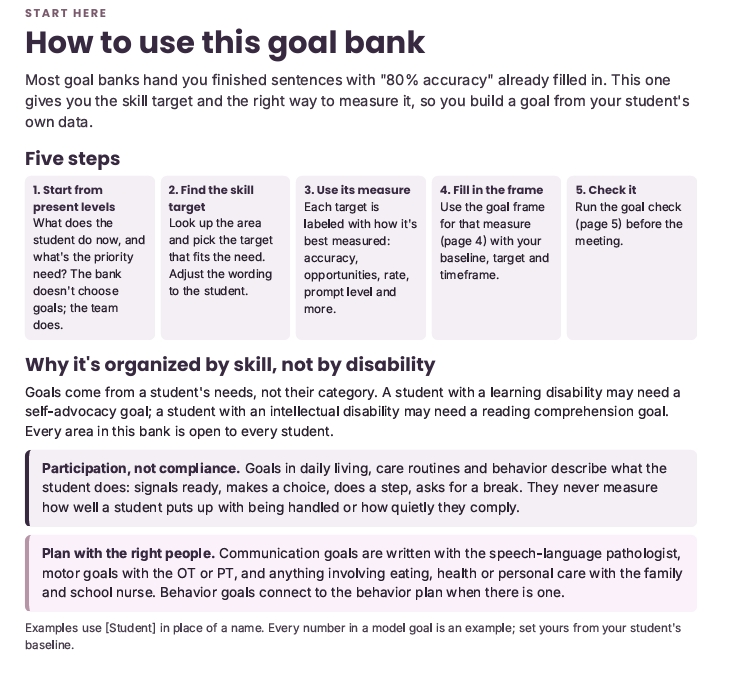
- Choosing the right measure, and matching data to the goal
- Behavior goal examples that count what matters, not “% accuracy across trials”
- Weekly Behavior Data Summary
- ABC Notes
- Behavior Graph with a goal line and space to mark plan changes
- Behavior Goal Progress Log with a simple decision rule
Family communication (fillable)
- How to keep families as partners, plus what not to send home
- Daily Home–School Note that starts with what went well
- Behavior Plan Family Summary
- Quarterly Behavior Update with real numbers
Team tools (fillable)
- Behavior Plan Team Meeting Agenda, with family input at the start
- Role and Responsibility Sheet
- 30-Day Plan Review, including whether the plan was carried out
- One-Page Staff Strategy Sheet for paras, specials teachers and substitutes
- Escalation and Safety Guide, from calm to recovery
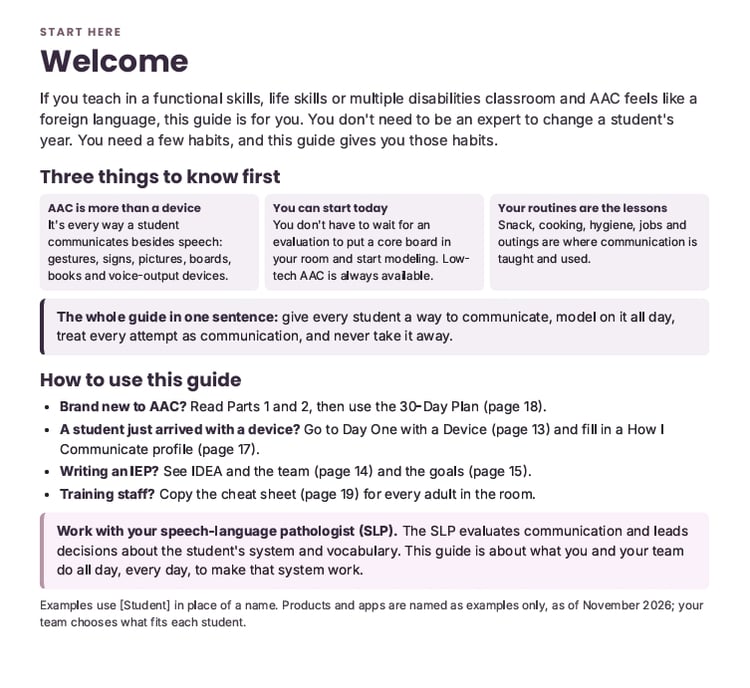
For: special educators, general educators, behavior teams, school psychologists and paraprofessionals, K–12.
Format: printable, fillable PDF, 28 pages (letter size). Type right into it or print it.
License: for one educator’s own classroom and caseload. You may print the forms for your own students and share filled-in forms with your team. For a building or district license, email hello@theaccessibleiep.com.
By Jenny Thompson, M.Ed., 30 years in special education. Professional guidance, not legal advice.