
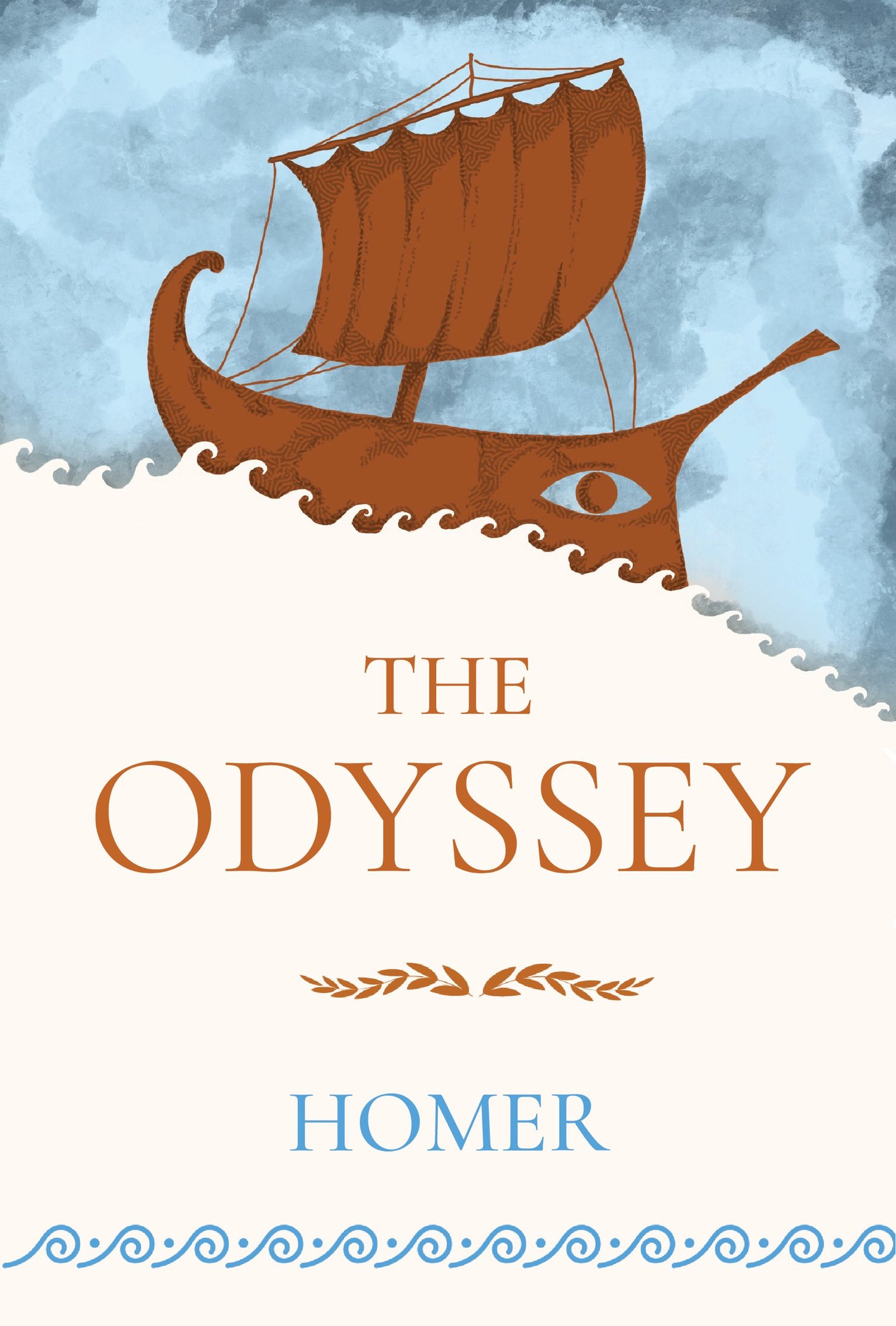
The Odyssey
Homer’s The Odyssey begins ten years after the fall of Troy with the hero Odysseus trapped on an island, prisoner of the goddess Calypso, who wants him as her immortal husband. Everyone assumes he’s dead. On Ithaca, his home island, his wife Penelope fends off more than a hundred suitors who have invaded the palace, devouring Odysseus’s wealth while pressuring her to choose a new husband. His son Telemachus, who was an infant when his father left for war, is now a young man trying to assert authority he doesn’t quite possess. The gods debate Odysseus’s fate—Athena champions him, Poseidon wants him dead for blinding his son, the Cyclops—and finally Odysseus is released to attempt the journey home. What unfolds is adventure on a mythic scale: battling the one-eyed Cyclops, resisting Circe’s magic and the Sirens’ fatal song, descending to the Underworld to consult the dead, navigating between the six-headed monster Scylla and the whirlpool Charybdis, watching all his men perish, and washing up shipwrecked and alone on yet another strange shore.
The poem’s second half shifts from fantastical adventure to gritty political drama. Odysseus finally reaches Ithaca disguised as a beggar, unrecognizable after decades away. He must navigate his own palace as a stranger, assess the situation, reconnect with his now-adult son, and test his wife’s loyalty—all while the suitors mock and abuse him, not knowing the beggar is the king they’ve displaced. Penelope, one of literature’s great characters, has spent twenty years maintaining impossible hope, using her intelligence to delay choosing a new husband through elaborate schemes like weaving a shroud by day and unraveling it by night. The reunion between Odysseus and Penelope is psychologically complex—layers of testing and recognition, caution mixed with longing, two people changed by time trying to find their way back to each other. The climactic slaughter of the suitors is brutal and graphic, showing Odysseus as both heroic warrior and ruthless killer reclaiming what’s his through violence.
The Odyssey is a poem about homecoming and identity, about whether you can ever truly return after war and wandering have transformed you, about marriage surviving impossible separation, and about the violence required to restore order. It explores hospitality as a sacred duty, the relationship between gods and mortals, the cost of survival when all your companions die, and what it means to be “nobody” (Odysseus’s famous trick) before reclaiming your name. Composed around 2,700 years ago in oral tradition before being written down, transmitted through centuries, translated into every language, this ancient epic remains vividly alive—its monsters still terrifying, its psychology still complex, its questions about home, identity, and belonging still urgent. From James Joyce to Margaret Atwood, from the Coen Brothers to contemporary verse novels, The Odyssey continues to shape how we tell stories about journeys, returns, and the people waiting at home. It’s the template for every quest narrative, every homecoming story, every tale of resilience against impossible odds—and it’s still the greatest adventure ever told.
About the author
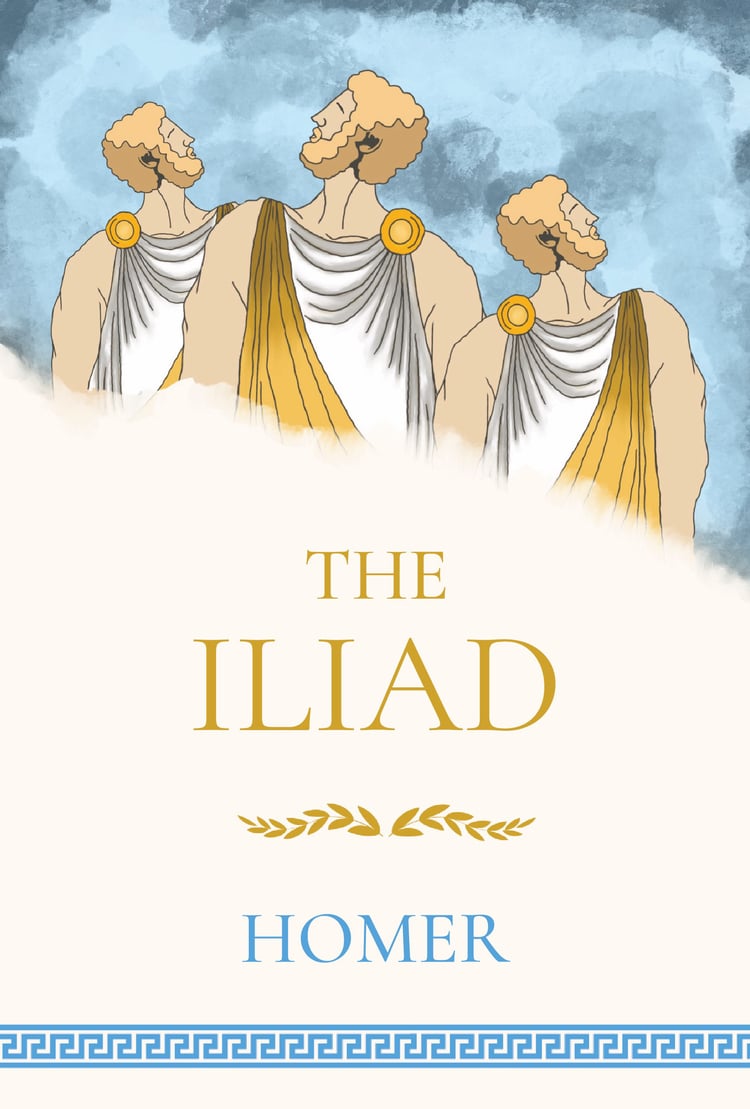
Homer is the legendary ancient Greek poet traditionally credited with composing The Iliad and The Odyssey, foundational works of Western literature. Though his historical existence is debated, these epic poems, composed around the 8th century BCE and passed down through oral tradition, have profoundly shaped storytelling, poetry, and culture for nearly three millennia.