
The Iliad
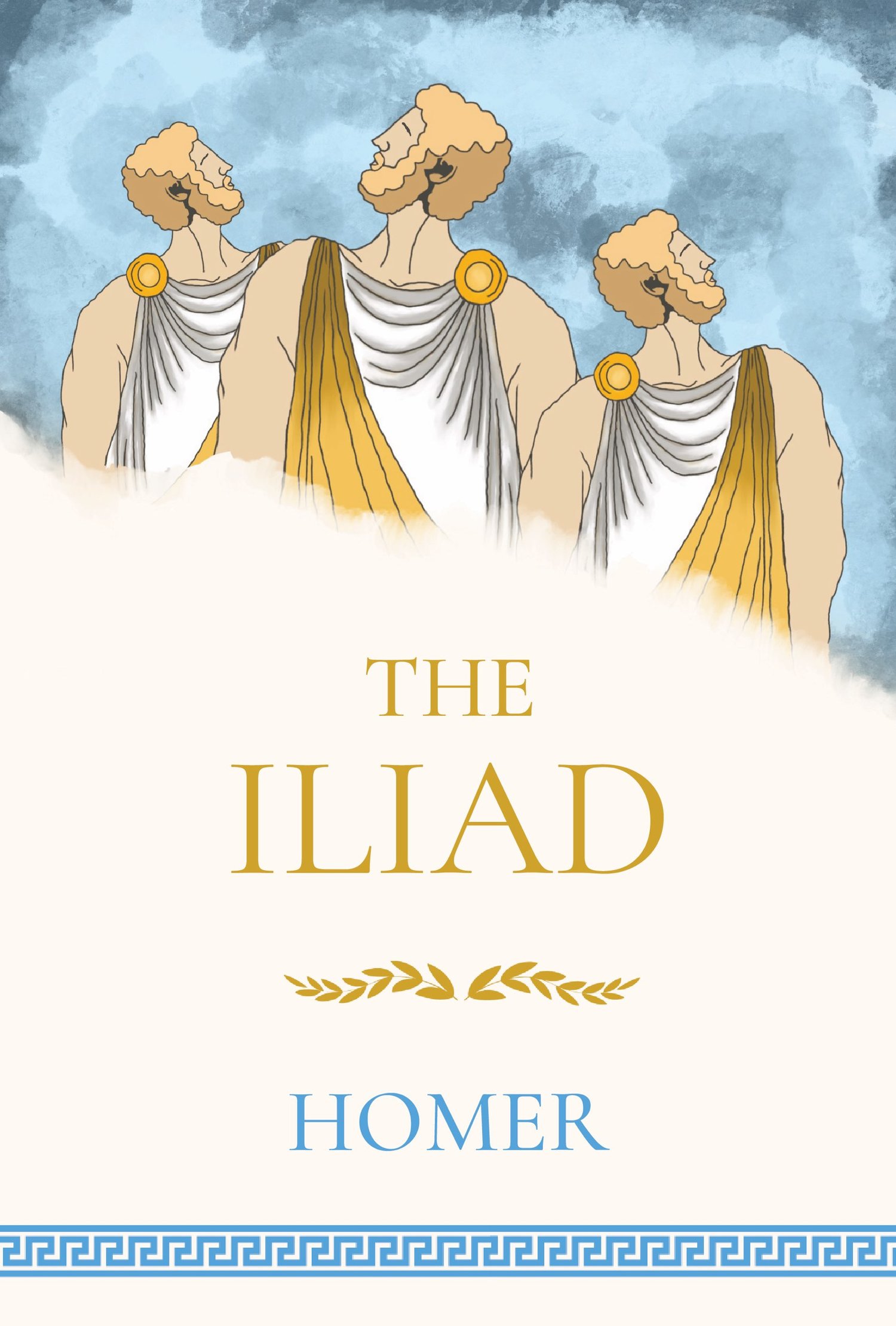
Homer’s The Iliad opens not at the beginning of the Trojan War but in its tenth year, with the Greek army camped on the beach outside Troy, exhausted and plague-ridden. The plague is divine punishment—Agamemnon, commander of the Greeks, has dishonored a priest of Apollo by refusing to return his daughter. When forced to give her back, Agamemnon seizes a replacement prize: Briseis, a captive woman awarded to Achilles, the Greeks’ greatest warrior. This insult triggers Achilles’s rage—the “wrath” that opens the poem and drives everything that follows. Achilles withdraws from battle, and without him, the Greeks begin to lose catastrophically. Hector, Troy’s greatest defender and son of King Priam, drives the Greeks back to their ships. Agamemnon begs Achilles to return, offering extravagant gifts. Achilles refuses—his honor has been violated, and he’d rather watch his countrymen die than fight for a commander who disrespected him.
The crisis intensifies when Patroclus, Achilles’s beloved companion, cannot bear watching Greeks die. He borrows Achilles’s armor and enters battle, terrifying the Trojans who think Achilles has returned. But Patroclus is killed by Hector, and Achilles’s rage transforms from wounded pride into annihilating grief. He returns to battle not for glory or duty but for vengeance, slaughtering Trojans by the hundreds in scenes of graphic, relentless violence. The confrontation between Achilles and Hector is the poem’s devastating climax—Hector knows he cannot win but fights anyway to defend his city, his family, and his honor. Achilles kills him and desecrates the corpse, dragging it behind his chariot around Troy’s walls while Hector’s parents and wife watch in horror. For days, Achilles refuses to release the body for proper burial, consumed by grief that cannot be satisfied.
The poem’s final act is unexpectedly tender. King Priam, guided by the gods, enters the Greek camp at night and begs Achilles for his son’s body. These two men, one who has lost a son, one who will soon die himself, sit together in shared grief, seeing each other’s humanity across the battle lines. Achilles returns Hector’s corpse, and the poem ends not with Greek victory but with Hector’s funeral, honoring a Trojan hero. The Iliad is not propaganda for either side but a profound meditation on war’s cost: the grief of parents burying children, wives losing husbands, warriors choosing glory knowing it means early death. Homer explores honor, pride, friendship, mortality, and the terrible arithmetic of heroism—you can have a long, forgotten life or a short, glorious one, but not both. Composed around 2,700 years ago in oral tradition, this epic invented the language for talking about war, heroism, and fate that we still use. Every war story since—from Shakespeare to Tolstoy to modern war literature—exists in The Iliad‘s shadow. It’s the foundation of Western literature and still the most honest, devastating portrait of combat and its human cost ever created.
About the author
Homer is the legendary ancient Greek poet traditionally credited with composing The Iliad and The Odyssey, foundational works of Western literature. Though his historical existence is debated, these epic poems, composed around the 8th century BCE and passed down through oral tradition, have profoundly shaped storytelling, poetry, and culture for nearly three millennia.