
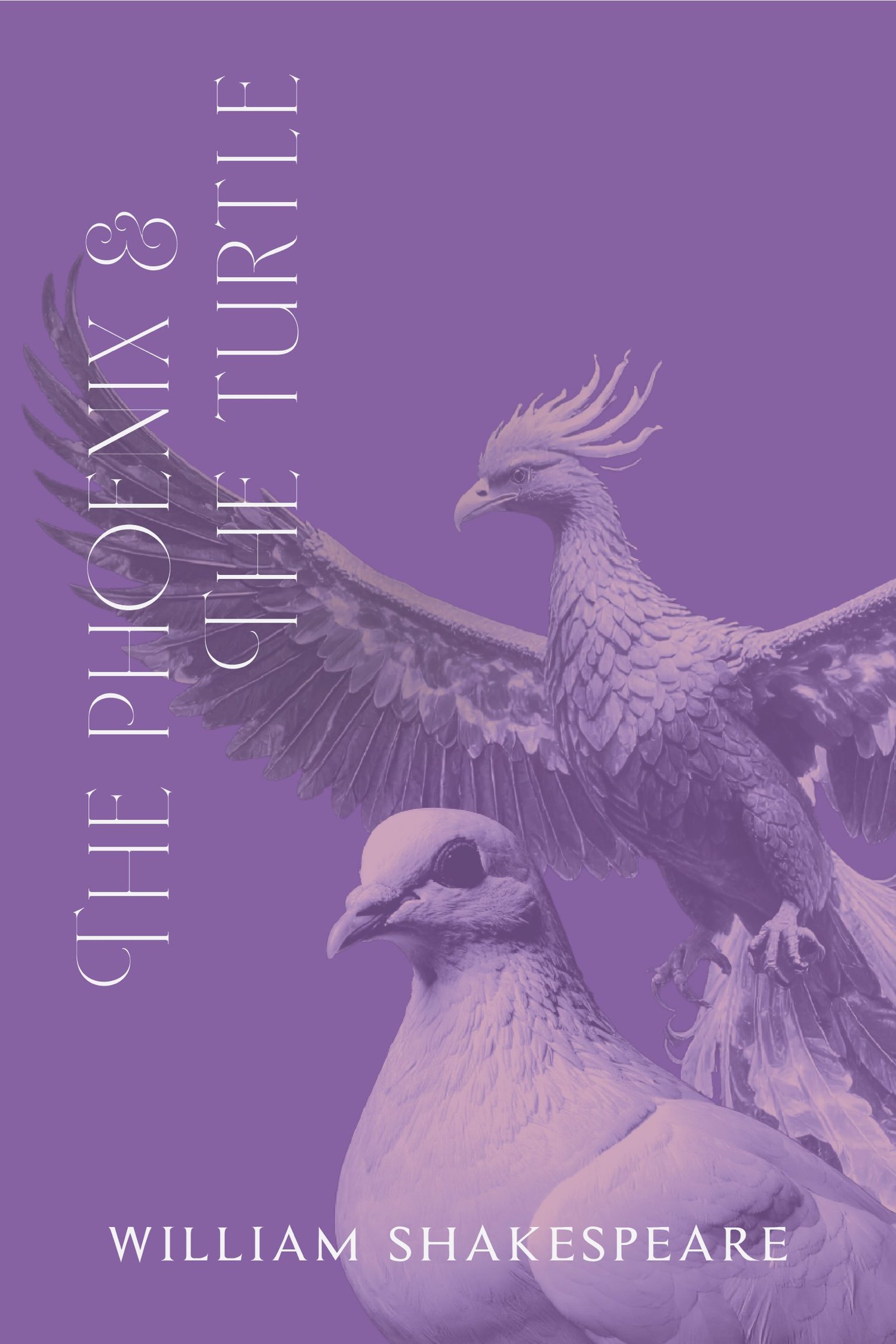
The Phoenix and the Turtle
William Shakespeare's The Phoenix and the Turtle is unlike anything else he wrote, a brief, enigmatic poem of just 67 lines that reads more like a metaphysical meditation than typical Renaissance verse. Published in 1601 in a collection called Love's Martyr, it takes the form of a funeral ceremony for two legendary birds: the Phoenix, mythological creature that dies and rises from its own ashes, and the Turtle Dove, emblem of faithful, monogamous love. Birds gather as mourners—the eagle, the swan, the crow—while Reason itself presides over the ceremony. What unfolds is a philosophical exploration of a love so perfect, so complete in its union, that it transcends the normal laws of nature and logic.
Shakespeare describes the Phoenix and Turtle's relationship as a paradox that defeats rational understanding: "Two distincts, division none; / Number there in love was slain." They remained two separate beings yet became utterly one, not merged or absorbed, but mysteriously unified while maintaining their individual essences. Property (identity, selfhood) was "appalled" because it couldn't comprehend how two could be one without ceasing to be two. Even Reason admits defeat, unable to explain this union that violates every logical principle. Their love existed in a realm beyond reason, beyond nature's laws—a purely spiritual communion that the poem presents as the highest form of love achievable, and perhaps only achievable once.
When these two die together, the poem suggests that this perfect form of love dies with them, leaving "Truth and Beauty buried be." The surviving birds sing a funeral anthem—the "threnos"—mourning not just two creatures but the very possibility of such transcendent union existing in the world again. The Phoenix and the Turtle has puzzled scholars for centuries. Is it allegory for a specific historical couple? A theological meditation on divine love? A philosophical statement about Platonic ideals? Shakespeare provides no clear answers, only this strange, austere, deeply moving tribute to a love beyond comprehension. In its brevity and mystery, it might be Shakespeare's most purely philosophical work, a poem that uses mythology to explore the ultimate questions about union, identity, and whether perfect love can exist in an imperfect world.
About the author
William Shakespeare (1564–1616) revolutionized language, theater, and thought. His 39 plays and 154 sonnets, spanning love, power, ambition, and mortality, continue to shape our understanding of what it means to be human.