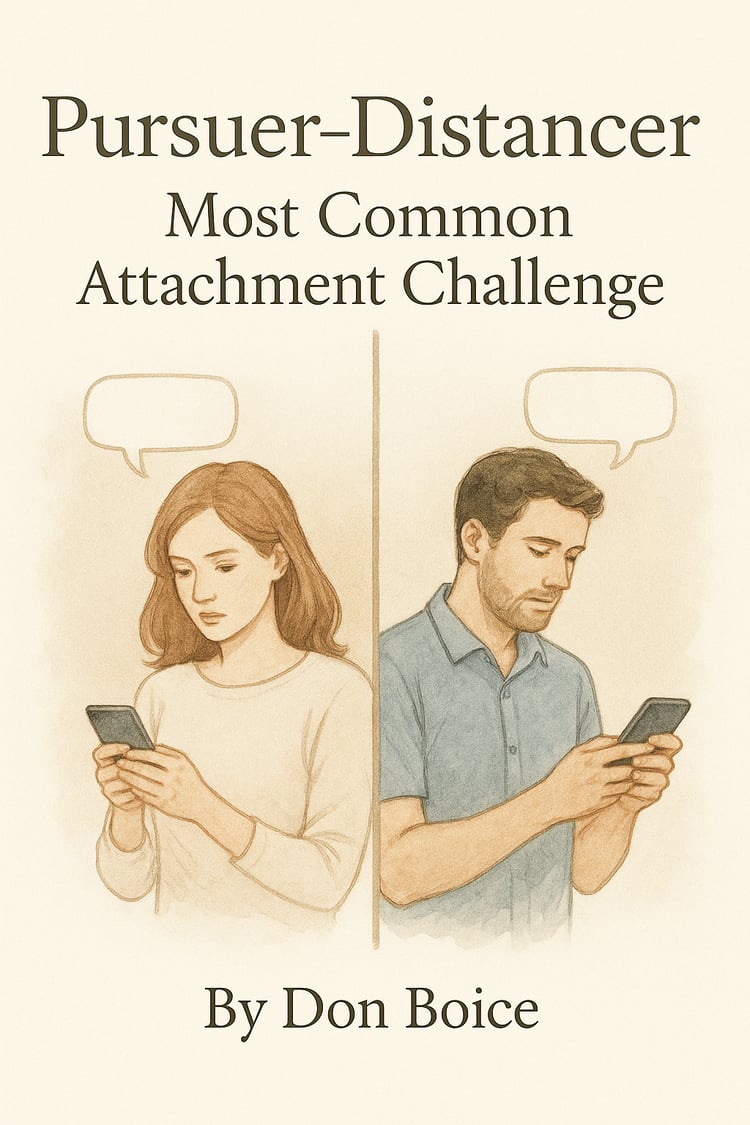
Attachment: Our Connection is Not Dangerous "We" instead of "Me"
Attachment theory helps explain romantic relationships. Your attachment type can usually help you work through the systemic issues in your relationship.
You can move from "me" to "we" if you do it carefully, consciously and intentionally. If not, there is a fair amount of pain and drama.
Let's look at how to get through what feels like a dangerous connection, but is not. You simply relate differently to one another and can learn how to do it better.
Let's look at page one:
Spending time near each other but not truly with each other
That’s a profound and very common transition point — spending time near each other but not truly with each other — is a hallmark of what developmental psychologists call parallel intimacy: proximity without deep engagement. Not everyone wants to be deeply emotionally connected.
Moving from that state to genuine “we-ness” (shared presence, emotional interdependence, and romantic partnership) requires intentional shifts across three domains: attention, vulnerability, and shared narrative. It is work for those who are interested and needs to be done with awareness.
Here’s a framework for how to make that transition:
1. Shift from Parallel Presence → Mutual Attention
What’s happening now: You’re coexisting — physically near, emotionally elsewhere. That’s safe, familiar, and low-risk.
Transition needed: Begin inviting shared moments of attention — moments where both people’s focus converges on one another or a shared experience.
Practices:
• Create a 10-minute “micro-presence ritual”: phones away, eyes meet, breathe together, notice each other.
• Practice “tracking”: say out loud what you notice in the other person’s facial expression or energy (“You seem calm right now. Feels nice to be near that.”).
• Shift shared time from background activities (TV, errands, group hangouts) to foreground activities (slow dinner, walk, music, shared touch).
Do a quick assessment. Would this fix it for the two of you? What else might you need?
(77 Pages total)
Next part is very practical- ways to look at how the avoidant thinks and how to be more successful when approaching them.