
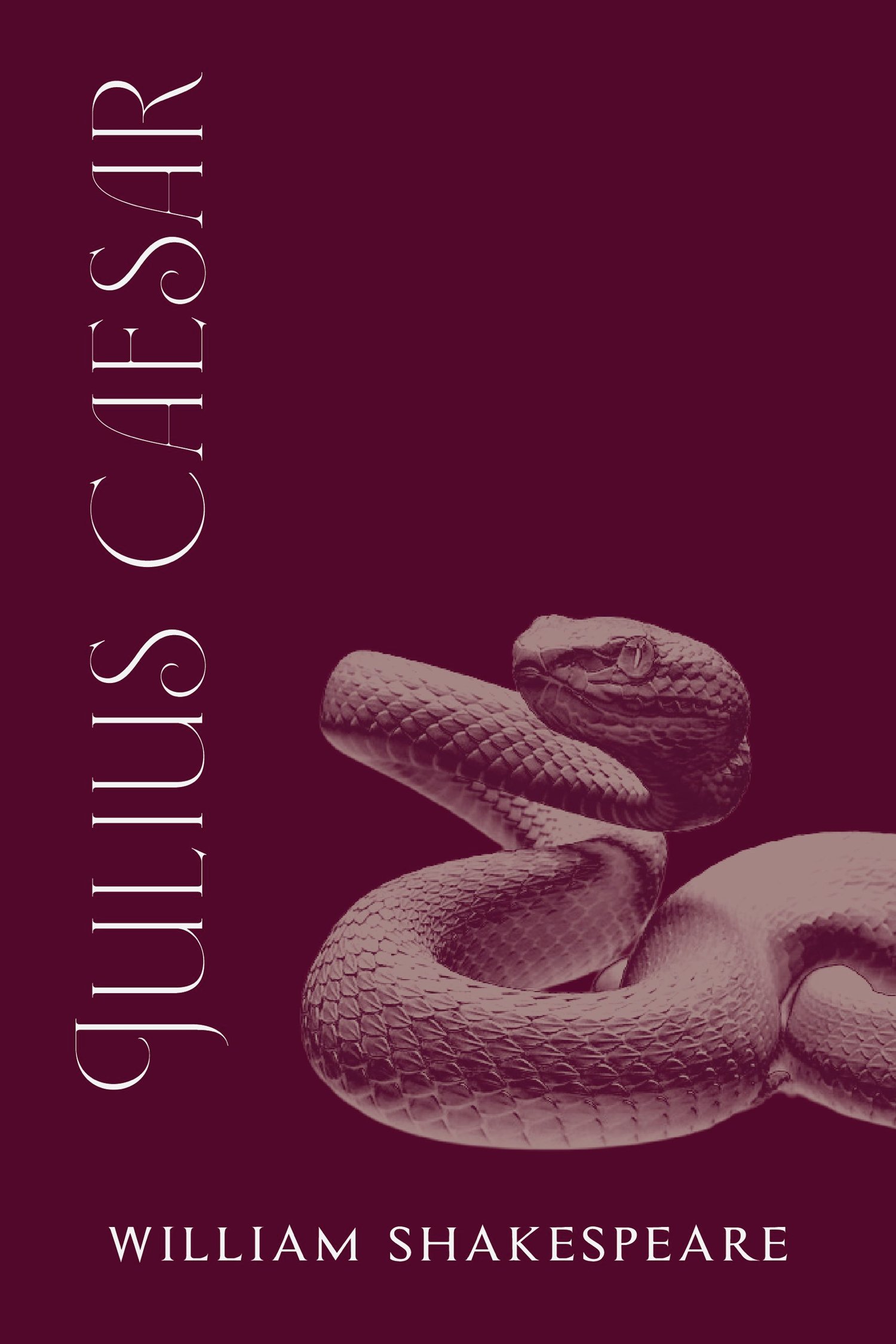
Julius Caesar
Julius Caesar is William Shakespeare at his most politically incisive, a tragedy that dissects the uneasy boundary between public virtue and private ambition. Set in the final days of the Roman Republic, the play opens with a leader at the height of his popularity and a city bristling with unease. Admirers see Caesar as Rome’s savior; his rivals fear he is becoming its master. Out of this tension emerges a conspiracy born not only of jealousy, but also of genuine anxiety about power unchecked.
The assassination that follows is swift, shocking, and far from the end. What truly drives the play is its aftermath: the moral reckoning, the struggle for control of the narrative, and the devastating consequences of political violence. Brutus, the most principled of the conspirators, discovers that noble intentions offer little protection against chaos, while Mark Antony’s masterful rhetoric turns public opinion into a weapon sharper than any dagger. Words, not swords, ultimately decide the fate of Rome.
Bracingly modern in its insights, Julius Caesar explores how democracies falter, how crowds are swayed, and how easily ideals can be consumed by ambition. It is a play about betrayal without villains, patriotism without clarity, and leadership without simple answers. More than a historical drama, it is a warning—about power seized in the name of virtue, and the ruin that follows when violence replaces trust.
About the author
William Shakespeare (1564-1616) is widely regarded as the greatest writer in the English language and the world’s preeminent dramatist. Born in Stratford-upon-Avon, he wrote approximately 39 plays and 154 sonnets that have shaped literature, theater, and the English language itself for over four centuries. His works, from tragedies like Hamlet and King Lear to comedies like A Midsummer Night’s Dream and histories like Henry V, explore the full range of human experience with unmatched psychological insight, poetic brilliance, and emotional power. Shakespeare’s influence extends far beyond the stage; his phrases and characters have become woven into the fabric of modern culture, and his exploration of timeless themes—love, power, ambition, jealousy, mortality—continues to resonate with audiences worldwide. Despite the passage of centuries, his work remains startlingly contemporary, speaking to each new generation with fresh relevance and inexhaustible depth.