
Grounding Skills, Take Two (Ages 6 to 9 / 10 to 12 / 13 to 17)
Grounding, Take Two (Ages 6 to 9 / 10 to 12 / 13 to 17)
For when 5-4-3-2-1 isn’t working.
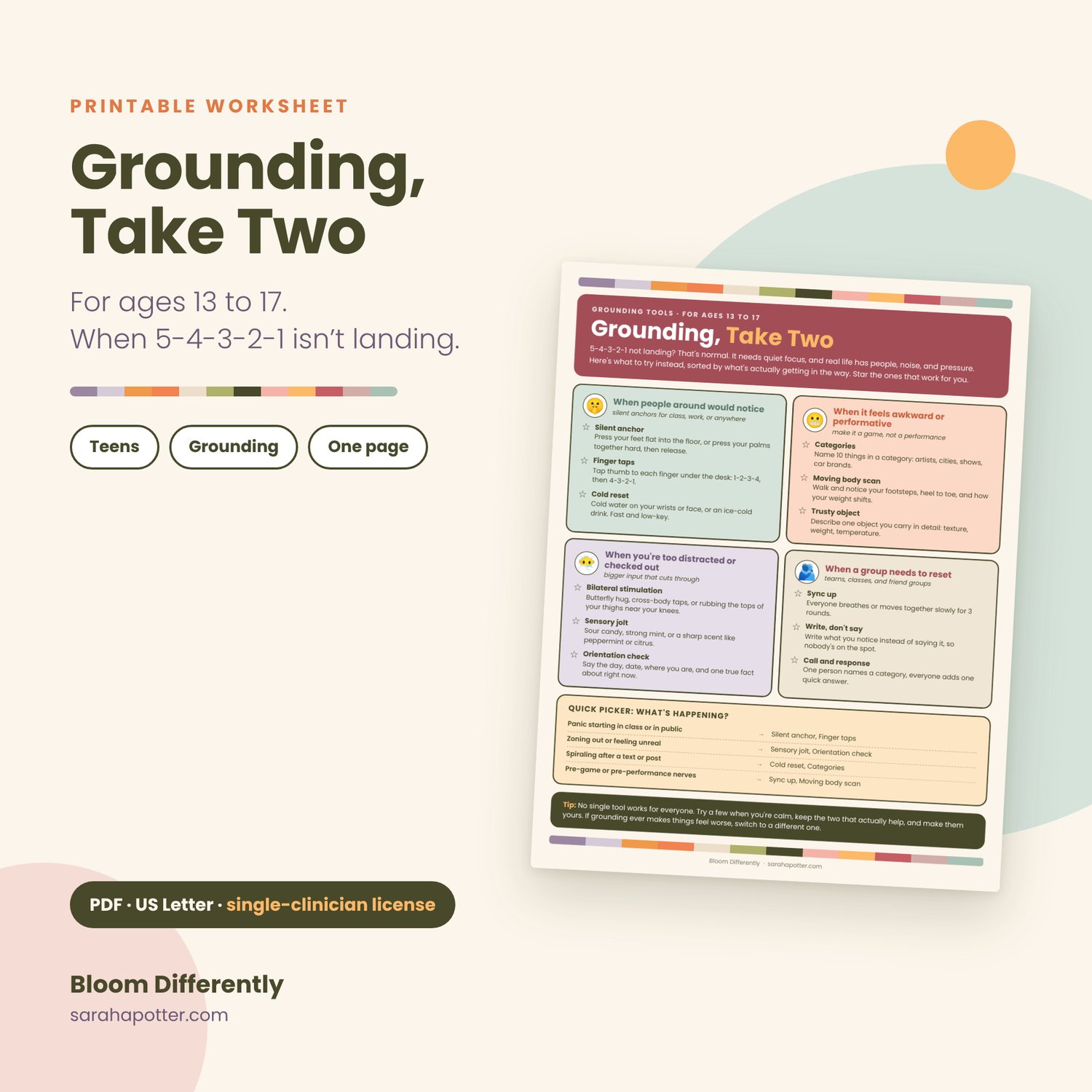
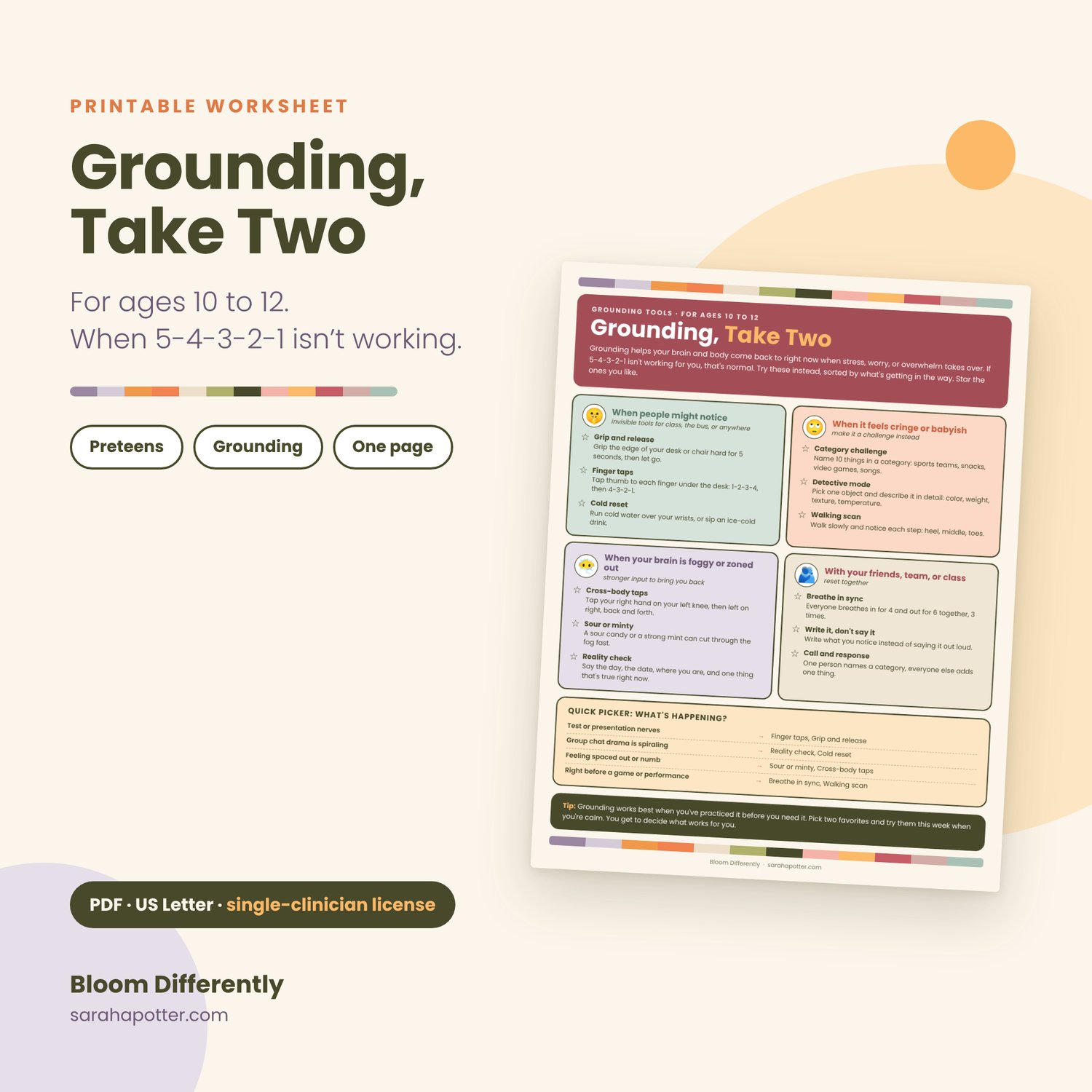
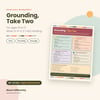
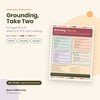
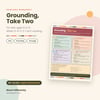
The classic 5-4-3-2-1 grounding exercise needs quiet focus, and real life has people, noise and pressure. Each one-page sheet offers grounding tools sorted by what’s actually getting in the way: being around other people, feeling too cringe or bored to try, feeling foggy or far away, or needing a whole group to reset. Kids and teens star the ones that work for them.
Ages 6 to 9
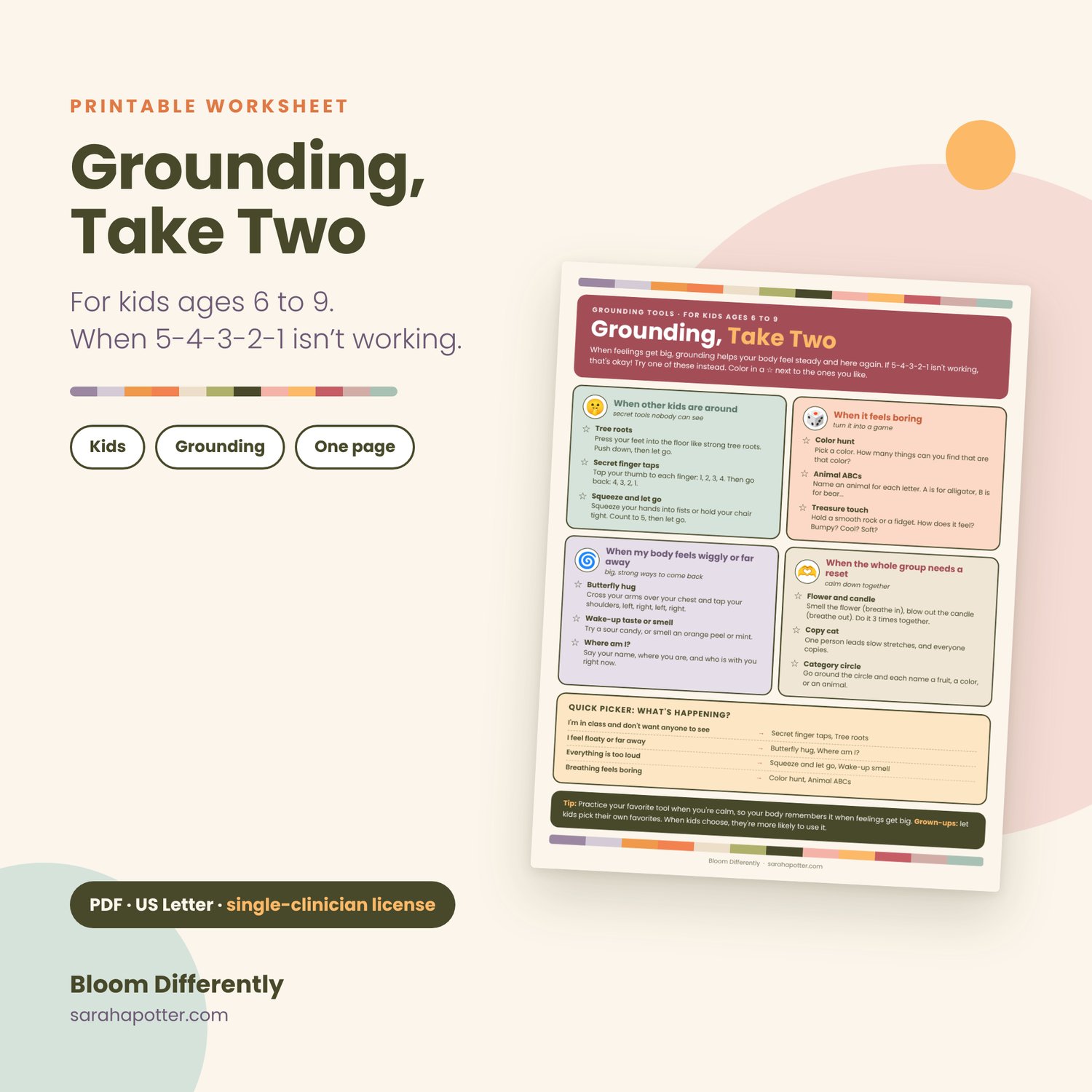
- When other kids are around, secret tools nobody can see: tree roots, secret finger taps, squeeze and let go.
- When it feels boring, turn it into a game: color hunt, animal ABCs, treasure touch.
- When my body feels wiggly or far away: butterfly hug, a wake-up taste or smell, and “Where am I?”
- When the whole group needs a reset: flower and candle breathing, copy cat, category circle.
- A quick picker for real moments, plus a grown-up tip: let kids pick their own favorites.
Who it’s for
Kids and teens dealing with anxiety, panic, overwhelm, dissociation or big emotions, plus the therapists, school counselors, teachers, coaches and parents who support them.
Ways to use it
- Try several tools in session when calm, then star the favorites.
- Use the group tools as a classroom, team or group therapy reset.
- Teach the discreet tools for school, where kids don’t want anyone to notice.
- Pair it with the Coping Skills sheet for the same age for a complete regulation plan.
Why it’s different
It starts from the honest truth that the standard tool doesn’t work for everyone, then problem-solves the real barriers: privacy, embarrassment, boredom and zoning out. The strong sensory and movement options work especially well for neurodivergent kids and anyone who dissociates.
What you get
A one-page printable PDF, US Letter, available as an instant download. Single-clinician license included.
Pairs well with: the Coping Skills sheet for the same age (Coping Toolbox for 6 to 9, Coping Skills, Sorted for 10 to 12 and 13 to 17), the Whole-Body Feelings Wheel for the same age, and The Window of Tolerance.
Next up are Maslow’s Hierarchy of Needs and Maslow’s Expanded Hierarchy, then the $5 guides.