
Building Confidence
Building Confidence
It’s not a feeling you wait for. It’s something you build.
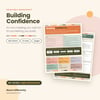
Confidence isn’t being sure everything will go perfectly. It’s trusting you can handle it, whatever happens, and it usually shows up after you try something, not before. This two-page CBT worksheet for teens explains how confidence really works and helps them build it from strengths they already have.
What’s inside
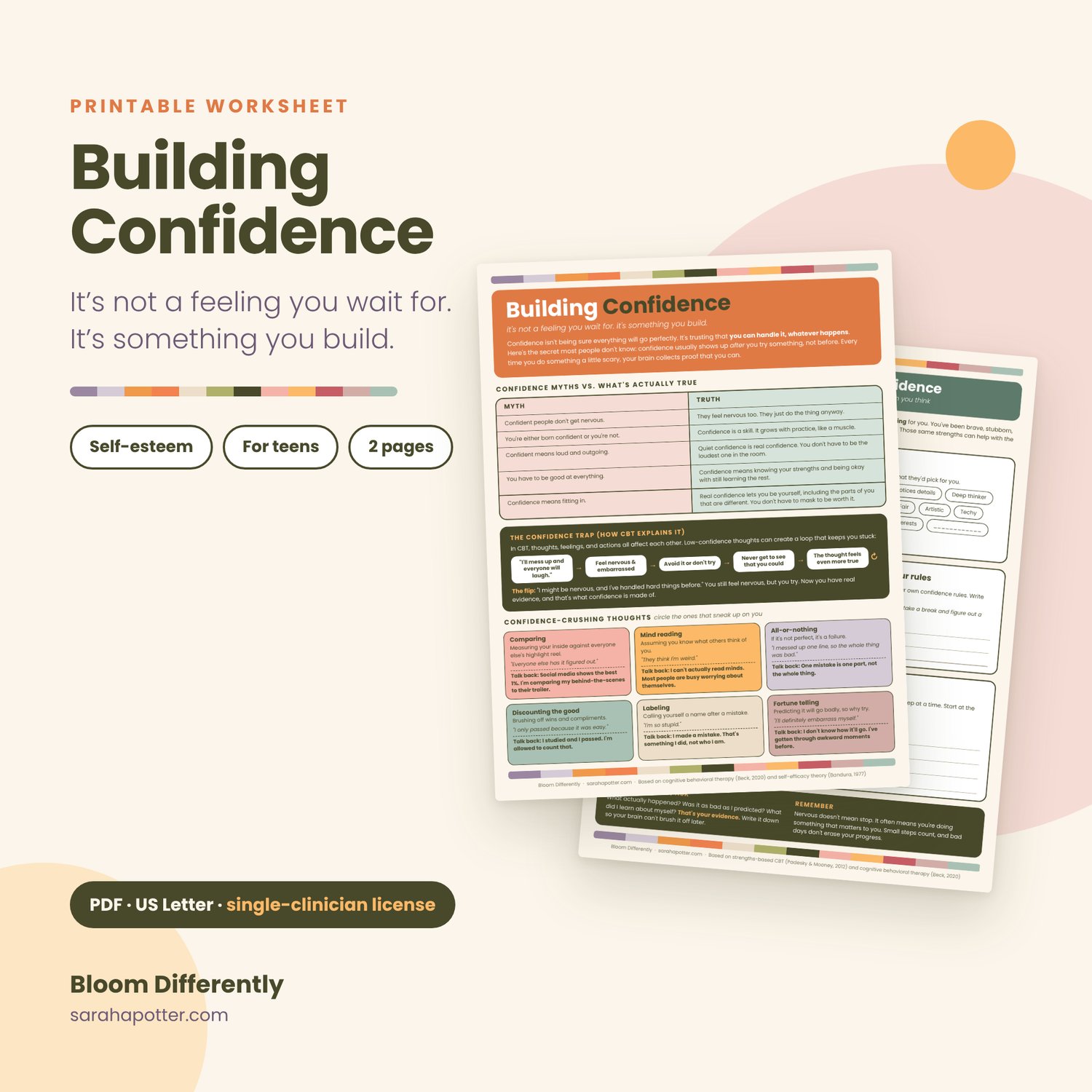
Page 1: How confidence works
- Myths vs. truth: confident people still get nervous, confidence is a skill, quiet confidence counts, and you don’t have to mask to be worth it.
- The confidence trap: how the CBT loop of thoughts, feelings and avoidance keeps teens stuck, and the “flip” that builds real evidence instead.
- Six confidence-crushing thoughts to circle (comparing, mind reading, all-or-nothing, discounting the good, labeling and fortune telling), each with a ready-made “talk back” line.
Page 2: Find your strengths
- Strength search: a word bank to circle, from creative and loyal to “knows a lot about my interests.”
- Find your strength story: something they keep going at even when it gets hard, like a game, sport, art or a pet.
- Turn it into your rules: confidence rules written as “When ___, I ___.”
- Use it on something hard: a three-step brave ladder, plus after-step questions that turn each try into evidence.
Who it’s for
Teens dealing with anxiety, avoidance, perfectionism, social worries or low self-esteem. It’s useful for therapists, school counselors and parents.
Ways to use it
- Explore myths and confidence-crushing thoughts in session.
- Build a brave ladder together for a real goal, like speaking in class or trying out for a team.
- Send page 2 home as strengths homework, and ask a parent or friend to add their picks.
- Revisit the ladder over several sessions as each step gets done.
Why it’s different
It’s strengths-based. Instead of only fixing what feels wrong, it starts with what’s already working, uses the teen’s own interests, and clearly says confidence means being yourself, not fitting in or masking.
What you get
A two-page printable PDF, US Letter, available as an instant download. It’s based on cognitive behavioral therapy (Beck, 2020), self-efficacy theory (Bandura, 1977) and strengths-based CBT (Padesky & Mooney, 2012). Single-clinician license included.
Pairs well with: ANTs: Automatic Negative Thoughts, Thoughts vs. Feelings, Boundaries 101