
ABC PLEASE for Teens - DBT Skills Sheet
ABC PLEASE for Teens
Your daily checklist for not running on empty.
Big emotions hit way harder when your body and your life are already running low. ABC PLEASE is a DBT emotion regulation skill for lowering everyday vulnerability, so when something stressful actually happens, you’ve got more room to handle it. This one-page sheet turns the skill into a simple daily checklist teens can actually use.
What’s inside
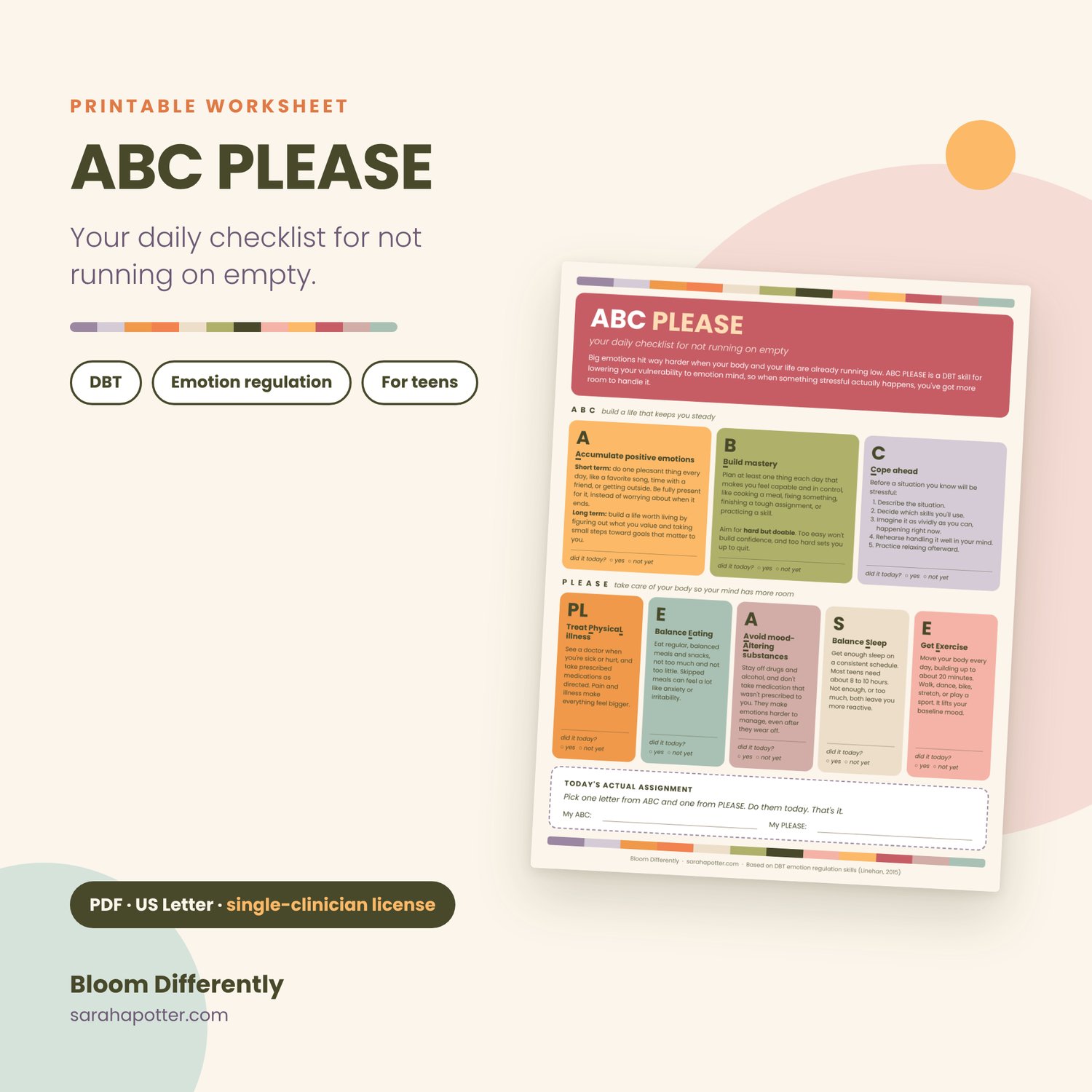
- ABC, build a life that keeps you steady:Accumulate positive emotions: one pleasant thing a day, plus small steps toward what you value.
- Build mastery: one thing a day that makes you feel capable, aiming for hard but doable.
- Cope ahead: five steps to mentally rehearse a stressful situation before it happens.
- PLEASE, take care of your body so your mind has more room: treat physical illness, balance eating, avoid mood-altering substances, balance sleep (with teen-specific sleep guidance) and get exercise. Each one comes with a plain-language reason why it matters for mood.
- “Did it today?” check boxes for every skill, so it works as a daily tracker.
- Today’s actual assignment: pick one letter from ABC and one from PLEASE, and do them today. That’s it.
Who it’s for
Teens working on emotion regulation, irritability, anxiety or burnout. It’s useful for therapists, school counselors, DBT-A groups and parents who want to support healthy routines without nagging.
Ways to use it
- Teach the skill in individual sessions or DBT groups.
- Use it as a daily or weekly tracker between sessions.
- Walk through cope ahead for an upcoming test, game or hard conversation.
- Explore which letters are running low when a teen feels extra reactive.
Why it’s different
It’s teen-friendly and realistic. It explains why each habit affects mood instead of just listing rules, and the “one ABC and one PLEASE today” assignment keeps it doable for overwhelmed or executive-function-challenged teens.
What you get
A one-page printable PDF, US Letter, available as an instant download. It’s based on DBT emotion regulation skills (Linehan, 2015). Single-clinician license included.
Pairs well with: Building Confidence, STOP Skill, DBT Skills Toolkit