
Maslow's Hierarchy of Needs + Expanded Version
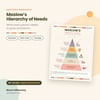
Maslow's Hierarchy of Needs
What every person needs to grow and bloom.
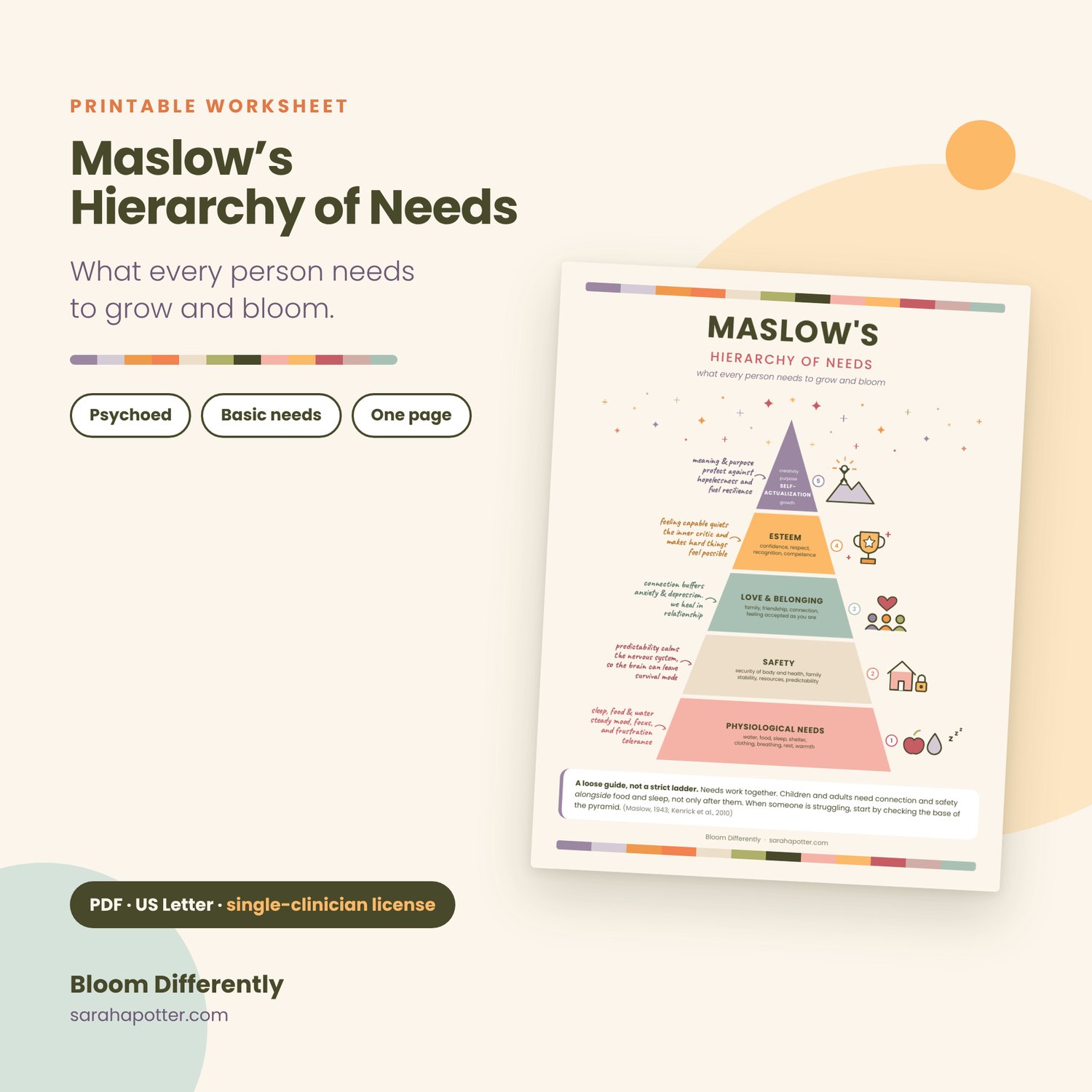
When someone is struggling, it helps to start at the base of the pyramid. This one-page, trauma-informed take on Maslow's Hierarchy of Needs shows the five levels of need, with a short note on why each one matters for mental health.
What's inside
- Five illustrated levels, from bottom to top:
- Physiological needs: food, water, sleep, shelter, rest and warmth.
- Safety: security of body and health, family stability, resources and predictability.
- Love and belonging: family, friendship and feeling accepted as you are.
- Esteem: confidence, respect, recognition and competence.
- Self-actualization: creativity, purpose and growth.
- A mental health note for every level, for example:
- Sleep, food and water steady mood, focus and frustration tolerance.
- Predictability calms the nervous system so the brain can leave survival mode.
- Connection buffers anxiety and depression, because we heal in relationship.
- "A loose guide, not a strict ladder": a modern update reminding readers that children and adults need connection and safety alongside food and sleep, not only after them.
Who it's for: therapists, school counselors, parent coaches, teachers, students and families.
Ways to use it
- Do a "check the base first" assessment when a client or child is struggling.
- Explain to parents why sleep, routine and connection come before behavior goals.
- Use it in treatment planning and goal-setting.
- Display it in a classroom or office as a teaching visual.
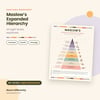
Maslow's Expanded Hierarchy of Needs
All eight levels, explained.
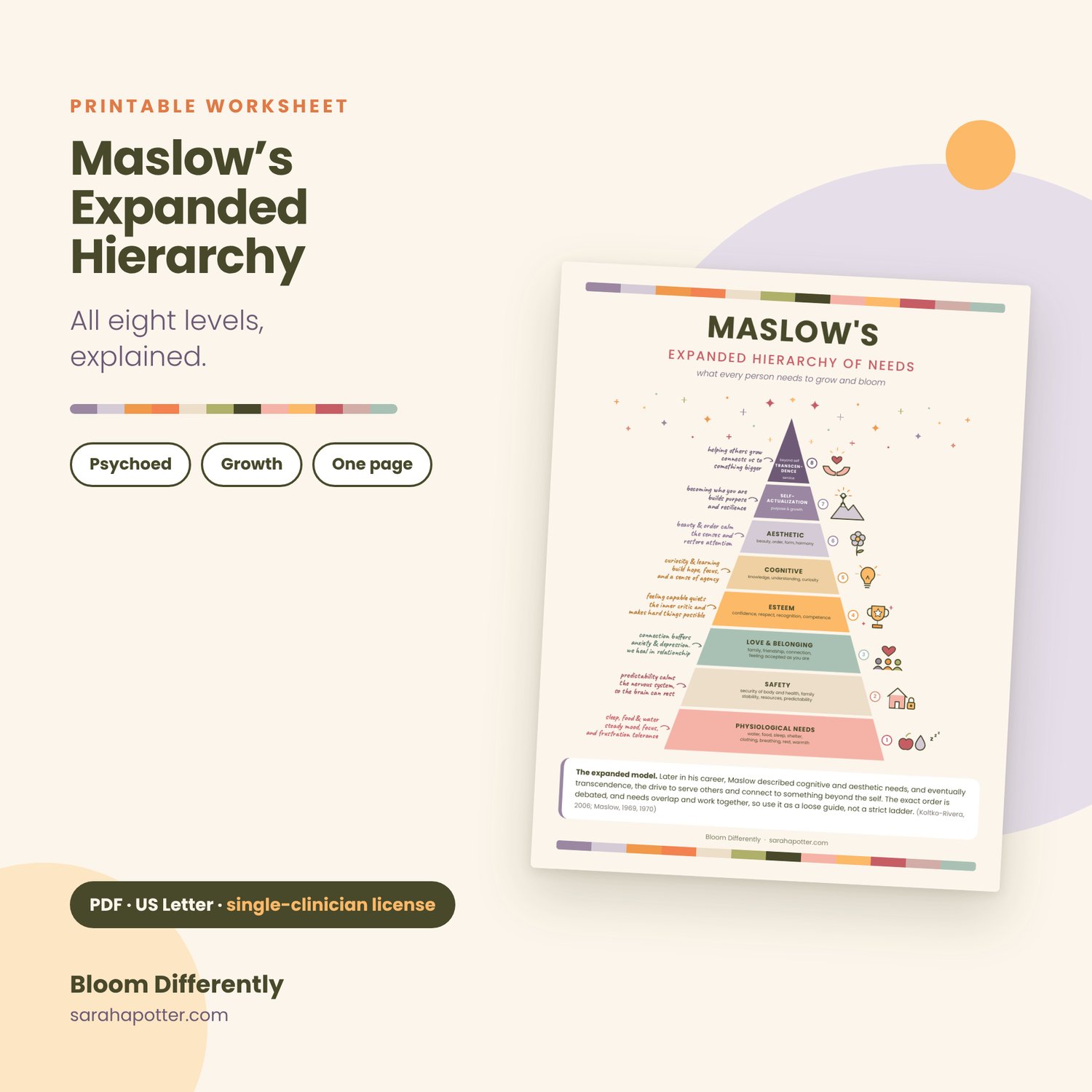
Later in his career, Maslow added cognitive and aesthetic needs, and eventually transcendence: the drive to serve others and connect to something beyond the self. This one-page visual shows all eight levels of the expanded model, with a short mental-health note for each.
What's inside
- Eight illustrated levels: physiological, safety, love and belonging, esteem, cognitive (knowledge, understanding and curiosity), aesthetic (beauty, order, form and harmony), self-actualization, and transcendence (service, and connecting to something bigger).
- A note for every level, for example:
- Curiosity and learning build hope, focus and a sense of agency.
- Beauty and order calm the senses and restore attention.
- Helping others grow connects us to something bigger.
- A note on the model: the exact order is debated and needs overlap, so treat it as a loose guide, not a strict ladder.
Who it's for: therapists, educators, students, coaches, and anyone exploring values, motivation or meaning.
Ways to use it
- Use it in values and purpose work with teens and adults.
- Show why curiosity, beauty and service matter for wellbeing.
- Teach it in psychology, counseling or education classes.
- Pair it with the five-level version to show how the model grew.
Both versions share
- Why it's different: it's trauma-informed and current. It ties every level to the nervous system and mental health, and it corrects the old "strict ladder" idea.
- What you get: a one-page printable PDF, US Letter, available as an instant download. The five-level version is based on Maslow (1943) and Kenrick et al. (2010); the expanded version on Koltko-Rivera (2006) and Maslow (1969, 1970). Single-clinician license included.
- Pairs well with:
- Five-level: The Window of Tolerance, Nervous System Basics, Wise Mind Parenting
- Expanded: Building Confidence, Living with Dysthymia, Maslow's Hierarchy of Needs