
Year 9 Acids, Bases and Chemical Tests Assessment Pack (2027 science curriculum)
Everything you need to gather and judge evidence for Year 9 Chemical change (acids and bases, and identification tests for common substances) against the five progress descriptors: practicals, conversations, student work and tests.
DESCRIPTION
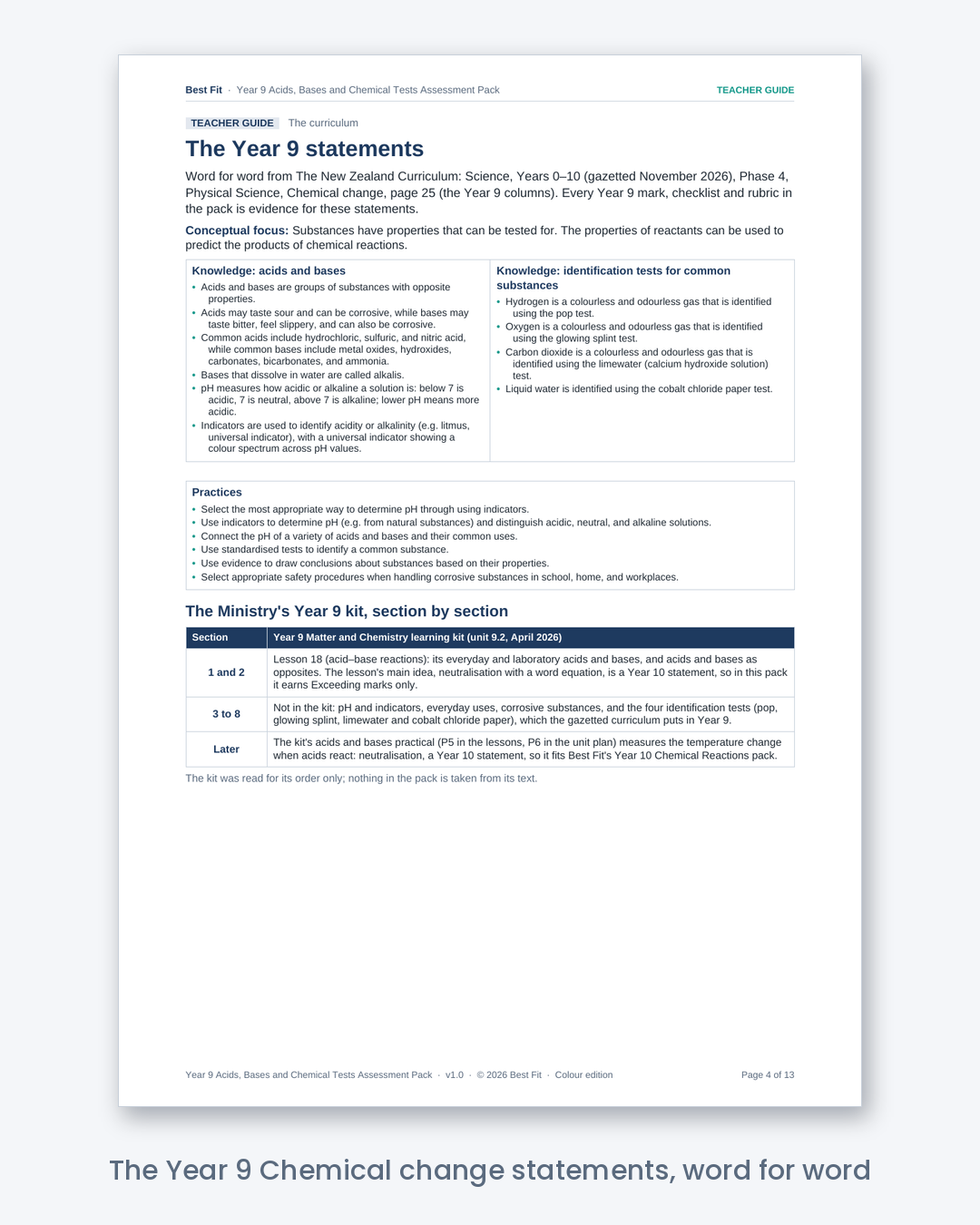
Built for Science Years 0–10 (gazetted November 2026), Phase 4, Physical Science: Chemical change. Every Year 9 knowledge and practice statement is quoted word for word in the teacher guide and mapped to the evidence that shows it.
Eight sections: acids and bases, opposite properties · common acids, bases and alkalis · the pH scale and indicators ·
measuring pH: choosing the method · pH and everyday uses · corrosive substances and safety · gas tests for hydrogen, oxygen and carbon dioxide · testing for water, and identifying substances.
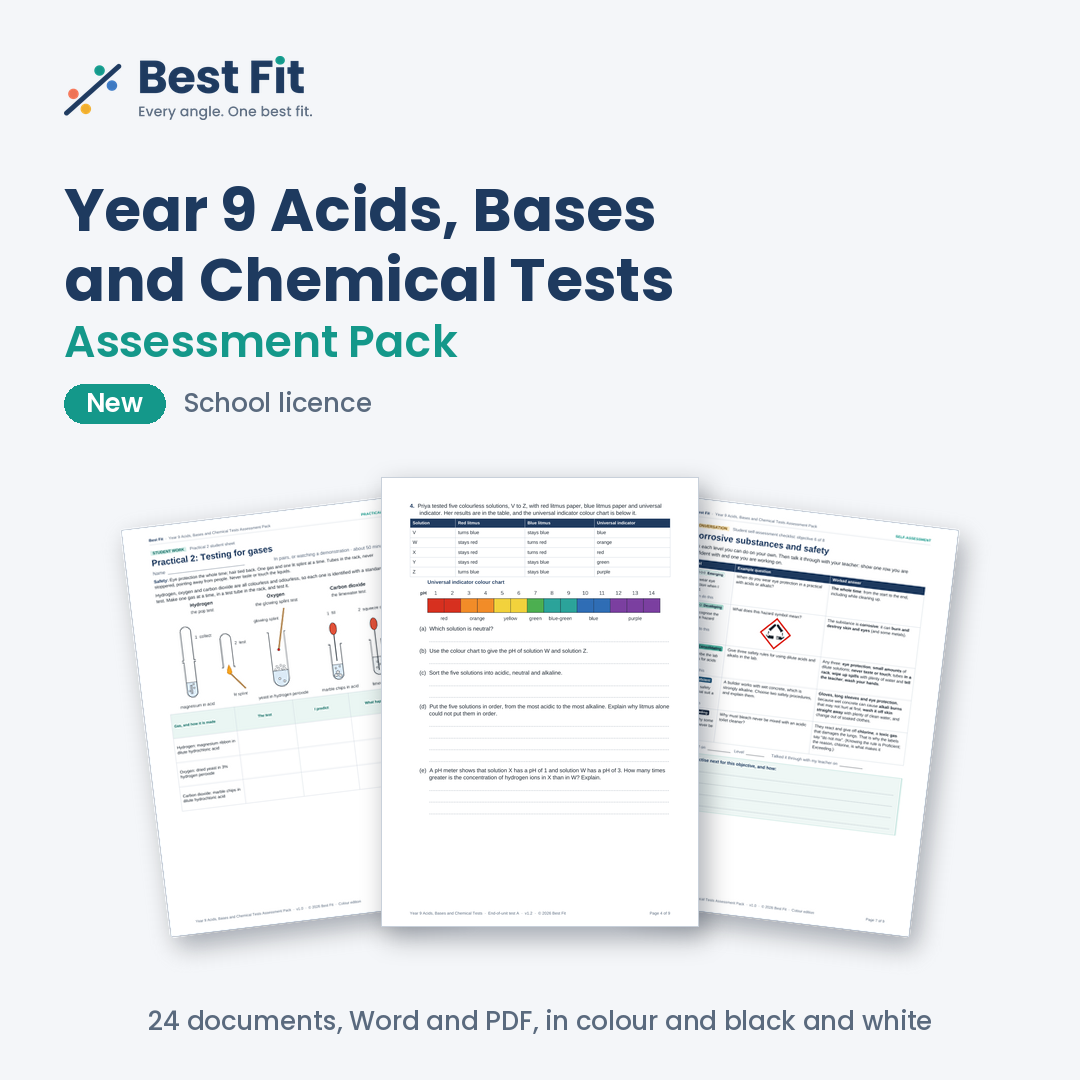
What's inside: 24 documents, each as a Word file and a PDF, in a colour edition and a black-and-white edition.
- Start here: a teacher guide with descriptor indicators for every section, an evidence map, a teaching plan matched to the Ministry's Year 9 kit, and judgement guides.
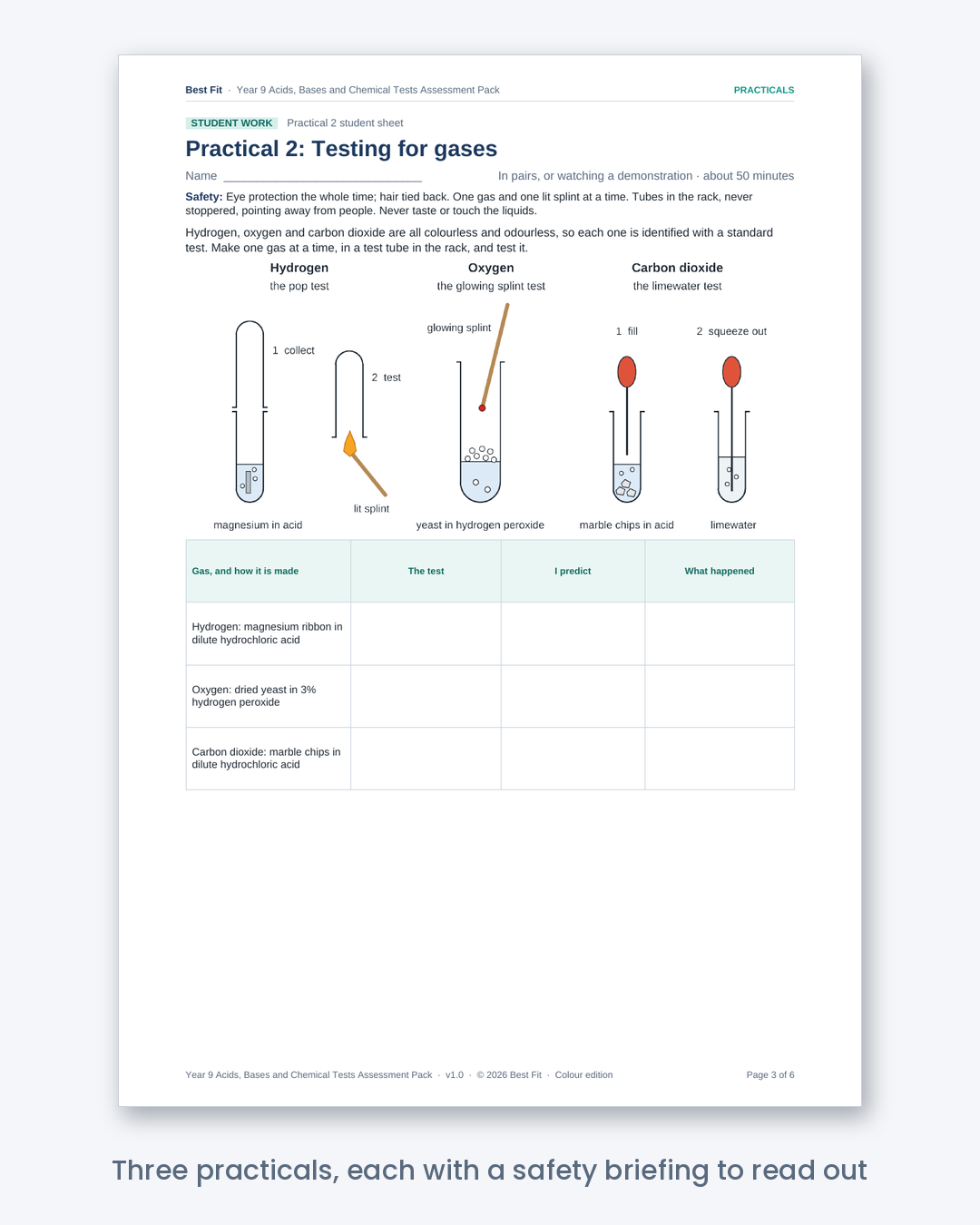
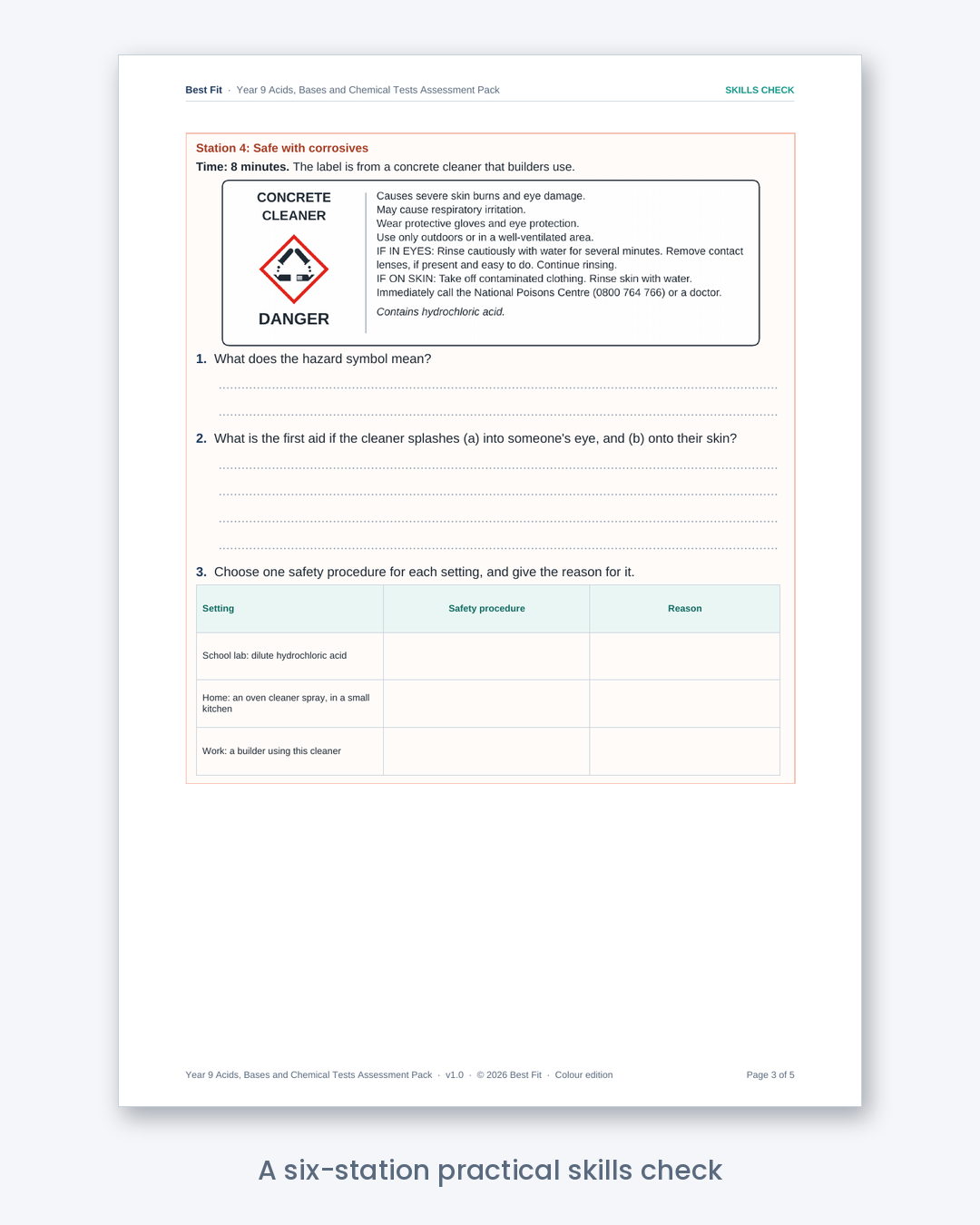
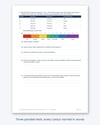
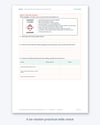
- Observation: three practicals (Acid, neutral or alkaline? · Testing for gases: hydrogen, oxygen and carbon dioxide What is it? Using tests as evidence) with teacher notes, safety briefings to read out, student sheets and observation checklists. The gas tests run as a student practical or a teacher demonstration. Plus a six-station practical skills check that needs no flames.
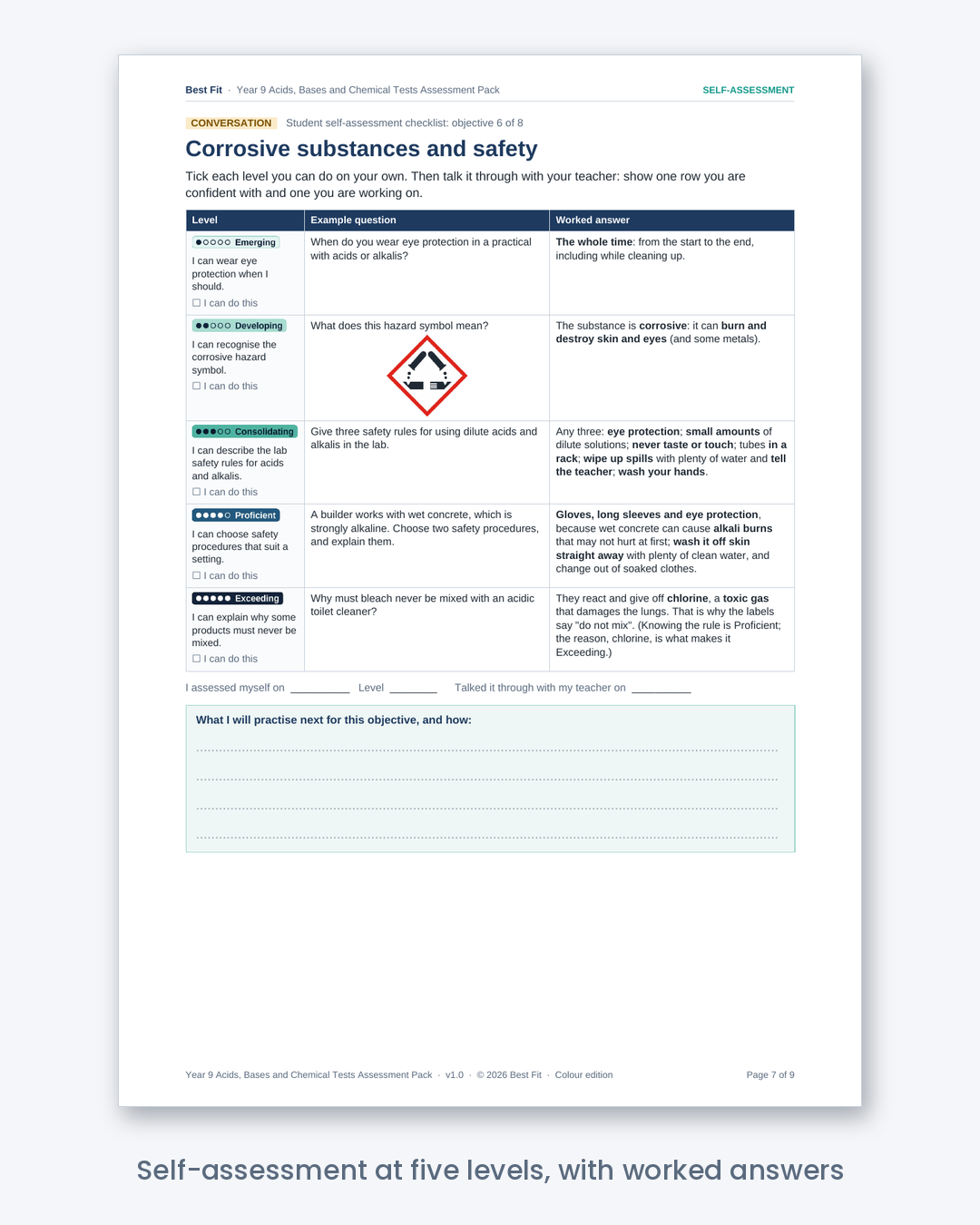
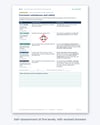
- Conversation: four prompt cards, a self-assessment (eight objectives at five levels, each with an example question and a worked answer) and an I can checklist.
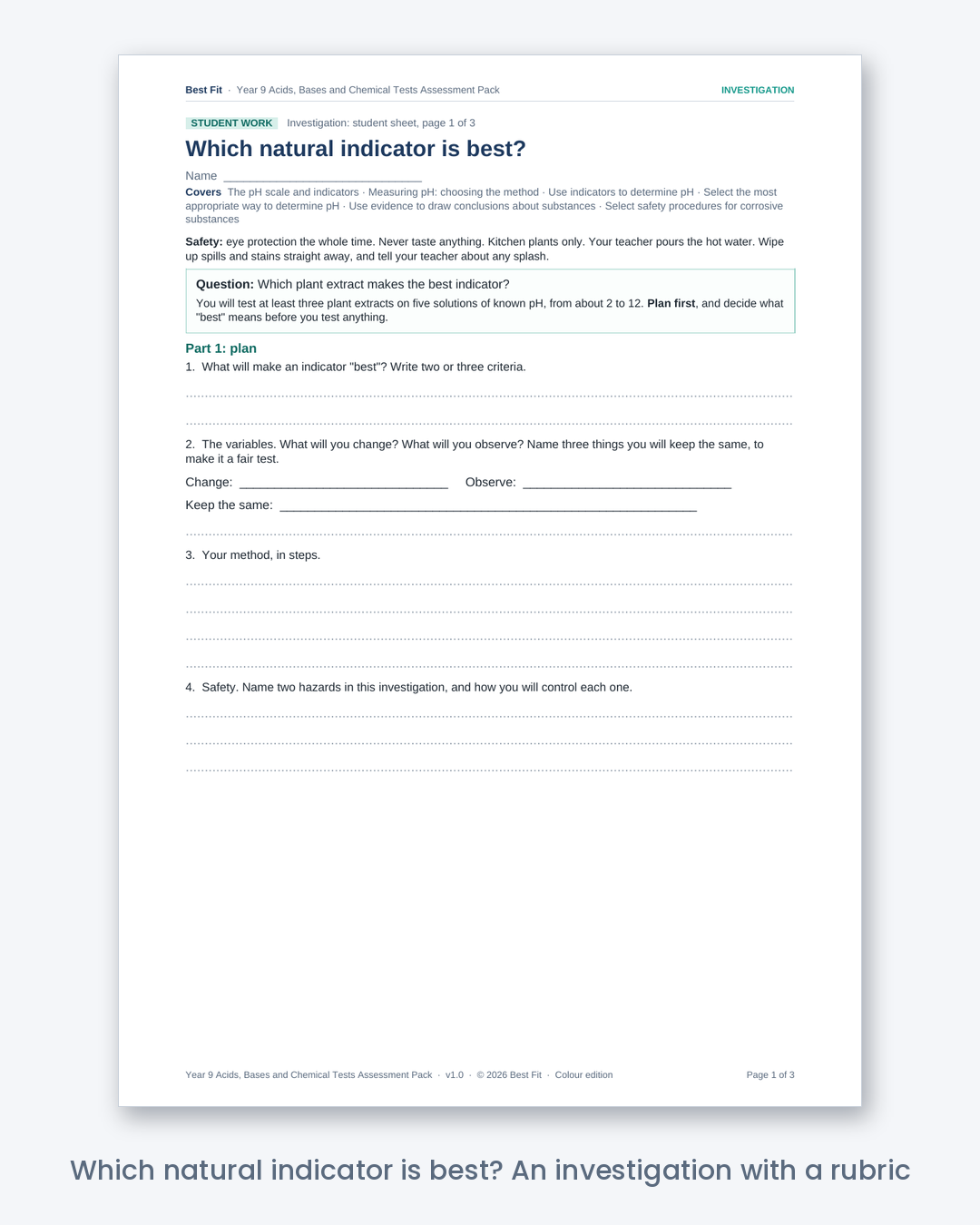
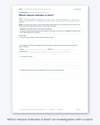
- Student work: eight exit tickets, printed two to a sheet, with teacher keys; four homework tasks with answers; an investigation, "Which natural indicator is best?", with a rubric; a research task, "Corrosive substances at home and at work", with a rubric and checked New Zealand sources.
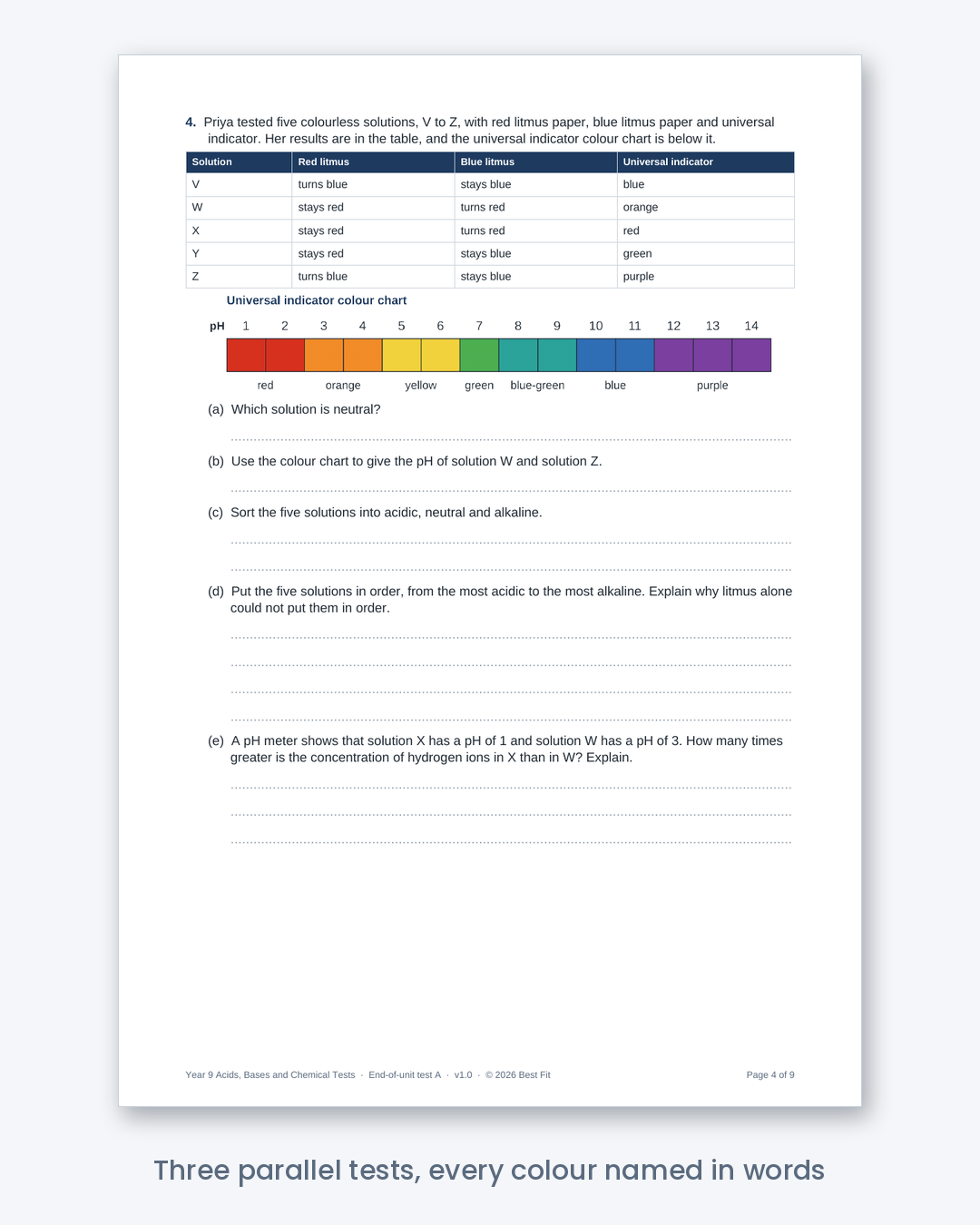
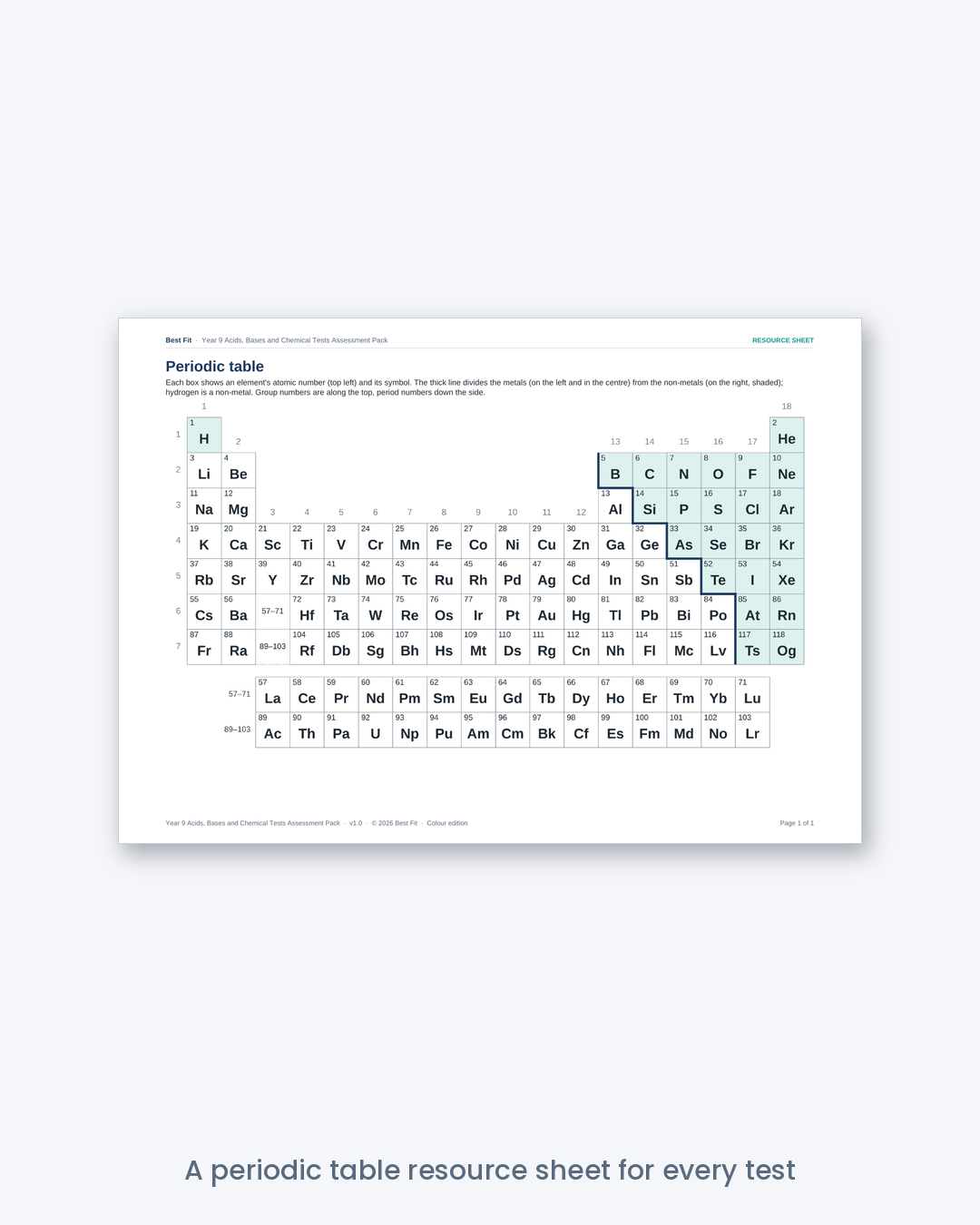
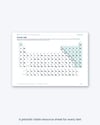
- Assessment results: a periodic table resource sheet, a practice test and parallel end-of-unit tests A and B, each with 36 Year 9 marks and 7 Exceeding marks, marking schedules and cut scores. Editable Word copies let you add your school's logo and name.
- Tracker: an evidence tracker that brings everything together into one best-fit judgement.
Good to know
- Safety habits in every lesson: each practical starts with a briefing to read out, every student sheet repeats it, and every observation checklist starts with "Works safely".
- The periodic table, used to the full: students use position to find the metal in a base, link the alkali metals and alkaline earth metals to the alkalis they make, and use the resource sheet in every test.
- Names, not formulas: neutralisation, word equations, formulas and the tenfold pH scale appear only in Exceeding marks, as a look ahead to Years 10 and 11.
- Every indicator colour is named in words, so the black-and-white edition works and students with colour vision deficiency can take part.
- New Zealand contexts throughout: dairy sheds, pools, building sites and home cleaning cupboards.
- No marks beside the questions on student papers: the marks are in the answers, and every mark names the descriptor it is evidence for.
- Free sample pages available for the Year 9 Electricity Assessment Pack so you can check them out before you buy: https://payhip.com/b/7NAoc
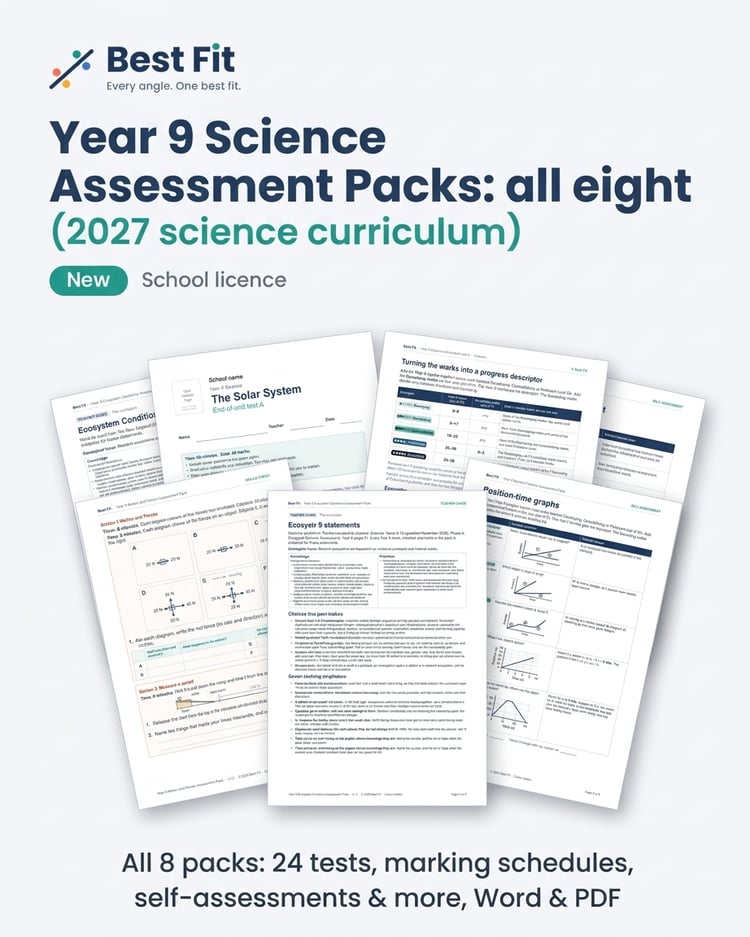
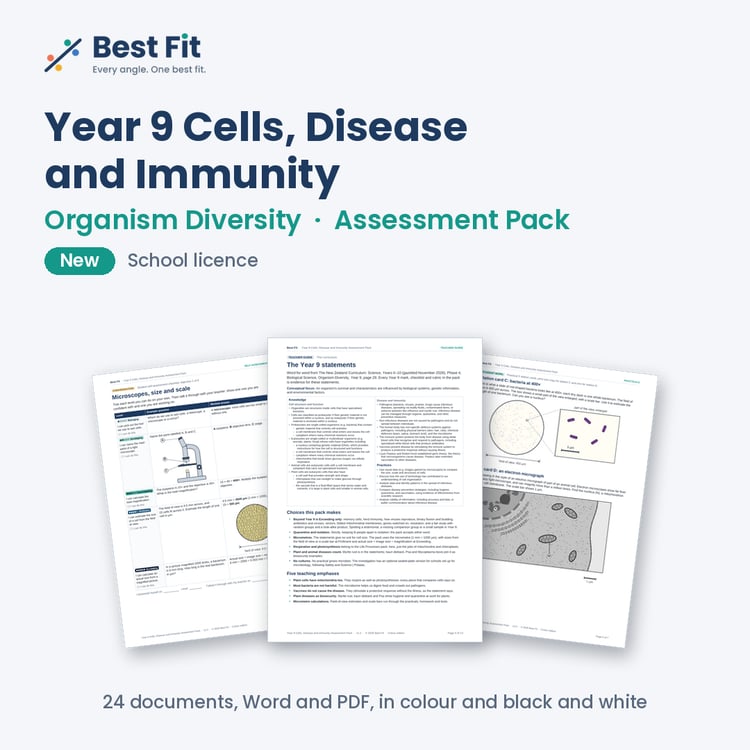
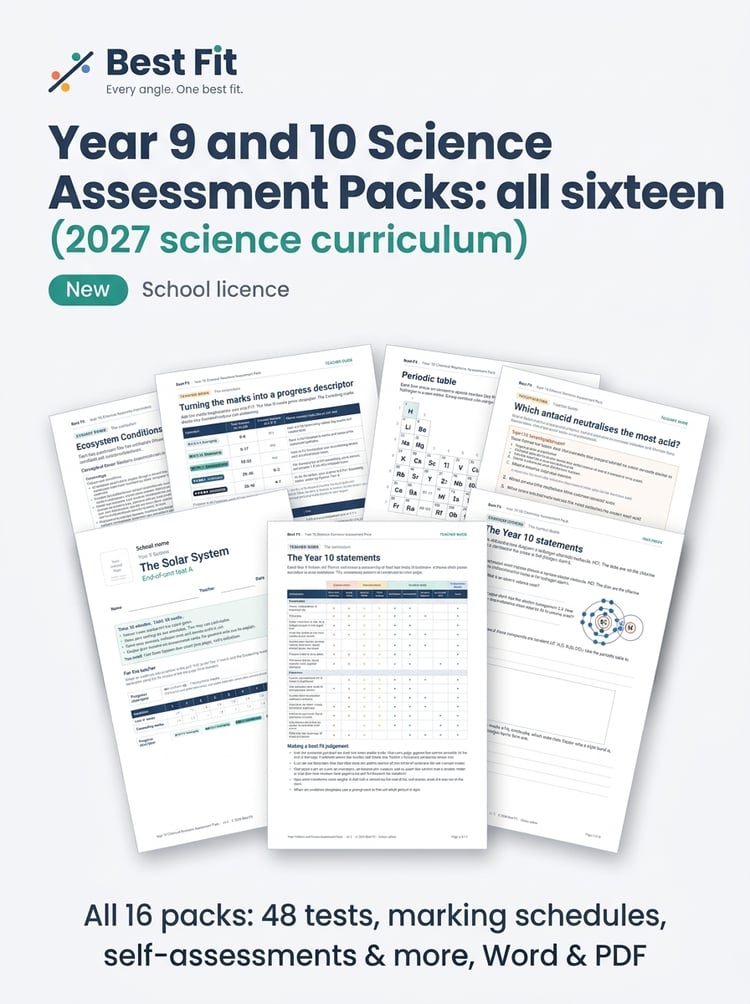
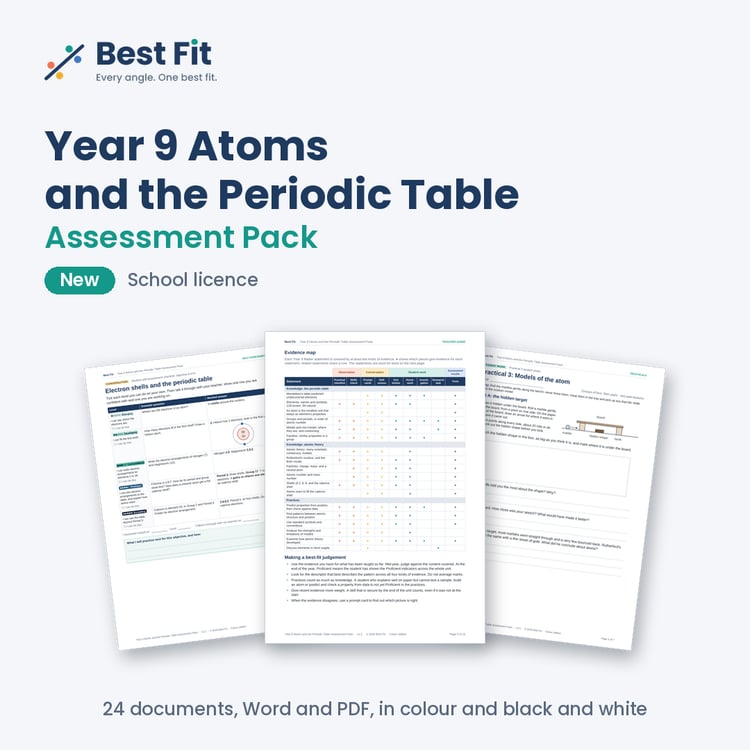
- Pairs with the other Y9 Science Assessment Packs or will all Junior Science Assessment Packs through the bundles.
- Add the report builder upgrade once it is released and it writes copy-ready report comments that fit your reporting system's character limits. [Free sample: https://payhip.com/b/DYCBE]
School licence: every teacher and student at one school may use and copy these files, including on your school's learning platform. Please don't share them outside your school.
Best Fit is not registered for GST.