


Year 9 Cells, Disease and Immunity Assessment Pack: Organism Diversity (2027 science curriculum)
Everything you need to gather and judge evidence for Year 9 Organism Diversity against the five progress descriptors: practicals, conversations, student work and tests.
DESCRIPTION
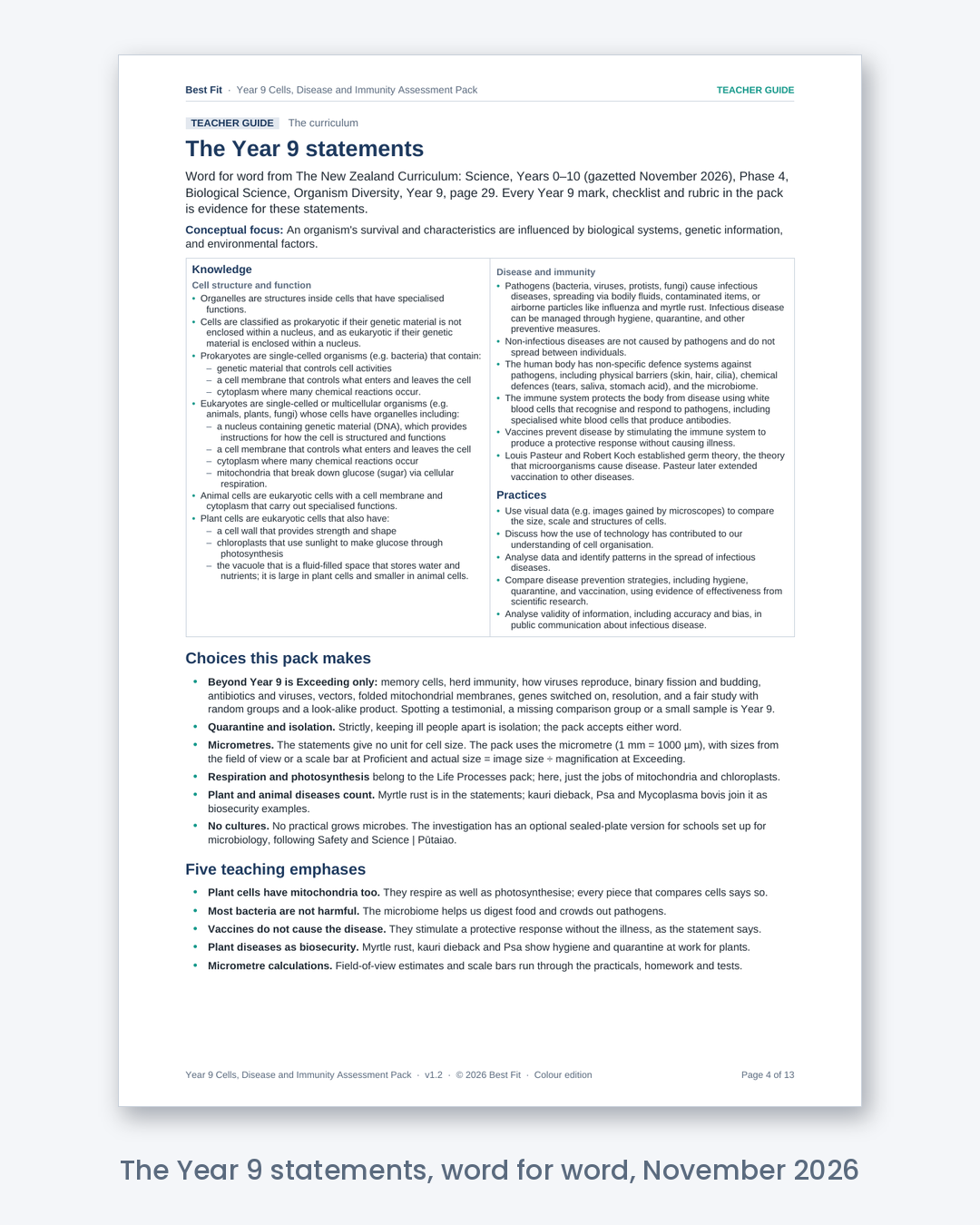
Built for Science Years 0–10 (gazetted November 2026), Phase 4, Biological Science: Organism Diversity (cell structure and function; disease and immunity). Every Year 9 knowledge and practice statement is quoted word for word in the teacher guide and mapped to the evidence that shows it.
Eight sections: microscopes, size and scale · organelles and what they do · plant cells and animal cells · prokaryotes and eukaryotes · pathogens and germ theory · how infectious diseases spread · body defences and the immune system · preventing disease and judging information.
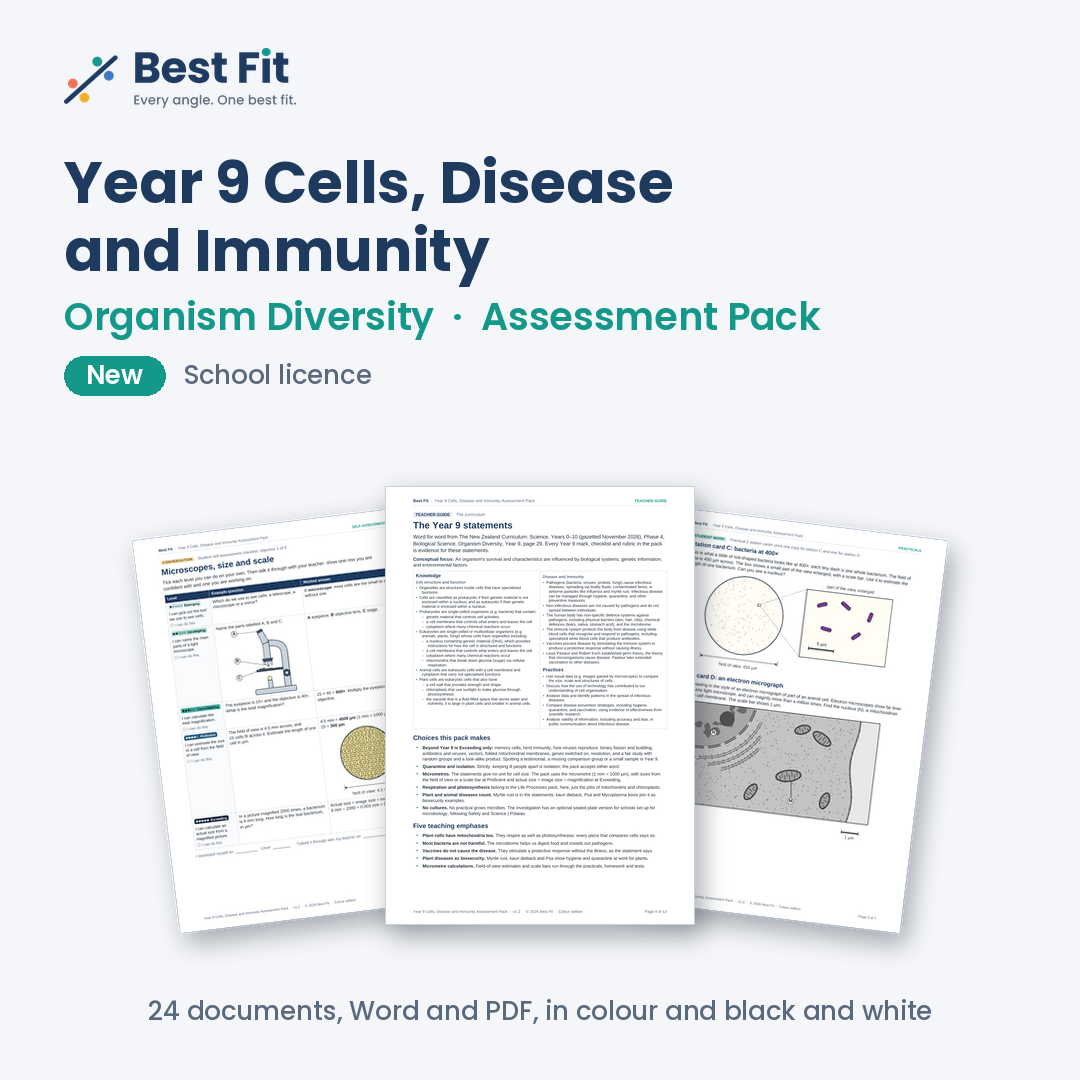
What's inside: 24 documents, each as a Word file and a PDF, in a colour edition and a black-and-white edition.
- Start here: a teacher guide with descriptor indicators for every section, an evidence map, a teaching plan and judgement guides.
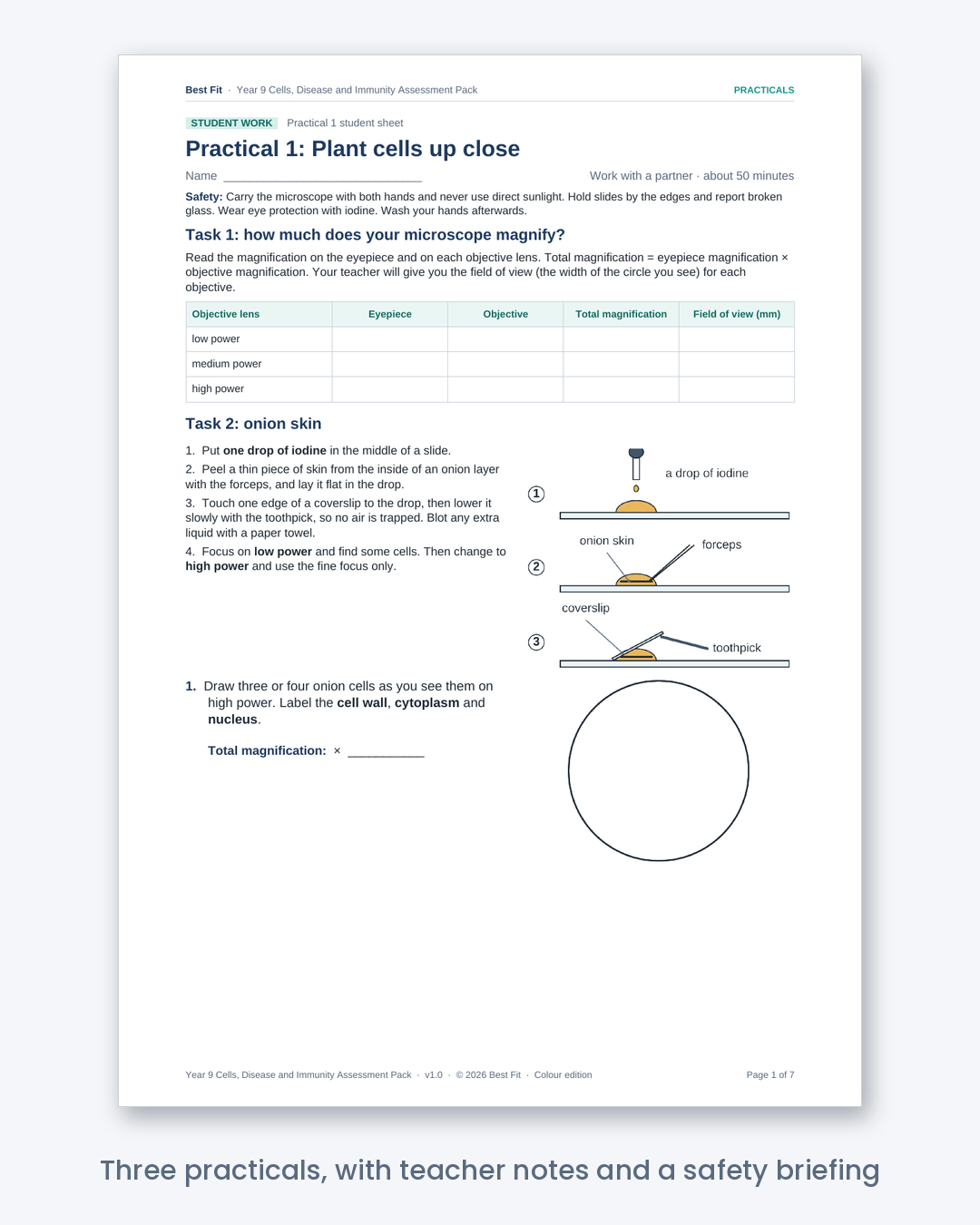
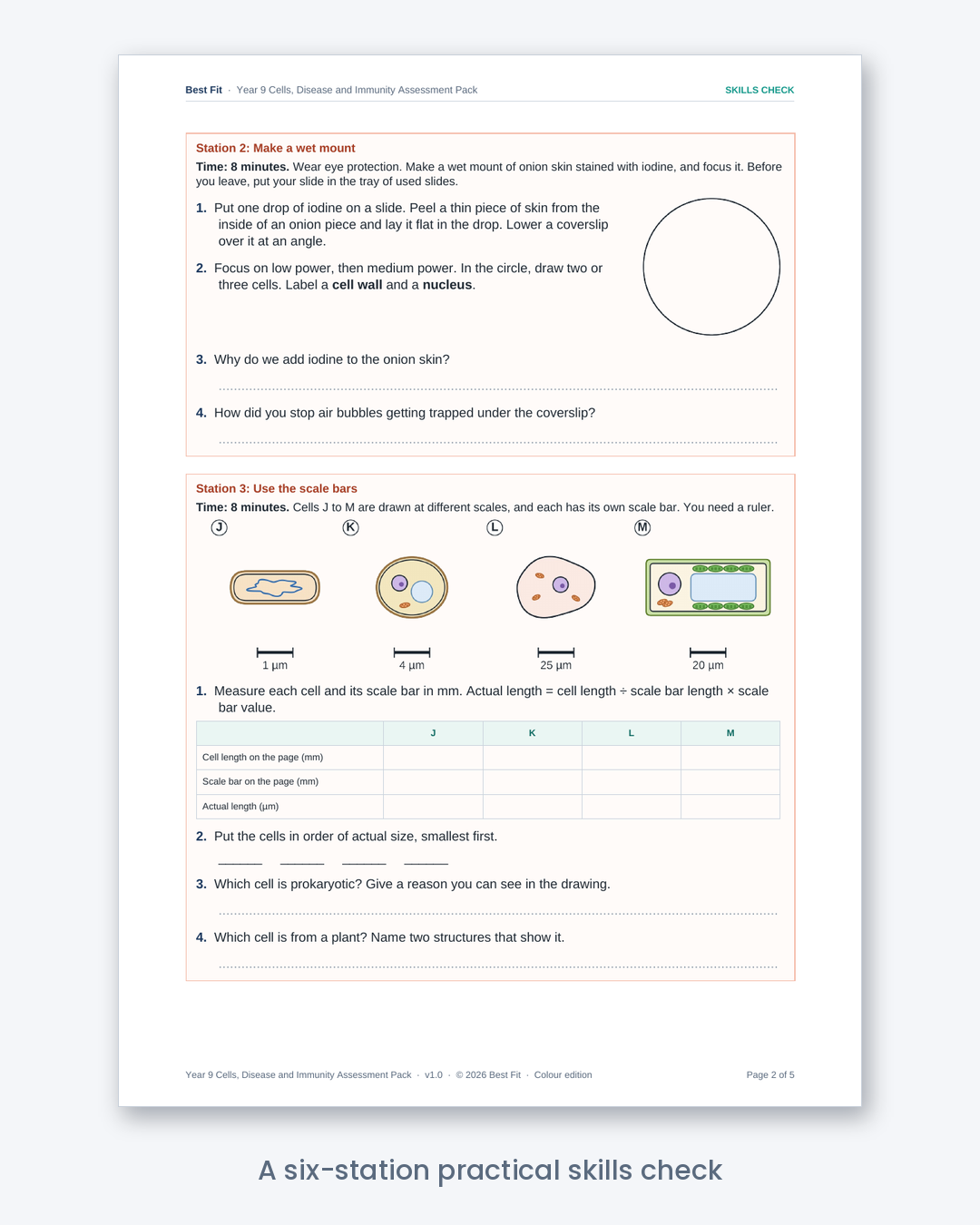
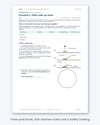
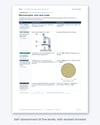
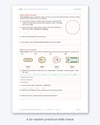
- Observation: three practicals (Plant cells up close · Cells compared · Catch it, trace it: a model outbreak) with teacher notes, safety briefings, student sheets and observation checklists, plus a six-station practical skills check.
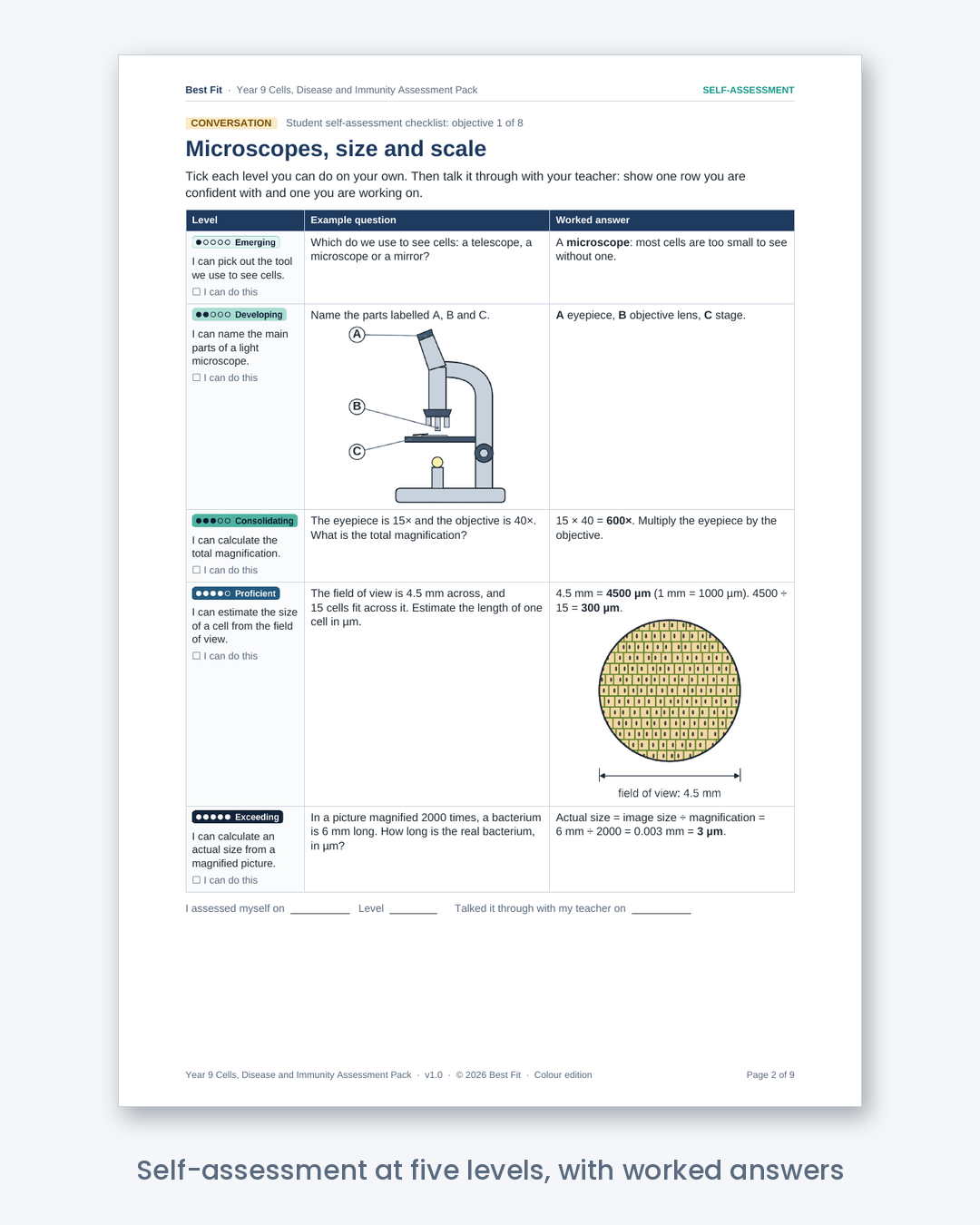
- Conversation: four prompt cards, a self-assessment (eight objectives at five levels, each with an example question and a worked answer) and an I can checklist.
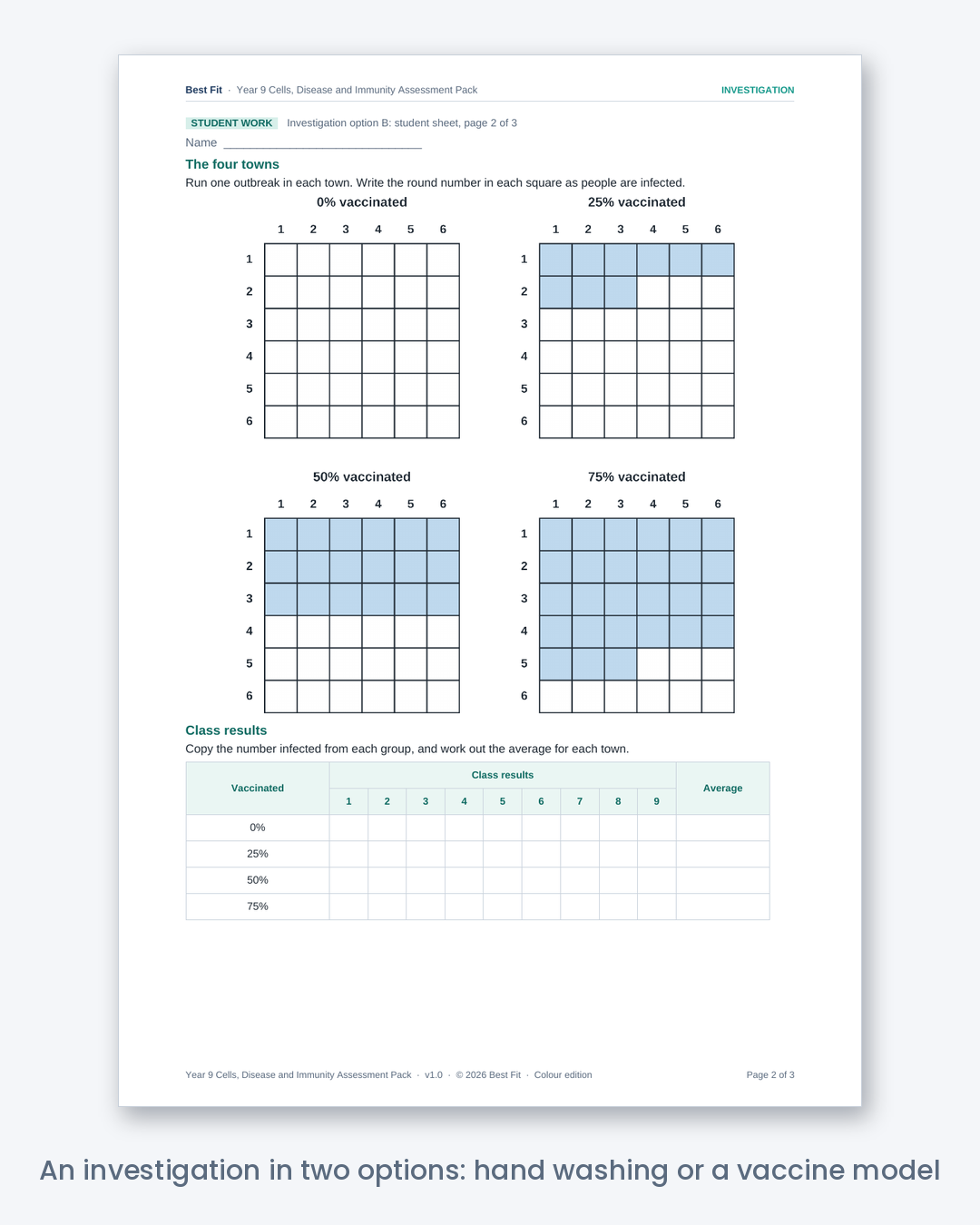
- Student work: eight exit tickets, printed two to a sheet, with teacher keys; four homework tasks with answers; a prevention investigation in two options (how long to wash your hands, with a UV "germ" gel; or how many people need to be vaccinated, with a dice-and-grid model) sharing one rubric; and a research task, "Disease case file", with a rubric.
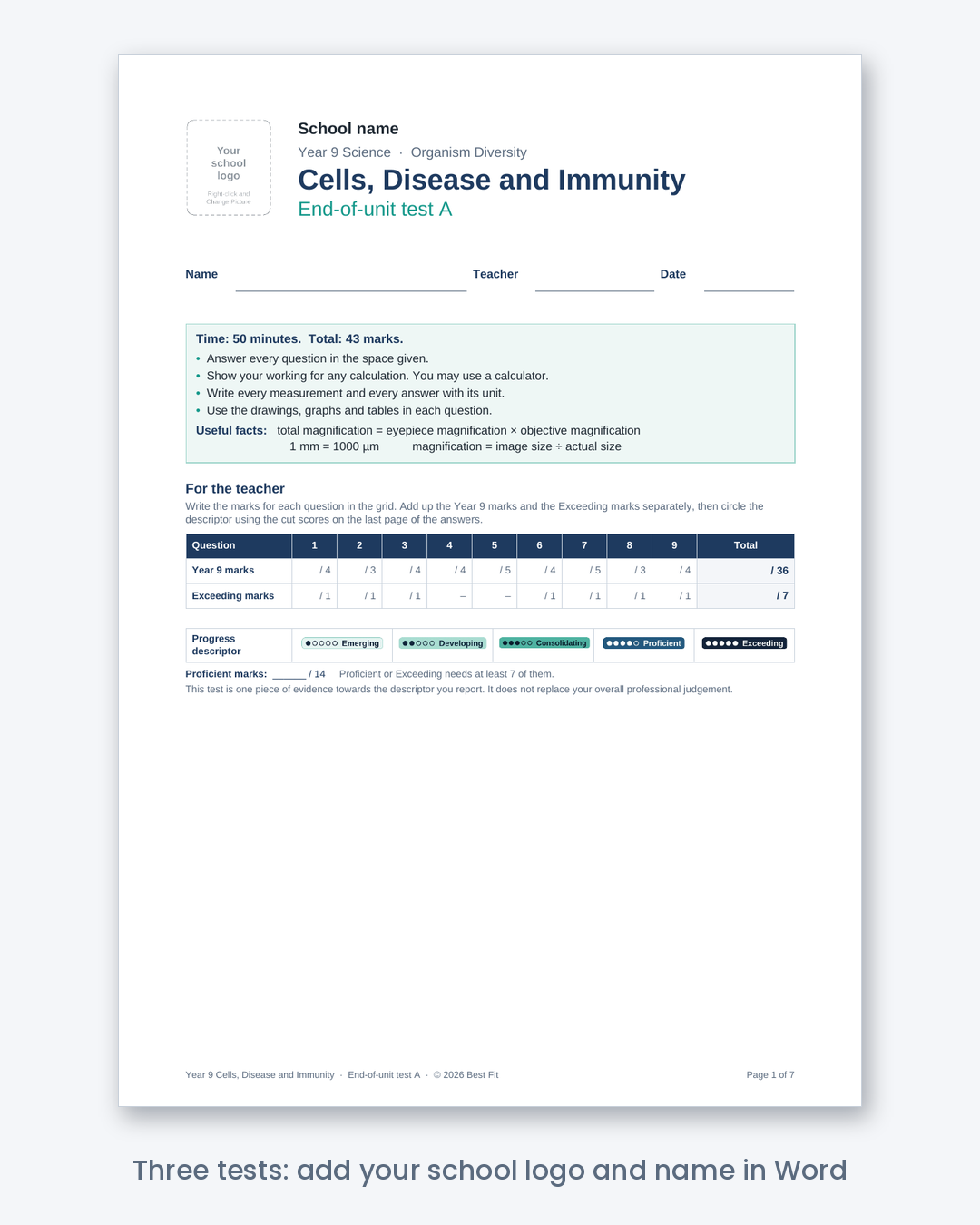
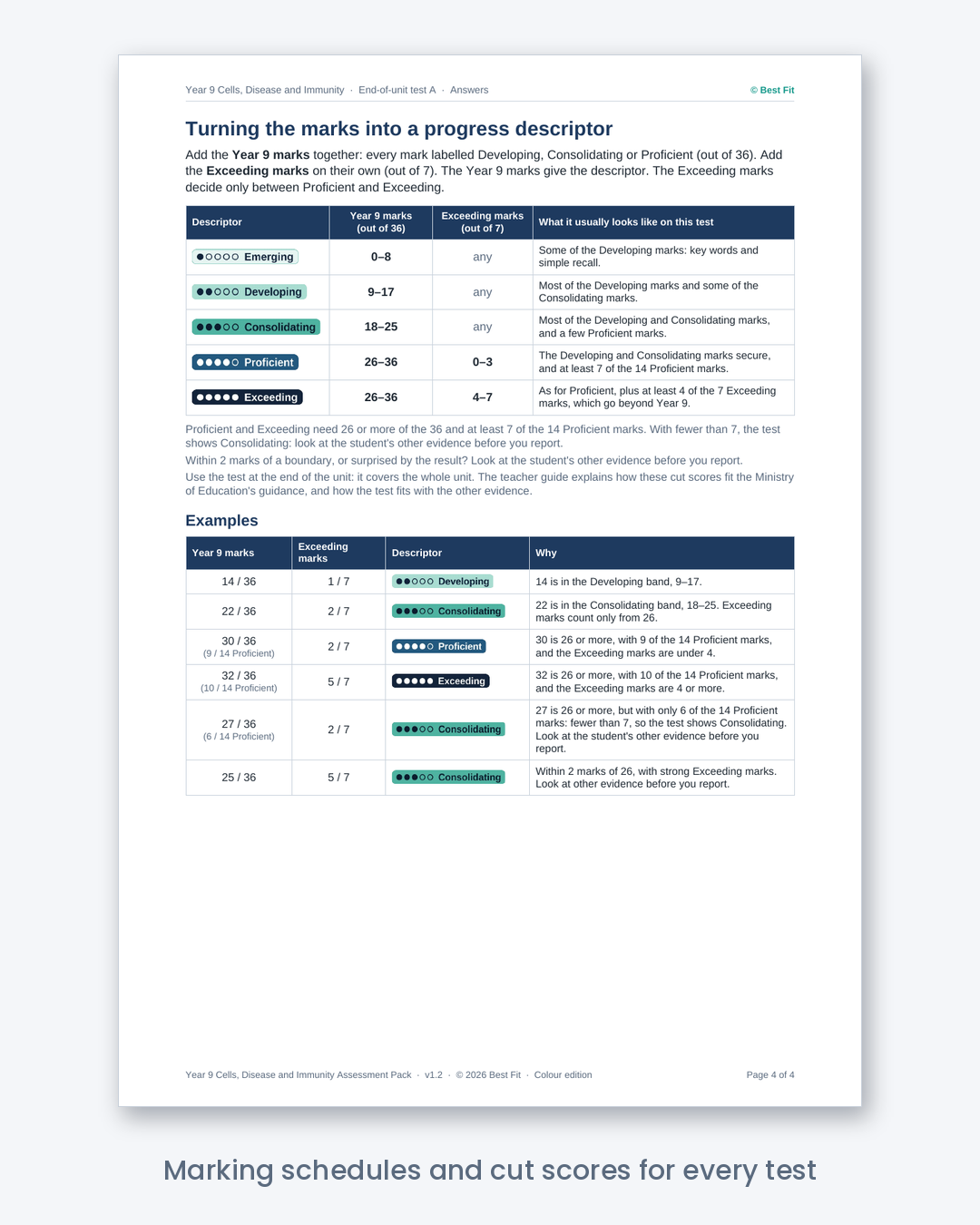
- Assessment results: a practice test and parallel end-of-unit tests A and B, each with 36 Year 9 marks and 7 Exceeding marks, marking schedules and cut scores. Editable Word copies let you add your school's logo and name.
- Tracker: an evidence tracker that brings everything together into one best-fit judgement.
Good to know
- Cell sizes in micrometres, from the field of view and scale bars, all the way through.
- Plant cells have mitochondria too, most bacteria are harmless, and vaccines do not cause the disease: the pack is clear on each.
- Plant diseases as biosecurity: myrtle rust, kauri dieback and Psa.
- No practical grows microbes, and no cells are taken from students. The investigation has an optional sealed-plate version for schools set up for microbiology.
- Evidence-based and neutral: nothing asks students about their own health.
- Ideas beyond Year 9 (memory cells, herd immunity, why viruses are not cells) appear only in Exceeding marks.
- New Zealand contexts throughout. No marks beside the questions on student papers: the marks are in the answers, and every mark names the descriptor it is evidence for.
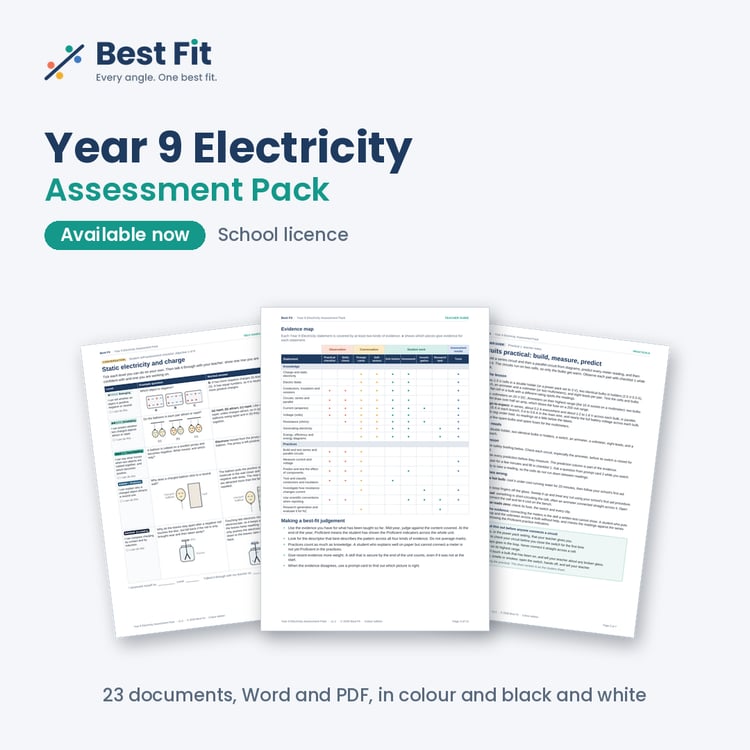
- Free sample pages available for the Year 9 Electricity Assessment Pack so you can check them out before you buy: https://payhip.com/b/7NAoc
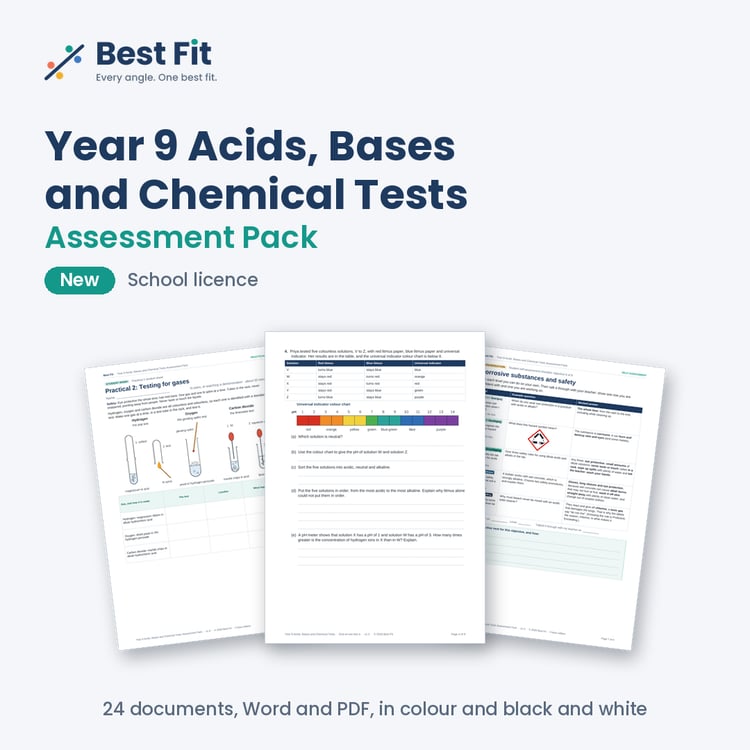
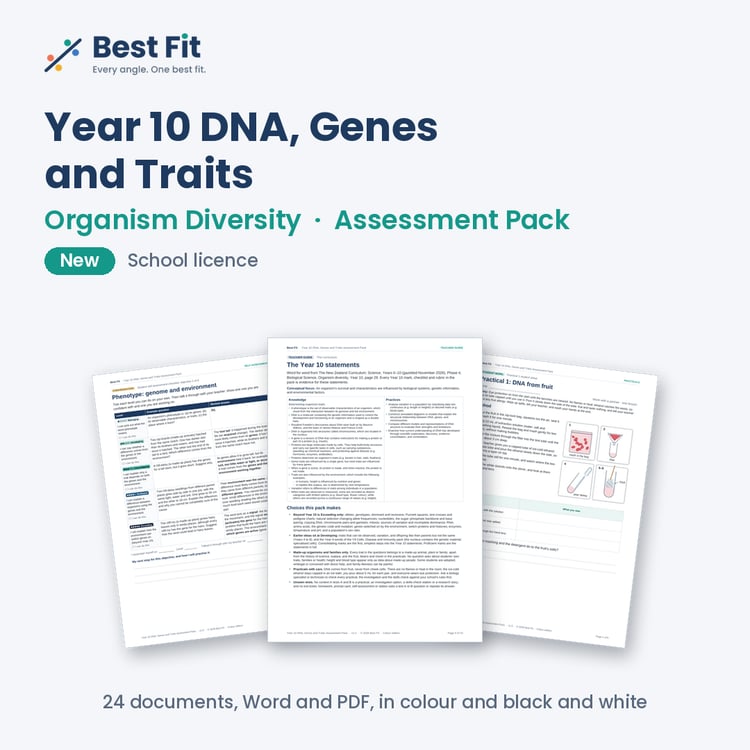
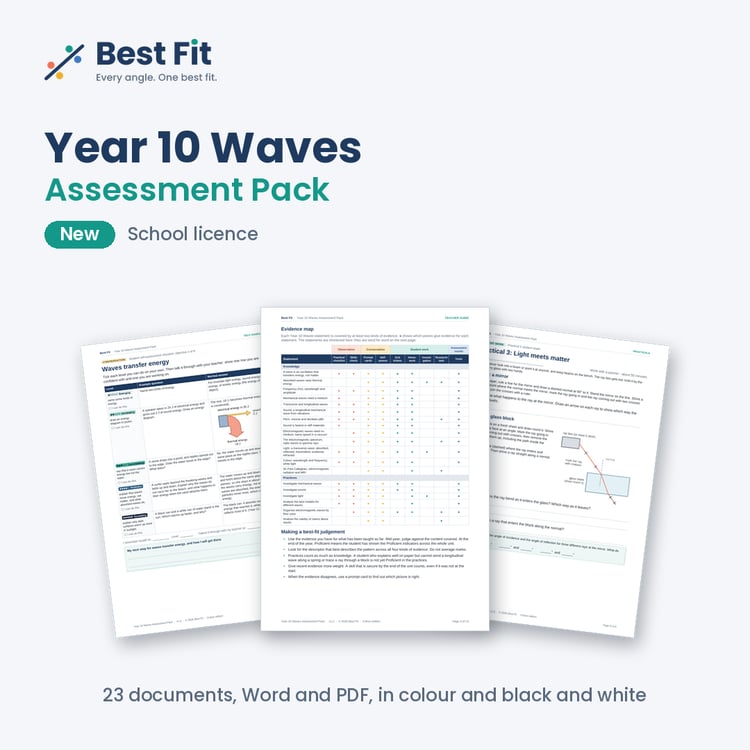
- Pairs with the other Y9 Science Assessment Packs or will all Junior Science Assessment Packs through the bundles.
- Add the report builder upgrade once it is released and it writes copy-ready report comments that fit your reporting system's character limits. [Free sample: https://payhip.com/b/DYCBE]
School licence: every teacher and student at one school may use and copy these files, including on your school's learning platform. Please don't share them outside your school.
Best Fit is not registered for GST.