
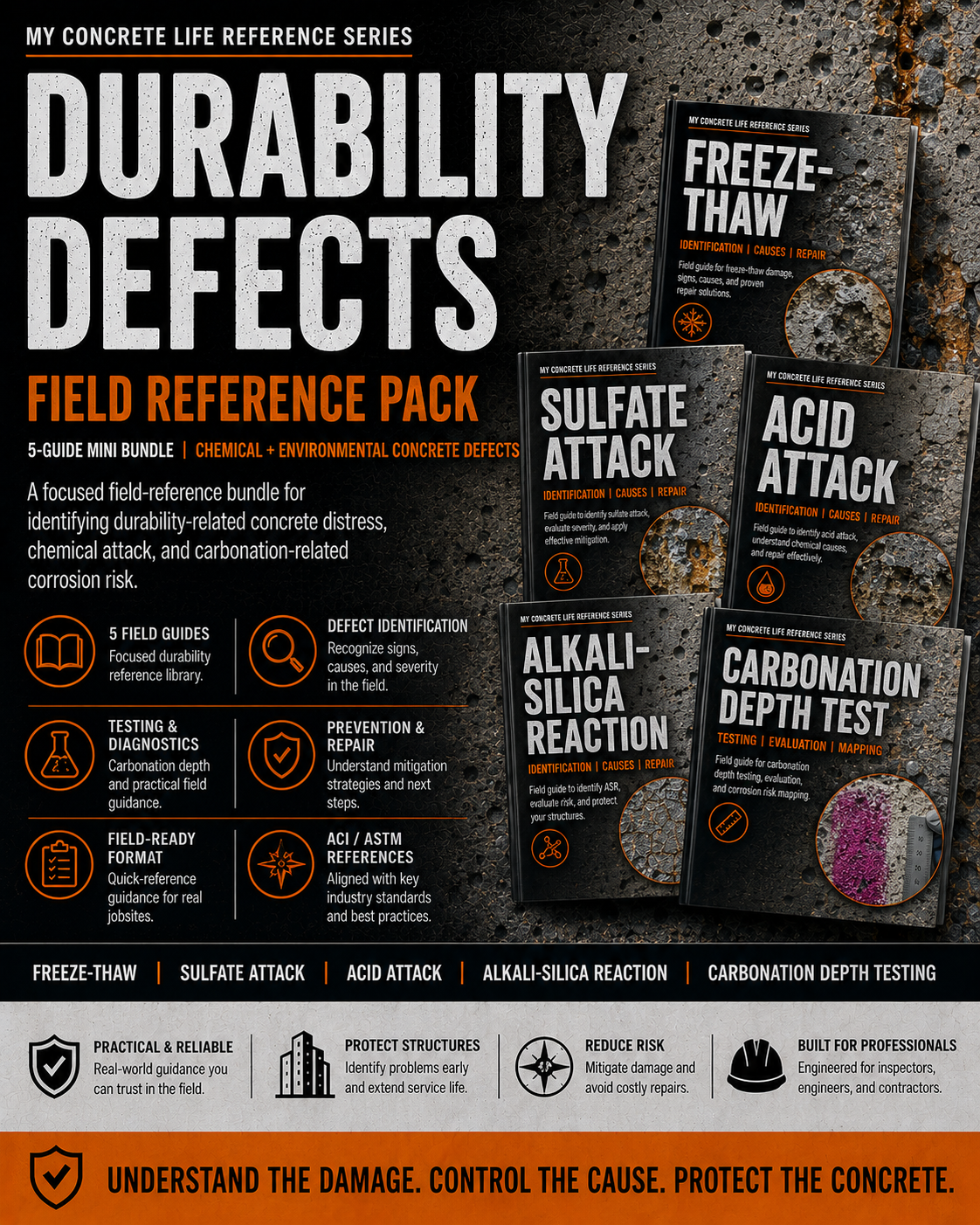
Mini-Bundle: Chemical & Environmental
Concrete Durability Defects Field Reference Pack
Understand the damage. Control the cause. Protect the concrete.
The Concrete Durability Defects Field Reference Pack is a focused 5-guide mini bundle built for identifying some of the most serious chemical, environmental, and durability-related concrete problems in the field.
This pack brings together practical field references for freeze-thaw damage, sulfate attack, acid attack, alkali-silica reaction, and carbonation depth testing. These are not simple appearance defects. They can affect service life, durability, reinforcement protection, surface integrity, and long-term performance if they are misunderstood or ignored.
This bundle is designed for concrete inspectors, contractors, QC technicians, ready-mix producers, engineers, repair crews, maintenance teams, and field personnel who need a clear way to recognize damage, understand likely causes, document the condition, and choose the correct next step.
What’s Included
This mini bundle includes 5 focused concrete durability guides:
- Freeze-Thaw Concrete Defect Field Reference
- Sulfate Attack Concrete Defect Field Reference
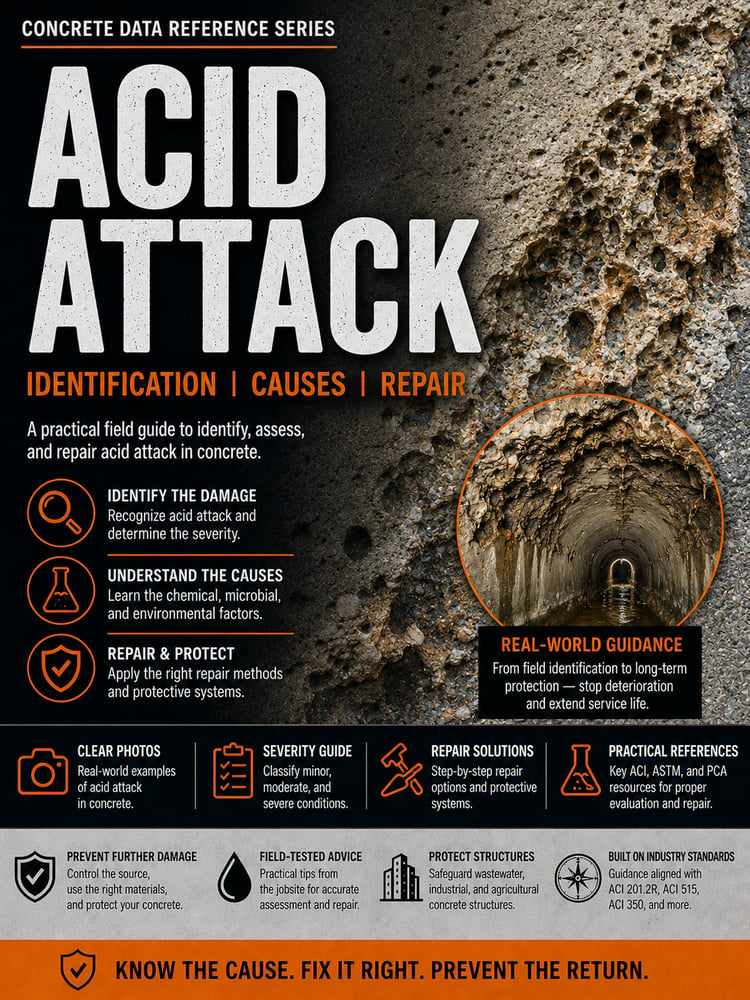
- Acid Attack Guide
- Alkali-Silica Reaction Guide
- Carbonation Depth Testing Guide
Together, these guides cover common durability threats caused by moisture, chemical exposure, reactive materials, environmental cycling, and loss of concrete alkalinity.
Built for Real Field Use
This bundle helps answer the questions that matter on site:
Is this surface scaling or freeze-thaw distress?
Could soil, groundwater, wastewater, or industrial exposure be attacking the concrete?
Is map cracking just surface crazing, or could it be ASR?
Has carbonation reached the reinforcement cover?
Does this need monitoring, testing, repair, source control, protection, or engineering review?
Each guide is written in practical field language and is organized to help users identify the defect, understand the cause, judge severity, and decide what action should come next.
What This Pack Helps With
- Identifying chemical and environmental concrete deterioration
- Recognizing freeze-thaw damage, scaling, cracking, and surface loss
- Understanding sulfate exposure and expansion-related distress
- Identifying acid attack, softened paste, exposed aggregate, and section loss
- Recognizing ASR map cracking, gel staining, pop-outs, and expansion
- Performing and interpreting carbonation depth testing
- Comparing carbonation depth to reinforcement cover
- Understanding when further testing or engineering evaluation is needed
- Supporting better inspection notes, repair planning, and field documentation
Best For
- Concrete inspectors
- Contractors and repair crews
- Ready-mix producers
- QC / QA personnel
- Field technicians
- Engineers and engineering support staff
- Facility maintenance teams
- Wastewater, agricultural, industrial, and infrastructure personnel
- Anyone responsible for identifying durability-related concrete damage
Why This Bundle Matters
Durability defects often look similar at first glance, but the cause matters. Freeze-thaw damage, sulfate attack, acid attack, ASR, and carbonation-related corrosion risk require different responses. Cleaning, patching, or sealing without understanding the real mechanism can lead to repeat damage, wasted repair money, and continued deterioration.
The Concrete Durability Defects Field Reference Pack gives users a practical way to slow down, identify the likely cause, document the evidence, and decide whether the condition needs monitoring, protection, testing, repair, or professional evaluation.
Practical Value
This pack is ideal for field crews and concrete professionals who want a smaller, focused reference set without buying the full 21-guide library. It concentrates on the chemical and environmental issues that can reduce service life and lead to costly repairs if missed.
Use it for inspections, troubleshooting, training, report support, maintenance planning, and field reference.
Important Note
These guides are educational and informational field references. They do not replace ASTM standards, ACI documents, project specifications, laboratory testing, engineering judgment, or qualified professional evaluation. Final repair decisions should be based on the actual condition, exposure, structure type, test results, and applicable standards.