
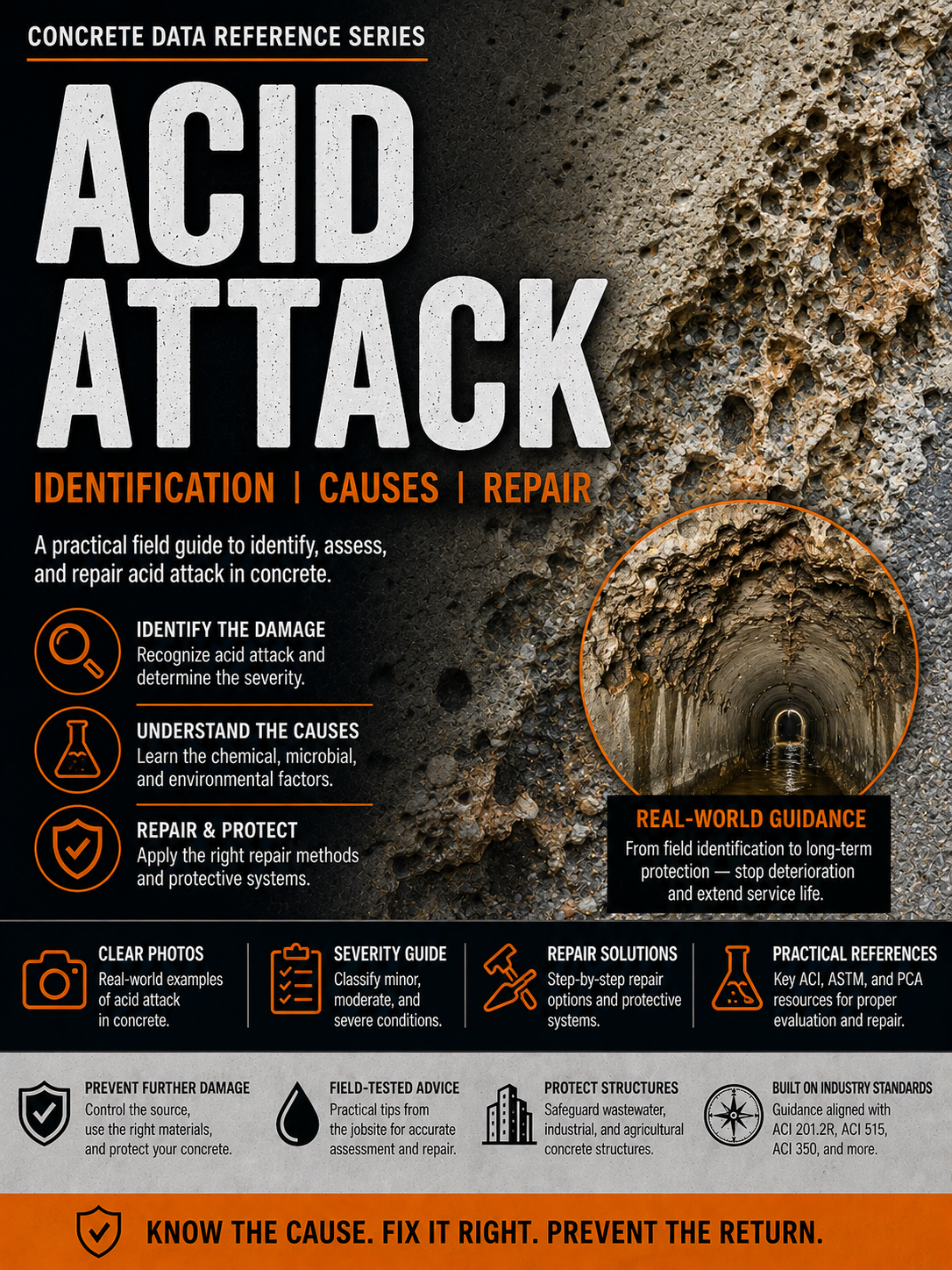
Concrete Defects - Acid Attack
Acid Attack Guide —
Identify acid attack in concrete before surface damage turns into section loss, exposed steel, and expensive repairs.
Acid attack is one of the most destructive chemical deterioration problems in concrete. Once acidic exposure begins dissolving the cement paste, the surface can soften, erode, expose aggregate, and continue deteriorating until the source is controlled. This guide gives contractors, inspectors, technicians, producers, and maintenance teams a clear field reference for recognizing acid attack, understanding the cause, judging severity, and selecting the right next step.
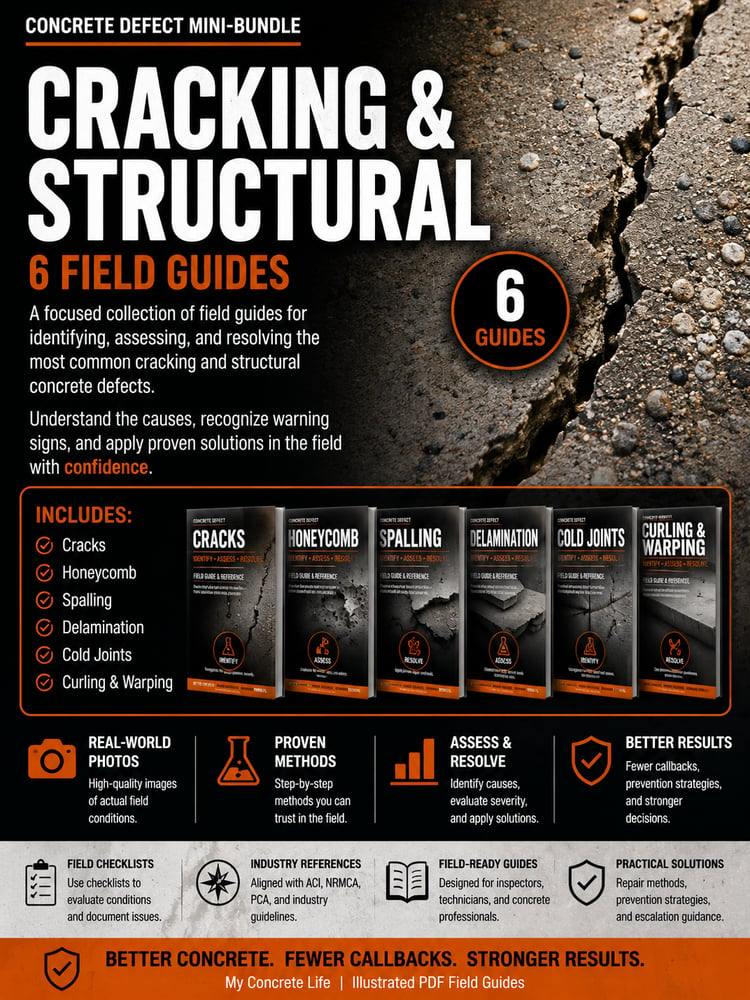
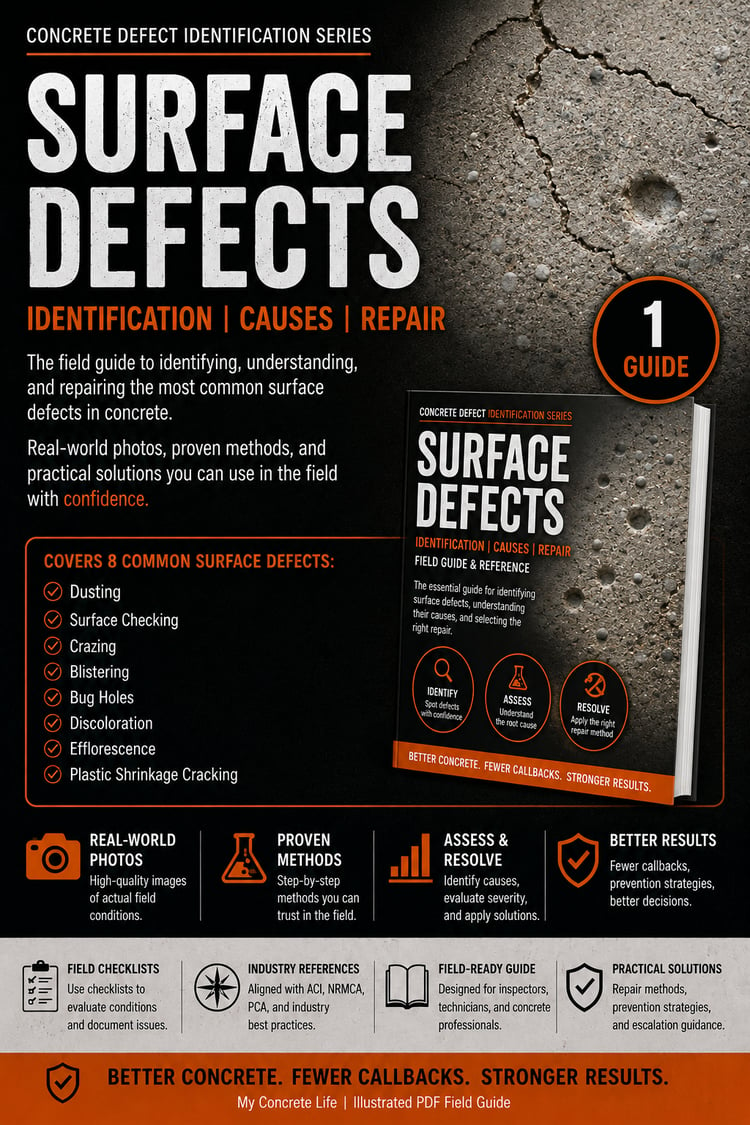
The Acid Attack Guide is part of the My Concrete Life Concrete Defect Identification Bundle and is built for real-world use — not textbook theory. It explains what acid attack looks like in the field, where it commonly occurs, why ordinary concrete struggles in aggressive acid environments, and when protective barriers, coatings, linings, or engineering evaluation are needed.
Inside, you’ll find practical guidance for identifying acid-etched, softened, roughened, or aggregate-exposed concrete surfaces, along with common exposure sources such as wastewater systems, agricultural environments, food processing, industrial acid exposure, acidic groundwater, and sewer crown corrosion. The guide also includes severity levels, escalation rules, repair considerations, prevention methods, cost impacts, ASTM/ACI references, and a field inspection checklist.
What’s Included
- Clear explanation of what acid attack is and why it damages concrete
- Field signs to look for, including softened paste, exposed aggregate, discoloration, erosion, and section loss
- Common causes such as industrial acids, acidic groundwater, manure/silage exposure, food processing acids, and biogenic sulfuric acid in sewers
- Minor / moderate / severe classification guidance
- Universal escalation rules for conditions that require professional evaluation
- Quick field decision path for repair, protection, or engineering review
- Prevention strategies including source control, drainage, chemical-resistant coatings, linings, and low-permeability concrete
- Repair options for surface deterioration and structural damage
- “If left unrepaired” cost-impact section
- ASTM / ACI / PCA / ICRI reference list
- At-a-glance action table and field inspection checklist
Built for Field Use
This guide is designed to help you quickly answer the questions that matter on site:
Is this just surface etching, or is the concrete actively deteriorating?
Is the acidic exposure still present?
Has section loss or reinforcement exposure occurred?
Does this need sealing, source control, protective lining, or engineering evaluation?
Instead of guessing, this guide walks you through the visual signs, severity levels, escalation triggers, and recommended actions in a simple, organized format.
Best For
- Concrete inspectors
- Contractors and repair crews
- Ready-mix and QC professionals
- Wastewater and utility maintenance teams
- Agricultural and industrial facility personnel
- Engineering support staff
- Field technicians
- Anyone building a concrete defect reference library
Why This Guide Matters
Acid attack does not stop on its own. If the acidic exposure continues, the concrete keeps dissolving. A patch without source control or a protective barrier can fail quickly. This guide helps users recognize that difference early, document the condition properly, and understand when the repair needs to go beyond a basic surface fix.
The Acid Attack Guide gives you a practical, field-ready way to identify chemical deterioration, understand the likely cause, classify severity, and choose the right next step before the damage gets worse.
Know the cause. Fix it right. Prevent the return.