
Seller Bookkeeping & Tax Estimate Spreadsheet 2027
2027 records, filed in 2028.
Keep organized records in one place – for sellers who sell on more than one platform.
This bookkeeping and tax-estimate organizer is a spreadsheet for small online and craft sellers who want all their 2027 sales, fees, refunds and expenses in one file – and a clear idea of how much to set aside for taxes during the year.
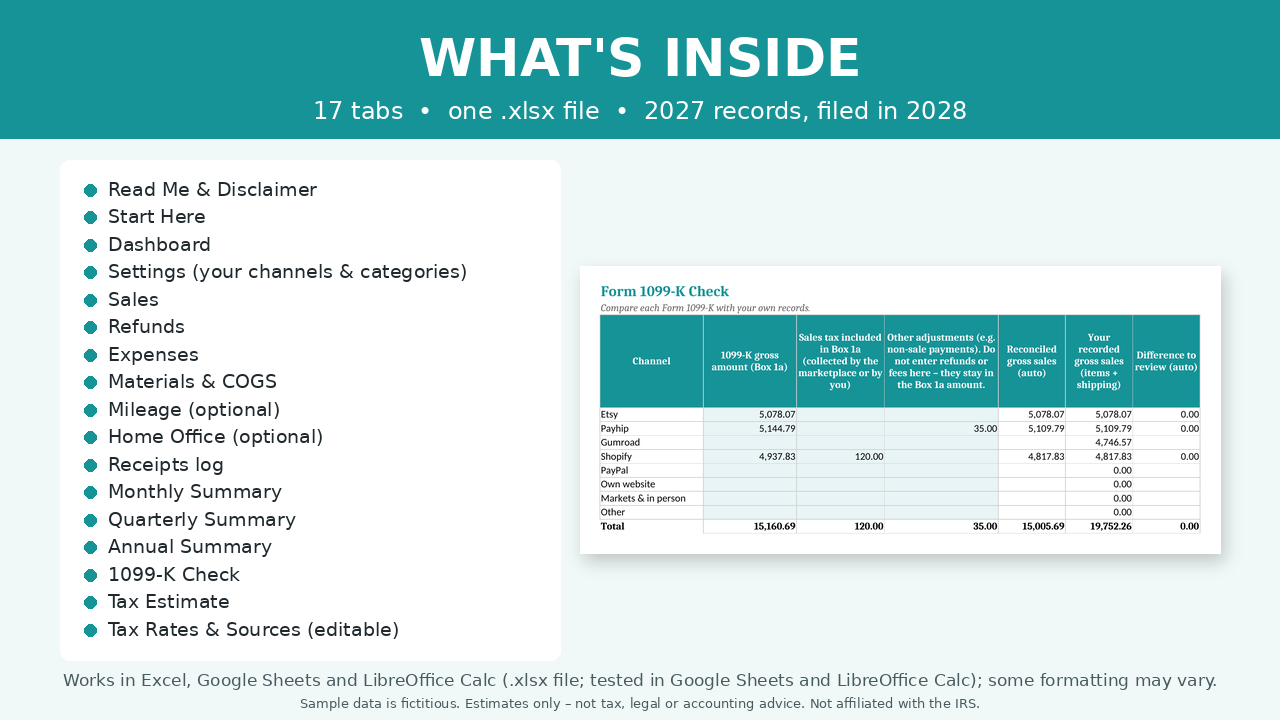
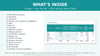
What's inside (17 tabs)
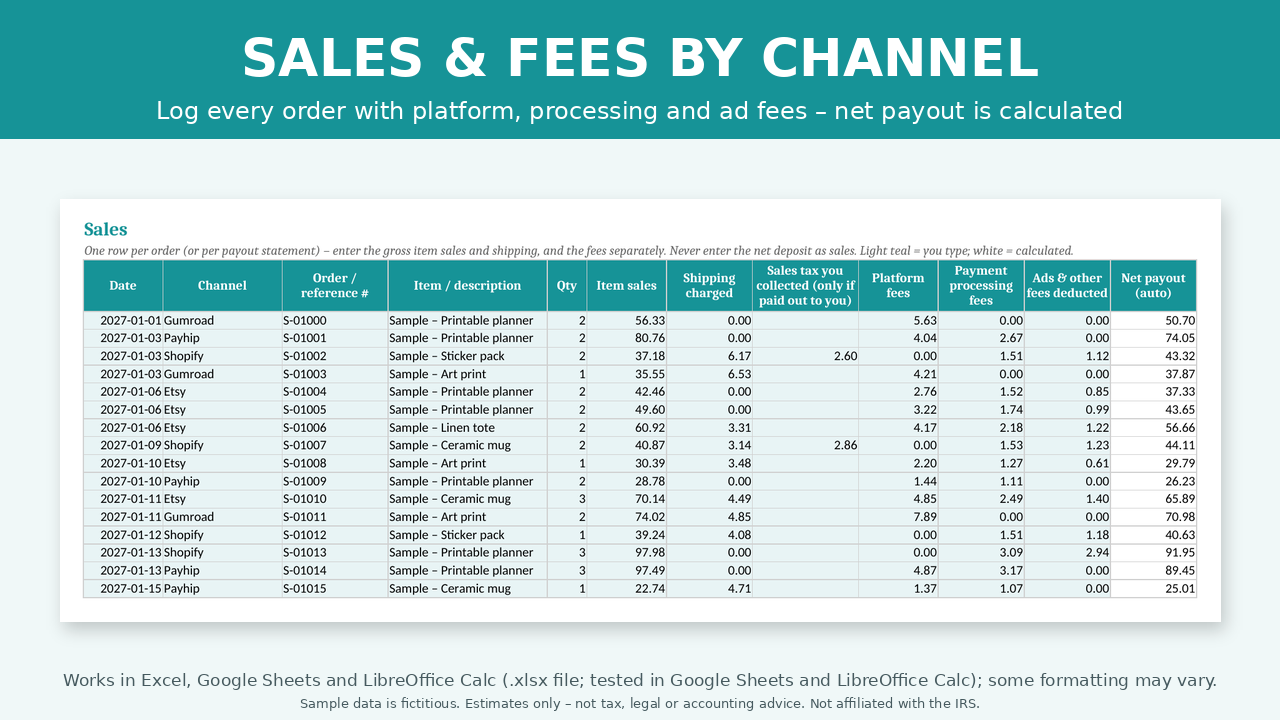
- Sales log – one row per order (or per payout statement): gross item sales, shipping, sales tax you collected, and platform fees, payment processing fees and ad fees entered separately (never the net deposit as sales). Net payout is calculated for you.
- Pre-labeled sales channels you can rename (up to 10), so every channel gets its own totals.
- Refunds – refunds to buyers and fees returned to you.
- Expenses by category – 23 editable categories, business-use %, receipt ID and receipt status. Business meals are counted at the deductible share you set (50% starting value – an estimate to verify with your tax professional).
- Materials & COGS – materials, packaging and inventory purchases, with start/end inventory counts in the Annual Summary.
- Optional Mileage and Home Office tabs – log business trips at the rate you choose, and workspace costs with an area-share or flat-rate option.
- Receipts log – numbered receipt IDs linked to your expense rows, so you can see which receipts are missing.
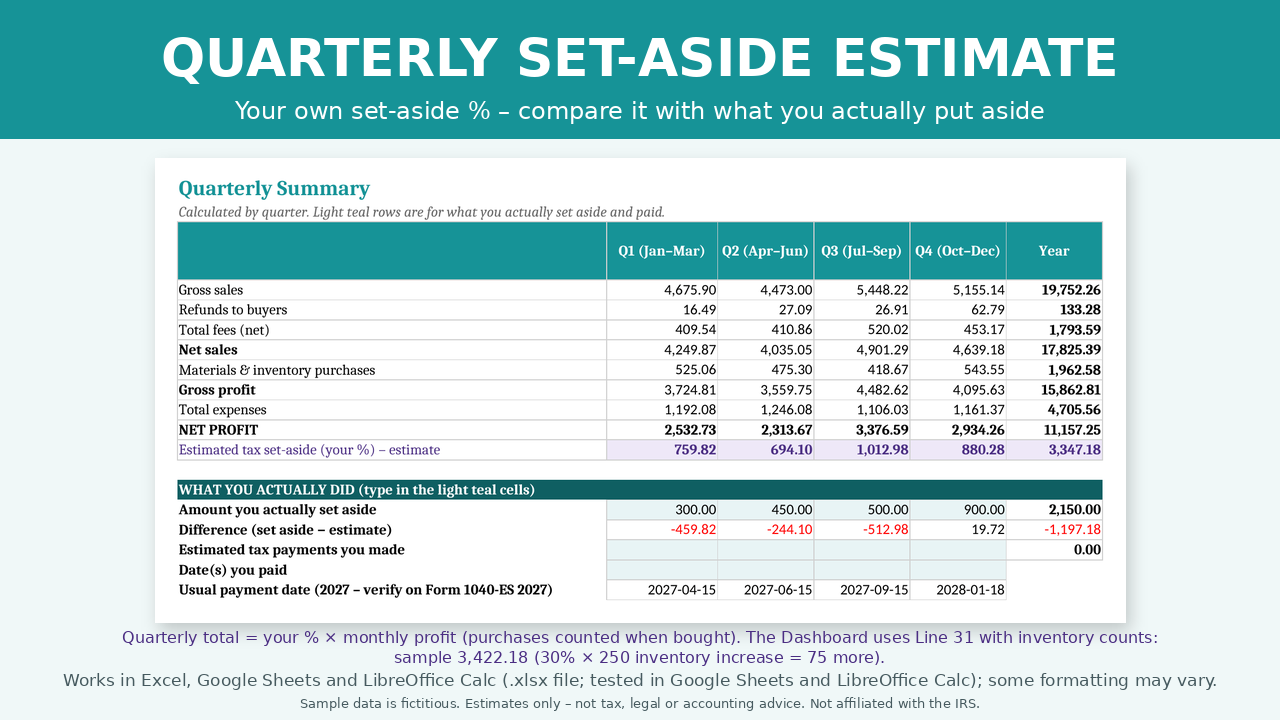
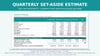
- Monthly and Quarterly Summaries – gross sales, refunds, fees, net sales, expenses and net profit, plus an estimated tax set-aside at the percentage you choose.
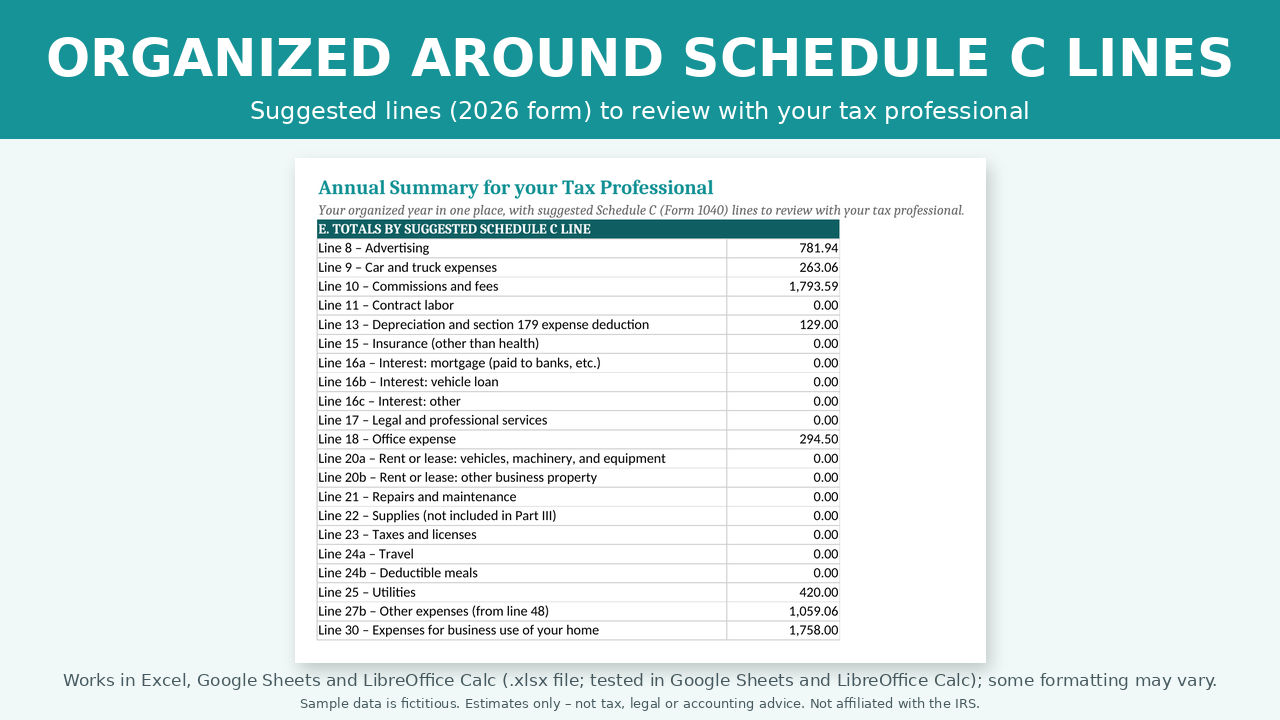
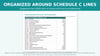
- Annual Summary for your tax professional – your year organized around IRS form categories, with suggested Schedule C (Form 1040) lines (from the 2026 form – verify line numbers on the current form) and a documents checklist.
- Form 1099-K check – enter the 1099-K gross amount (Box 1a) for each channel and compare it with your own records. The 1099-K amount is not your taxable income.
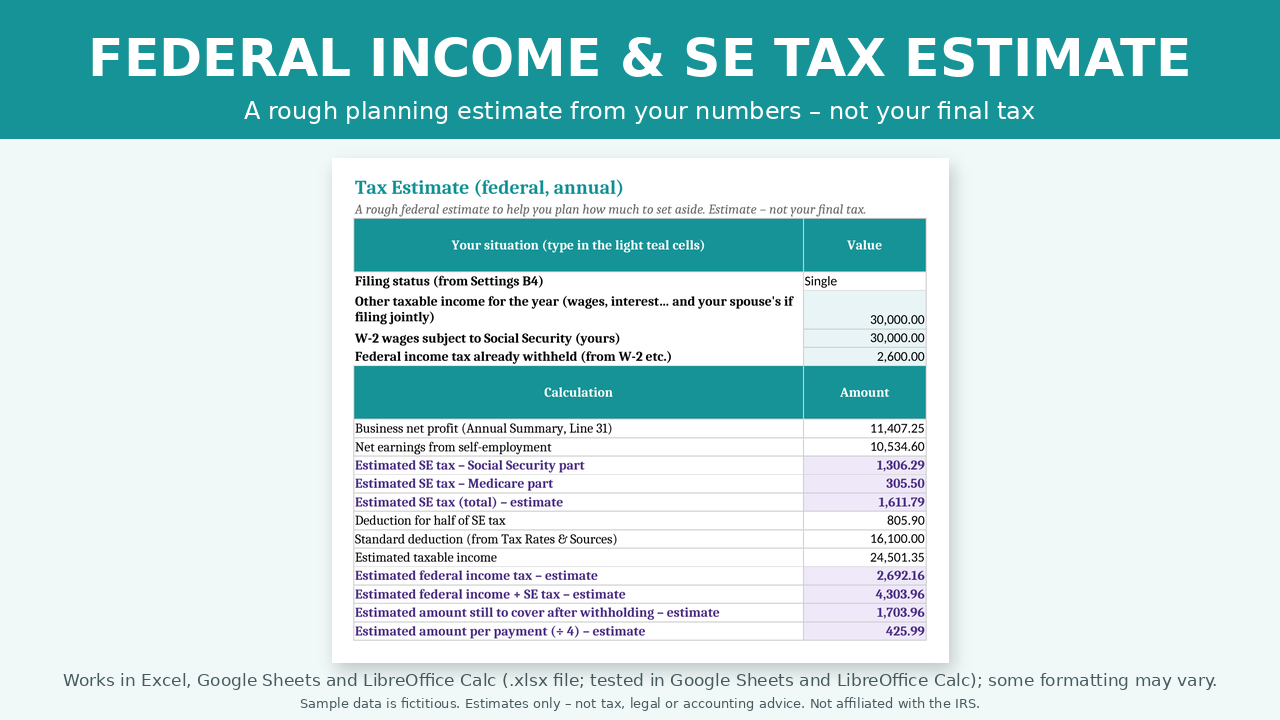
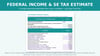
- Tax Estimate – estimated federal income and self-employment tax set-aside for planning, and an estimate of how much to set aside for quarterly estimated taxes (Form 1040-ES).
- Tax Rates & Sources – every rate and amount the formulas use, with year, IRS.gov/SSA.gov source link and date checked. All values are editable, so you can update them when the IRS publishes the 2027 figures (the standard deduction and brackets are the 2026 official amounts until then).
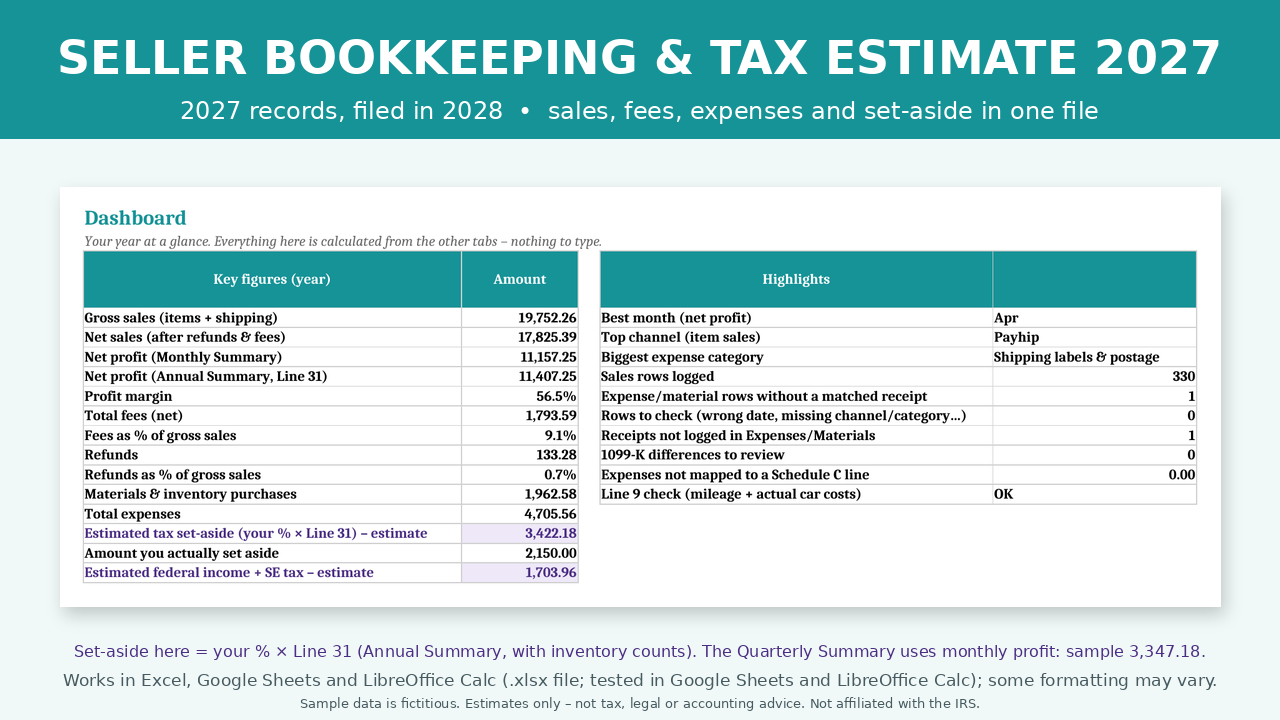
- Dashboard – key figures, best month, top channel, biggest expense category and counts of rows that need your attention.
- Read Me & Disclaimer and Start Here – step-by-step instructions and a color key.
Good to know
- You type or paste your numbers; there is no automatic import.
- Track sales tax collected separately from your income (the file does not handle sales tax filing).
- Federal only. Does not calculate state or local taxes, credits, the QBI deduction or penalties – see the Read Me tab.
- Hand your tax professional organized numbers at the end of the year.
Compatibility
Works in Excel, Google Sheets and LibreOffice Calc (.xlsx file; tested in Google Sheets and LibreOffice Calc); some formatting may vary.
What you get: one .xlsx file (no sample data – the screenshots use fictitious sample numbers).
Important: This spreadsheet is an organizational and record-keeping tool, not tax, legal or accounting advice. Tax figures it shows are estimates based on the data you enter and on the rates and thresholds listed in the Tax Rates & Sources tab (2026 official figures where 2027 ones were not yet published), which may change. Please review your return with a CPA, enrolled agent or other qualified tax professional. Not affiliated with or endorsed by the IRS, Etsy, eBay, Amazon, Shopify, PayPal, Stripe, Payhip or Gumroad.
Seller information: https://payhip.com/SellerSheetsLab/seller-information · Terms of Sale: https://payhip.com/SellerSheetsLab/terms-of-sale