
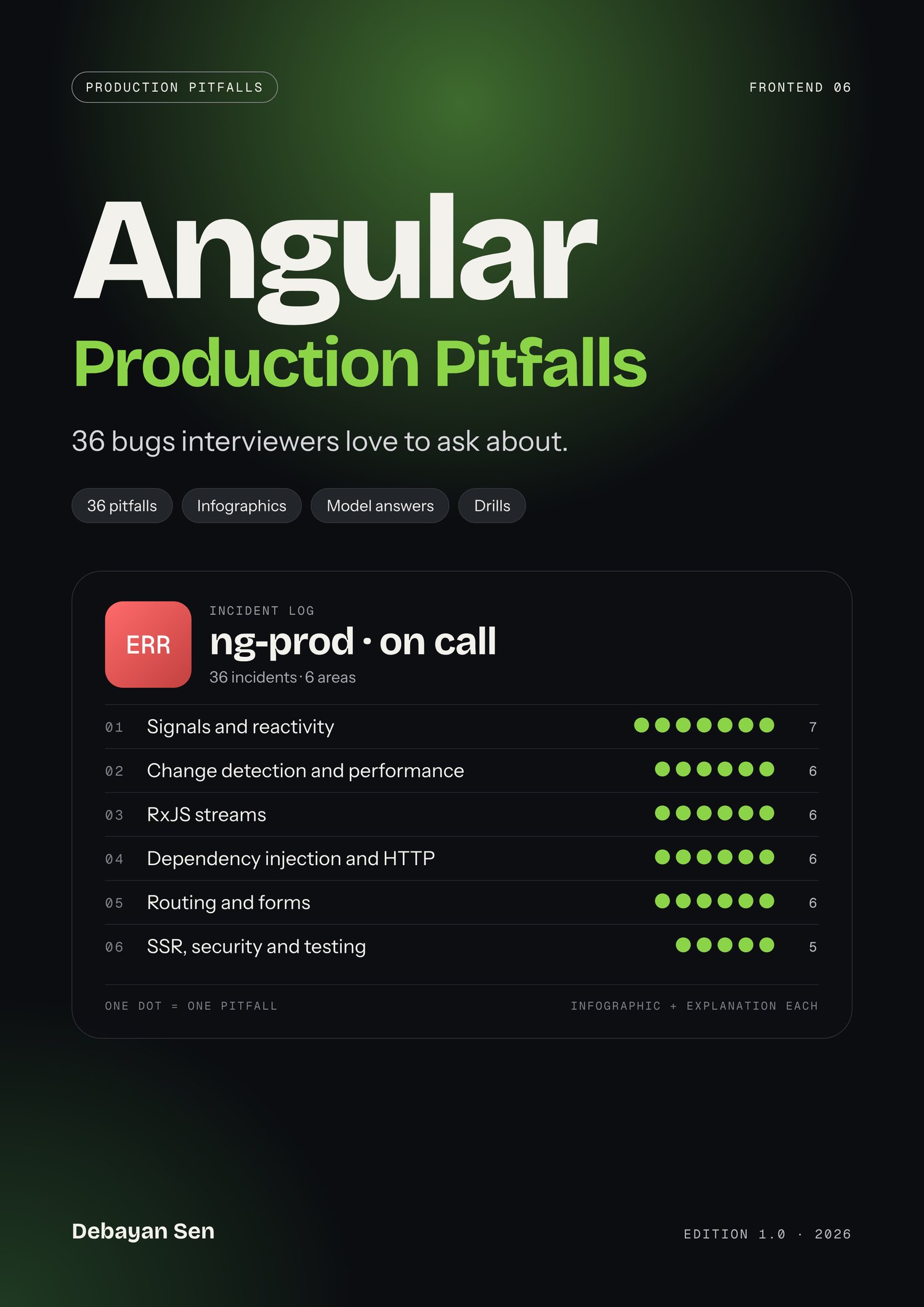
Angular Production Pitfalls: 36 Bugs Interviewers Love to Ask About
Signals, zoneless change detection and RxJS each fail in their own quiet way. These are the 36 Angular mistakes that reach production, and the follow-up questions interviewers use to separate tutorial knowledge from real experience.
What's inside
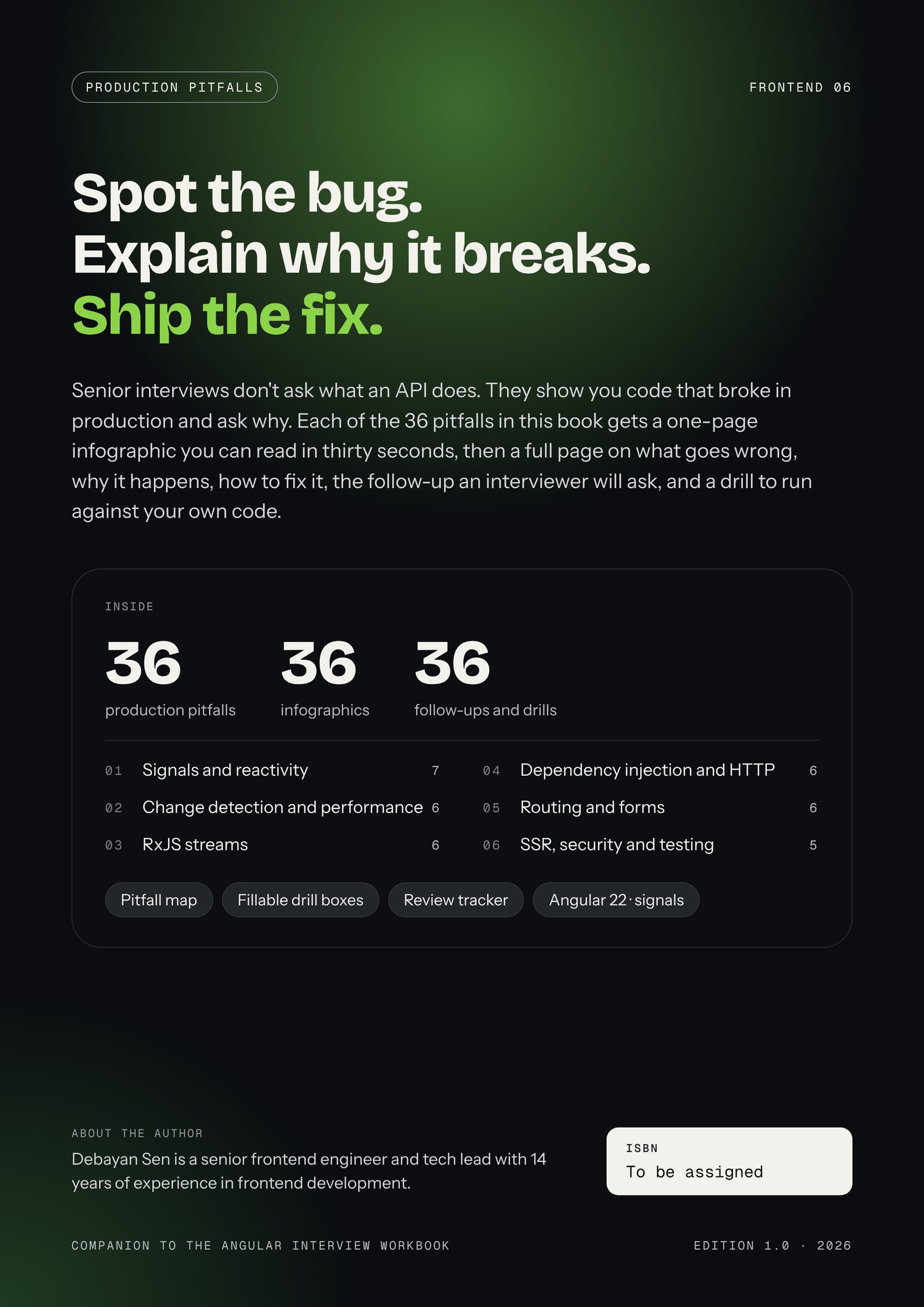
• 36 real production pitfalls in 6 areas, 85 pages
• Every pitfall gets two pages: an infographic of what breaks, why it happens, the fix, the follow-up question an interviewer asks next, and a fillable drill to answer in your own words
• A 36-item tracker so you can tick off each pitfall as you master it
The 6 areas
1. Signals and reactivity — mutating a signal's value in place, effects that derive state, signals read after an await
2. Change detection and performance — zoneless fields that never render, OnPush with mutated inputs, track that recreates every row
3. RxJS streams — typeahead results out of order, subscriptions that outlive the component, the wrong flattening operator
4. Dependency injection and HTTP — the service that isn't the one you think, interceptors in the wrong order, retry() on a request that charges
5. Routing and forms — route guards treated as security, resolvers that freeze navigation, form.value dropping disabled fields
6. SSR, security and testing — browser APIs during server rendering, bypassSecurityTrust with user content, tests that pass before render
Who it's for
Frontend developers preparing for mid-level and senior interviews, and anyone who wants to stop shipping these bugs. Pairs with the Angular Interview Workbook (100+ questions with model answers and follow-ups).
Versions
This book targets Angular 22 with standalone components, signals and zoneless change detection, and notes where older versions behave differently.
Format
PDF, 85 pages, with fillable fields. Fill it in on screen in any PDF reader that supports forms (Adobe Acrobat Reader, browser PDF viewers) or print it.
This copy is licensed to the purchaser for their personal use only. Do not share, resell or redistribute it, in whole or in part, without the prior written permission of the author.