
Coping with Seasonal Low Mood: A Practical Guide with Worksheets (PDF Guide)
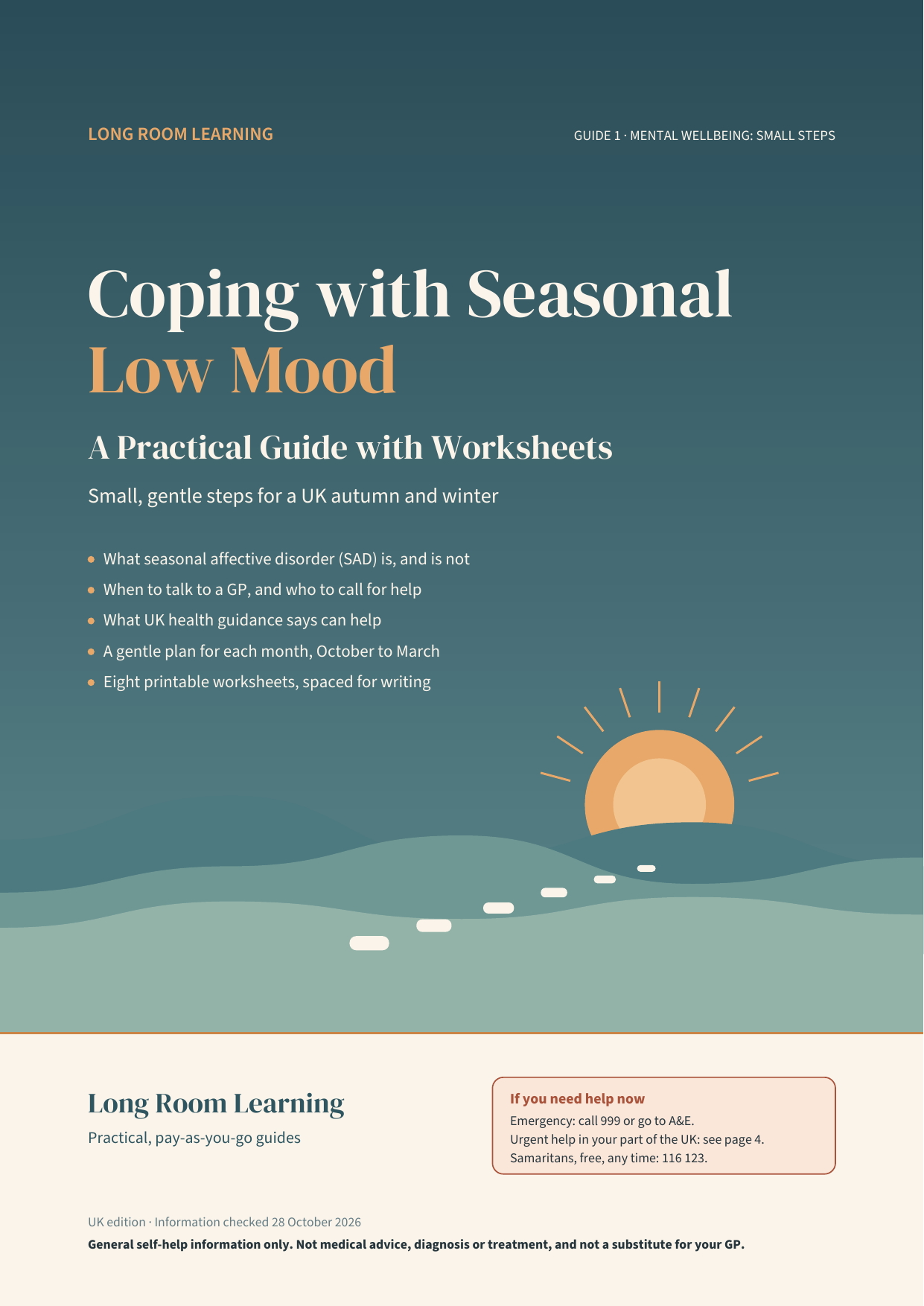
Darker days getting on top of you? A calm, practical UK guide to autumn and winter, with eight printable worksheets and clear signposting to the NHS and other support.
Many people in the UK notice their mood, energy or sleep change as the days get shorter. This guide brings together official UK health information and what NICE and the mental health charity Mind say about seasonal low mood and seasonal affective disorder (SAD), and turns it into small, manageable steps for each month from October to March.
It explains what SAD is and what it is not, the common signs, and when and how to talk to a GP, with a one-page sheet to help you prepare for the appointment. Help and crisis contacts for England, Scotland, Wales and Northern Ireland are at the front and again at the back.
You will find plain-English sections on daylight, routine, movement, sleep, food and staying in touch with people, plus what the evidence says about light therapy lamps, talking therapies and when to discuss medicines with your GP. There are practical ideas for freelancers, parents, shift workers and students, a section on supporting someone else, and a plan for staying well next winter.
The eight A4 worksheets are spaced for handwriting: a two-week mood and energy tracker, a sleep and routine log, a daylight and activity planner, a small wins list, a one-page winter wellbeing plan, a warning signs and who to call sheet, a GP conversation-prep page and a sheet to give to a supportive friend or relative.
What you get: one 34-page A4 PDF (print the worksheets as often as you like for your own use). Information checked against official UK health, NICE, government and charity pages on 28 October 2026, with every source listed.
Please note: This guide is general self-help information only. It is not medical advice, therapy, diagnosis or treatment, and it is not a substitute for your GP. It does not treat, cure or diagnose any condition, and no particular result is promised. If you are worried about your mood, please speak to a GP. If you feel unsafe or someone's life is at risk, call 999 or go to A&E. Samaritans are free to call on 116 123, day or night.
Guide 1 in the Mental Wellbeing: Small Steps series from Long Room Learning.