
Burnout and Work-Life Balance: A Practical Guide with Worksheets (PDF Guide)
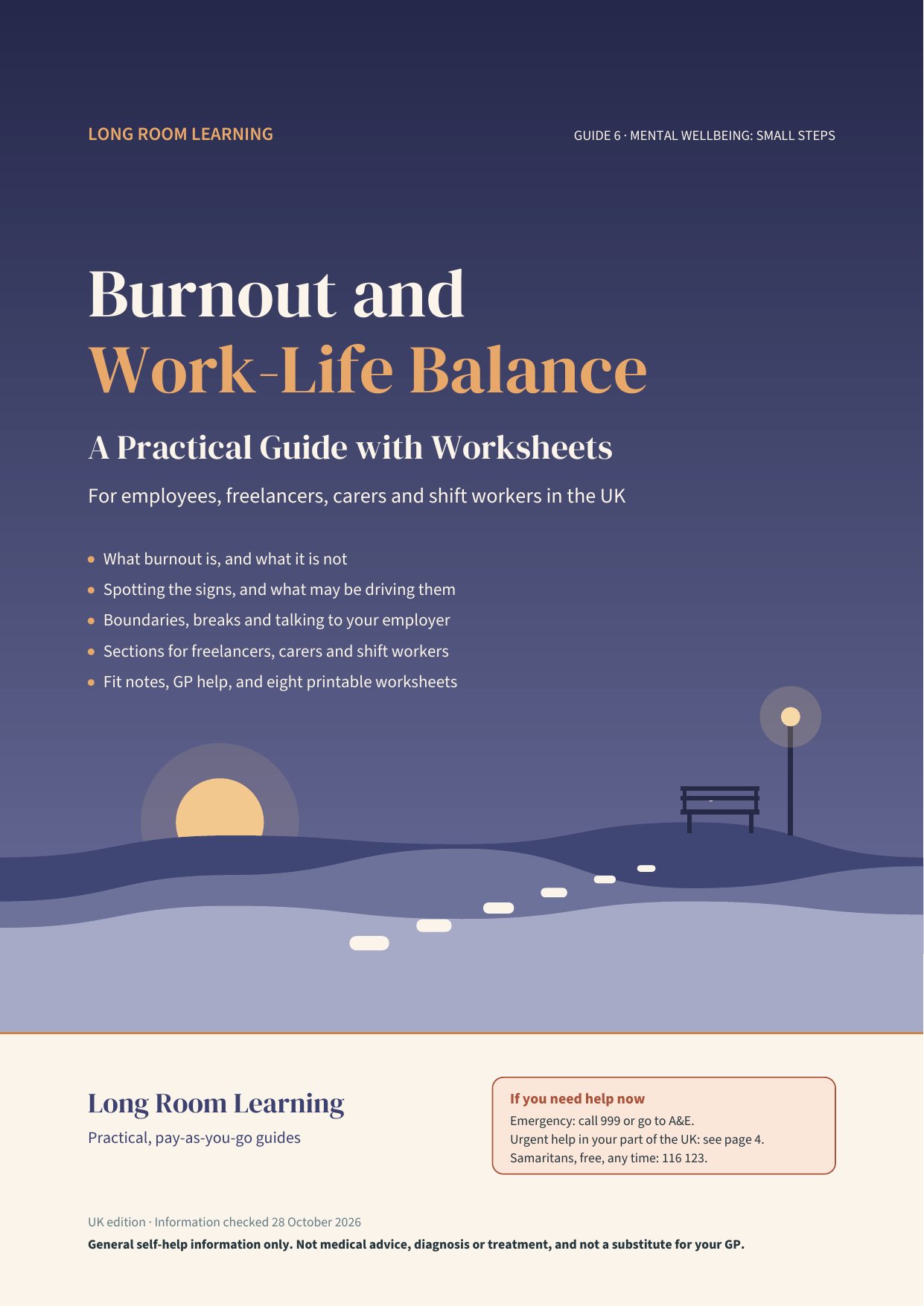
Running on empty? A calm, practical UK guide to spotting the signs of burnout, protecting your time and knowing where to get help, with sections for freelancers, carers and shift workers and eight printable worksheets.
Work pressure is part of life, but when it goes on for a long time it can leave you feeling drained, detached and struggling to switch off. This guide brings together official UK health information and what the World Health Organization, the Health and Safety Executive, Acas, GOV.UK and the Mental Health Foundation say about burnout and work stress, and turns it into small, manageable steps.
It explains, in plain words, what burnout is and is not (the World Health Organization describes it as an occupational phenomenon, not a medical condition), the signs to watch for, and the six areas of work that can lead to stress. Then it walks you through noticing where your energy goes, focusing on what you can change, setting boundaries, your basic rights to rest breaks, flexible working, and how to prepare for a conversation with your employer.
There are separate sections for people who work for themselves (irregular income, no sick pay, where to get advice), people who care for someone (the carer's assessment in each UK nation, carer's leave and breaks), and people who work shifts or nights (night worker health assessments, sleep and getting home safely).
A clear chapter explains when to see a GP, how fit notes work, Access to Work, and how to get NHS talking therapies in England, Scotland, Wales and Northern Ireland. Urgent help contacts for each part of the UK are at the front and again at the back.
The eight A4 worksheets are spaced for handwriting: an energy check, the six areas of work, boundaries and one small change, talking to my employer, working for myself, preparing for a carer's assessment, my shift plan, and a recovery toolkit with space to prepare for a GP appointment.
What you get: one 34-page A4 PDF. Print the worksheets as often as you like for your own use. Information checked against official UK health, government and charity pages on 28 October 2026, with every source listed.
Please note: This guide is general self-help information only. It is not medical, legal, employment or financial advice, therapy, diagnosis or treatment, and it is not a substitute for your GP. Burnout is not a medical diagnosis, and this guide cannot tell you whether you have depression or any other condition. No particular result is promised. It does not give medicine or supplement advice: please ask your GP or a pharmacist. If stress or low mood is affecting your daily life, speak to a GP. If you feel unsafe or someone's life is at risk, call 999 or go to A&E. Samaritans are free to call on 116 123, day or night.
Guide 6 in the Mental Wellbeing: Small Steps series from Long Room Learning. Guide 1, Coping with Seasonal Low Mood, and Guide 2, Better Sleep, are also available.