
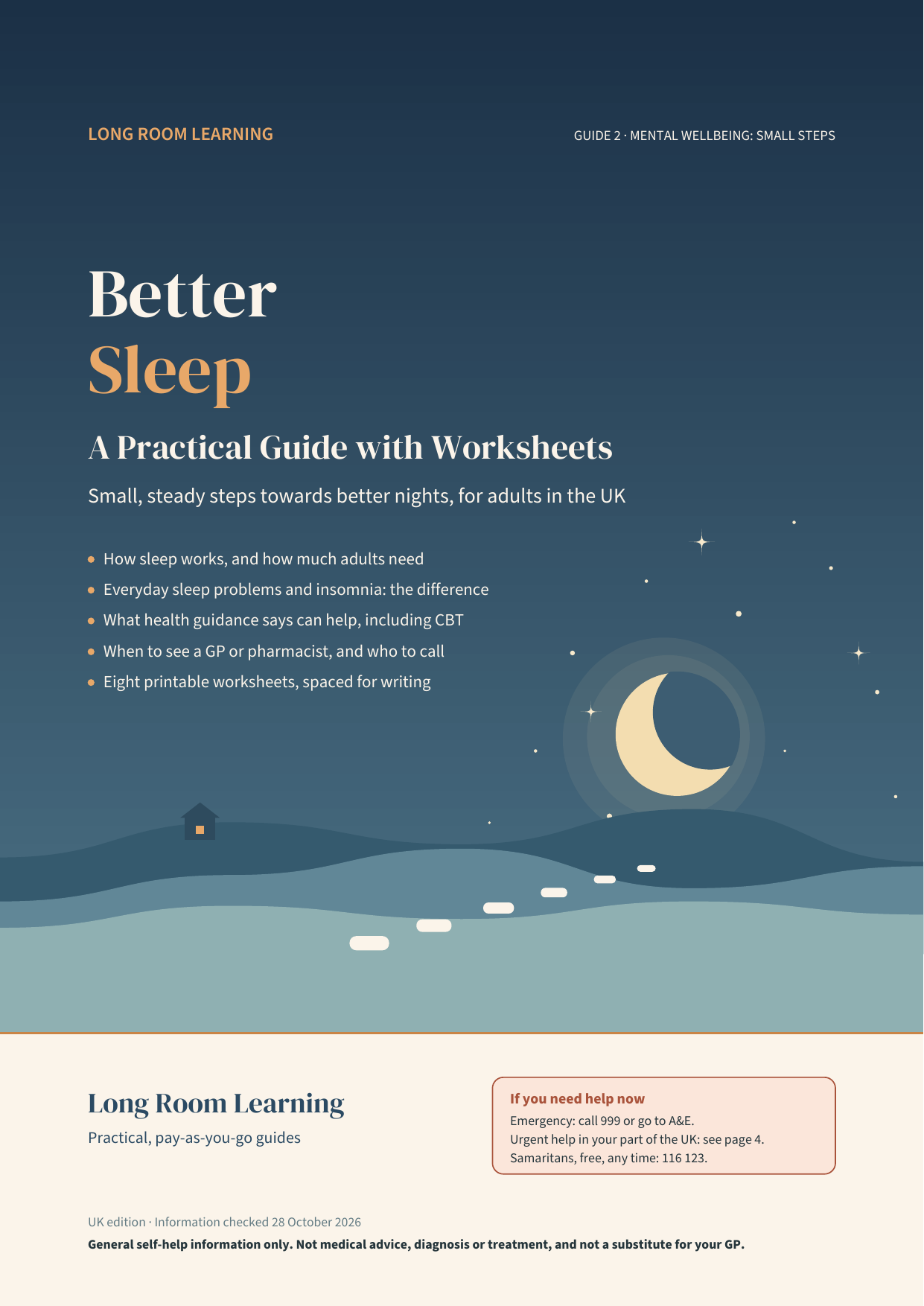
Better Sleep: A Practical Guide with Worksheets (PDF Guide)
Lying awake, waking at 4am, or tired all day? A calm, practical UK guide to sleep, with eight printable worksheets and clear signposting to the NHS and other support.
Most of us have a bad night now and then. When poor sleep becomes a pattern, it can wear down your mood, your work and how well you cope with everything else. This guide brings together official UK health information and what NICE, the Royal College of Psychiatrists and the mental health charity Mind say about sleep, and turns it into small, manageable steps.
It explains, in plain words, how sleep works, how much sleep adults need, and the difference between a rough patch, short-term insomnia and long-term insomnia. It looks at how sleep and mood affect each other, and what the official advice says about routine, winding down, the bedroom, caffeine, alcohol, screens, naps, worry and what to do when you cannot sleep.
You will also find what CBT for insomnia (CBT-I) is and how to ask about it, practical sections for shift workers, new parents, people going through perimenopause or menopause, students and people who work from home, the signs that are worth checking with a GP (such as loud snoring and gasping, or restless legs), and the Highway Code and DVLA rules on driving when tired. Help and crisis contacts for England, Scotland, Wales and Northern Ireland are at the front and again at the back.
The eight A4 worksheets are spaced for handwriting: a two-week sleep diary, a wind-down routine planner, a worry page, a bedroom check, a caffeine, alcohol and screens log, a weekly sleep plan, a "when sleep goes wrong" plan and a GP preparation sheet.
What you get: one 34-page A4 PDF. Print the worksheets as often as you like for your own use. Information checked against official UK health, NICE, government and charity pages on 28 October 2026, with every source listed.
Please note: This guide is general self-help information only. It is not medical advice, therapy, diagnosis or treatment, and it is not a substitute for your GP. It does not treat, cure or diagnose insomnia or any other condition, and no particular result is promised. It does not give advice on sleeping tablets, melatonin or supplements: please ask your GP or a pharmacist. If you are worried about your sleep or your mood, speak to a GP. If you feel unsafe or someone's life is at risk, call 999 or go to A&E. Samaritans are free to call on 116 123, day or night.
Guide 2 in the Mental Wellbeing: Small Steps series from Long Room Learning. Guide 1, Coping with Seasonal Low Mood, is also available.