
Loneliness and Staying Connected: A Practical Guide with Worksheets (PDF Guide)
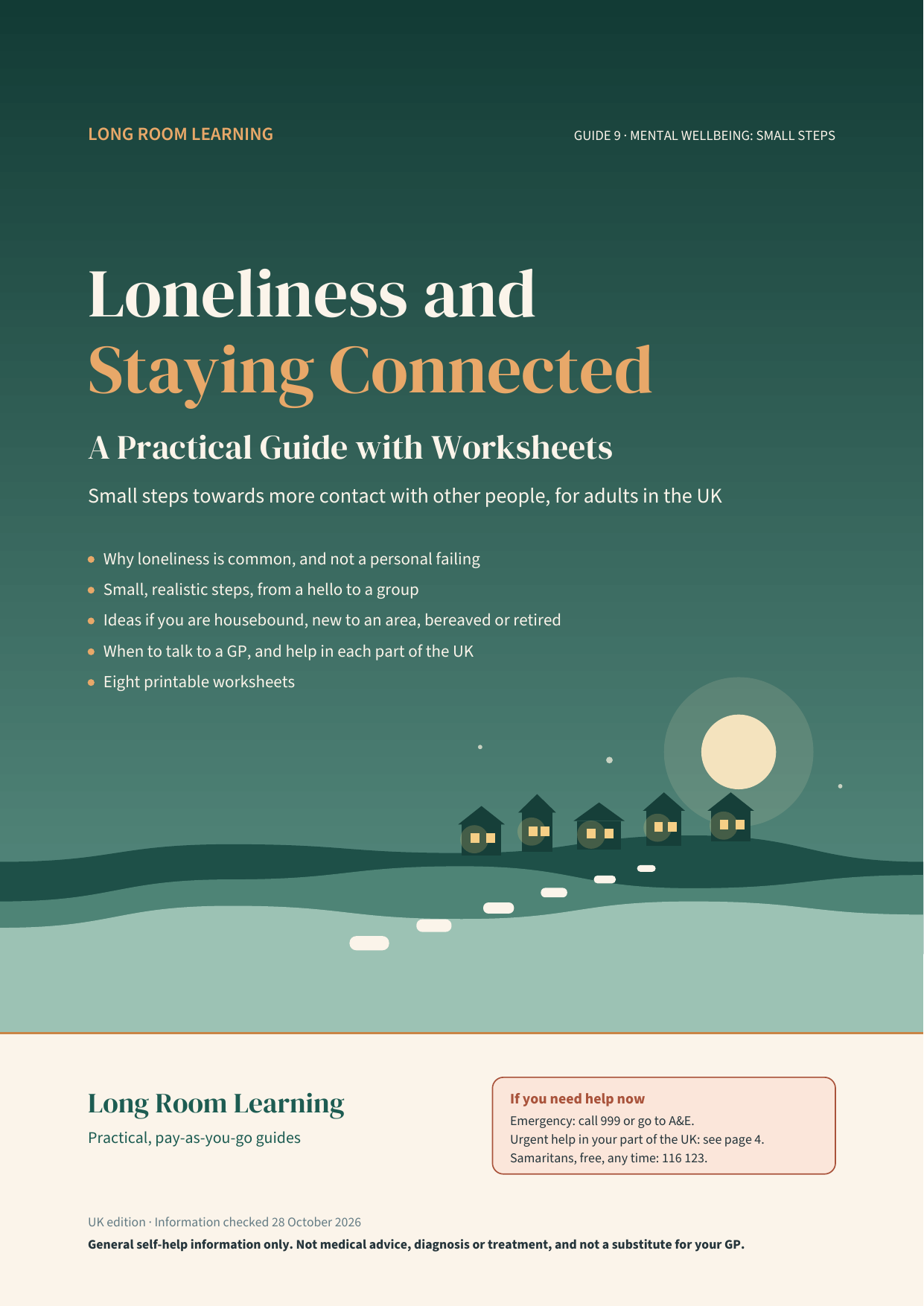
Feeling lonely, or more cut off than you would like? A gentle UK guide to small, realistic steps towards more contact with other people, from a hello to a group, with eight printable worksheets.
Loneliness is common. Most people feel lonely at some point, and it is not a personal failing. This guide brings together official UK health information and what the Campaign to End Loneliness, Age UK, Mind, Samaritans and other UK organisations say about loneliness, and turns it into small steps you can try at your own pace.
It explains, in plain words, how feeling lonely differs from being alone, the different kinds of loneliness, and how loneliness and mood can affect each other. Then it moves to practical ideas: very small first steps, getting back in touch with people you know, groups and activities, volunteering, social prescribing through your GP practice, and going online with care.
There are ideas for particular situations: if it is hard to get out of the house, if you are new to an area, after a bereavement or a break-up, after retirement, and if you work from home, are a student, or care for someone. A section covers what to do if you are worried that someone else is lonely.
A clear chapter explains when to see a GP and how to get NHS talking therapies in England, Scotland, Wales and Northern Ireland. Urgent help contacts for each part of the UK are at the front and again at the back, with helplines for older people, carers, bereaved people and students.
The eight A4 worksheets help you note where you are now, build your own small steps ladder, track a week of small contacts, list groups near you, plan getting back in touch, prepare for harder times of year, look back on what has helped, and get ready for a GP appointment.
What you get: one 34-page A4 PDF. Print the worksheets as often as you like for your own use. Information checked against official UK health, government and charity pages on 28 October 2026, with every source listed.
Please note: This guide is general self-help information only. It is not medical advice, therapy, counselling, diagnosis or treatment, and it is not a substitute for your GP. No particular result is promised: small steps can help some people feel more connected, but everyone is different. It does not give medicine or supplement advice: please ask your GP or a pharmacist. If loneliness or low mood is affecting your daily life, speak to a GP. If you feel unsafe or someone's life is at risk, call 999 or go to A&E. Samaritans are free to call on 116 123, day or night.
Guide 9 in the Mental Wellbeing: Small Steps series from Long Room Learning. Guide 1, Coping with Seasonal Low Mood, and Guide 2, Better Sleep, are also available.