

Down the Ground - Powerplay
Ball-by-ball tabletop cricket for T20 and The Hundred, with every player rated.
NEW: Your Teams. You can now build your own teams and leagues and play them in the Match Player app. If you already own Powerplay, the new files are in your Payhip library.
Down the Ground plays a whole match in five minutes. Powerplay plays it one ball at a time, and every player in the side has his own ratings.
Each ball, you find the column for the batter on strike, roll two dice and read the result. If it's a bad ball, you check that batter's shot rating, so an opener and a number nine get very different results from the same delivery. There are three ways to lose a wicket, and only one of them is down to the bowler alone.
An innings takes about twenty minutes once you know the table.
What's in the pack
Book 1 - The Rules (18 pages). Setting up a match, playing a ball, the shot table, batting and fielding calls, wickets and appeals, extras and free hits, the chase, competitions and net run rate, a worked example and a quick reference. It also shows you how to rate any player.
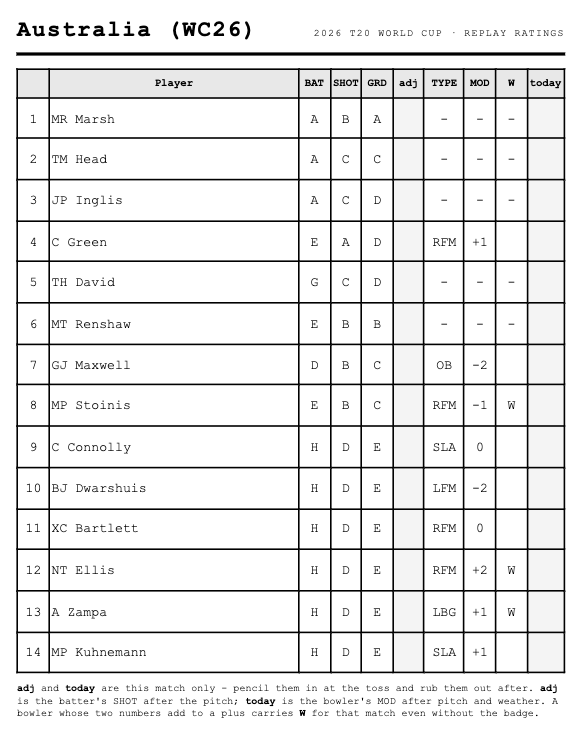
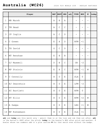
Book 2 - Ratings. All twenty squads from the 2026 T20 World Cup, 270 players, plus the top four men's sides from The Hundred. Each player is rated on how he played in that tournament.
Book 3 - The Flow of Play (10 pages). A tutorial with a flowchart for each part of the game, a worked example covering every kind of roll, and the whole game on one page at the back.
Book 4 - Your Teams (13 pages). How to use the Team Builder and the Match Player, starting with a full match between two made-up counties.
Sheets 1 and 2 - Master Ball Tables. One for The Hundred, one for T20. Also included in large print, one table to a page.
Sheet 3 - Scoresheet. Batting, bowling and ball by ball, for both formats.
Sheet 4 - Narrative Tables. Ten d20 tables that describe what happened: what kind of dot ball it was, where the four went, how he got out, what happened when a catch went down.
Sheet 5 - World Cup Tracker. Groups, fixtures, scores and standings so you can play the whole tournament.
Sheet 6 - Team Sheet. Write a side's ratings down once and keep it.
Sheet 7 - Team Cards. All twenty-four sides as cut-out cards, four to a page, with each player's ratings on one line. Pick two cards and play without needing the ratings book.
Sheet 8 - Player Types. Seven types of player (opener, anchor, finisher, two kinds of all-rounder, fast bowler, spinner) at three levels. Pick a type and a level, or roll a d6 for the level, and read the ratings off the sheet.
Sheet 9 - Roll a Side. A standard eleven, a d6 for each man's level, what he bowls, and an optional tweak, so you can roll up a whole side on paper and then type it into the Team Builder.
The apps
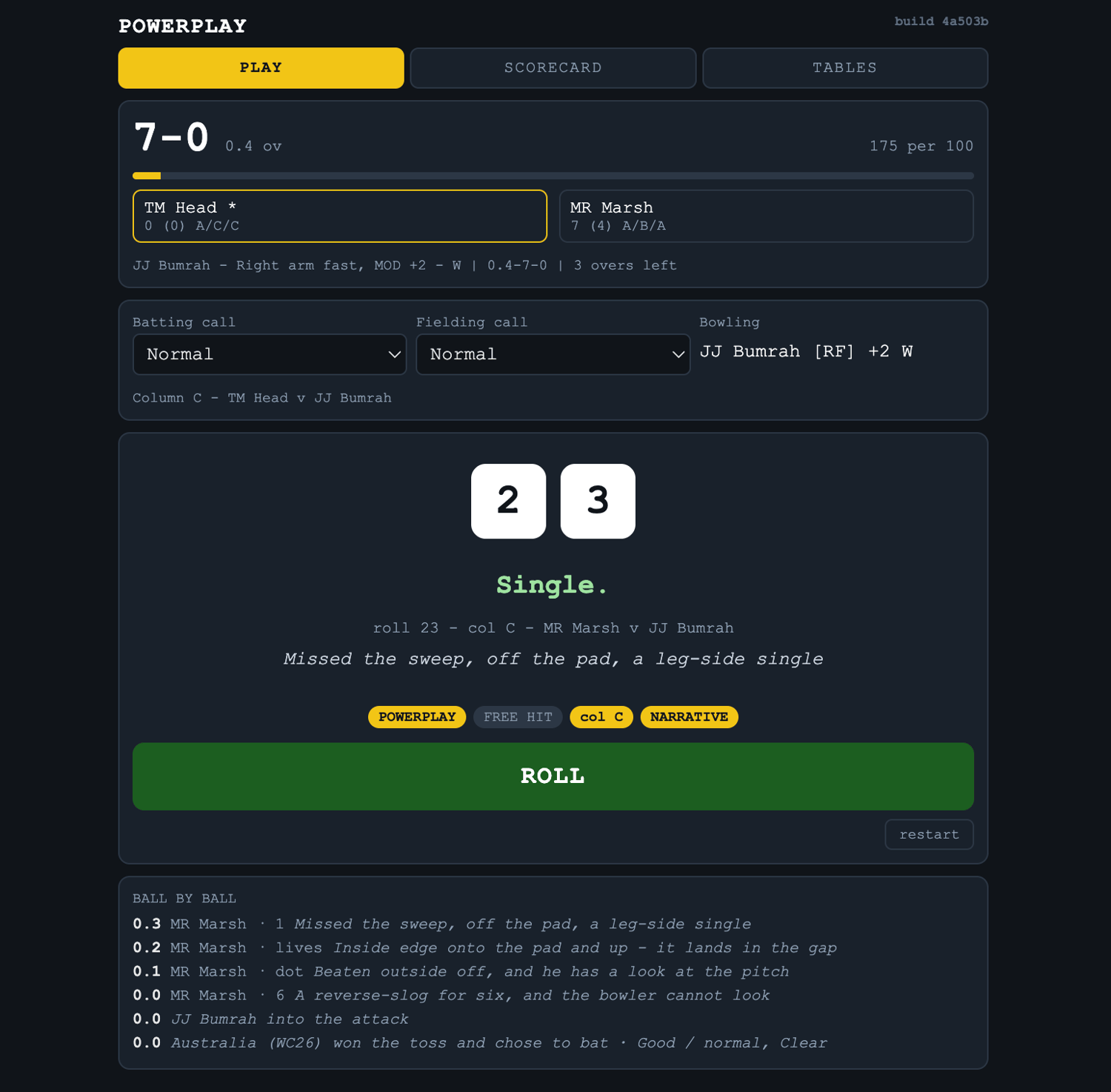
Match Player. Runs in your browser on a computer or phone, no internet needed. It rolls the dice, keeps the scorecard and reads the narrative tables for you. There are two versions: one with the twenty-four sides from Book 2, and one that also plays teams you've built yourself. You can save a match and carry on later.
Team Builder. Keeps all your teams and players in one league file. Add players by type, from their stats, or set the ratings yourself. You can split teams into divisions and import a whole league from a spreadsheet. When you're ready, pick two teams and send the match to the Match Player.
Team files. All twenty-four sides from Book 2, ready to load into the Team Builder and edit. Also two made-up county sides, Elmshire and Northmoor, so you can start playing straight away. Each file comes in app and spreadsheet format.
Rate anybody
Book 1 has three questions for a batter and two for a bowler, so you never need stats you can't find. If you have full figures there's a conversion table, and if you only have a batting average there's a shortcut. Or type the figures into the Team Builder and it works out the ratings.
Your club side, a 1990 Sunday League team, a Test side from before anyone recorded strike rates. Rate each one against its own competition and they'll play a fair match.
Two formats
The Hundred: 100 balls, sets of five, change ends every ten balls, twenty balls max per bowler.
T20: 120 balls, overs of six, four overs max per bowler.
Everything else in the rules is the same for both.
Print and play. Solo or two players.
Ball-by-ball data: cricsheet.org.