
The Science Behind Gestalt Language Processing
The Science Behind Gestalt Language Processing — Educational Infographic (Printable, A2)
You will receive the printable unwatermarked version of this infographic
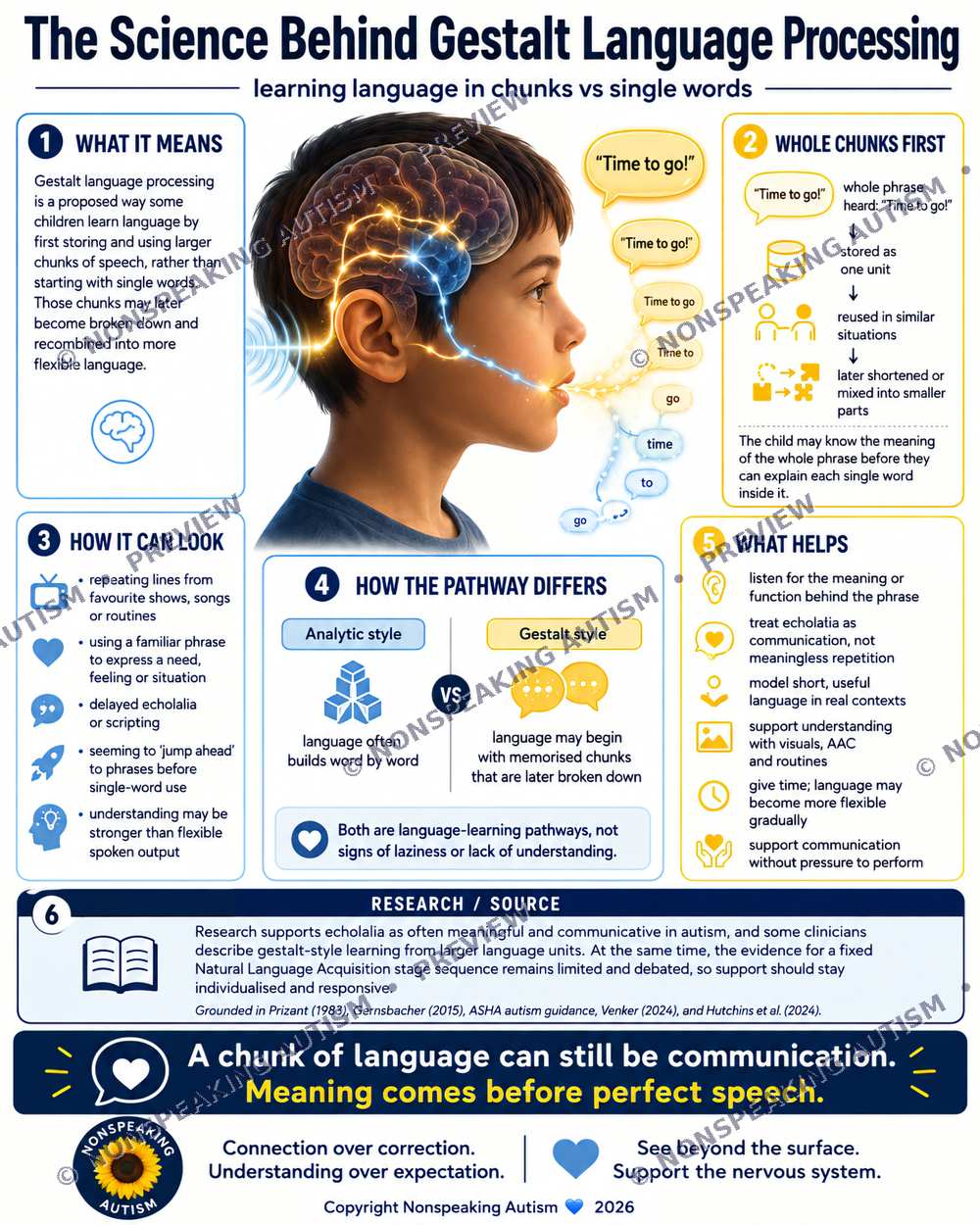
A clear, research-grounded visual explaining gestalt language processing — learning language in chunks vs. single words.
This infographic covers:
- What it means: a proposed way some children learn language by first storing and using larger chunks of speech, later broken down into more flexible language
- Whole chunks first: how a phrase is heard, stored as one unit, reused in similar situations, later shortened or mixed into smaller parts
- How it can look: repeating lines from favourite shows, using a familiar phrase to express a need, delayed echolalia or scripting, understanding stronger than flexible spoken output
- How the pathway differs: analytic style (language builds word by word) vs. gestalt style (language begins with memorised chunks that are later broken down) — both are language-learning pathways, not signs of laziness
- What helps: listen for the meaning behind the phrase, treat echolalia as communication not meaningless repetition, model short useful language, support understanding with visuals and AAC, give time
- Grounded in research (Prizant 1983; Gernsbacher 2015; ASHA autism guidance; Venker 2024; Hutchins et al. 2024) — noting the evidence for a fixed stage sequence remains limited and debated
What you get:
- High-resolution PDF, print-ready and scalable up to A2 (420 × 594mm)
- Instant digital download
Perfect for: SLT and SEND training, therapy rooms, classrooms, parent carer forums, and staff CPD.
For personal, classroom, and professional educational use. Not for resale or redistribution.
© Nonspeaking Autism
Disclaimer:
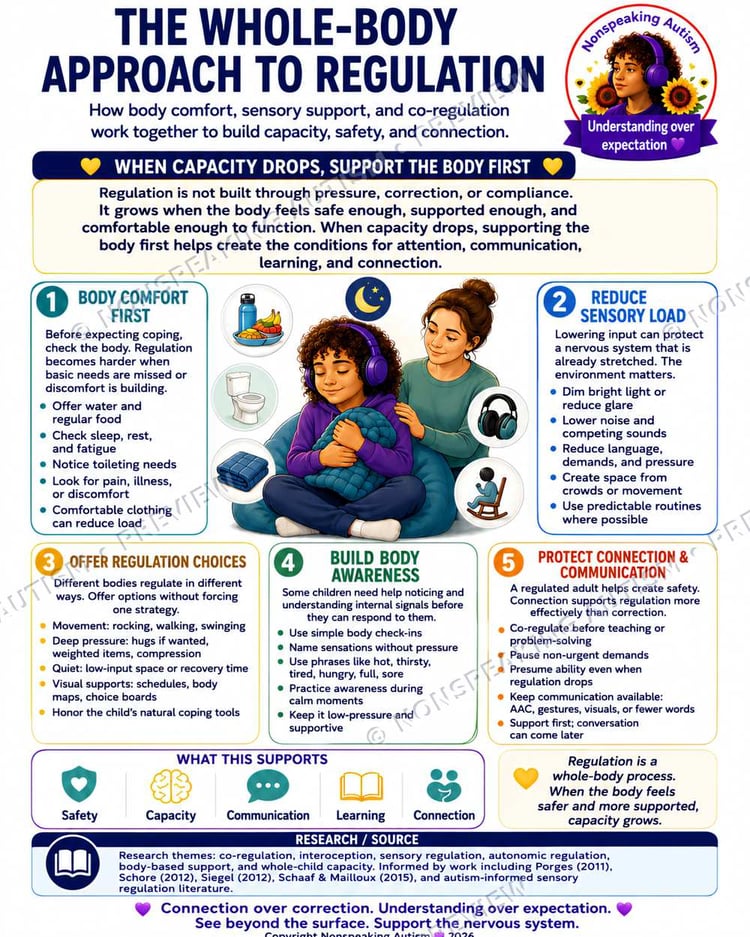
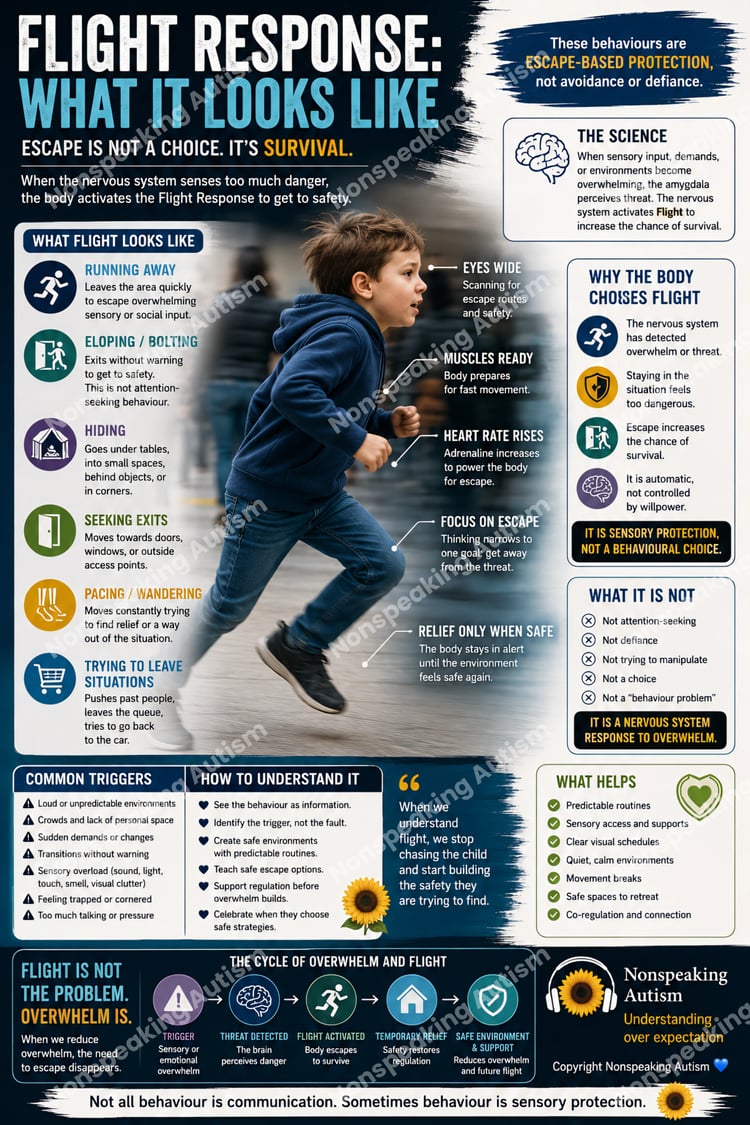
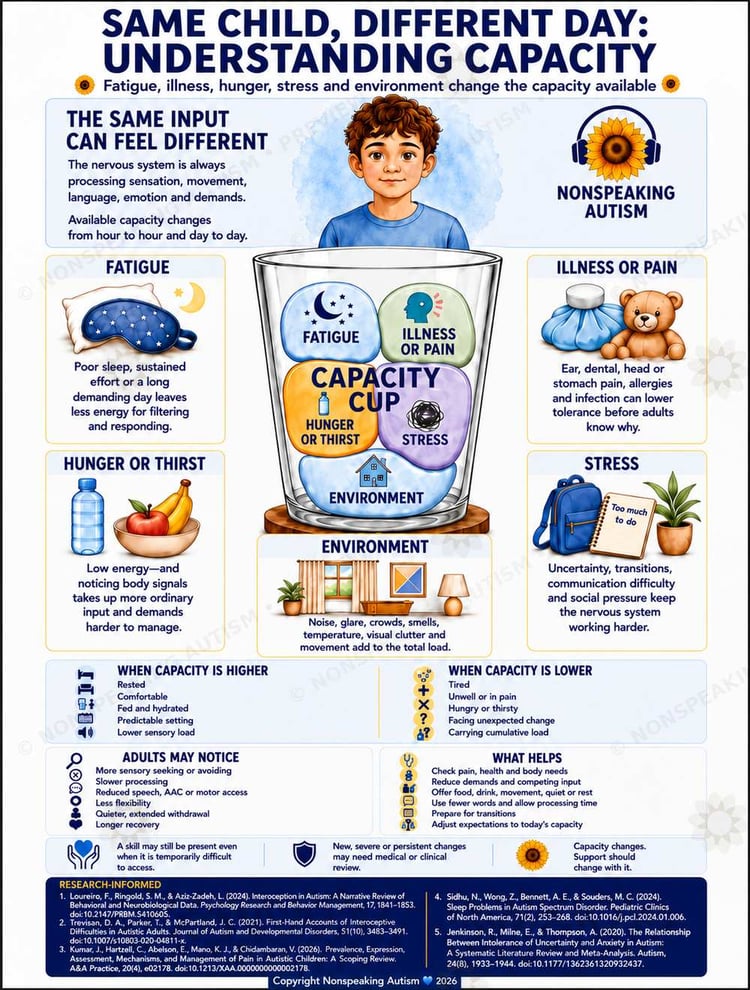
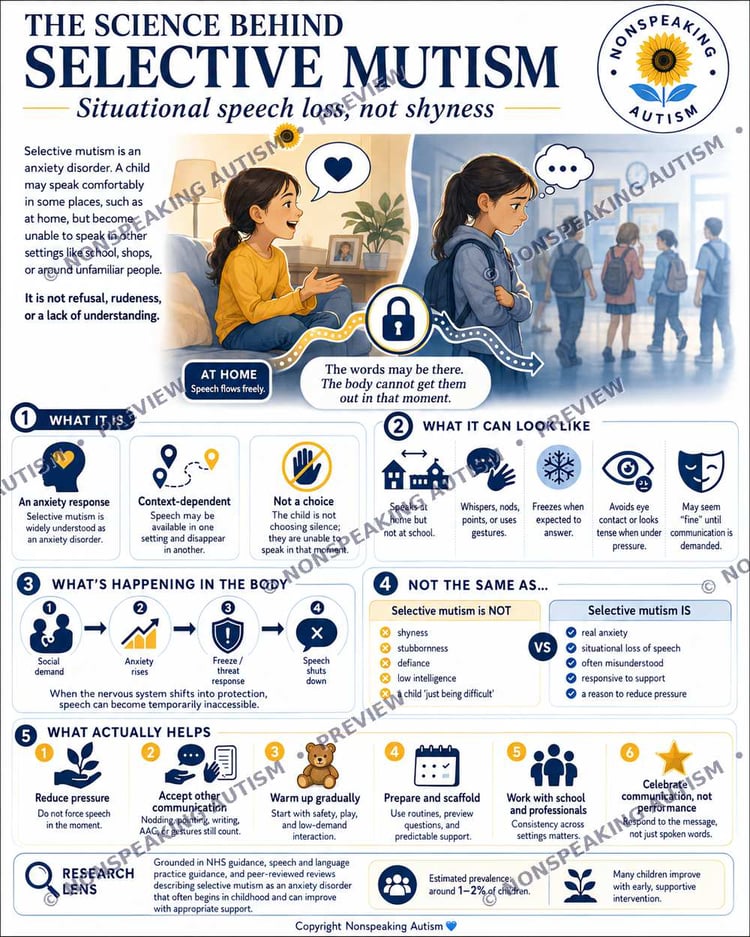
This resource is intended for educational and informational purposes only. It is designed to support understanding of autism, sensory processing, nervous system regulation, and behaviour from a neurodevelopmental perspective.
The information provided is not medical, psychological, therapeutic, or legal advice and should not be used as a substitute for assessment, diagnosis, or treatment by a qualified healthcare professional.
Every autistic person is unique. Strategies and supports should always be tailored to the individual's needs, strengths, and circumstances.
If a child displays a sudden change in behaviour, severe distress, signs of illness, injury, or behaviours that place themselves or others at risk, seek appropriate medical advice or emergency assistance where necessary.
While every effort has been made to ensure the information is accurate and reflects current understanding, knowledge in autism and neuroscience continues to evolve.
This resource is for the purchaser's personal, educational, or professional use only. It may not be copied, redistributed, resold, edited, shared publicly, or reproduced in whole or in part without prior written permission.
© Nonspeaking Autism 💙