
The 5 Survival Responses Series - Not Behaviour, but Protection - resource pack
The 5 Survival Responses Series - Not Behaviour, but Protection - resource pack
You will receive the printable unwatermarked versions of these infographic resources
When the nervous system detects threat, pain, sensory overload or no safe way out, it can automatically shift into survival mode.
The reactions that follow are often judged only by how they look from the outside. Appeasing may be mistaken for cooperation. Freezing may look like refusal. Shutdown may be mistaken for calmness. Running may be labelled defiance, while protective physical actions may be described as deliberate aggression.
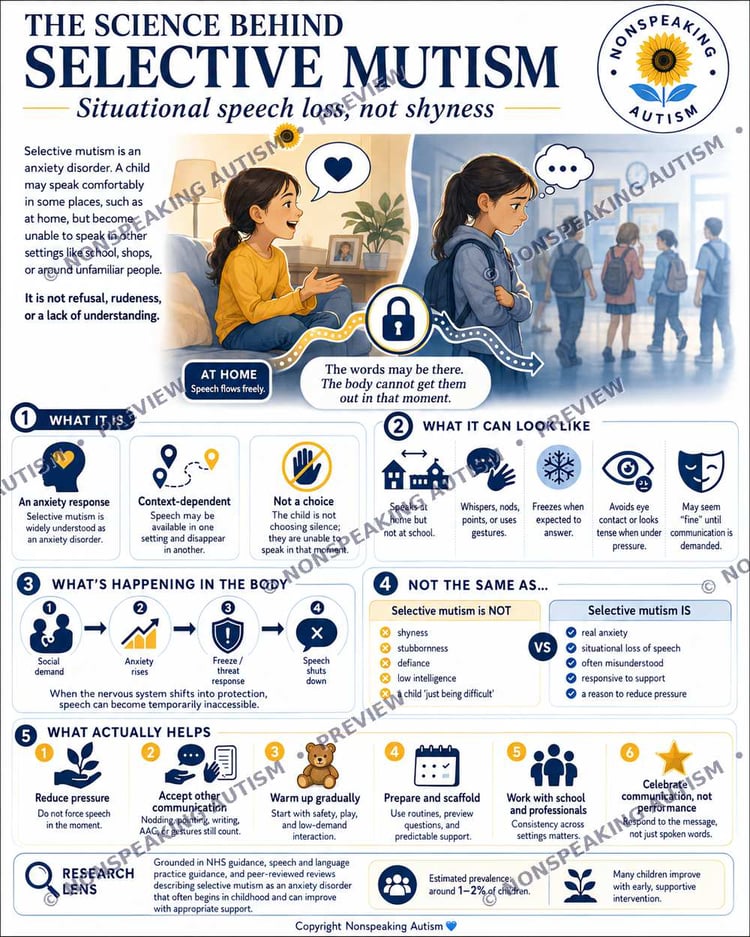
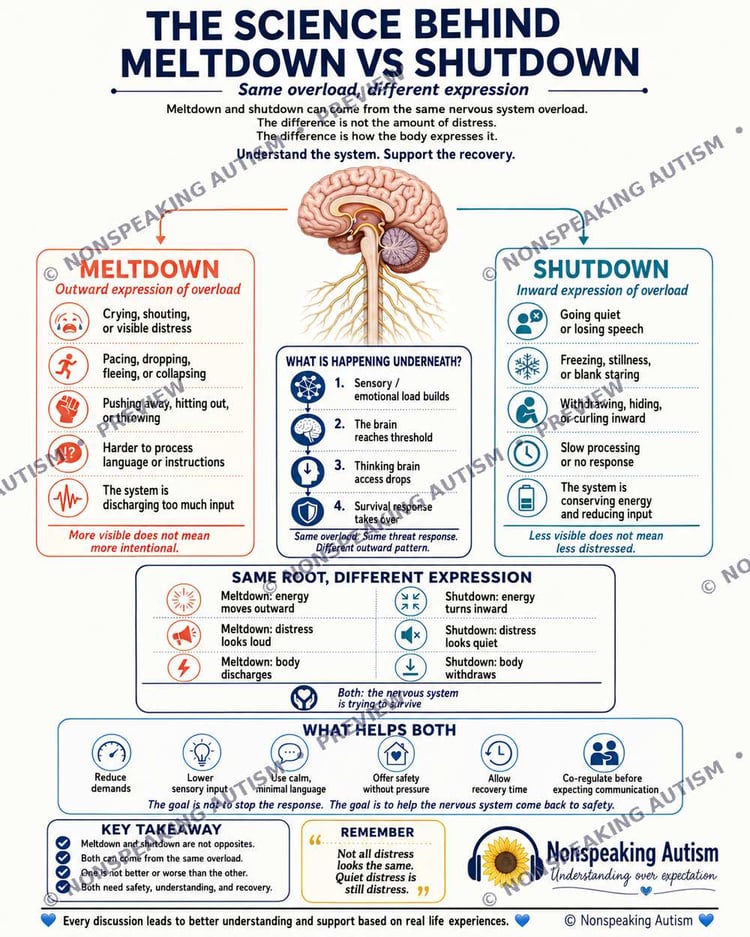
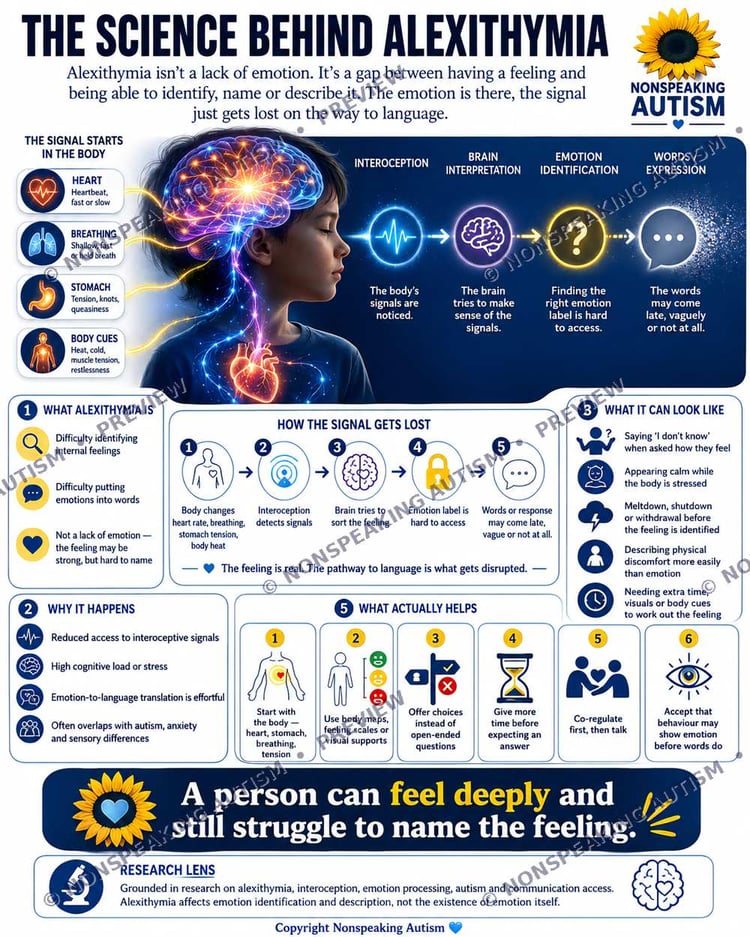
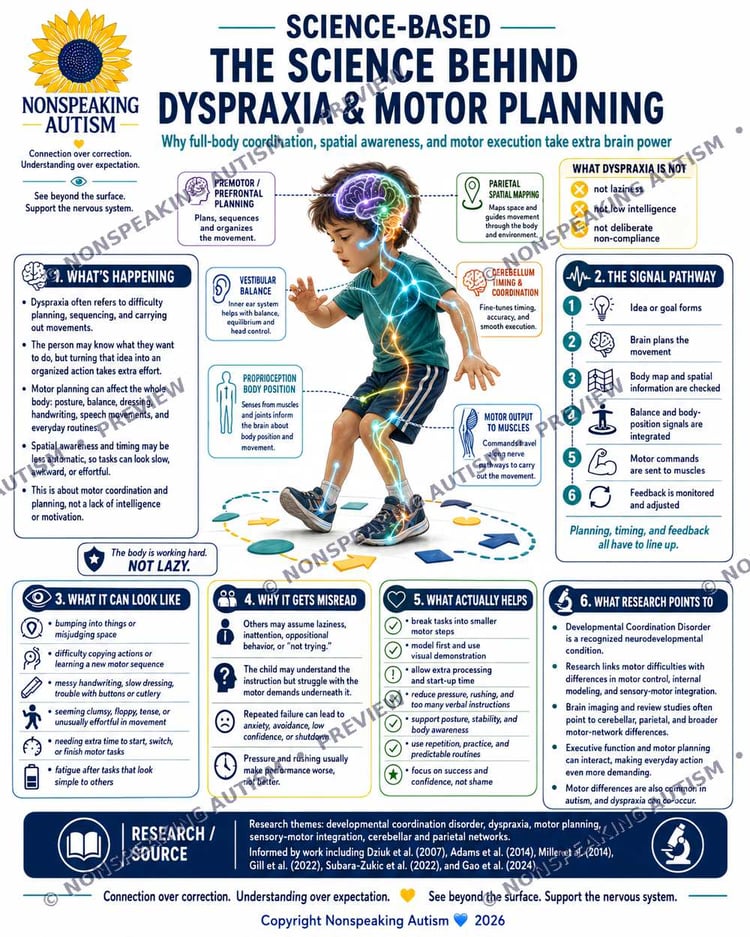
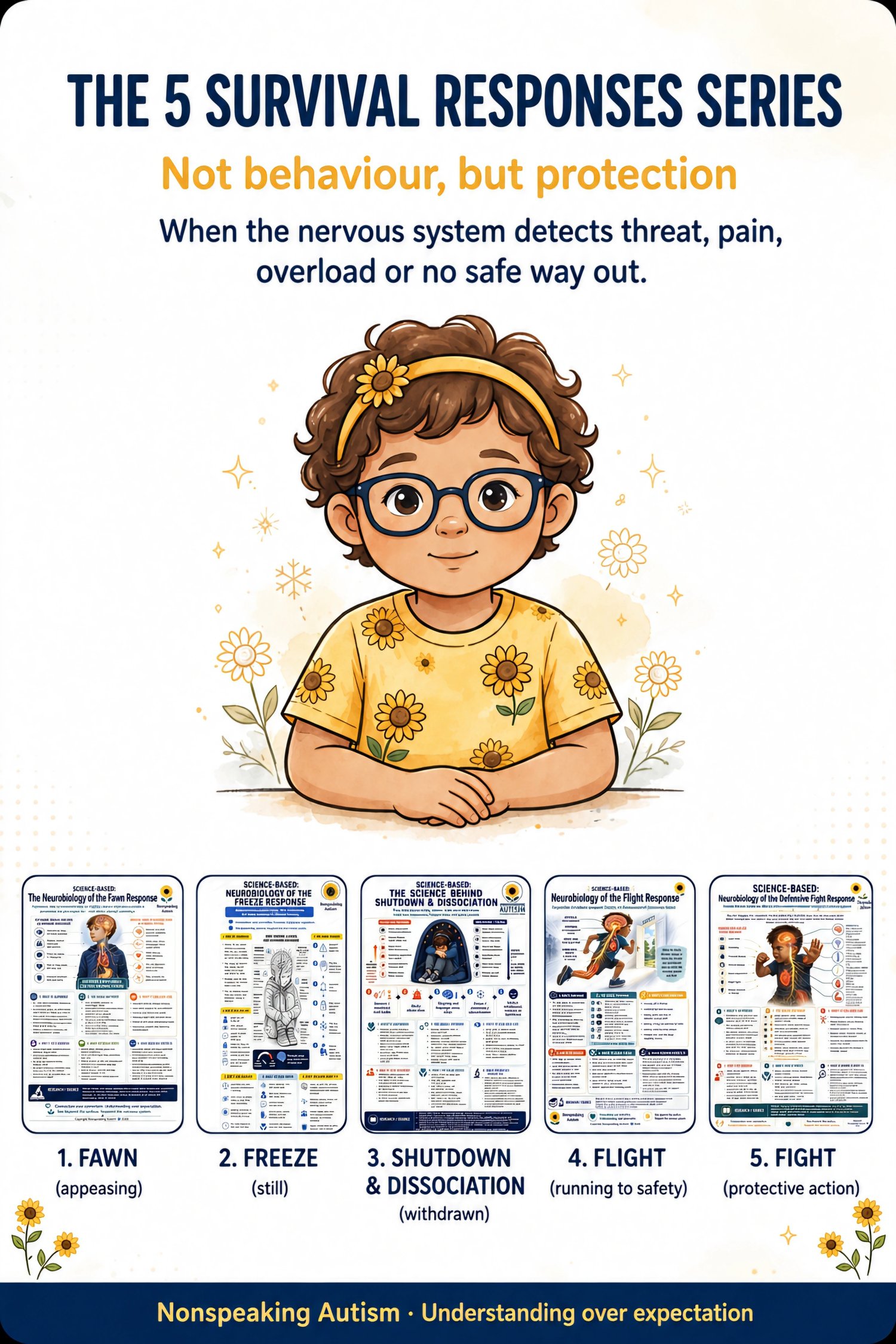
This five-part, research-based visual series looks beneath the visible response and explains what may actually be happening inside the nervous system.
THE FIVE POSTERS
💛 1. FAWN — Appeasing to Maintain Safety
Fawn is an outwardly compliant protective response. A person may agree, copy others, smile, apologise, suppress discomfort or closely monitor the people around them in an attempt to prevent conflict and remain safe.
This poster explores:
• Outward signs of appeasing and people-pleasing
• Internal stress that may be hidden by compliance
• The nervous system pathway behind the response
• Why fawning is frequently mistaken for genuine agreement
• How pressure, correction and fear of disapproval can reinforce it
• Support that encourages authentic communication and safer boundaries
💙 2. FREEZE — High Internal Alarm, Low Outward Movement
Freeze can occur when the nervous system detects danger but neither fighting nor escaping feels possible. The body may become still while internal alarm remains extremely high.
This poster explores:
• Why a person may become silent, motionless or unable to respond
• The difference between being calm and being immobilised
• Changes in speech, movement and decision-making
• Why instructions or questions may become impossible to process
• How freeze is often mistaken for ignoring, refusal or noncompliance
• Ways to reduce pressure and restore a sense of safety
💛 3. SHUTDOWN & DISSOCIATION — Protective Withdrawal
Shutdown and dissociation can develop when overwhelm becomes too intense or continues for too long. The nervous system may reduce connection with the environment to conserve energy and protect the person from further input.
This poster explores:
• Sensory and emotional load building within the body
• Withdrawal, blankness and reduced responsiveness
• Loss of speech, movement or access to familiar skills
• Feeling distant, unreal, numb or disconnected
• Why shutdown can be mistaken for calmness or deliberate withdrawal
• Support through reduced demands, quiet, familiarity and recovery time
💙 4. FLIGHT — Running Towards Safety
Flight is the body’s attempt to escape a situation that feels unsafe, painful or overwhelming. For an autistic person, this may involve leaving a room, bolting, hiding, pacing or urgently trying to reach a familiar place.
This poster explores:
• What may activate the flight response
• The rapid nervous system pathway behind escape behaviour
• Why running is not always planned or controlled
• Signs that overload may be approaching
• Why blocking an exit can intensify panic
• How adults can support safety without increasing the perceived threat
💛 5. FIGHT — Protective Action
Fight is a defensive response that may appear when the nervous system believes danger is immediate, escape is blocked or other attempts to communicate distress have not worked.
This poster explores:
• The internal alarm behind protective action
• How sensory pain, fear and overwhelm can affect behaviour
• Why reasoning and spoken language may become less accessible
• The difference between intentional harm and survival-driven action
• How demands, restraint or confrontation can intensify the response
• Safer ways to reduce pressure, protect everyone and support recovery
WHAT EACH POSTER COVERS
Each visual guide explains:
• What is happening inside the nervous system
• The biological or neurological pathway involved
• What the response can look like from the outside
• What the person may be experiencing internally
• Why the response is commonly misunderstood
• What can make the situation worse
• What practical, compassionate support may help
• What relevant research points to
WHO THIS COLLECTION IS FOR
Created for:
• Parents and carers
• Teachers and teaching assistants
• SENCOs and school support teams
• Therapists and healthcare professionals
• Support workers
• Autism services
• Anyone seeking a more compassionate understanding of survival responses
These resources can support staff training, family discussions, professional learning and conversations about behaviour, sensory overload, regulation and safety.
THE CENTRAL MESSAGE
Survival responses are automatic and body-based. They are not carefully planned attempts to manipulate, gain attention or create difficulty.
The same person may experience different responses at different times—or move between responses—depending on sensory load, pain, exhaustion, previous experiences, available support and whether the environment feels safe.
The aim is not to demand compliance while the nervous system is overwhelmed. The aim is to recognise distress, reduce the threat, support regulation and help the person return to safety.
Digital educational resource. No physical product will be posted.
For personal, educational or professional use. Redistribution, resale, editing, cropping and re-uploading are not permitted.
You will receive the following graphics in the resource pack:
Neurobiology_of_the_Fawn_Response
Neurobiology_of_the_Freeze_Response
The_Science_Behind_Shutdown_and_Dissociation
Neurobiology_of_the_Flight_Response
Neurobiology_of_the_Defensive_Fight_Response
Copyright Nonspeaking Autism 💙 2026
See beyond the surface. Support the nervous system.
Connection over correction. Understanding over expectation.
Disclaimer:
This resource is intended for educational and informational purposes only. It is designed to support understanding of autism, sensory processing, nervous system regulation, and behaviour from a neurodevelopmental perspective.
The information provided is not medical, psychological, therapeutic, or legal advice and should not be used as a substitute for assessment, diagnosis, or treatment by a qualified healthcare professional.
Every autistic person is unique. Strategies and supports should always be tailored to the individual's needs, strengths, and circumstances.
If a child displays a sudden change in behaviour, severe distress, signs of illness, injury, or behaviours that place themselves or others at risk, seek appropriate medical advice or emergency assistance where necessary.
While every effort has been made to ensure the information is accurate and reflects current understanding, knowledge in autism and neuroscience continues to evolve.
This resource is for the purchaser's personal, educational, or professional use only. It may not be copied, redistributed, resold, edited, shared publicly, or reproduced in whole or in part without prior written permission.
© Nonspeaking Autism 💙