





Emotional Resiliency + Escape the Trauma Matrix Level 1 Bundle
Level 1 Digital Bundle 1
Emotional Understanding + Agency Repair
This digital bundle includes two CPTSD-safe printable workbooks: Emotional Resiliency and Escape the Trauma Matrix Level 1.
Bundle price: $39.99 — save $14.99 compared with buying both separately.
Complex PTSD doesn’t leave us stuck in just one way.
Sometimes we’re trying to understand what we feel, why certain emotions seem unsafe, or what old beliefs are keeping those emotions trapped.
Other times, we understand the pattern perfectly well, but fear, catastrophizing, learned helplessness, or the expectation that effort won’t pay off still make movement feel hard.
This first digital Level 1 bundle works with both sides of that problem.
It includes:
Emotional Understanding — Emotional Resiliency
Agency Repair — Escape the Trauma Matrix: Level 1
Together, these two interactive workbooks help you understand what’s happening inside your emotional system and begin working with the survival patterns that interfere with movement, choice, effort, and agency.
Emotional Understanding
Emotional Resiliency
Emotional Resiliency is a CPTSD-safe workbook for rebuilding your relationship with emotions and repairing the old programming attached to them.
Complex PTSD doesn’t just teach us to suppress emotions. It also leaves behind beliefs about what those emotions mean — beliefs like I have to be strong, it isn’t safe to express myself, I’m the problem, I don’t really have a choice, or something bad will happen if I act.
That’s why this workbook works with emotions and the beliefs and cognitions connected to them, instead of treating feelings as isolated symptoms.
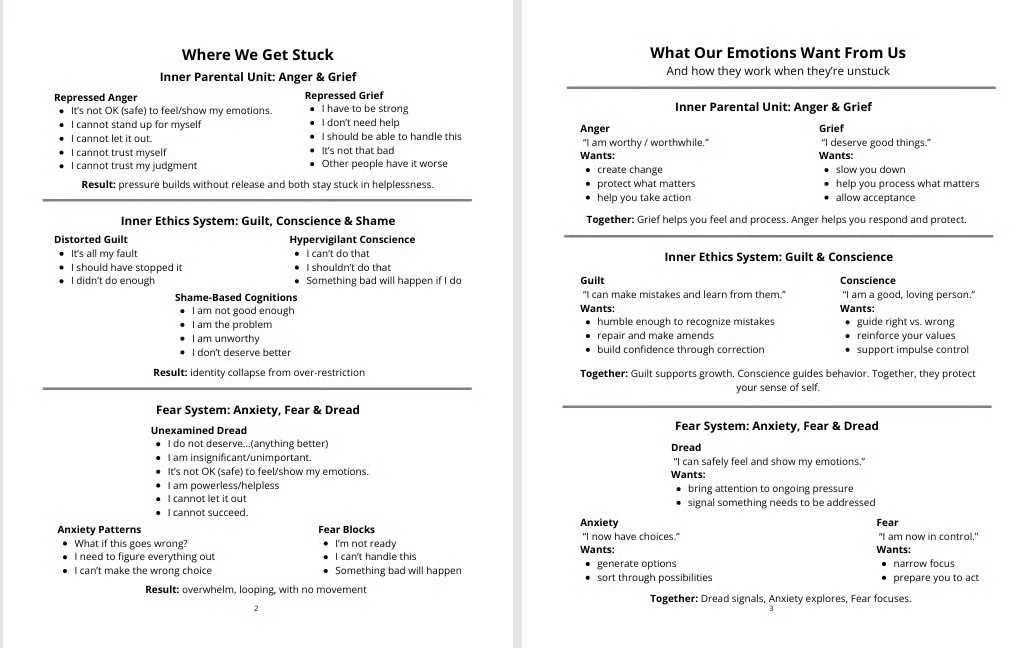
The Inner Parental Unit — Anger & Grief
Grief helps you slow down, acknowledge what hurts, and process loss, exhaustion, injustice, disappointment, and emotional pain.
Anger helps you protect what matters, recognize boundaries, create change, and move toward action.
When one of these emotions gets blocked, the other may end up carrying the emotional load alone. That can leave you stuck in helplessness, emotional exhaustion, over-functioning, or emotional armoring.
This section helps anger and grief begin working together again so protection and compassion don’t have to compete with each other.
The Inner Ethics System — Guilt, Conscience & Shame
This section helps you separate healthy guilt and conscience from toxic shame.
You’ll explore how shame turns “I made a mistake” into “I am the mistake,” and how otherwise healthy traits like empathy, accountability, humility, kindness, and conscience can get pushed into survival overdrive through perfectionism, self-abandonment, over-apologizing, over-functioning, and fear of doing something wrong.
You’ll also practice recovering from mistakes without collapsing into shame, staying connected to your values, and repairing what actually needs repairing without turning the mistake into your identity.
The Fear System — Dread, Anxiety & Fear
Dread, anxiety, and fear each have a different job.
Dread brings attention to ongoing pressure. Anxiety explores possibilities and options. Fear narrows the focus and prepares you to act.
When this system becomes overloaded by Complex PTSD, those emotions can get tangled with helplessness, shame programming, overwhelm, and the belief that you don’t really have choices.
This section helps you understand what each emotion is trying to communicate and gives you practical ways to work with that system without getting trapped inside survival mode.
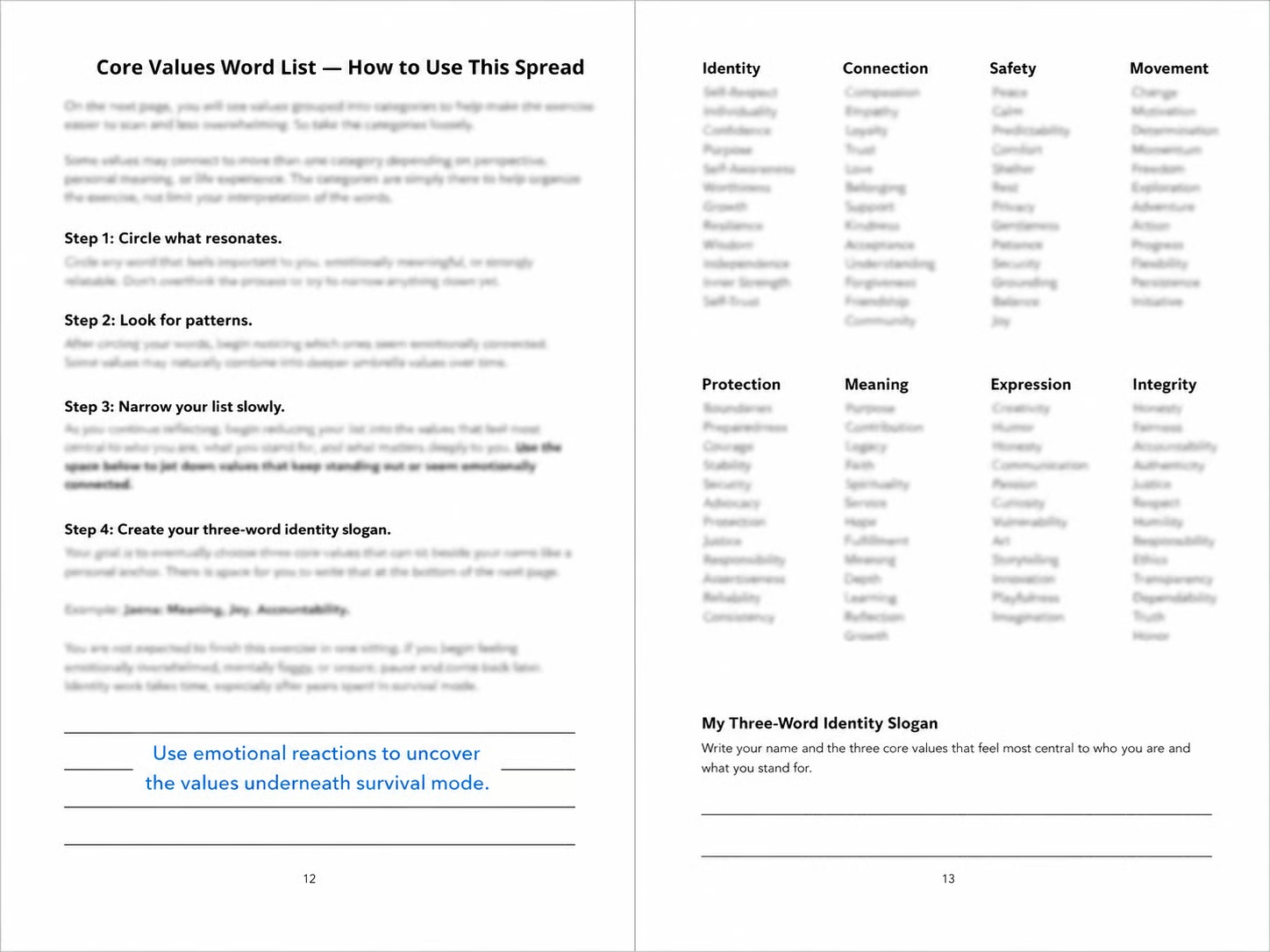
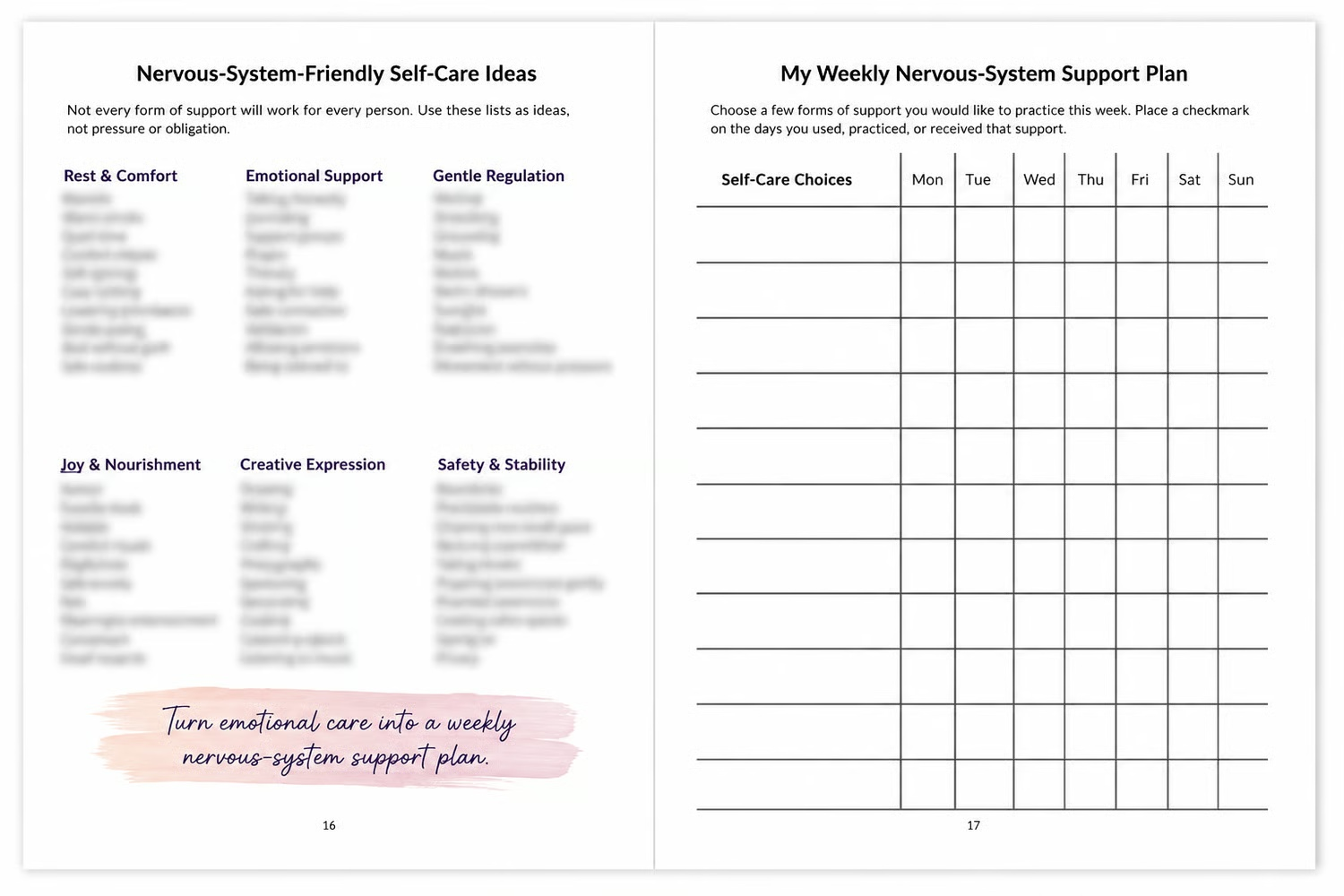
Throughout Emotional Resiliency, you’ll also work with core values and identity, nervous-system-friendly self-care, self-advocacy, shame recovery, healthy guilt, emotional expression, cognition work, and practical exercises designed to help your emotional systems process, protect, guide, repair, and communicate more effectively.
The workbook is built around a simple but important idea: healing emotions means understanding both what you feel and what trauma taught you to believe about what you feel.
Agency Repair
Escape the Trauma Matrix: Level 1
Escape the Trauma Matrix: Level 1 is an interactive guidebook for working with learned helplessness, fear prediction, reward prediction, and resiliency.
Learned helplessness begins to take hold when the nervous system starts expecting effort, hope, change, or forward movement to cost more than it gives back. Over time, risk starts feeling louder than reward.
This workbook gives you a map for working with that pattern step by step.
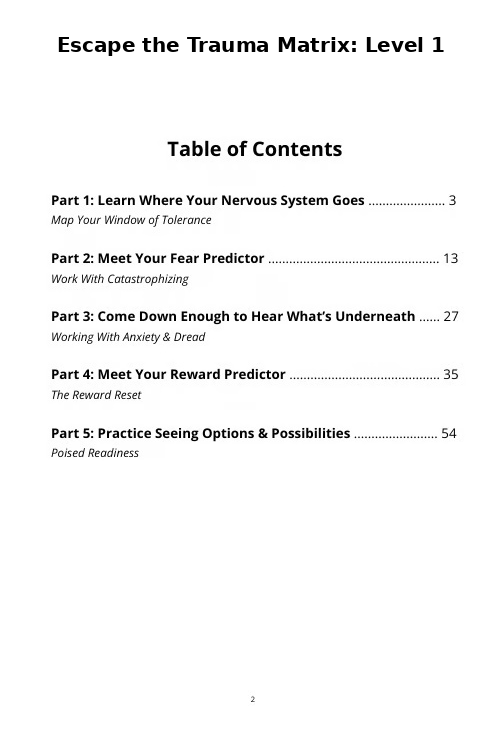
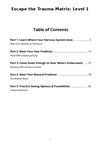
Part 1 — Learn Where Your Nervous System Goes
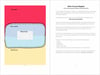
Map Your Window of Tolerance
You begin by learning where your nervous system lands when stress rises.
This section helps you recognize what steadiness feels like, what pushes you toward hyperarousal, what drops you into shutdown, and what helps you return.
Your Window of Tolerance becomes the starting map for everything that follows.
Part 2 — Meet Your Fear Predictor
Work With Catastrophizing
Here, you begin working with the future your nervous system is predicting.
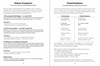
The workbook separates two different fear lanes:
False Prophet — Story Fear
The disaster movie, worst-case prediction, or frightening future your mind can clearly describe.
Silent Alarm — Body Fear
The dread, avoidance, urgency, or shutdown that shows up before you even have words for what feels dangerous.
You map the broad staircase toward the outcome you want, find the point where uncertainty gets loud, and then shrink that step until it feels small enough to work with.
From there, you create a Tiny Contract: one contained promise you can actually keep. You stop where you said you would stop, soothe afterward, add a small reward, and capture proof of what really happened.
That repeated sequence begins giving your fear predictor newer evidence to work from.
Part 3 — Come Down Enough to Hear What’s Underneath
Working With Anxiety & Dread
After working with fear prediction, the nervous system may still be running hot.
This section acts as a bridge.
You give anxiety somewhere to land through Dump It, reconnect with what’s still holding you now through Thank It, help the body come down, and then listen for the dread underneath the mental noise.
That dread often points toward pressure, obligation, exhaustion, or something that has been costing more than it gives back.
Part 4 — Meet Your Reward Predictor
The Reward Reset
Once fear and anxiety have come down enough to listen, the workbook turns toward a different question:
What has your brain learned to expect when effort is involved?
This section looks at effort, payoff, disappointment, relief, and reward.
Sometimes the good thing technically happens, but the reward never really lands. You finish something and immediately move the goalpost. You receive praise and dismiss it. You succeed, but stay too stressed to feel the payoff.
When that happens often enough, the brain may still learn: that cost too much or that wasn’t worth it.
The Reward Reset helps you notice what your reward system currently trusts, what disrupts that trust, and what kinds of reliable experiences begin teaching the brain that effort can still lead somewhere worthwhile.
Part 5 — Practice Seeing Options & Possibilities
Poised Readiness
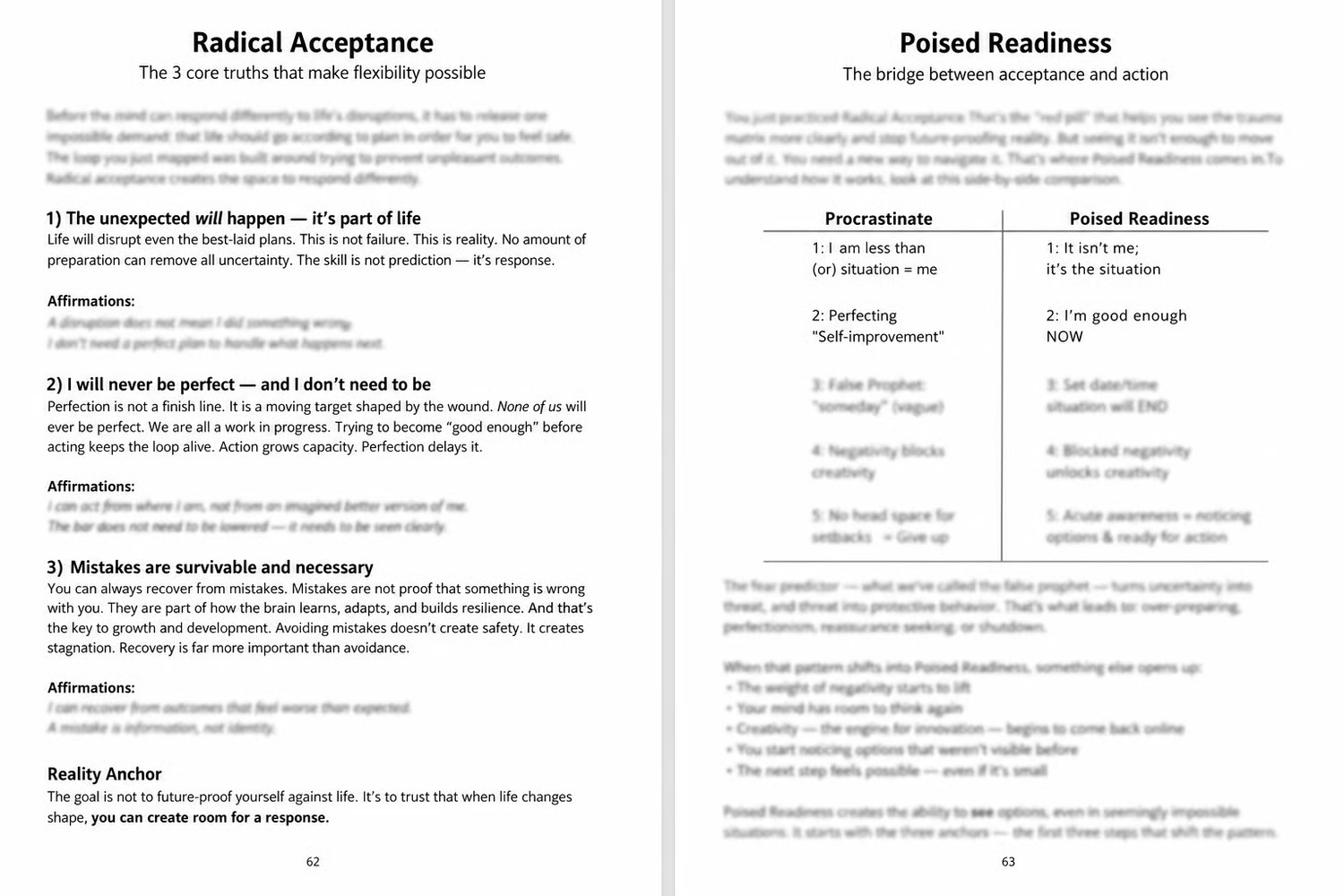
Poised Readiness is where the work begins opening back into possibility.
After mapping your nervous system, working with fear prediction, and meeting your reward predictor, you practice seeing the next workable option again.
Poised Readiness is steady enough to notice, flexible enough to choose, and grounded enough to move without waiting for perfect confidence.
The workbook helps you separate yourself from the situation, work with the pressure to become “good enough” before acting, give uncertainty clearer boundaries, and make enough mental room for creativity and options to come back online.
About the Five Focused Agency Repair Tools
You may also see five smaller Agency Repair tools sold separately in my Tool Shop:
Window of Tolerance
Catastrophizing
Come Down From Catastrophizing
Reward Predictor Reset
Poised Readiness
Those same five areas are already built into Escape the Trauma Matrix: Level 1.
If you own the full workbook, you don’t need to purchase those five tools separately.
The individual tools are there as smaller entry points for people who want to work on one specific part of Agency Repair without purchasing the complete workbook.
Why These Two Workbooks Are Bundled Together
Emotional Resiliency and Escape the Trauma Matrix: Level 1 work with different parts of the same larger pattern.
Emotional Understanding helps you work with what you feel, what those emotions are trying to do, and what trauma taught you to believe about them.
Agency Repair helps you work with what your nervous system predicts, what it expects from effort, and how fear, reward, and uncertainty influence whether movement feels possible.
One helps you rebuild your relationship with your emotional system.
The other helps you rebuild your relationship with choice, effort, risk, possibility, and action.
Together, they make up Bundle 1 of the digital Level 1 curriculum.
What You Receive
This digital bundle includes:
Emotional Resiliency
The Emotional Understanding workbook.
Escape the Trauma Matrix: Level 1
The Agency Repair workbook, including all five focused Agency Repair sections.
Both are downloadable PDFs you can work through at your own pace.
The Identity Repair Journey Is Separate
This is Bundle 1 of the digital Level 1 curriculum. It isn’t the entire Level 1 curriculum.
Bundle 1 contains the two interactive workbooks:
Emotional Resiliency — Emotional Understanding
Escape the Trauma Matrix: Level 1 — Agency Repair
The Identity Repair Journey is sold separately because it works differently. It’s a journaling system designed to help you keep tracking patterns, building evidence, and strengthening your sense of identity over time.
So if you want the full digital Level 1 curriculum, you’ll need:
Bundle 1 — Emotional Understanding + Agency Repair
and
You don’t have to purchase everything at once. Start with the part of the work that makes the most sense for where you are right now.