
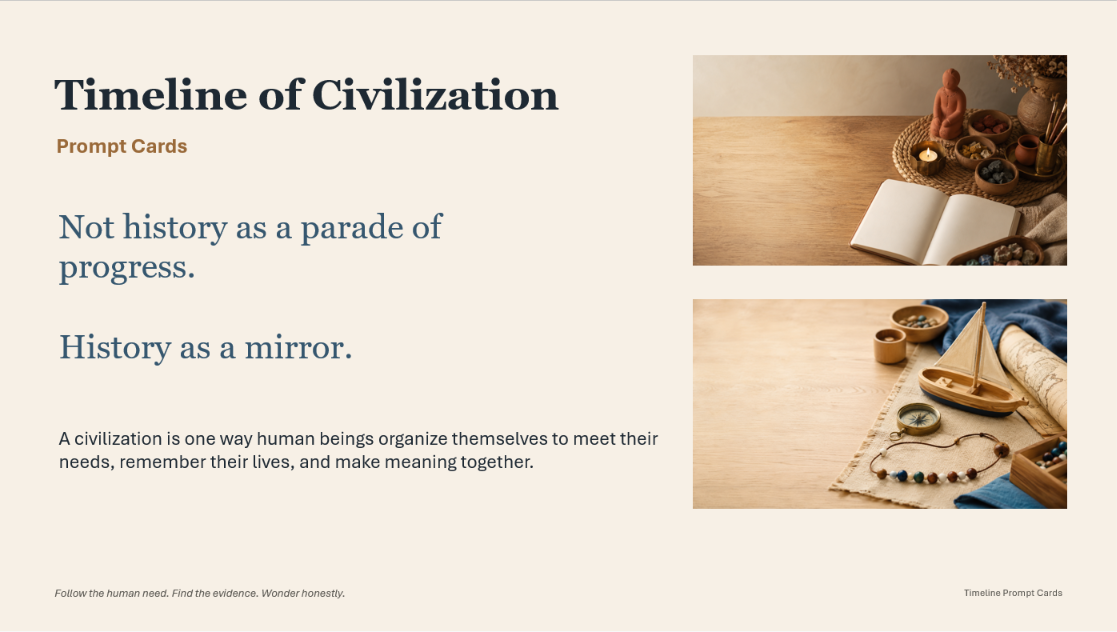
Timeline of Civilization Prompt Cards
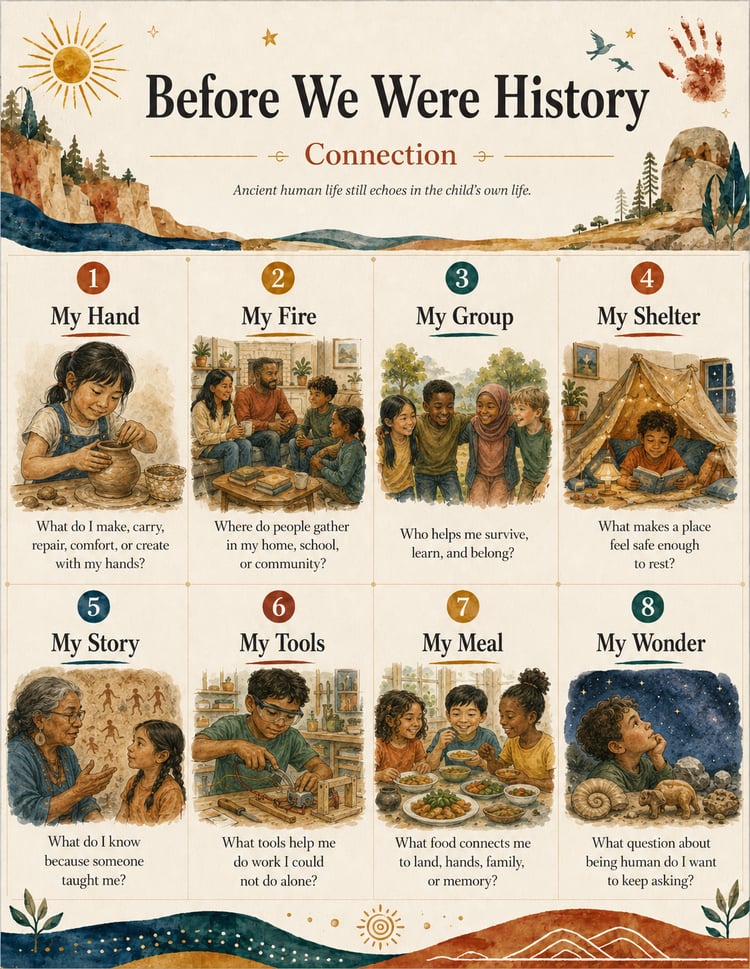
I created a set of Timeline of Civilization Prompt Cards because I wanted a way for children to enter history through human questions, not just facts, dates, and famous places.
In Montessori, the timeline of civilization can become something much deeper than a sequence of “who came first.” It can become an invitation to wonder about how human beings, across time and place, have met their fundamental needs.
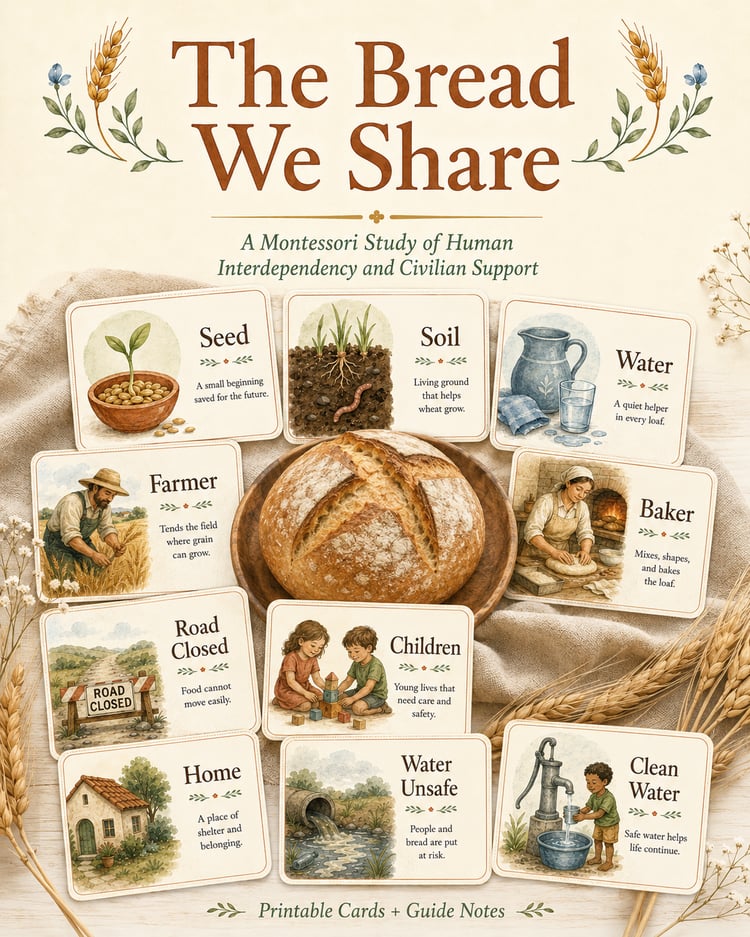
How did people find food? Build shelter? Protect themselves? Move across land and water? Make beauty? Create tools? Remember their stories? Explain mystery? Organize community? Care for one another?
These cards were created to help children follow those questions with more care.
Each card gives students a path into research without turning the work into a simple fact hunt. The goal is not just to collect interesting information about ancient civilizations. The goal is to help children notice evidence, compare human responses, and ask what those responses reveal about what people valued, protected, feared, and hoped for.
I also wanted the resource to hold a more honest frame.
Civilization is not a clean staircase from “simple” to “advanced.” If we are not careful, timelines can quietly teach children to rank people, cultures, and ways of life. These prompt cards are meant to slow that down. They ask children to look at human brilliance while also wondering about cost, labor, land, power, and responsibility.
The deck includes prompt cards for the fundamental needs of humans, civilization inquiry, reflection, and curated research links so children can begin finding meaningful facts from thoughtful sources.
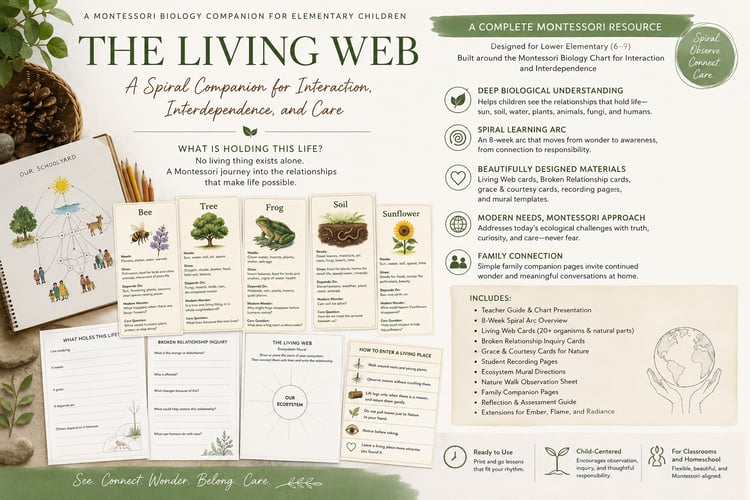
This material is designed to enter The Spiral Companion during Week 4, come fully alive in Week 8, deepen through Weeks 17–20, and return throughout the second half of the year as children study community, tools, shelter, food, water, ceremony, time, and legacy.