
Smart Humectant Blends That Resist Evaporation
Humectants play a central role in modern skincare formulation, yet their performance varies dramatically depending on molecular structure, environmental humidity, and how they interact with the stratum corneum. While traditional humectants such as glycerin, propanediol, and sorbitol are effective water binders, they can lose efficiency when exposed to dry climates or when used alone without supporting ingredients. This has prompted a shift within formulation science toward more advanced hydration systems that are designed not simply to attract water, but to retain it, regulate it, and deliver sustained moisturisation under a wide range of environmental conditions.
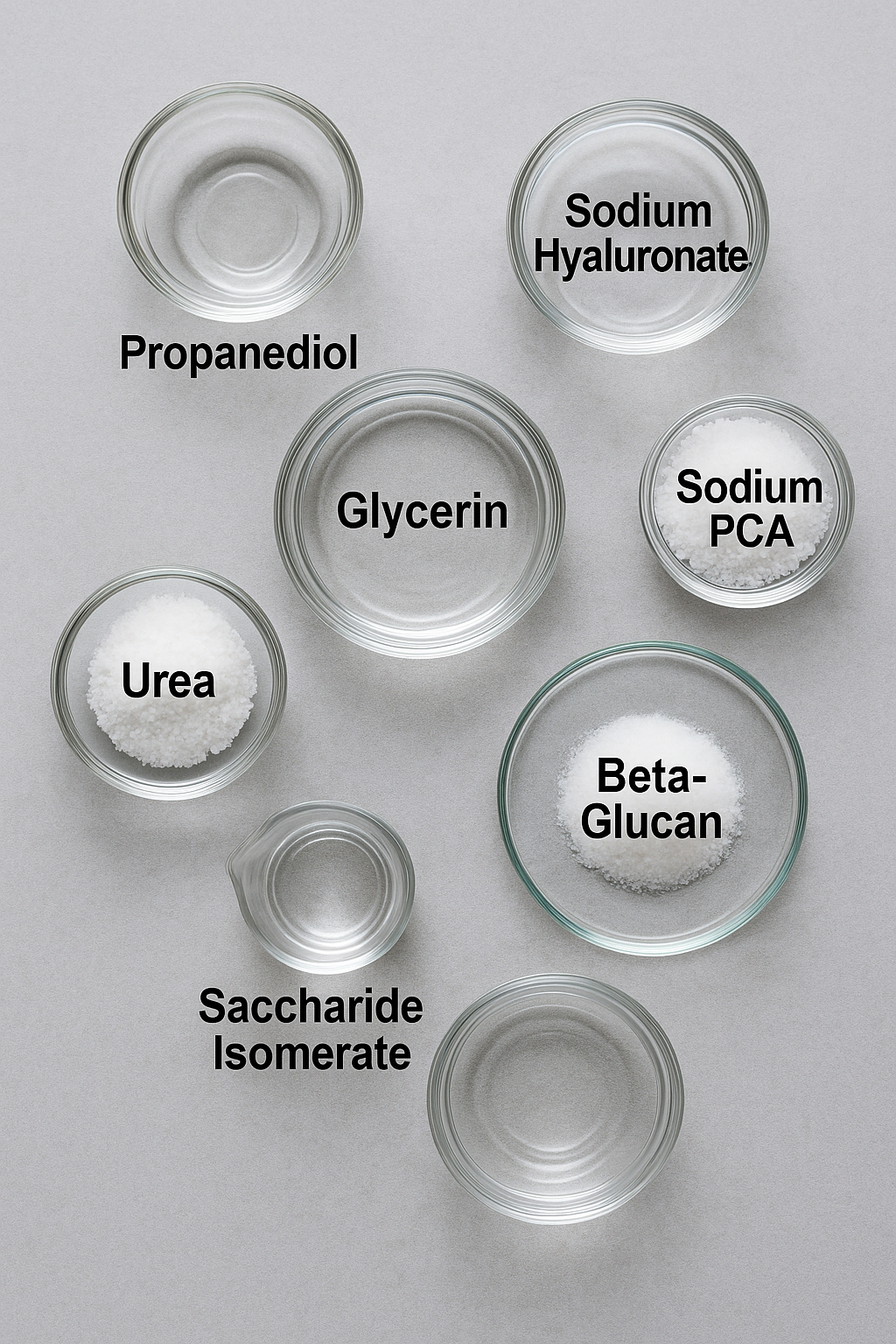
Smart humectant blends represent the next evolution of hydration science. These blends combine different categories of humectants including small-molecule agents, NMF mimics, corneocyte-binding saccharides, and high-molecular-weight polysaccharides to create multi-mechanism hydration pathways. Unlike single humectants, which can evaporate or pull moisture out of deeper epidermal layers in low humidity, smart blends are engineered to resist evaporation, maintain water activity, and support the barrier function simultaneously. This results in longer-lasting hydration, improved skin comfort, and more stable formulation performance.
Understanding how these blends work is essential for formulators who want to create high-performance, climate-resilient skincare products. Smart humectant systems allow for tailored hydration strategies that benefit all skin types, particularly those experiencing chronic dryness, tightness, or impaired barrier function. By exploring the mechanisms behind evaporation resistance, molecular diversity, and corneocyte-binding technologies, formulators can design products that deliver measurable improvements in skin hydration and maintain moisture balance throughout the day.