
How to Use Customer Feedback to Improve Your Formulations
Customer feedback is one of the most valuable resources for cosmetic formulators. It provides real-world insights into how your products perform, helping you identify areas for improvement, fine-tune textures, and even develop new product lines that better meet consumer needs. Here is how to use customer feedback effectively to enhance your formulations.
1. Collect Feedback from Multiple Sources
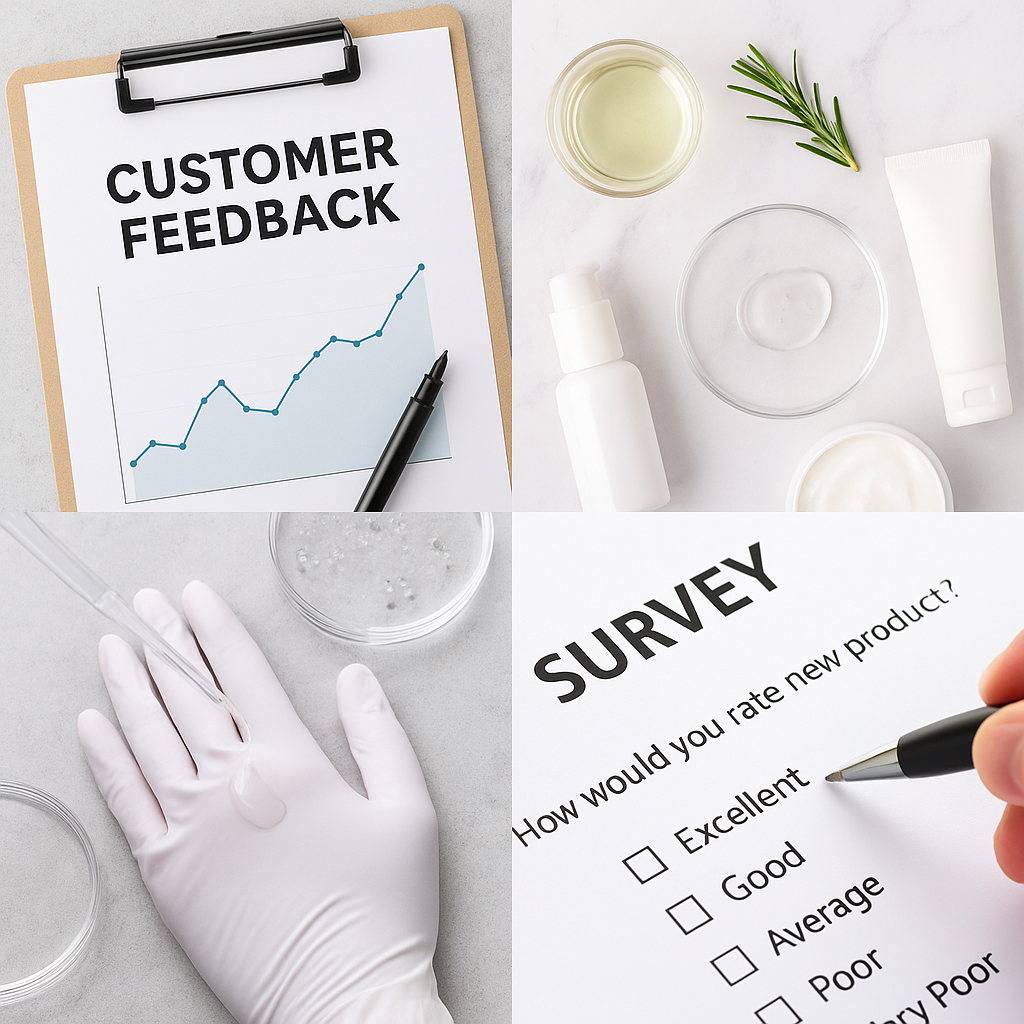
Do not rely on a single source of information. Gather feedback through:
- Direct communication – Emails, customer service enquiries, and follow-up messages.
- Product reviews and testimonials – Online reviews often highlight recurring issues or positive features.
- Social media – Comments and direct messages can provide honest, unfiltered opinions.
- Professional testers or focus groups – Ideal for structured feedback before launching a new product.
Make sure you ask targeted questions, such as:
- "How does the product feel on your skin?"
- "Did you notice any changes after consistent use?"
- "What do you wish this product did differently?"
2. Identify Patterns in Feedback
One or two negative comments do not necessarily indicate a formulation issue. However, repeated patterns, such as “too sticky,” “takes too long to absorb,” or “not moisturising enough” signal areas that may require reformulation.
Group feedback into categories:
- Texture and sensory experience – Feel, scent, spreadability.
- Performance and results – Hydration, brightening, soothing, etc.
- Stability concerns – Separation, colour changes, or unusual odour.
- Packaging issues – Hard-to-use pumps or leaking caps can affect how customers perceive the product, even if the formula itself is stable.
3. Use Feedback to Guide Reformulation
Once patterns are identified, decide which changes are practical and align with your brand’s positioning.
For example:
- If customers find a serum sticky – Adjust humectant levels or explore lighter emollients.
- If absorption is too slow – Review oil phase composition, reduce heavy butters, or experiment with volatile silicones (if permitted by your brand philosophy).
- If irritation is reported – Investigate potential allergens, check pH levels, and consider soothing agents or alternative actives.
Always perform stability and safety testing before releasing a reformulated version.
4. Keep Customers Involved
Customers appreciate transparency and love to feel involved in the product development process. You can:
- Announce that you are reformulating based on their feedback.
- Offer samples of the updated formula for trial.
- Ask for opinions again before officially launching the new version.
This not only builds trust but also turns customers into loyal brand advocates.
5. Maintain Records of Changes
Keep a detailed record of:
- Customer feedback summaries
- Formulation changes made
- Test results after reformulation
This documentation ensures that you can trace improvements and understand what works best for your audience.
6. Use Positive Feedback to Your Advantage
While negative feedback helps you improve, positive feedback tells you what not to change. If customers love the scent, texture, or visible results, ensure you preserve those aspects in future batches or similar product developments.
Conclusion
Customer feedback is not criticism, it is a roadmap to better formulations. By collecting, analysing, and acting on feedback, you can create products that perform better, satisfy customers, and build a stronger reputation as a knowledgeable and responsive formulator.