

CAT-PD: Workaholism — Complete Assessment Toolkit (6 Worksheets)
Do you feel guilty when you stop working? Do you check emails during dinners, skip vacations mentally, and measure your worth by your output? Workaholism is not a productivity superpower — it is a compulsive pattern that quietly burns out careers, damages relationships, and collapses identity. This toolkit gives you the structure to see it clearly and start changing it.
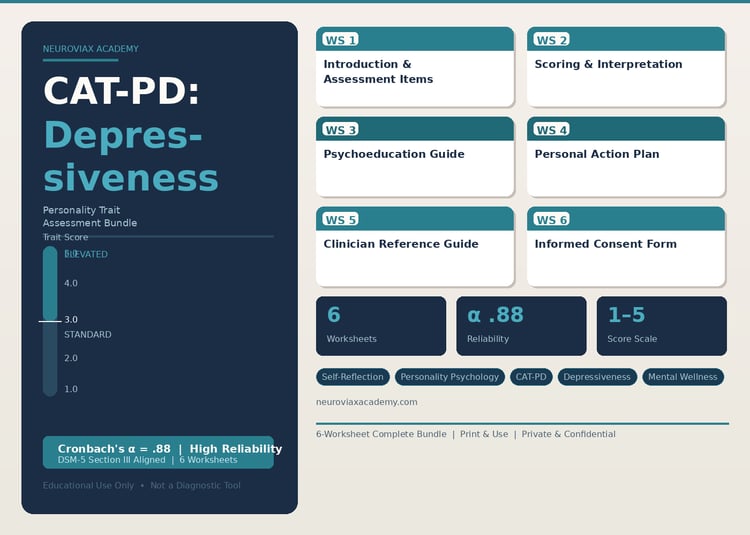
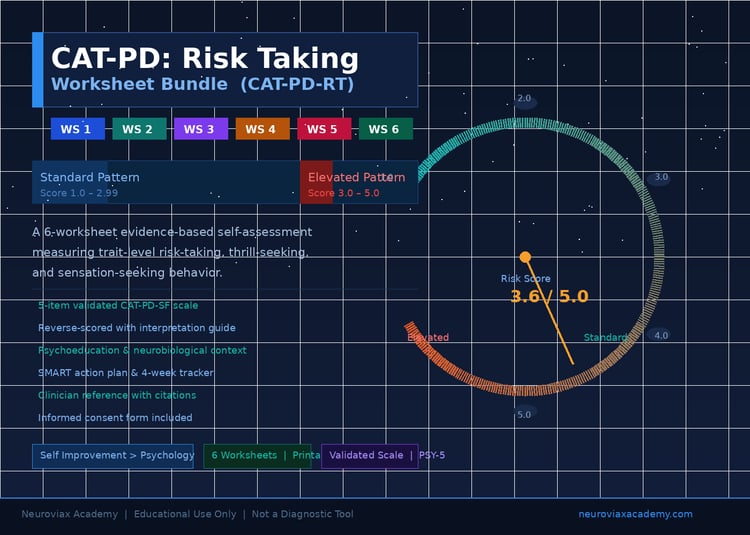
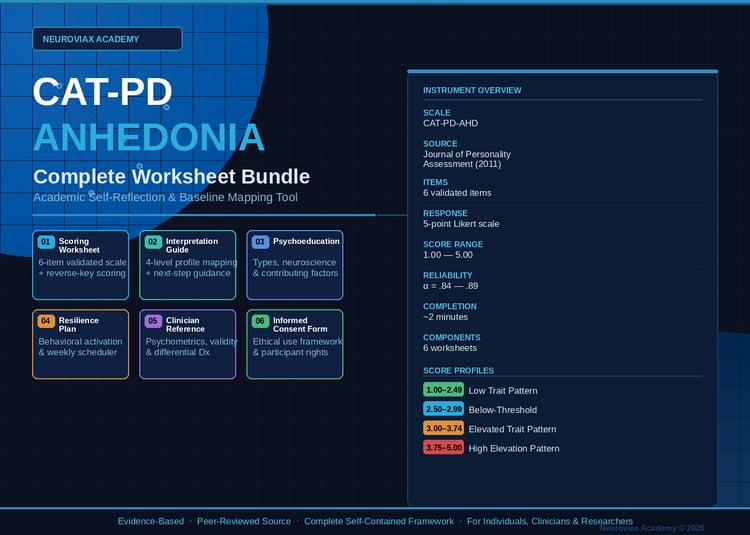
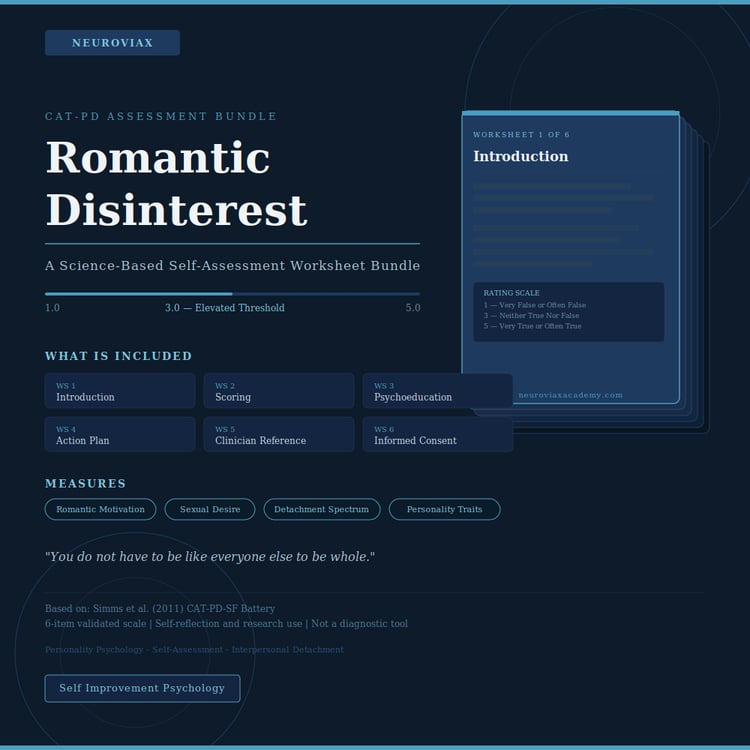
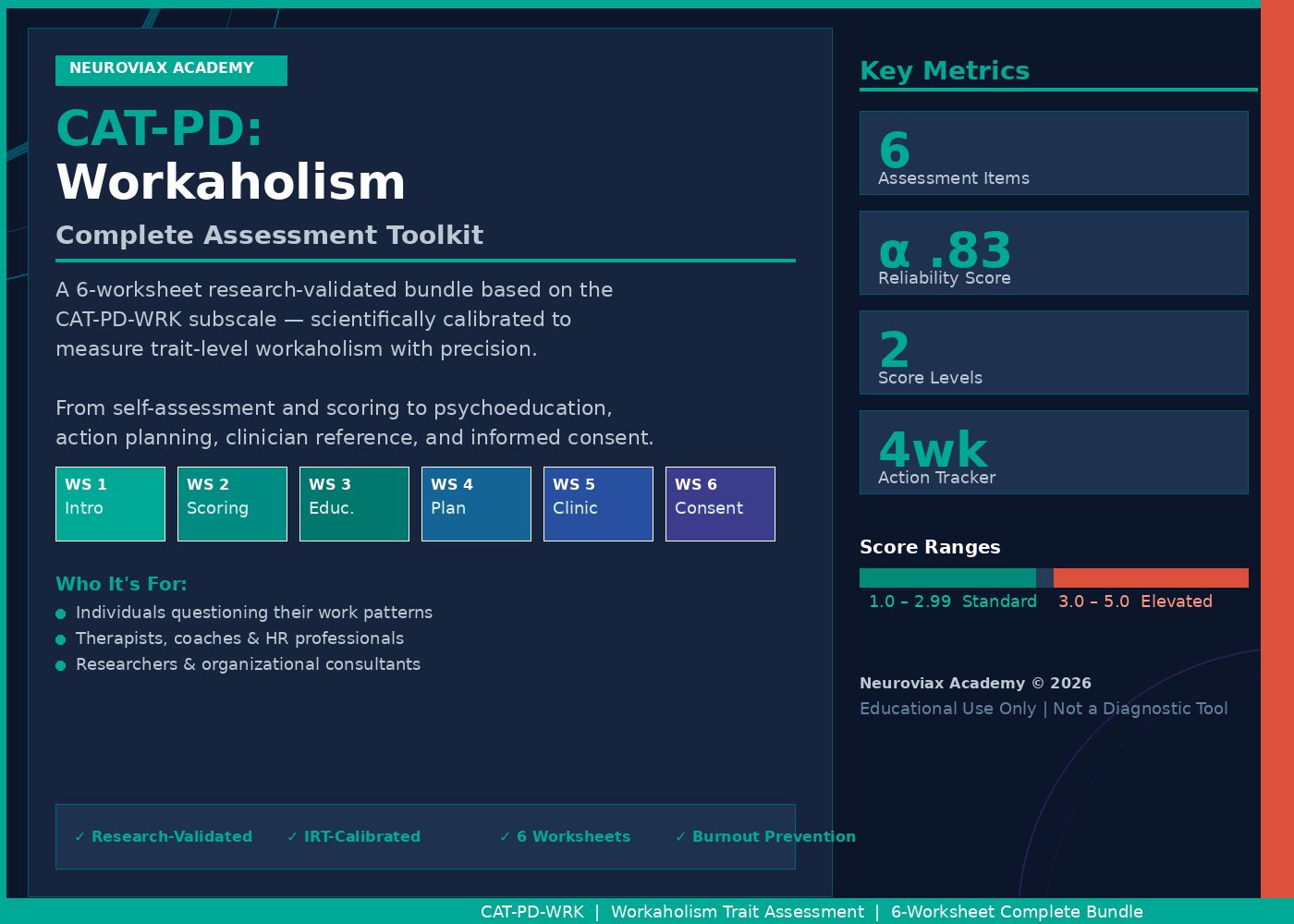
The CAT-PD: Workaholism Complete Assessment Toolkit is a research-validated, 6-worksheet bundle based on the CAT-PD-WRK subscale — a scientifically calibrated instrument derived from the Computerized Adaptive Assessment of Personality Disorder (CAT-PD) developed by Simms and colleagues. With a strong internal reliability (α = .83–.85), this tool measures trait-level workaholism with precision, helping individuals and practitioners go beyond surface-level burnout advice and into the psychological roots of compulsive overwork.
What Is Inside the Bundle
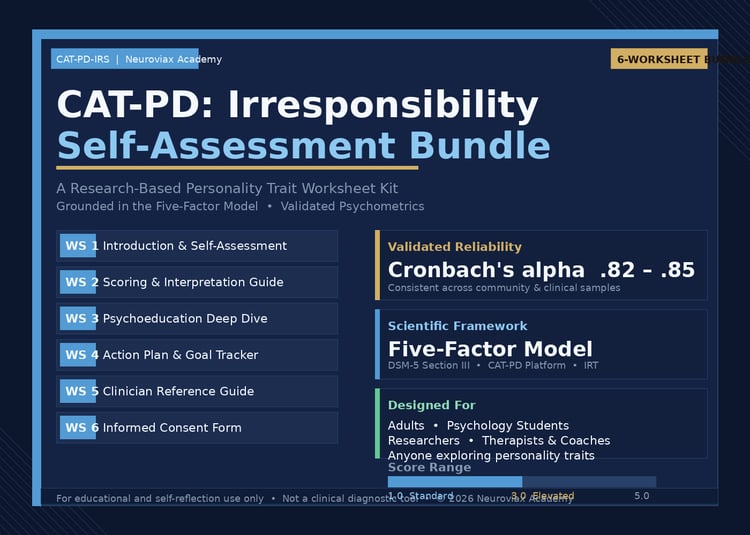
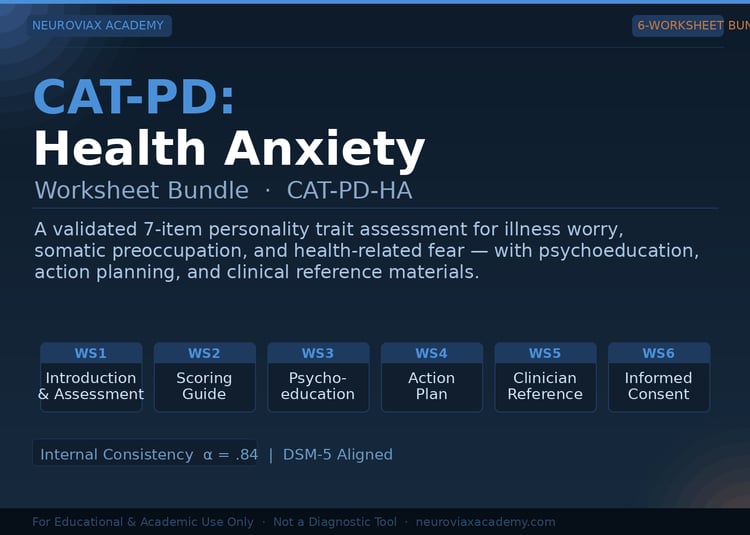
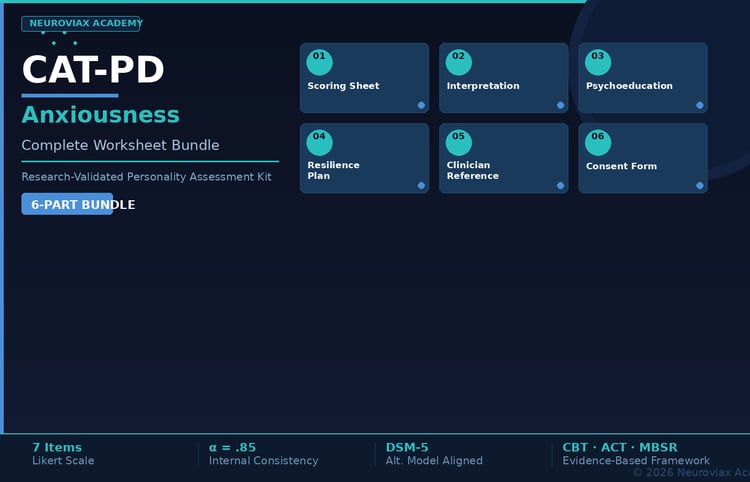
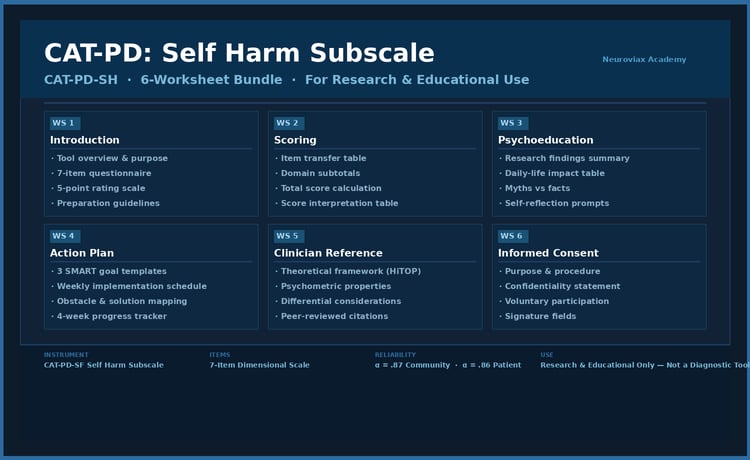
WS 1 — Introduction & Assessment
A complete 6-item self-report instrument rated on a 5-point scale, with full preparation guidance and context on what workaholism actually measures versus what popular culture assumes.
WS 2 — Scoring Worksheet
Step-by-step scoring instructions, a visual score profile chart, and a clear interpretation table. No reverse scoring required. A score above 3.0 signals elevated workaholism patterns worth addressing.
WS 3 — Psychoeducation Guide
Research-backed education covering the neuroscience of workaholism, how it differs from high achievement, its relationship to burnout, identity fusion with work, and relationship costs. Includes a daily-life impact table, protective factor checklist, myths vs. facts, and five structured self-reflection prompts.
WS 4 — Action Plan Worksheet
A personalized planning framework including SMART goal setting for three behavioral targets, a full weekly implementation schedule (morning, afternoon, evening), obstacle mapping, support system identification, and a 4-week progress tracker with a 30-day review section.
WS 5 — Clinician Reference Guide
A professional-facing document covering the theoretical framework, psychometric properties, differential diagnosis considerations, scoring and interpretation guide for clinical use, and a full evidence base with peer-reviewed citations from Simms, Miller, Thimm, and Goldberg.
WS 6 — Informed Consent Form
A formal consent document outlining the educational purpose, voluntary participation terms, confidentiality scope, benefits and risks, and a signature block for individual or guardian acknowledgment.
Who This Is For
- Individuals who suspect their relationship with work has crossed into compulsive territory
- Professionals experiencing burnout, chronic fatigue, or emotional exhaustion linked to overwork
- High achievers who want to understand whether their drive is healthy ambition or anxiety-driven compulsion
- Therapists, coaches, and counselors working with clients on work-life balance, burnout prevention, or personality trait exploration
- Researchers and academics conducting personality assessment or occupational psychology studies
- HR professionals and organizational consultants assessing workforce wellbeing
Why This Toolkit Stands Apart
Most burnout resources offer generic tips. This toolkit uses a validated psychometric instrument grounded in item response theory, giving you a reliable baseline measurement — not a vague quiz. The bundle moves you through assessment, understanding, and action in a structured sequence, so insight translates into behavioral change rather than staying on paper.
This is not a clinical diagnostic tool. It is an evidence-informed self-reflection and educational resource. If you have concerns about your mental health, please consult a qualified professional.
If your identity has become indistinguishable from your job title, this toolkit is the first honest mirror you have had in years. Get it today and begin building a relationship with work that is sustainable, not self-destructive.