

CAT-PD: Affective Lability — Complete 6-Worksheet Clinical Assessment Bundle
CAT-PD: Affective Lability — Complete 6-Worksheet Clinical Bundle
If you work with clients who struggle with emotional dysregulation, unpredictable mood shifts, or suspected personality disorder features, you need more than a single screening item — you need a structured, research-backed assessment system that takes you from first measurement to an actionable resilience plan.
This is the CAT-PD Affective Lability Complete Bundle — a professionally designed, 6-worksheet clinical toolkit built around the validated CAT-PD Affective Lability Subscale (CAT-PD-AL), originally developed by Simms and colleagues (2011) at the University at Buffalo. Every worksheet in this bundle is formatted for immediate clinical or educational use, grounded in peer-reviewed psychometric research, and cross-culturally validated across Norwegian, Turkish, Portuguese, and Chinese samples.
What Is Affective Lability — and Why Does It Matter?
Affective lability refers to the frequency and intensity of rapid, contextually incongruent emotional shifts — not just being "emotional," but experiencing repeated, abrupt mood transitions that disrupt relationships, occupational functioning, and daily stability. As a transdiagnostic trait, it appears across borderline personality disorder, bipolar spectrum disorders, PTSD, and ADHD, making reliable measurement essential for any clinician conducting comprehensive personality or emotional dysregulation assessments.
The CAT-PD-AL subscale measures this construct using 6 Likert-scale items (including 2 reverse-keyed protective items) and produces a single average score on a 1.00–5.00 scale — interpretable immediately against validated clinical thresholds.
What Is Inside This Bundle
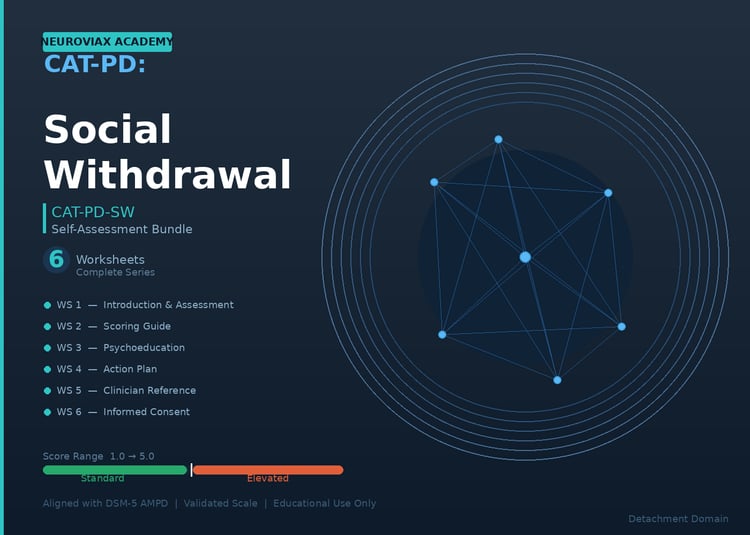
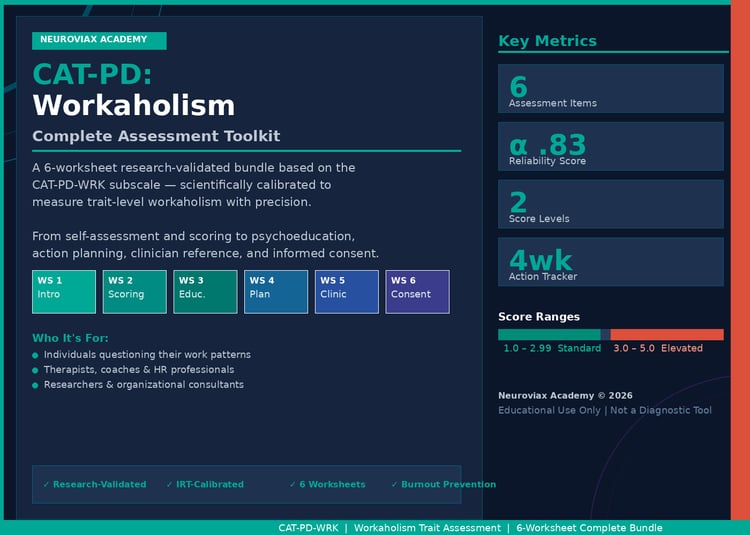
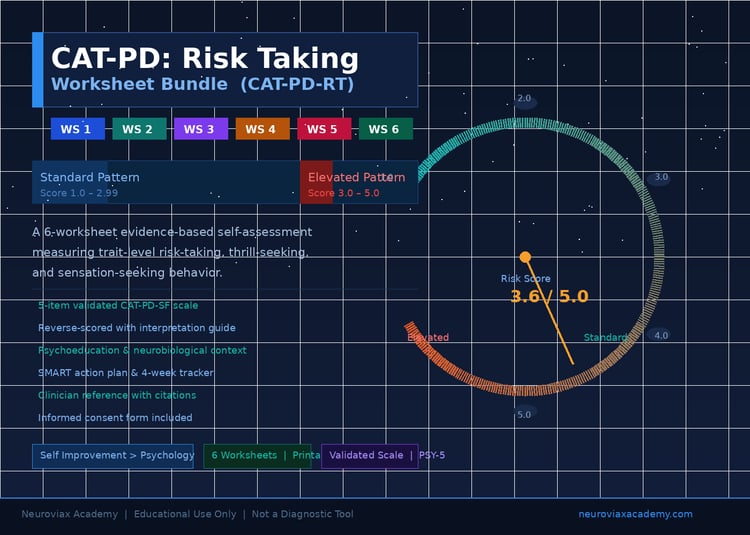
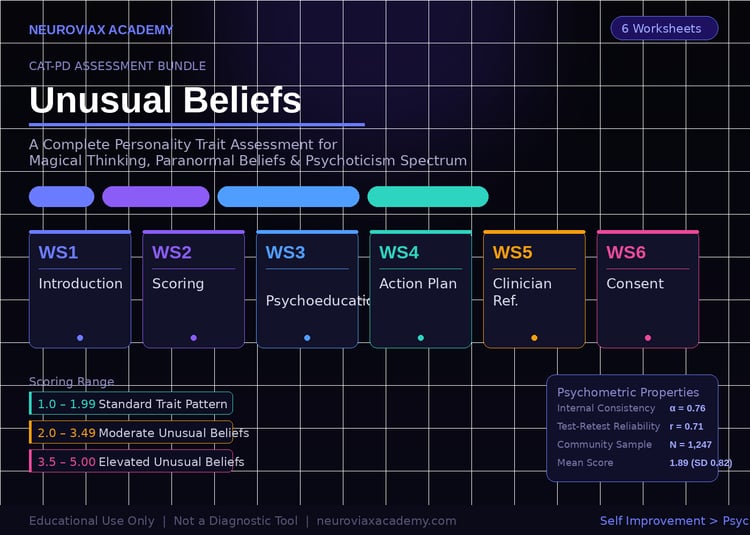
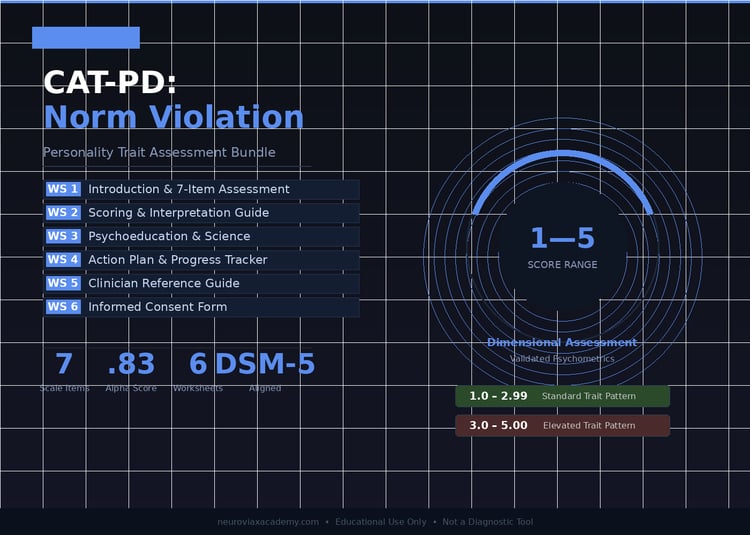
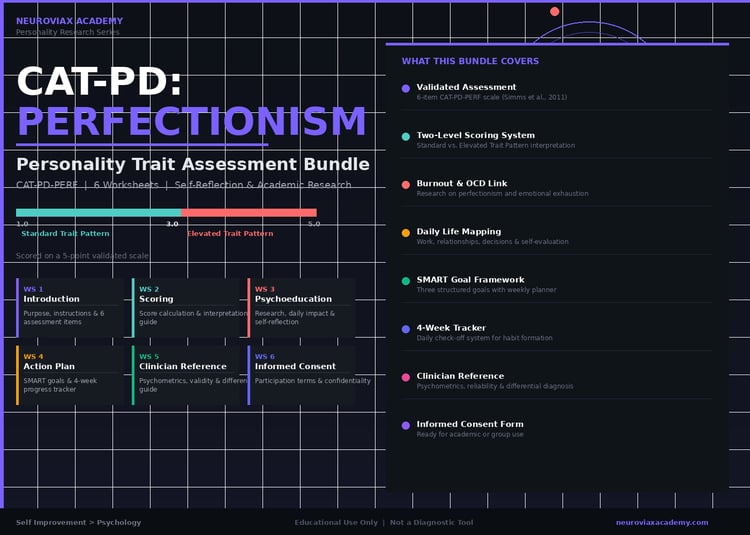
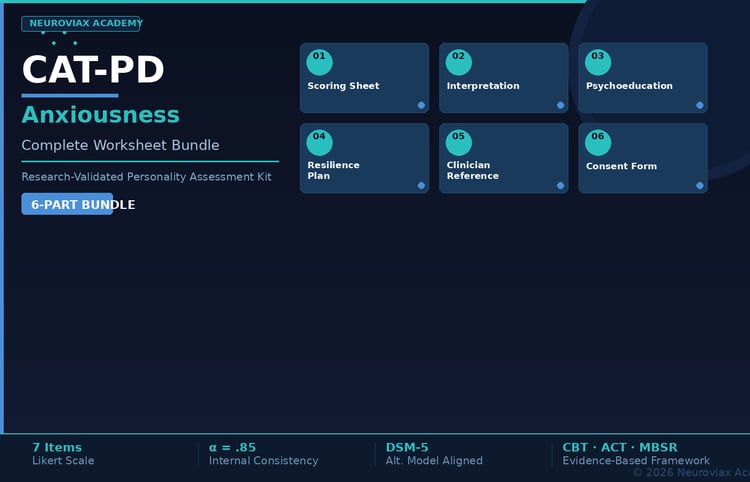
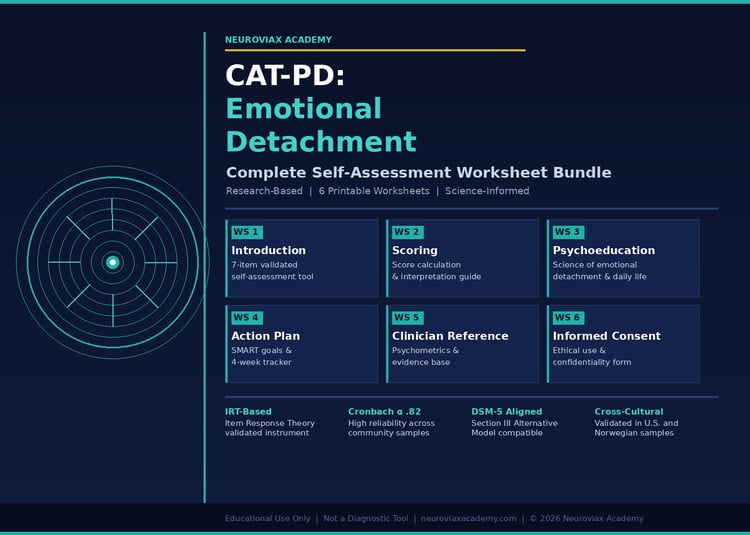
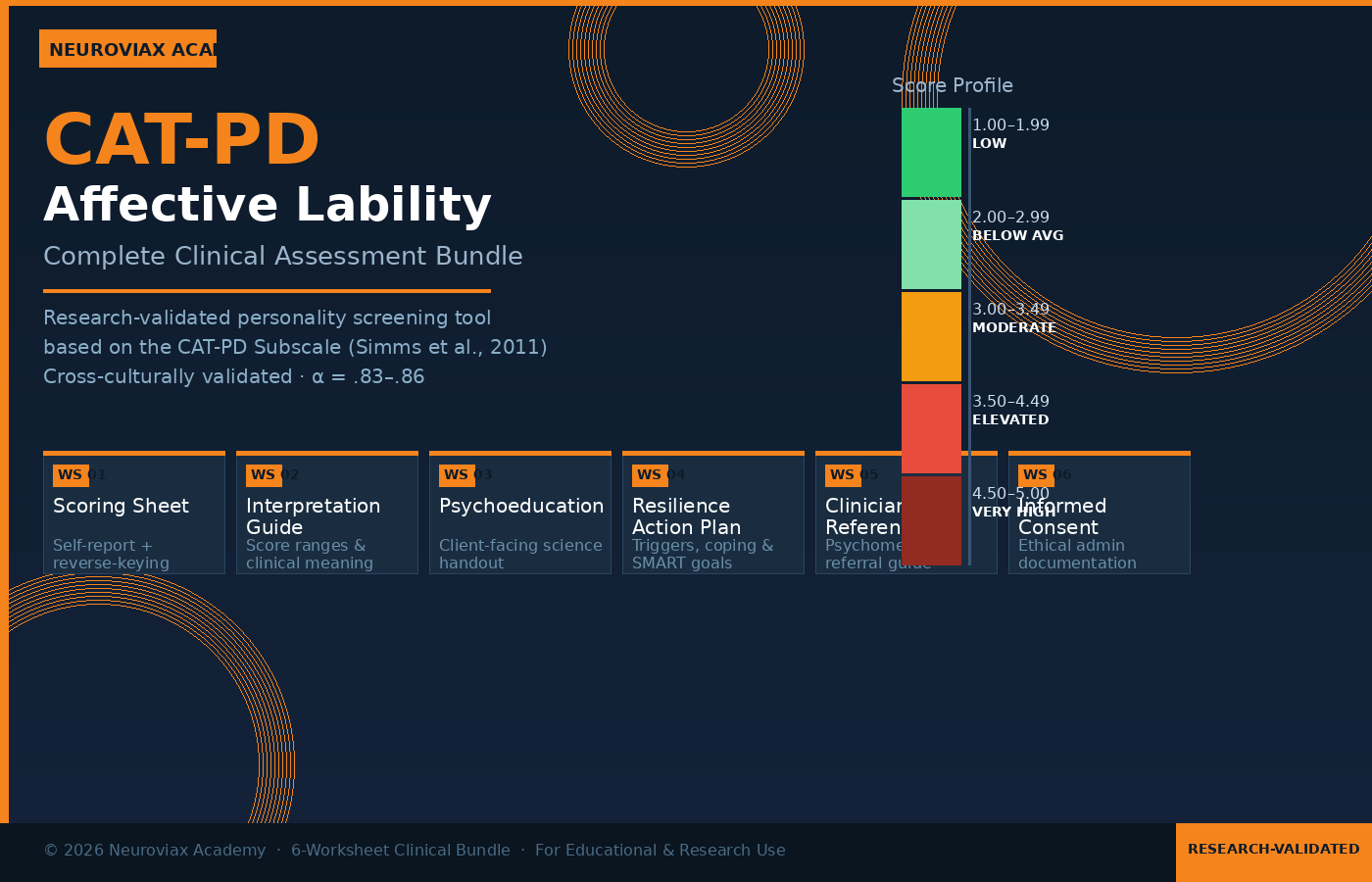
Worksheet 1 — Scoring Sheet: A clean, structured self-report form with all 6 CAT-PD-AL items, step-by-step reverse-keying instructions for items 5 and 6, an average computation section, and a built-in score interpretation table. Estimated administration time is approximately 2 minutes. Designed for both paper-based and digital completion.
Worksheet 2 — Score Interpretation Guide: A detailed narrative guide that explains what each score range means — from Low (1.00–1.99) through Very Elevated (4.50–5.00) — in plain language suitable for client psychoeducation as well as clinical documentation. Includes discussion of what affective lability is and is not, its health and functional correlates (interpersonal conflict, impulsivity, occupational instability), and referral recommendations keyed to specific score thresholds.
Worksheet 3 — Psychoeducation Handout: A take-home handout for clients and participants explaining the science behind the scale, the three-factor structure of affective lability, evidence-based intervention approaches (DBT, mindfulness, cognitive restructuring), and a message that reframes high emotional sensitivity as a manageable trait — not a character flaw. Appropriate for both clinical populations and non-clinical educational settings.
Worksheet 4 — Resilience Action Plan: A structured, fillable action-planning worksheet that guides clients through identifying personal emotional triggers, recognizing early warning signs, building a personalized coping toolkit (including DBT skills such as "check the facts," opposite action, and TIPP), mapping their support network, completing a weekly mood tracker, and setting a SMART goal for emotional regulation. This worksheet bridges assessment to intervention.
Worksheet 5 — Clinician Reference Card: A single-document quick-reference for practitioners containing the instrument summary, psychometric properties (internal consistency α = .83–.86, test-retest reliability, cross-cultural validity), score interpretation table with clinical action recommendations, differential diagnostic considerations, and a curated reference list of 10 primary academic sources. Suitable for clinical file documentation and supervision contexts.
Worksheet 6 — Informed Consent Form: A professionally formatted consent document that clearly states the tool's educational purpose, what it does and does not do, participant rights, confidentiality practices, and a dual-signature section for both participant and clinician or administrator. Meets standard ethical requirements for research and educational settings.
Who This Bundle Is For
This bundle is designed for licensed mental health professionals (psychologists, therapists, counselors, psychiatrists) who need a validated screening tool for affective lability in personality assessment workflows. It is also well suited for clinical researchers and graduate students building assessment batteries, mental health educators and trainers developing psychoeducation programs, and coaches or wellness practitioners operating within educational frameworks who want to provide clients with a research-grounded self-reflection tool.
This bundle is not intended as a standalone diagnostic instrument and is not appropriate for individuals seeking a self-administered clinical diagnosis. The consent form and clinician reference card are designed to support responsible, ethical use in supervised contexts.
Key Features
All six worksheets follow a consistent, professional layout produced by Neuroviax Academy (© 2026). The bundle covers the complete assessment workflow — from informed consent through scoring, interpretation, psychoeducation, and resilience planning — without requiring any additional external materials. Each document is print-ready and includes clear section headers, fillable fields, and clinician guidance notes where applicable.
The underlying scale is validated across multiple cultures and clinical populations, with published reliability data across community (α = .83) and clinical samples (α = .86), making it suitable for use in diverse practice settings.
References Supporting This Instrument
The bundle cites primary academic sources including Simms et al. (2011), Look et al. (2010), Wright & Simms (2014), Aas et al. (2015), and cross-cultural validation studies by Thimm et al. (2018), Gül & Gül (2020), Pechorro et al. (2022), and Zhang et al. (2023). A full reference list is included in Worksheet 5.
If your practice needs a structured, academically grounded system for assessing and addressing emotional dysregulation — one that respects both the science and the client's experience — this bundle gives you everything in one download. Add it to your clinical toolkit today.