
Ecmo Explained a Pump Room Podcast
The Pump Room: ECMO Explained
A practical audio guide for patients, families, and anyone learning the foundations of ECMO
ECMO can enter a family’s life suddenly—often during a serious illness, in an intensive care unit, and with little time to absorb unfamiliar language or technology.
The Pump Room: ECMO Explained is an audio learning series designed to make the foundations of ECMO easier to understand. It explains the purpose of ECMO, the people who manage it, and the realities surrounding this form of temporary heart and lung support in clear, respectful language.
This series is for:
- ECMO patients and their families
- Friends and caregivers trying to understand what a loved one is experiencing
- Students and new clinicians seeking a grounded introduction to ECMO
- Anyone who wants a clearer explanation of the technology, the care environment, and the decisions involved
Episodes included
The High Stakes of ECMO Life Support
An introduction to ECMO as a high-acuity form of temporary support: why it may be used, what it can and cannot do, and why continuous monitoring and coordinated care matter.
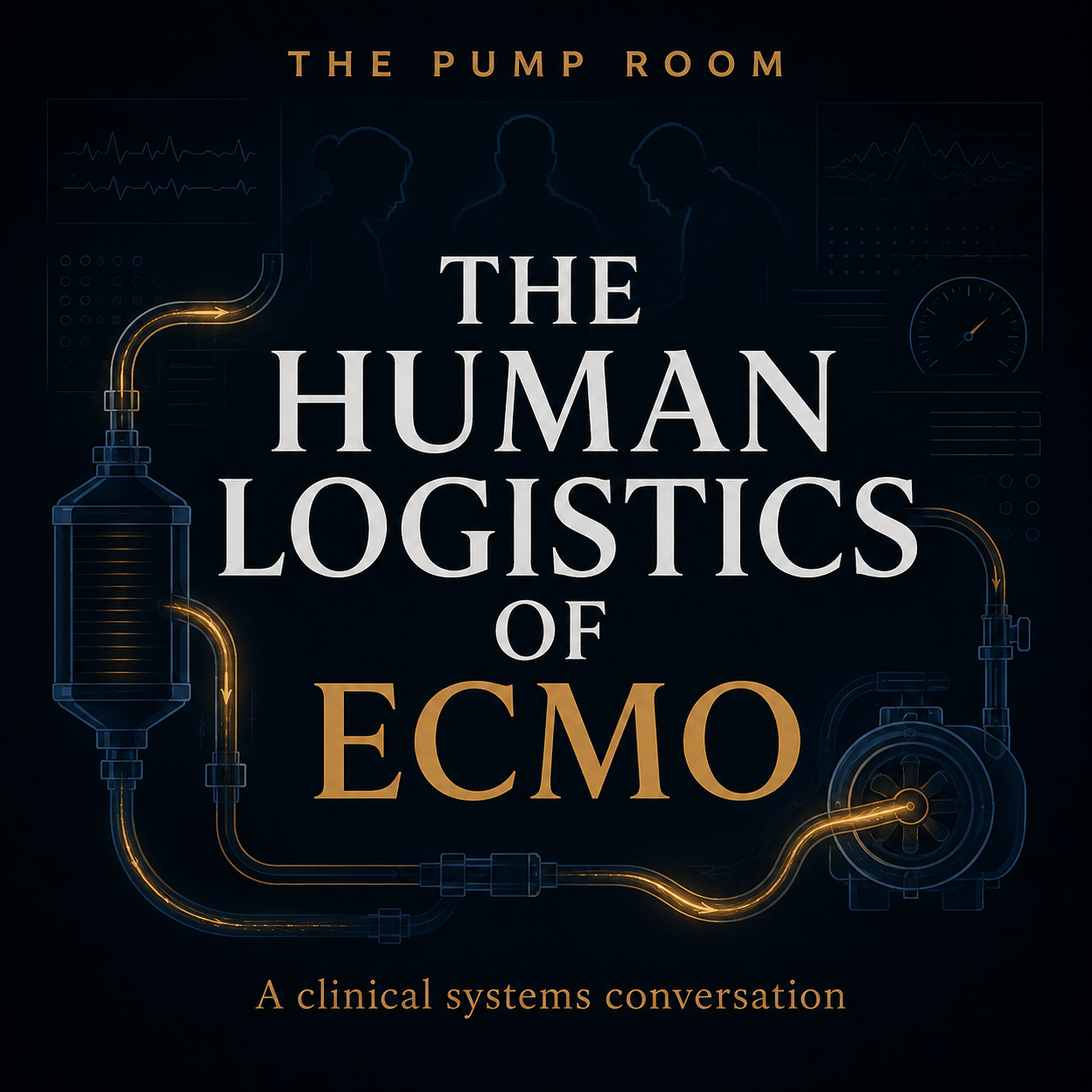
The Human Logistics of ECMO
A look beyond the equipment at the work around it: communication, bedside vigilance, multidisciplinary coordination, and the human decisions that make ECMO care possible.
What you will learn
- The basic purpose of ECMO support
- The difference between supporting the heart, lungs, or both
- What the pump, oxygenator, and circuit are designed to do
- Why ECMO requires an experienced multidisciplinary care team
- How patients and families can prepare for conversations with the clinical team
- The questions that help make complex information more understandable
This series does not promise simple answers to complex medical situations. Instead, it provides a reliable foundation so patients and families can better understand the language, equipment, and decisions surrounding ECMO care.
Important: This resource is educational only. It is not medical advice and does not replace discussions with the patient’s treating physicians, perfusionists, nurses, respiratory therapists, or other members of the clinical team. Every patient’s condition, treatment plan, risks, and prognosis are individual.