
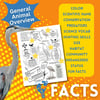

Great Blue Heron - Facts & Coloring
Great Blue Heron - Facts & Coloring
Grades: 3rd – 6th
Subjects: Science (Life Science, Ecology), Reading Comprehension, Environmental Studies
Black and white for easy printing, single-page
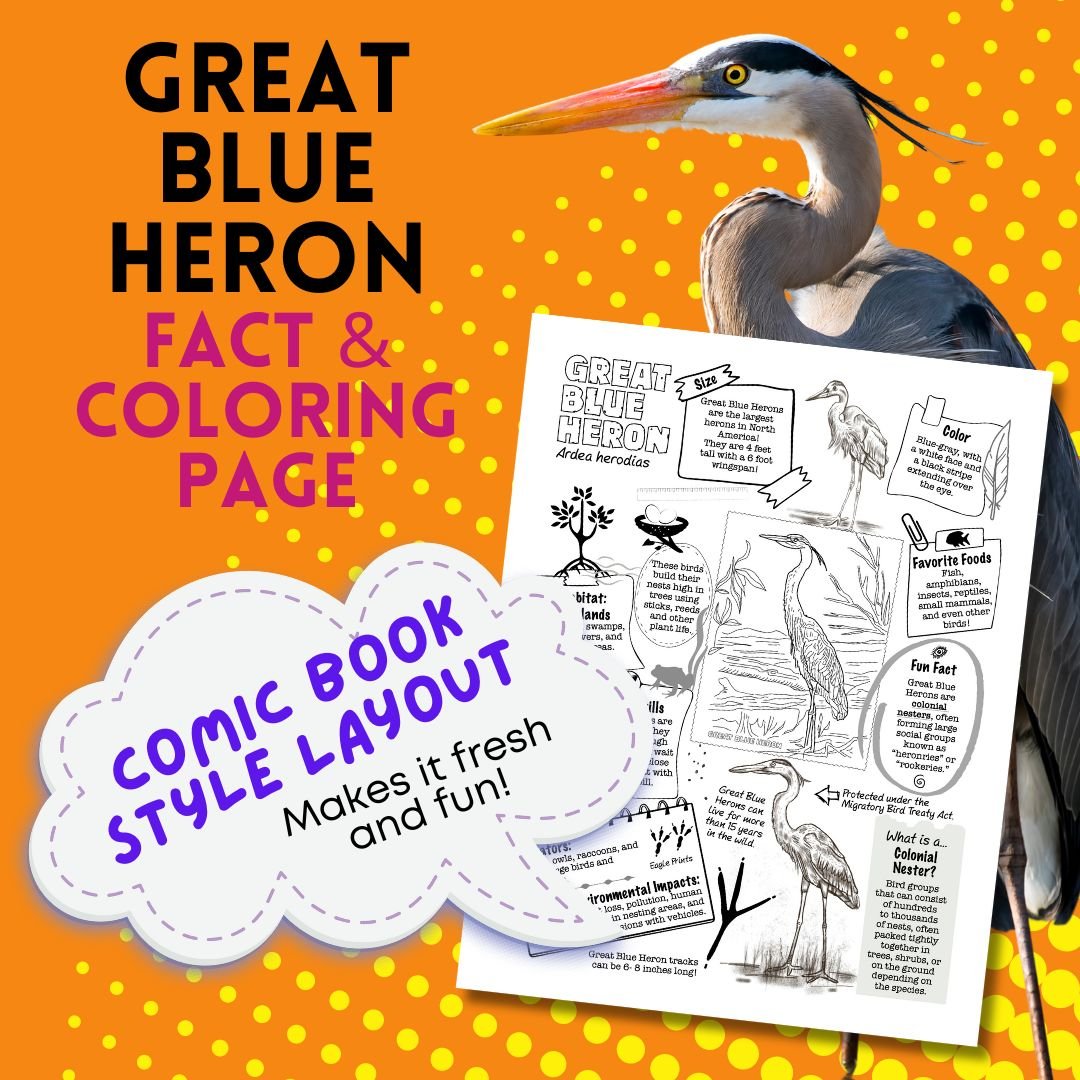
Bring life science and literacy together with this engaging nonfiction reading passage, all about the Great Blue Heron (Ardea herodias) — the largest heron in North America!
This beautifully designed resource introduces students to the heron’s size, habitat, diet, predators, hunting skills, environmental threats, and nesting behaviors. Students will strengthen their comprehension skills while exploring real-world connections to wetlands, ecosystems, and conservation.
Students will:
• Read and analyze a high-interest nonfiction passage.
• Learn about food webs, predators, and habitats.
• Explore environmental impacts such as pollution and habitat loss.
• Build vocabulary around life science and ecology.
• Practice summarizing, comparing/contrasting, and making inferences.
Perfect for life science units, Earth Day, wetland studies, or ELA informational text practice.
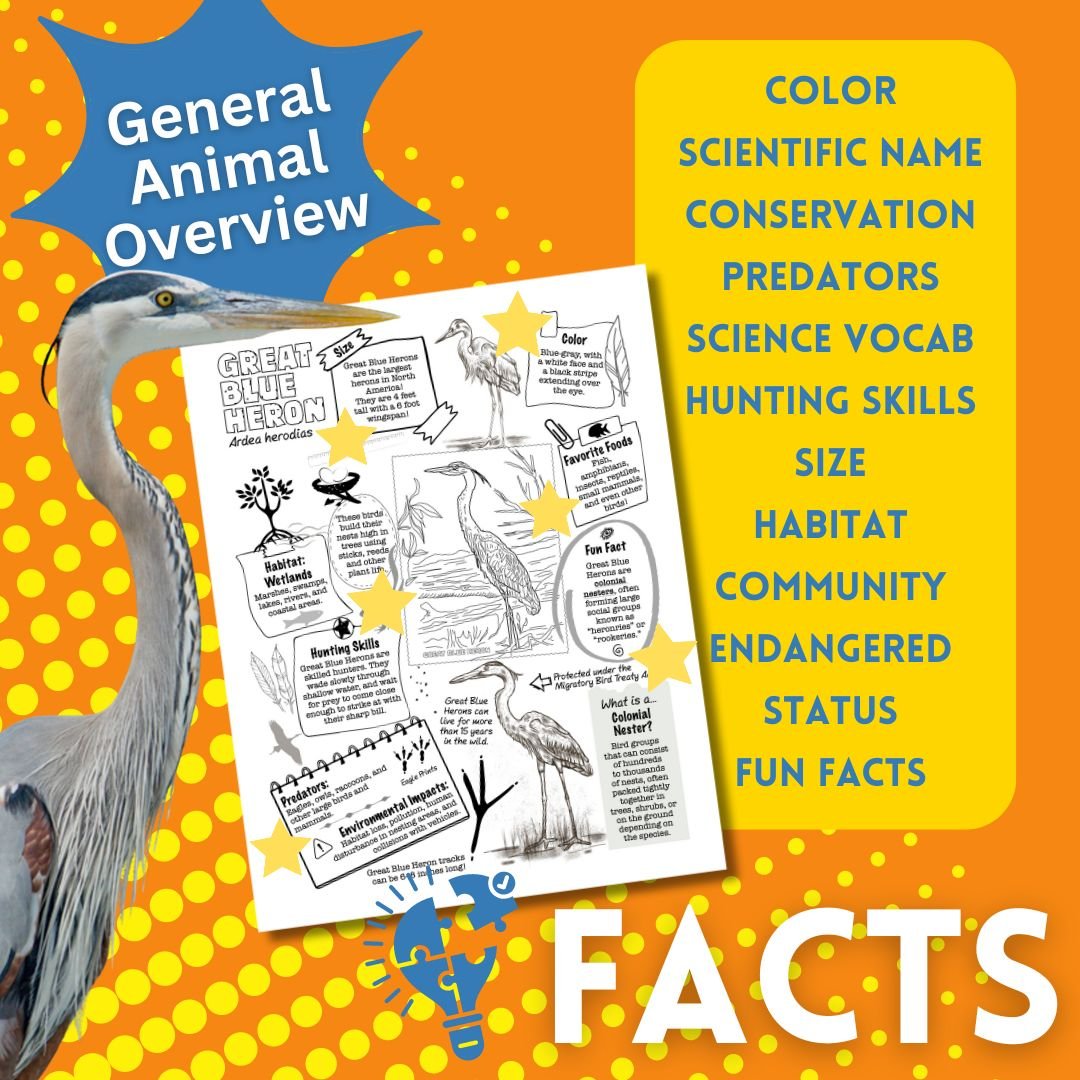
- Scientific name
- Size
- Color
- Diet
- Hunting skills
- Habitat
- Predators
- Environmental impacts
- Conservation status
- Lifespan
- Nest description
- Vocab- Colonial Nester
- Footprint size and shape
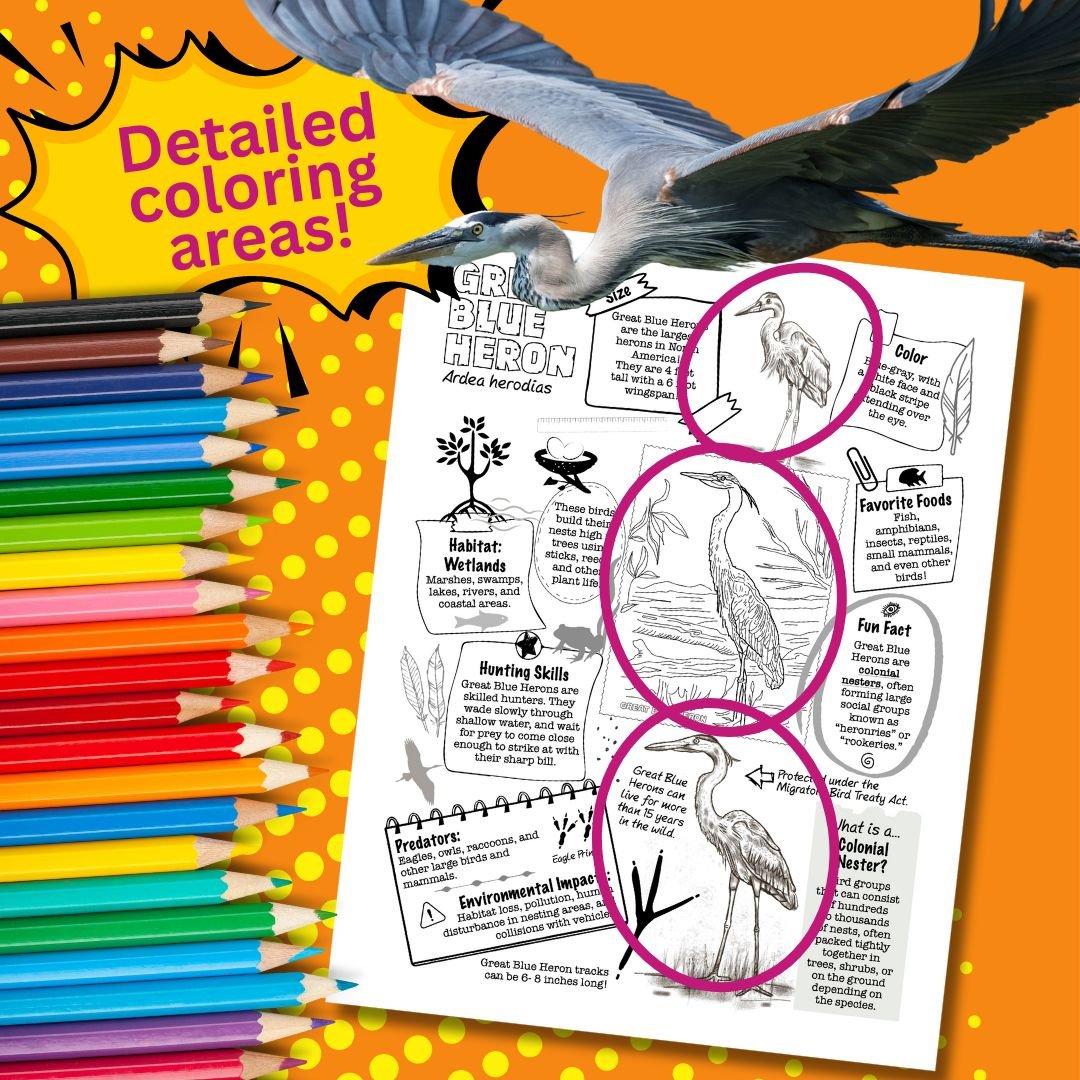
- + Coloring areas
Standards Alignment
Common Core ELA (CCSS.ELA-LITERACY)
• RI.3.1 / RI.4.1 / RI.5.1 – Ask and answer questions to demonstrate understanding of a text.
• RI.3.2 / RI.4.2 / RI.5.2 – Determine the main idea of a text and explain how it is supported by key details; summarize the text.
• RI.3.4 / RI.4.4 / RI.5.4 – Determine the meaning of academic and domain-specific words.
• RI.3.7 / RI.4.7 / RI.5.7 – Use information gained from illustrations and text features to demonstrate understanding.
• RI.3.9 / RI.4.9 / RI.5.9 – Integrate information from two texts on the same topic to write or speak about the subject knowledgeably.
Next Generation Science Standards (NGSS)
• 3-LS4-3 – Construct an argument that some animals survive well in particular habitats.
• 3-LS4-4 – Make a claim about the merit of a solution to a problem caused when the environment changes.
• 4-LS1-1 – Construct an argument that animals have structures that support survival, growth, and reproduction.
• 5-ESS3-1 – Obtain and combine information about ways humans protect Earth’s resources and environments.
Social Studies / C3 Framework Connections
• D2.Geo.5.3-5 – Explain how the environment influences human settlement and animal survival.
• D2.Civ.10.3-5 – Identify ways communities take action to protect natural resources.