

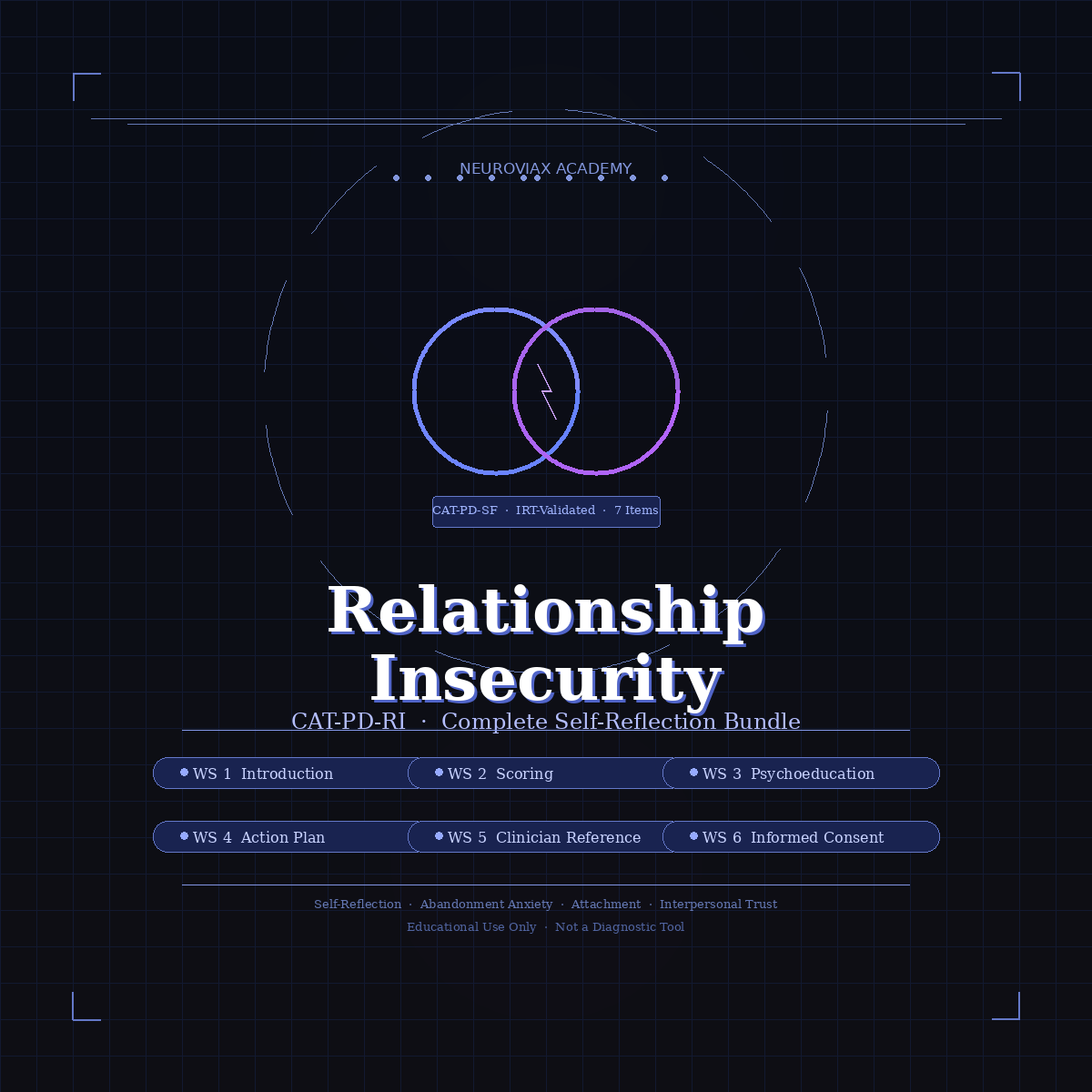
CAT-PD: Relationship Insecurity — Complete Self-Reflection Bundle (CAT-PD-RI) | 6 Worksheets
Do You Fear Being Abandoned, Betrayed, or Left — Even When There's No Real Reason To?
Relationship insecurity isn't simply being "clingy" or "jealous." It's a deep, often unconscious pattern of anticipating rejection, fearing abandonment, and struggling to trust others — even those who have shown consistent loyalty. If you find yourself constantly bracing for loss in your closest relationships, this research-validated worksheet bundle gives you the structured tools to understand why, and what to do about it.
The CAT-PD: Relationship Insecurity Worksheet Bundle (CAT-PD-RI) is a 6-worksheet self-reflection system derived from the Computerized Adaptive Assessment of Personality Disorder – Static Form (CAT-PD-SF), a psychometrically validated academic instrument developed by Simms and colleagues (2011). It measures stable trait-level tendencies toward abandonment anxiety, fear of rejection, and interpersonal trust deficits — all grounded in Item Response Theory (IRT) and validated across both community and clinical adult samples.
What's Inside the Bundle
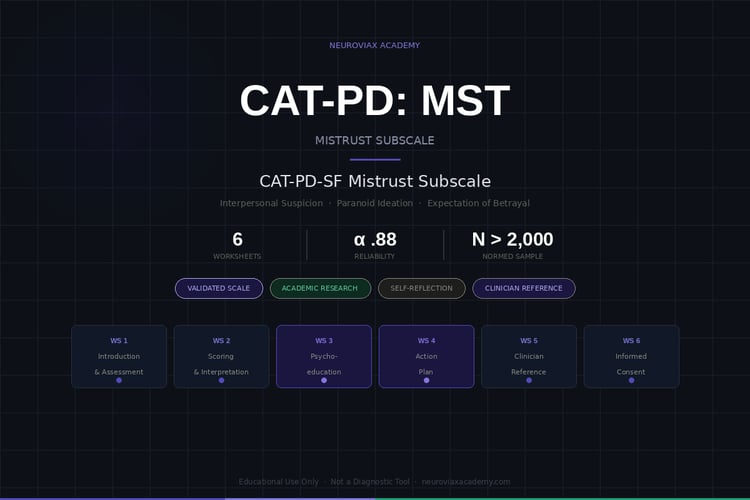
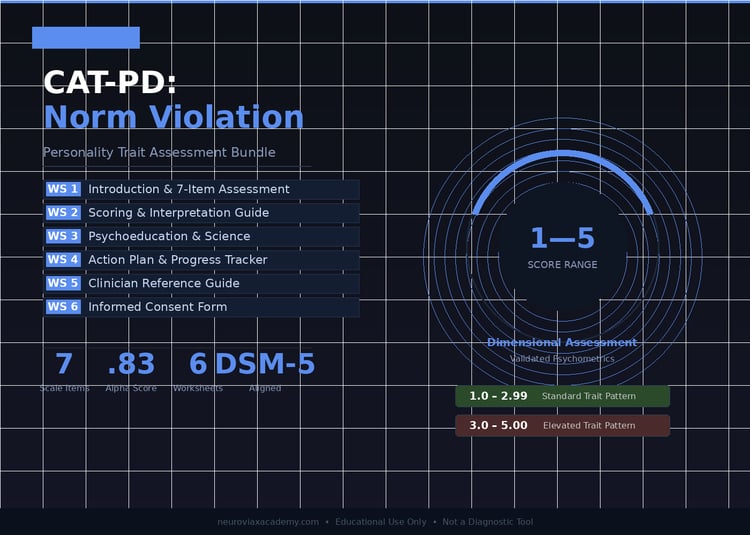
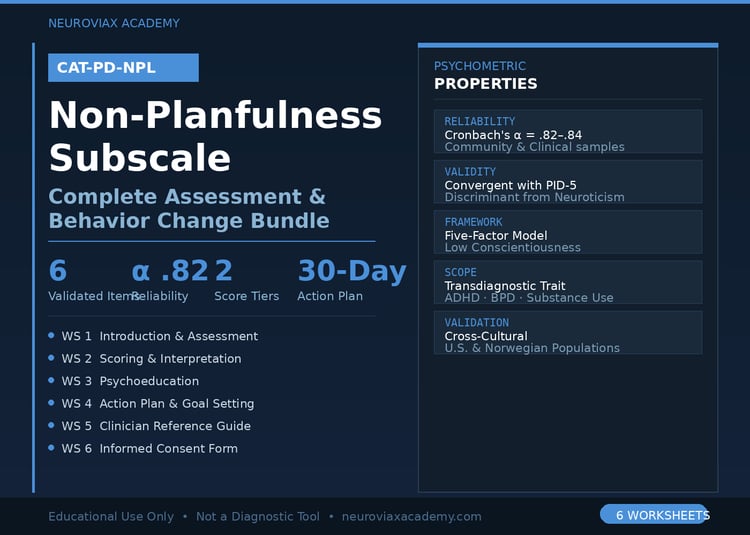
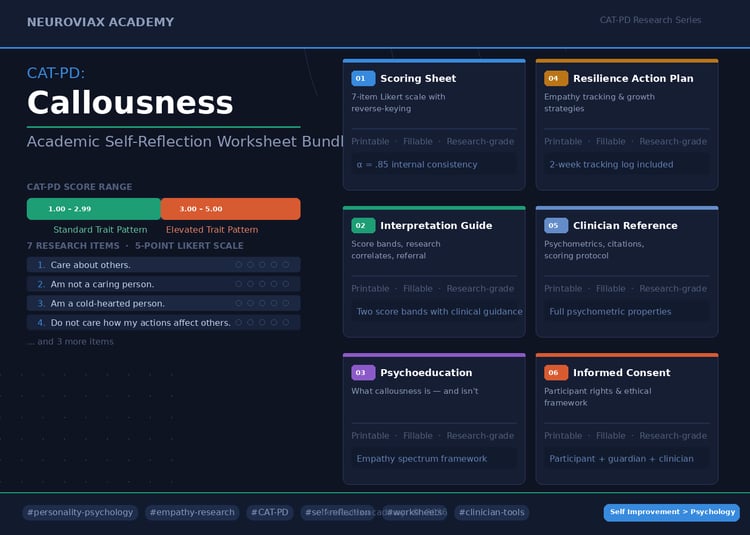
WS 1 — Introduction: A clear orientation to the tool, its scientific background, and step-by-step instructions. Explains the attachment theory foundations of relationship insecurity and how the 7-item scale works before you begin.
WS 2 — Scoring Worksheet: A structured scoring guide for transferring your responses, calculating domain subtotals across three thematic clusters (Abandonment Anxiety, Fear of Rejection, Interpersonal Trust Deficits), and interpreting your item-average score using a two-tier scale with detailed meaning for each range.
WS 3 — Psychoeducation: The science explained in plain language. Covers what research says about relationship insecurity, how it manifests in daily situations, common myths versus evidence-based facts, self-reflection questions, and a protective factors checklist to identify existing strengths.
WS 4 — Action Plan: A full personal development framework including SMART goal setting across three goals, a 7-day weekly implementation planner, an obstacle-and-solution mapping table, a support system roster, and a 4-week progress tracker with a 30-day review section.
WS 5 — Clinician Reference Guide: A professional-grade reference covering the theoretical framework, psychometric properties (reliability α = .84 community / α = .83 clinical), convergent validity data, differential considerations, and a complete evidence base with full citations for academic and clinical use.
WS 6 — Informed Consent Form: A formal consent document outlining purpose, scope, voluntary participation, confidentiality, benefits and risks, and mandatory acknowledgments — suitable for structured research or professional settings.
Who This Bundle Is For
- Individuals who recognize patterns of anxiety, jealousy, or hypervigilance in their romantic relationships or close friendships and want a structured tool to understand them
- People in personal growth work who want a research-grounded framework for exploring their attachment style
- Academic researchers studying personality traits, attachment, or interpersonal functioning
- Therapists and counselors looking for a structured self-reflection tool to complement sessions (see Clinician Reference, WS 5)
- Psychology students and educators working with personality assessment instruments
What Makes This Bundle Different
Unlike generic relationship quizzes, the CAT-PD-RI is built on Item Response Theory and has been validated across community and psychiatric adult populations, with cross-cultural replication in Norway. It doesn't just give you a score — it gives you a scoring framework, a psychoeducation layer, a personal action plan, and a clinician reference, all in a single coherent system. Internal consistency scores (α = .84) place it among the more reliable short-form personality instruments available for non-diagnostic use.
This is not a diagnostic tool and does not replace professional mental health assessment. It is an educational and self-reflective instrument for use in personal development and academic research contexts.
If your relationships have ever felt more fragile than they should — if trust doesn't come easily and the fear of being left never quite goes away — this bundle gives you the language, the framework, and the plan to begin understanding those patterns and working toward something more secure.