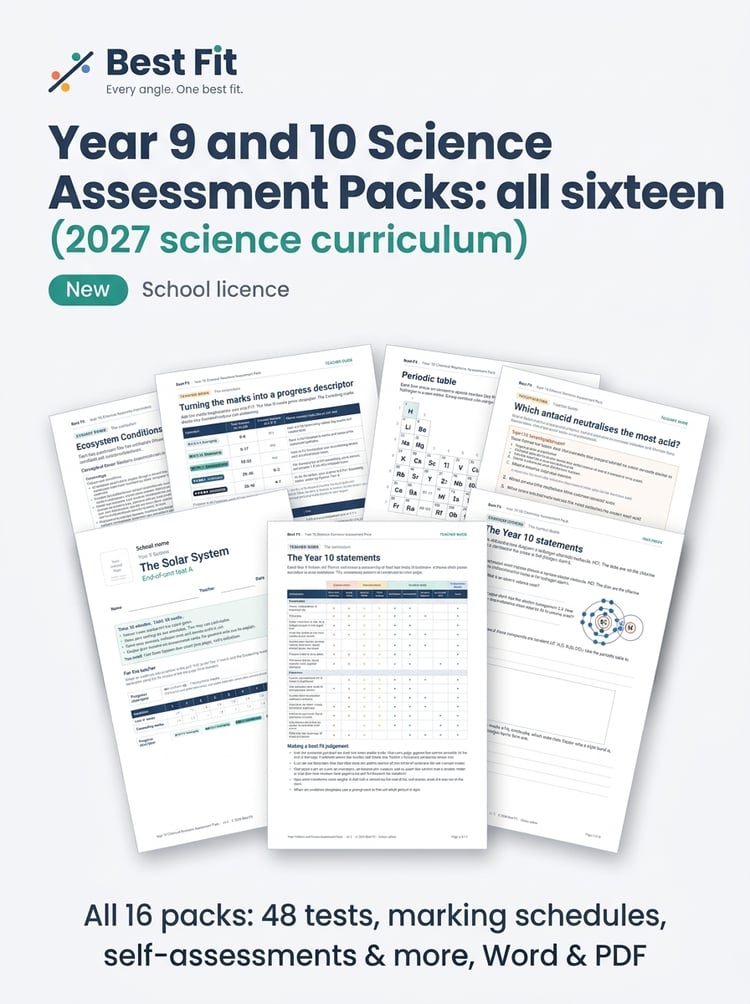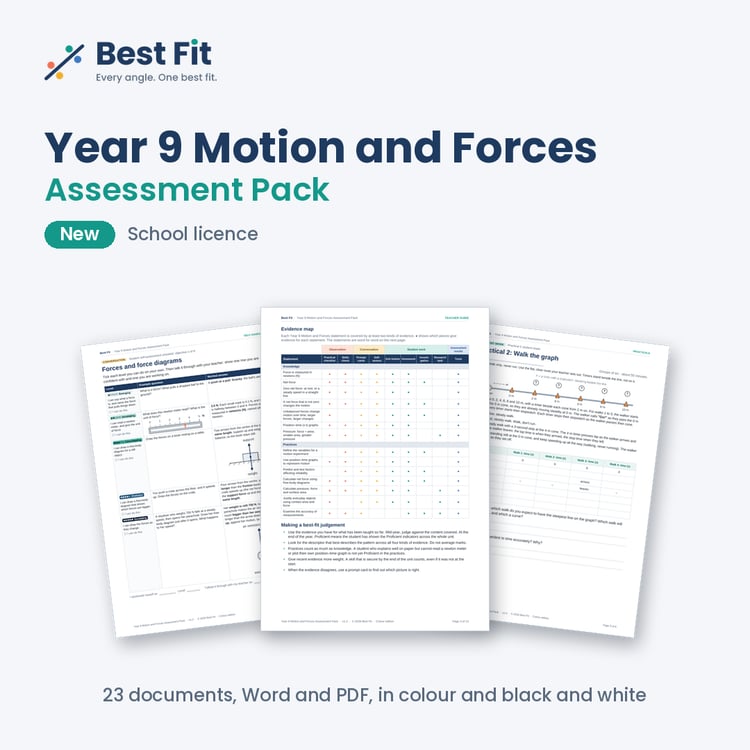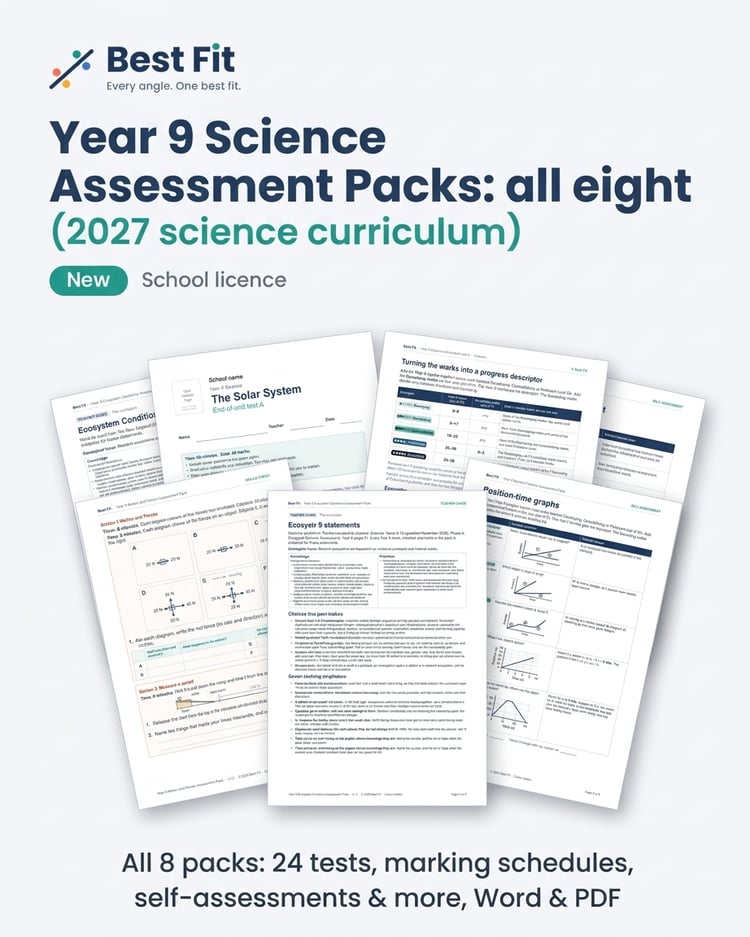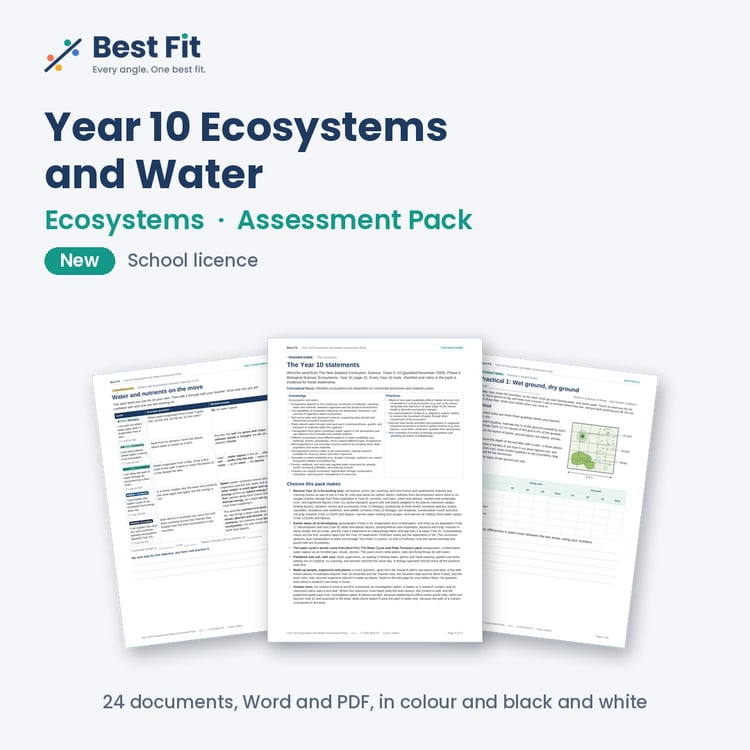

Year 9 Diffusion, Photosynthesis and Respiration Assessment Pack: Life Processes (2027 science curriculum)
Everything you need to gather and judge evidence for Year 9 Life Processes against the five progress descriptors:
practicals, conversations, student work and tests.
DESCRIPTION
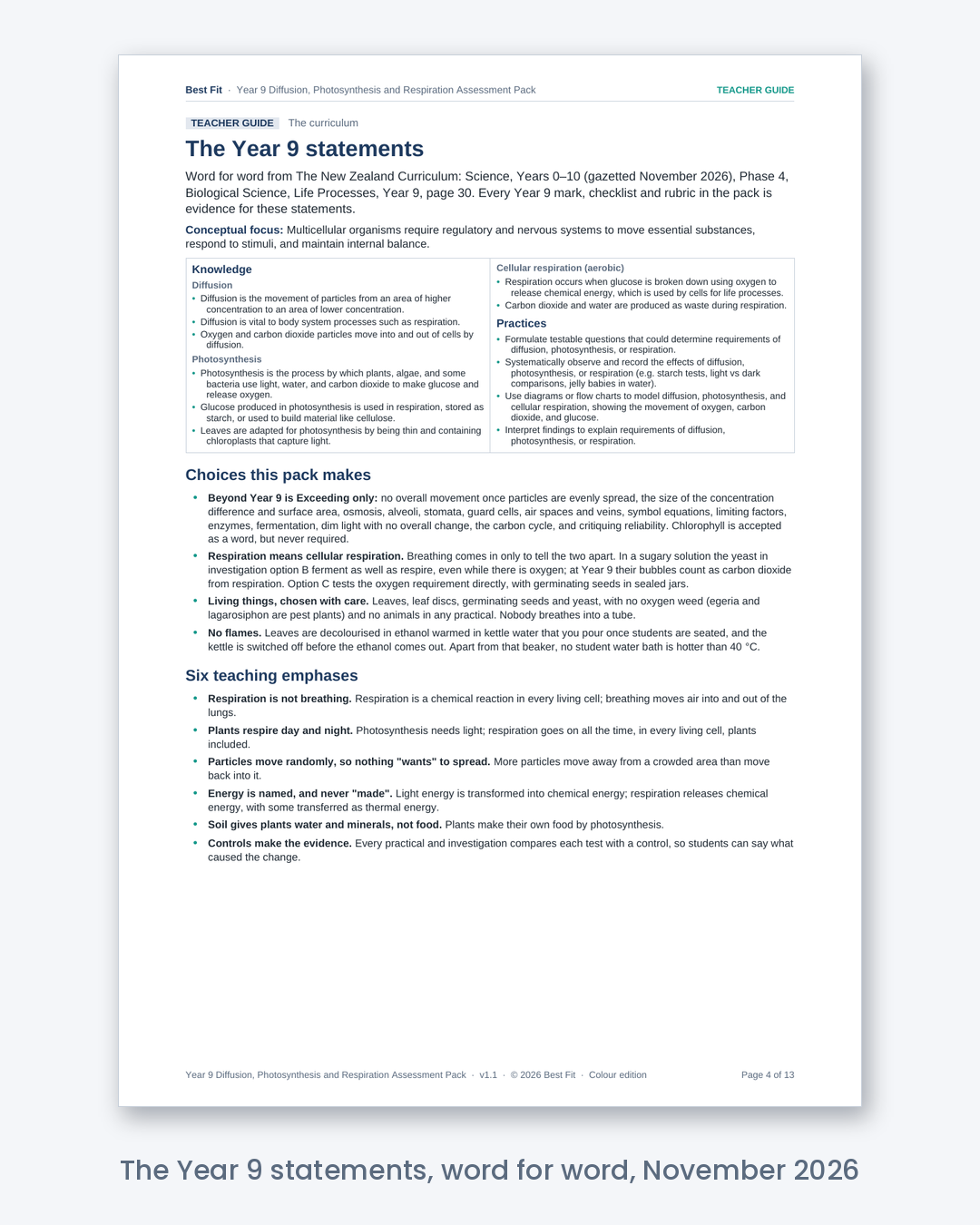
Built for Science Years 0–10 (gazetted November 2026), Phase 4, Biological Science: Life Processes (diffusion, photosynthesis and aerobic respiration). Every Year 9 knowledge and practice statement is quoted word for word in the teacher guide and mapped to the evidence that shows it.
Eight sections: particles on the move · diffusion into and out of cells · photosynthesis · leaves built for
photosynthesis · what happens to glucose · aerobic respiration · showing respiration happens · photosynthesis and
respiration together.
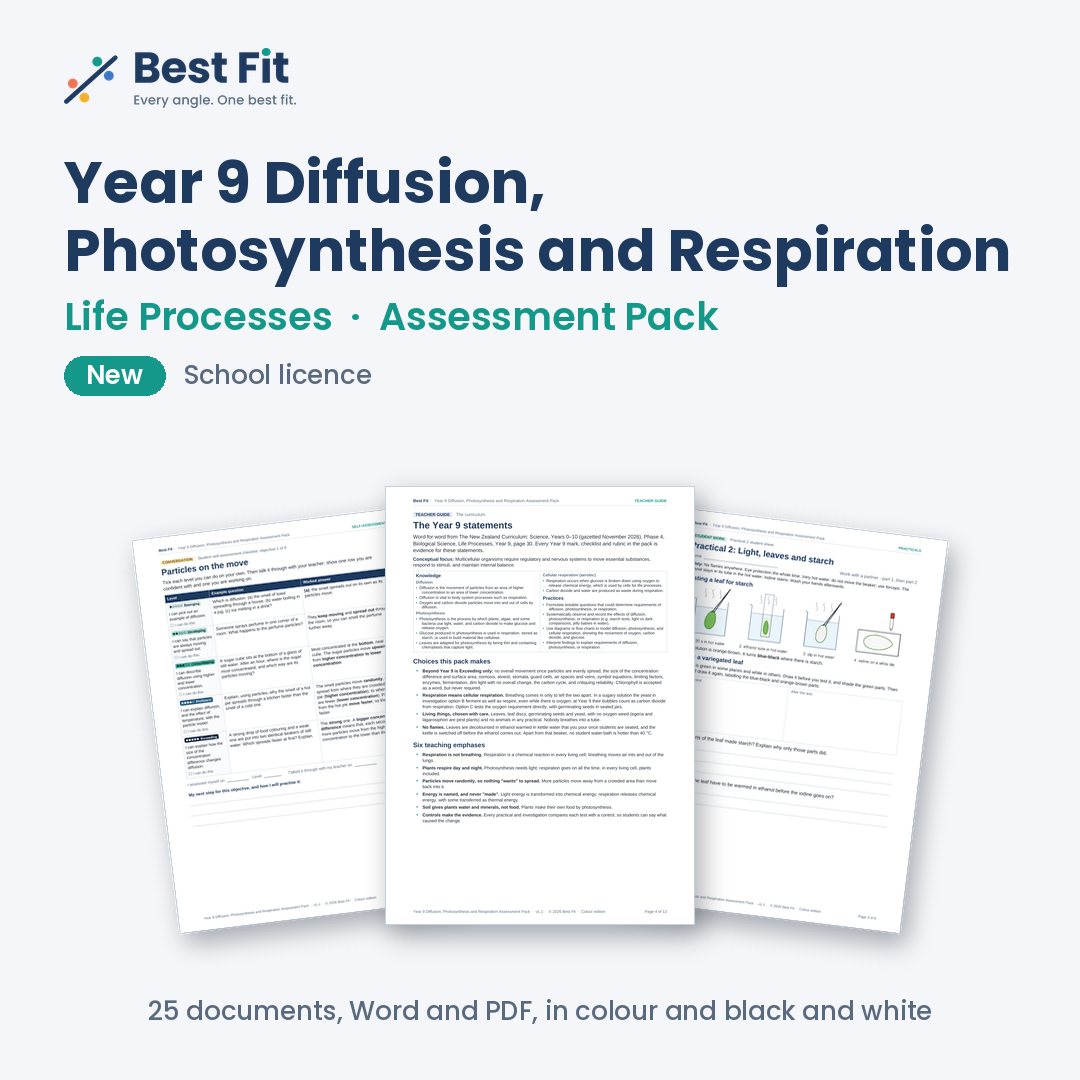
What's inside: 25 documents, each as a Word file and a PDF, in a colour edition and a black-and-white edition.
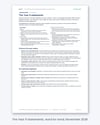
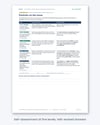
- Start here: a teacher guide with descriptor indicators for every section, an evidence map, a teaching plan and judgement guides.
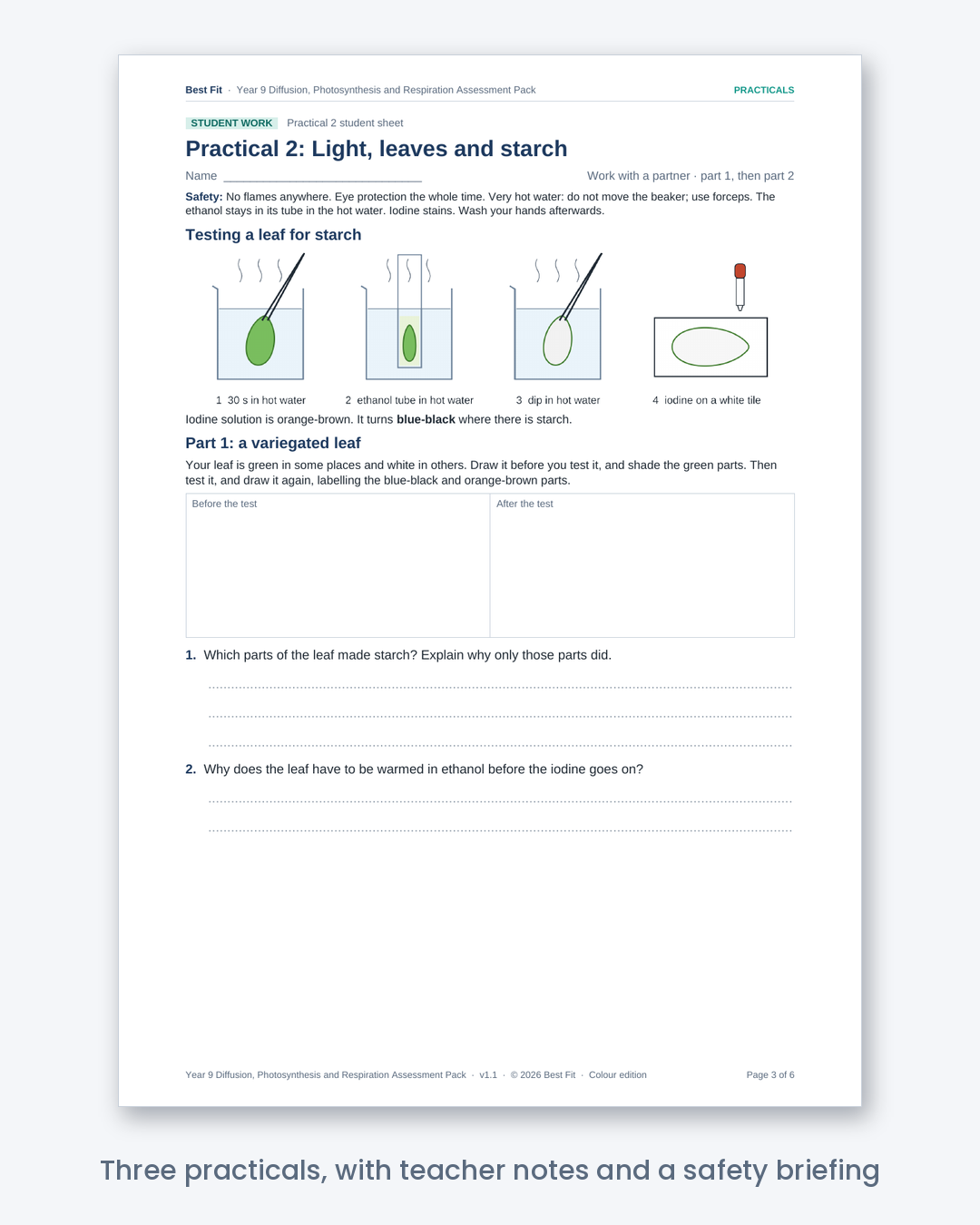
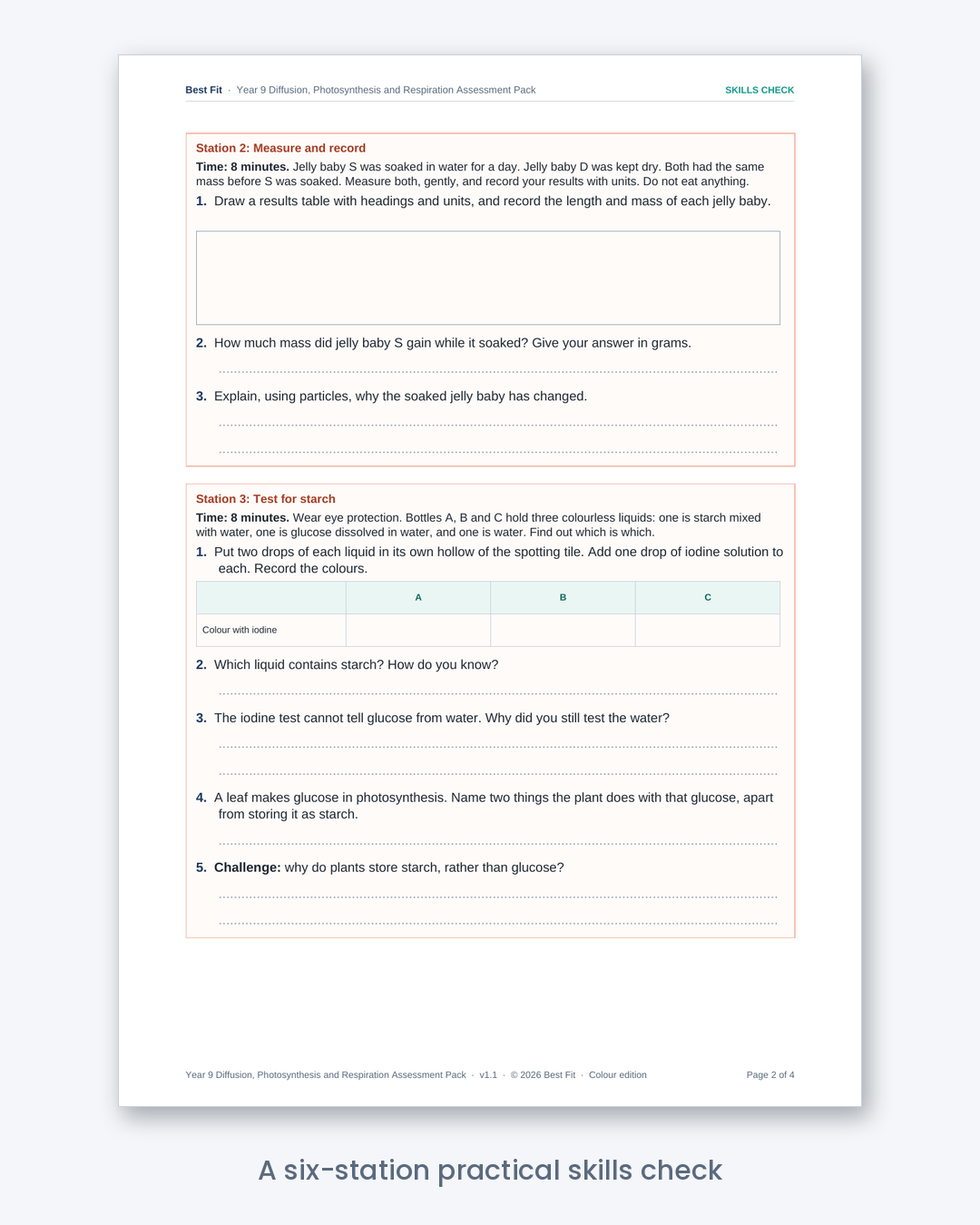
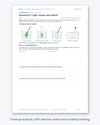
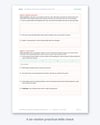
- Observation: three practicals (Particles on the move, with jelly babies · Light, leaves and starch · Gases in and out) with teacher notes, safety briefings, student sheets and observation checklists, plus a six-station practical skills check.
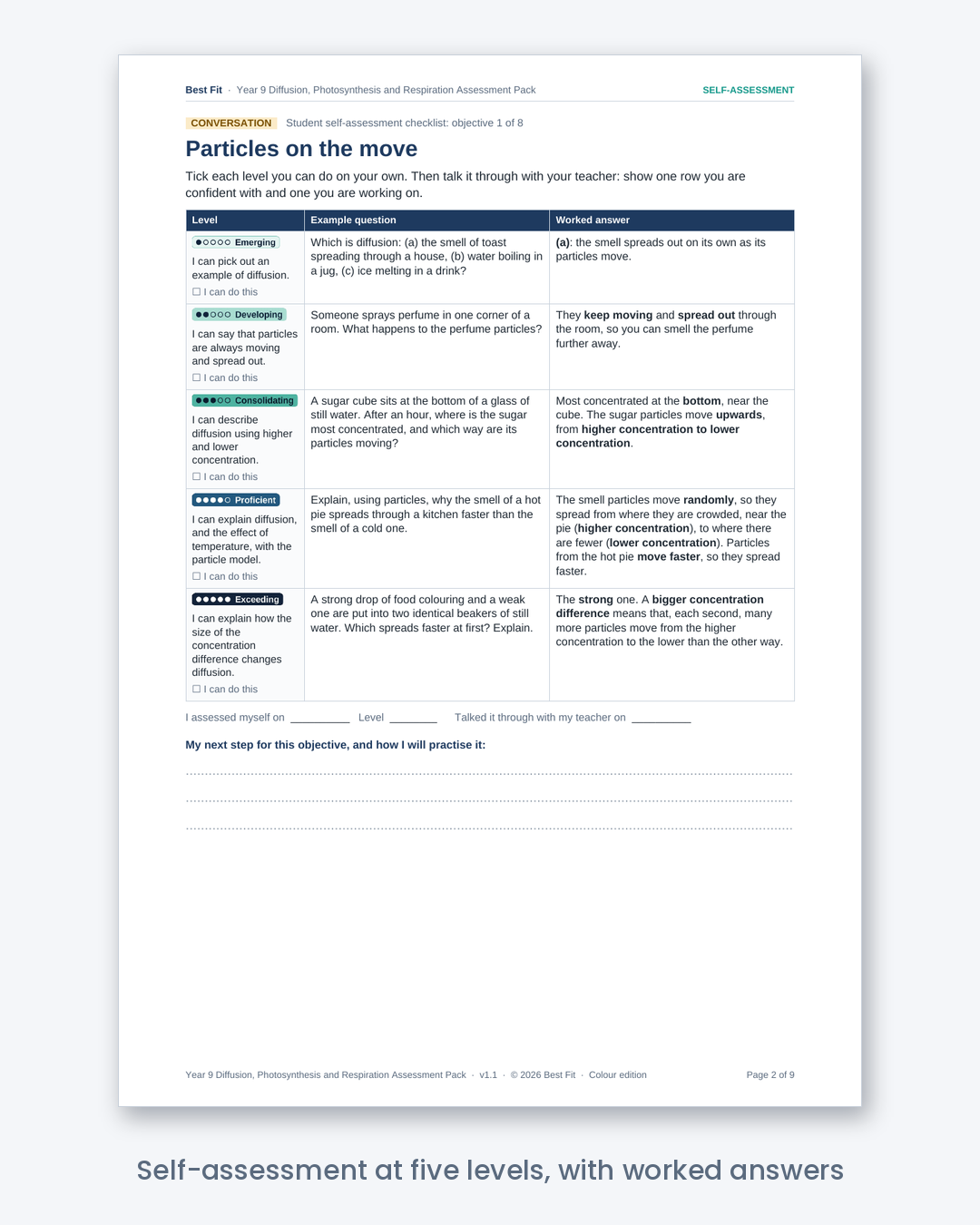
- Conversation: four prompt cards, a self-assessment (eight objectives at five levels, each with an example question and a worked answer) and an I can checklist.
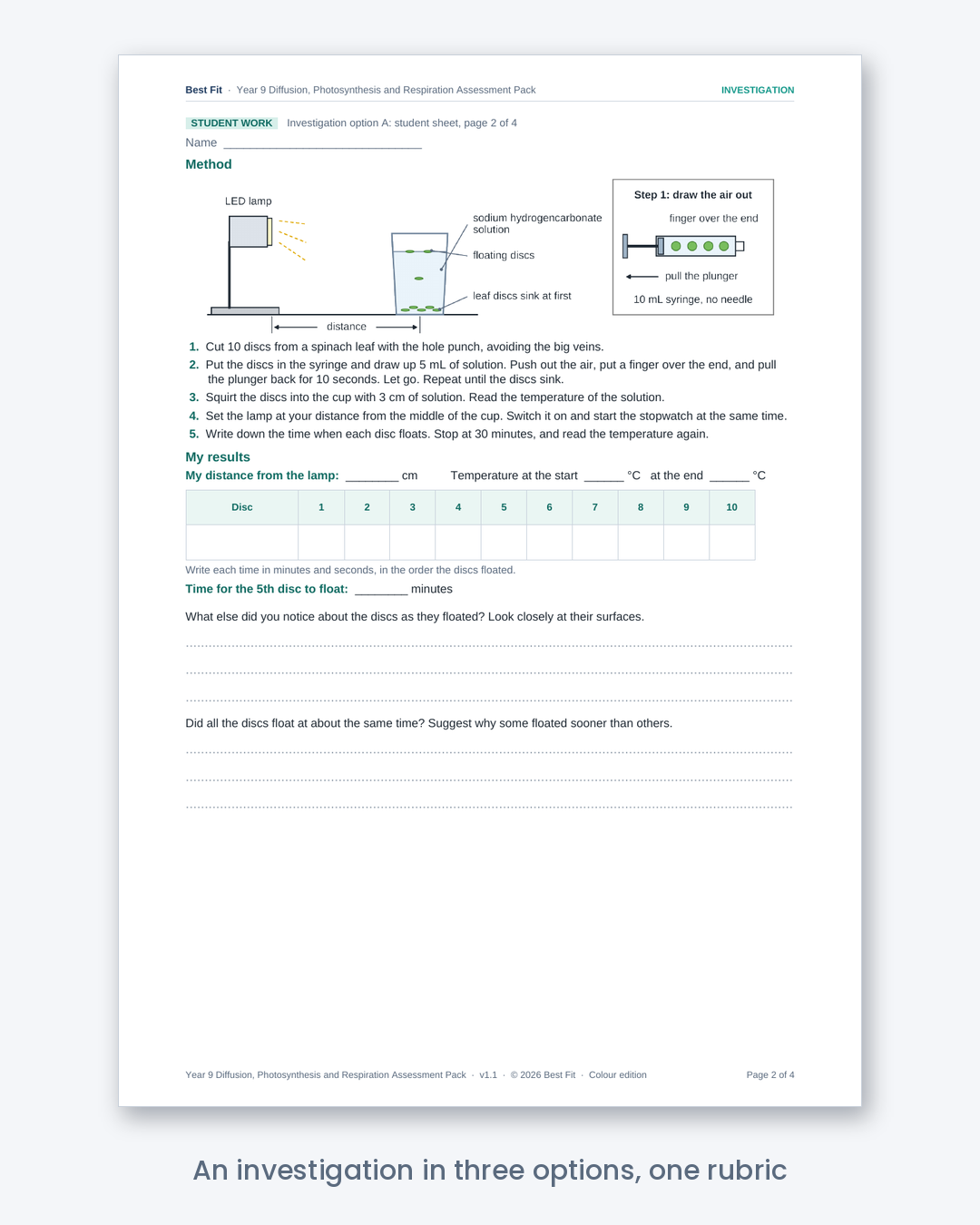
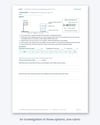
- Student work: eight exit tickets, printed two to a sheet, with teacher keys; four homework tasks with answers; a requirements investigation in three options (spinach leaf discs under a lamp, yeast at different temperatures, or seeds in sealed jars with and without oxygen) sharing one rubric, with back-up class results; and a research task, "Growing and keeping food in Aotearoa" (glasshouse tomatoes, coolstores or kūmara), with a rubric.
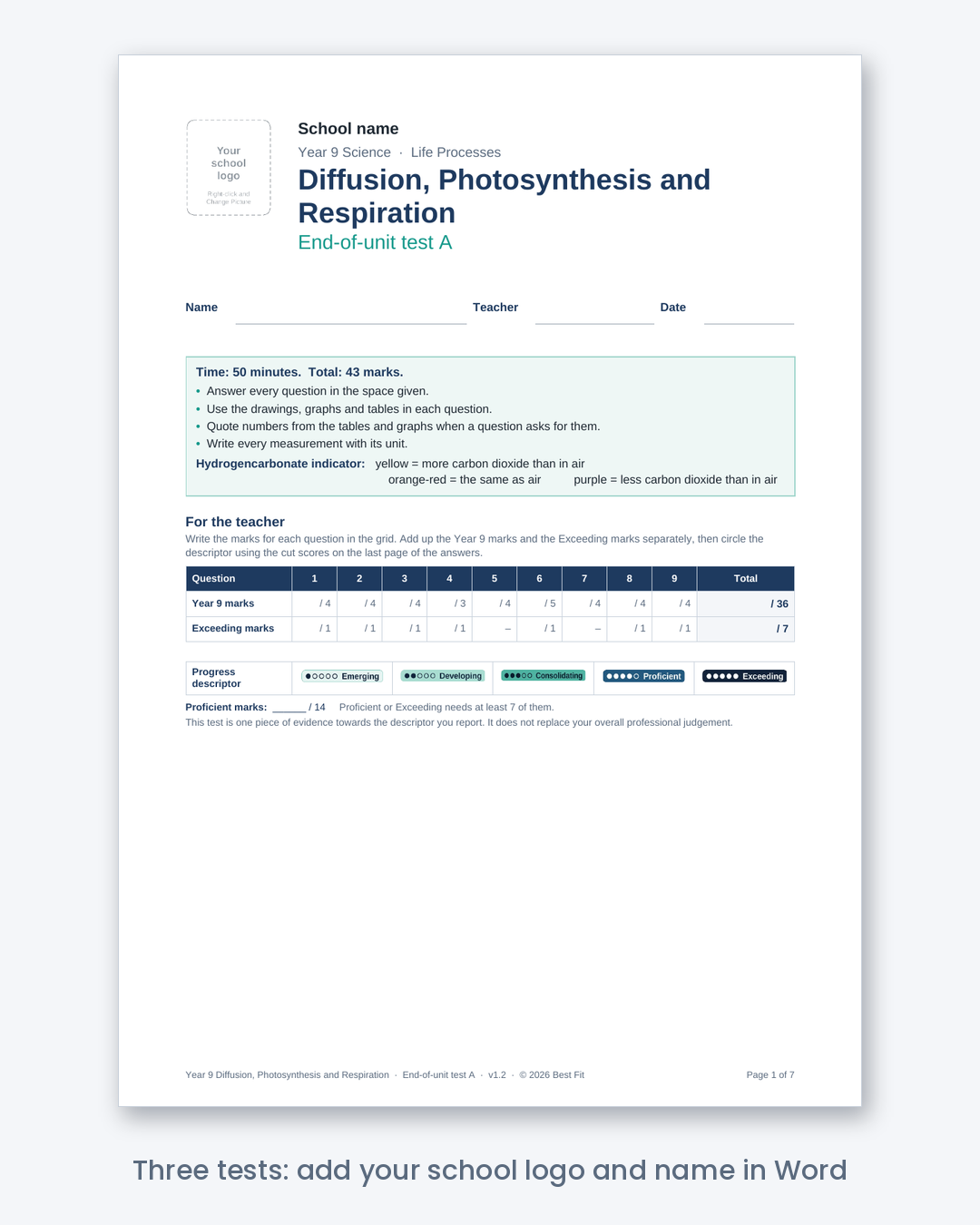
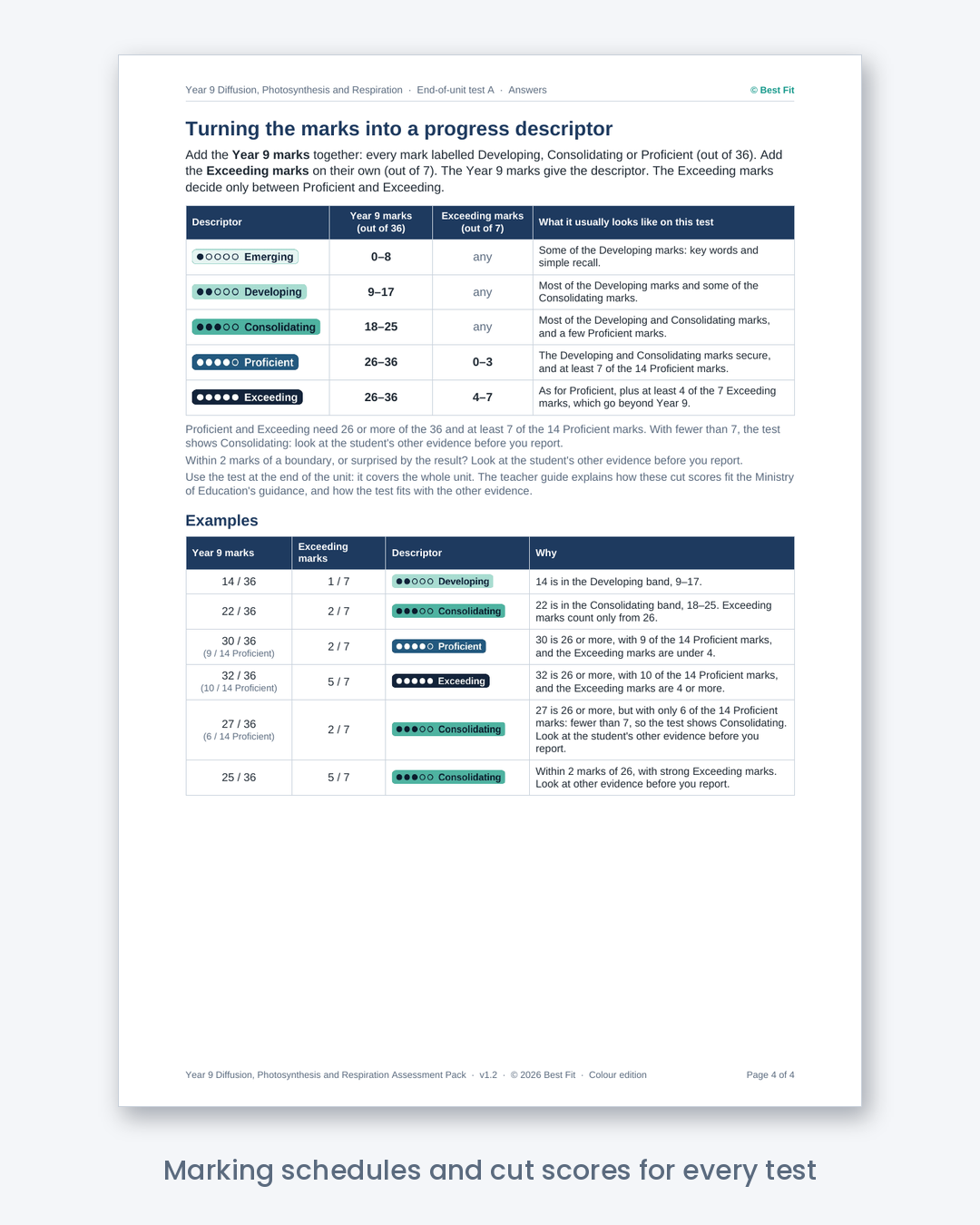
- Assessment results: a practice test and parallel end-of-unit tests A and B, each with 36 Year 9 marks and 7 Exceeding marks, marking schedules and cut scores. Editable Word copies let you add your school's logo and name.
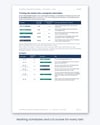
- Tracker: an evidence tracker that brings everything together into one best-fit judgement.
Good to know
- Respiration is not breathing, and plants respire day and night: the pack is clear on both, all the way through.
- Energy is named and never "made": light energy becomes chemical energy, and respiration releases chemical energy, with some transferred as thermal energy.
- Every practical and investigation has a control, and students write their own testable questions.
- A respiration investigation that is truly aerobic: option C shows that germinating seeds need oxygen, using sealed jars and the oxygen-absorber sachets used in food packaging, with no yeast fermentation to explain away.
- Safe by design: no flames near ethanol (you pour hot kettle water for the leaf test), student water baths no hotter than 40 °C, no oxygen weed, and nobody breathes into a tube.
- Ideas beyond Year 9 (osmosis, stomata, limiting factors, enzymes, fermentation, the carbon cycle) appear only in Exceeding marks.
- New Zealand contexts throughout. No marks beside the questions on student papers: the marks are in the answers, and every mark names the descriptor it is evidence for.
- Free sample pages available for the Year 9 Electricity Assessment Pack so you can check them out before you buy: https://payhip.com/b/7NAoc
- Pairs with the other Y9 Science Assessment Packs or will all Junior Science Assessment Packs through the bundles.
- Add the report builder upgrade once it is released and it writes copy-ready report comments that fit your reporting system's character limits. [Free sample: https://payhip.com/b/DYCBE]
School licence: every teacher and student at one school may use and copy these files, including on your school's learning platform. Please don't share them outside your school.
Best Fit is not registered for GST.