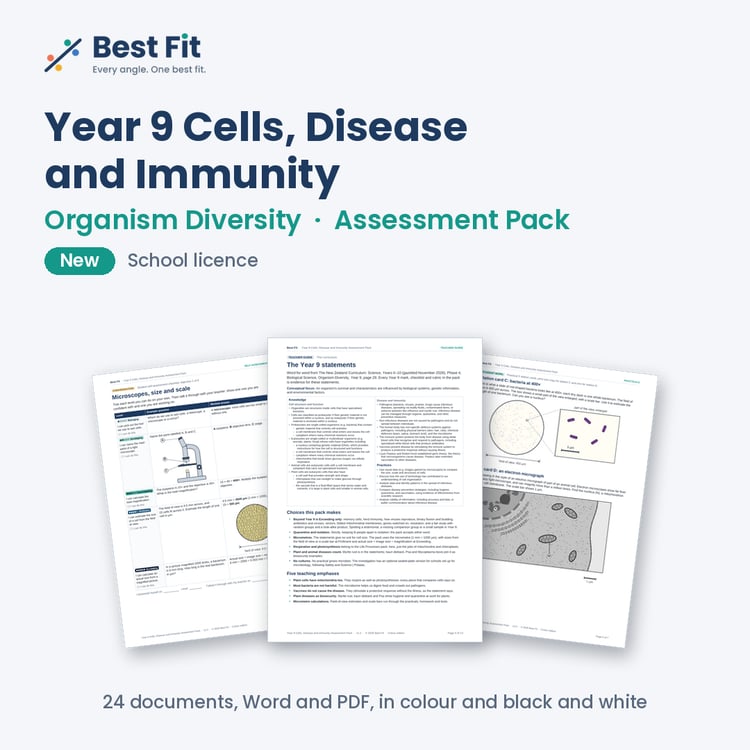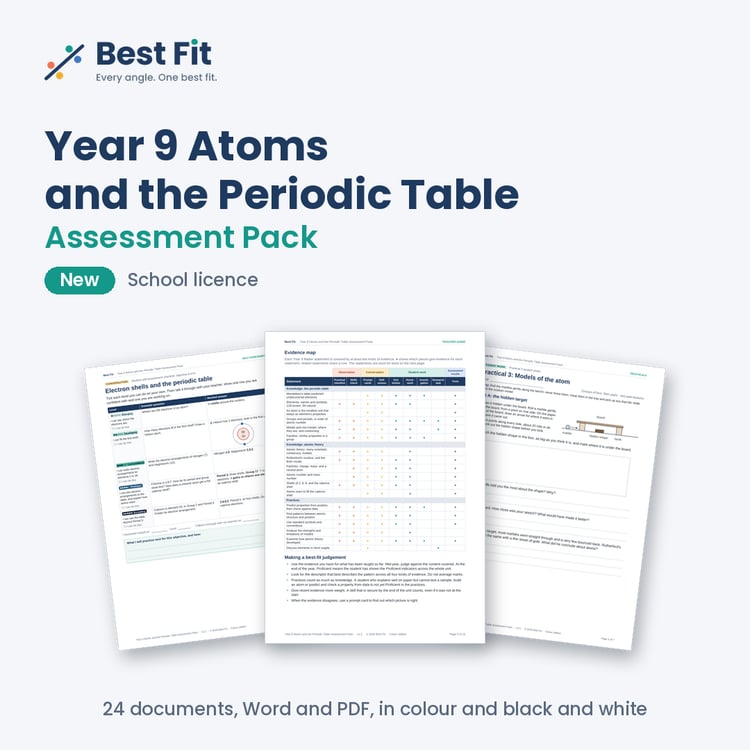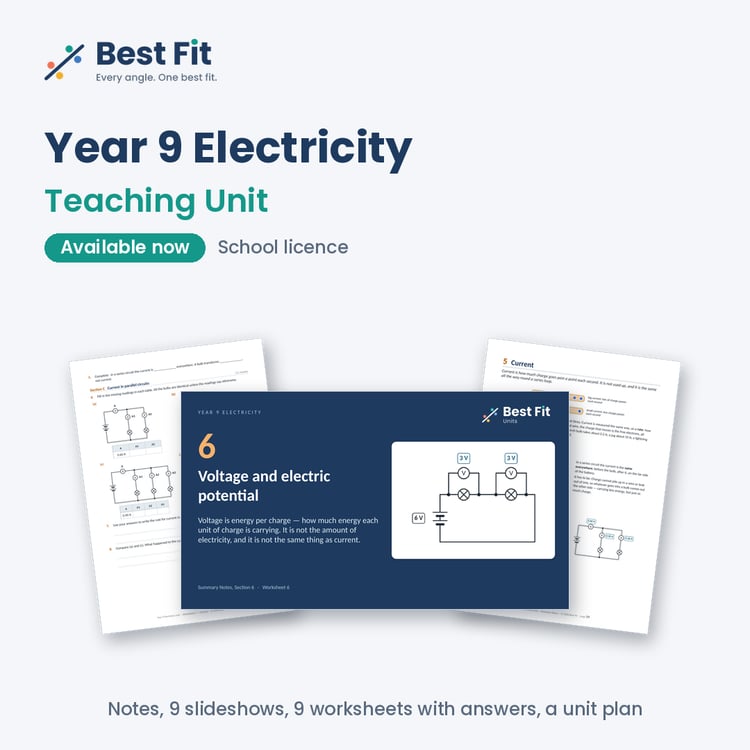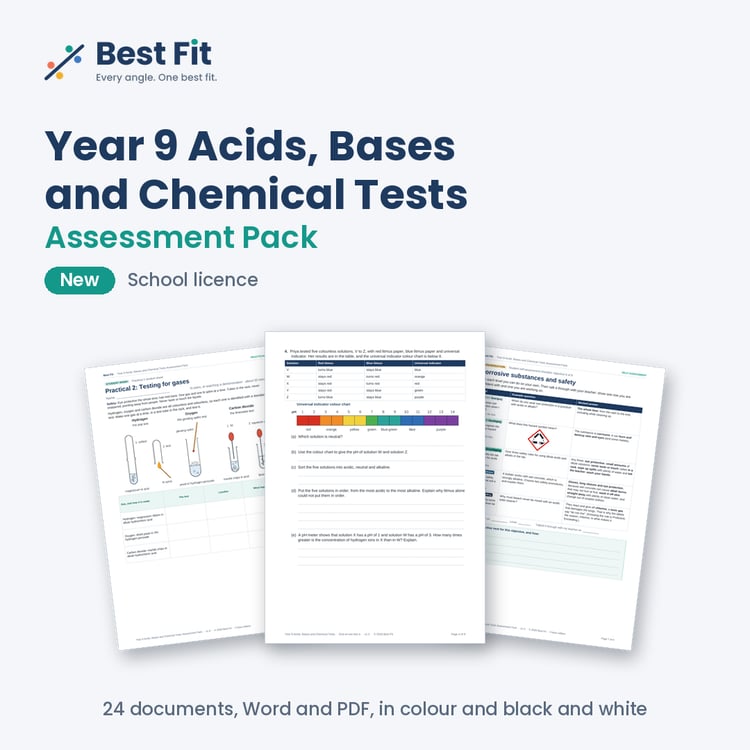





Year 10 Ecosystems and Water Assessment Pack: Ecosystems (2027 science curriculum)
Everything you need to gather and judge evidence for Year 10 Ecosystems (ecosystems and water) against the five progress descriptors: practicals, conversations, student work and tests.
DESCRIPTION
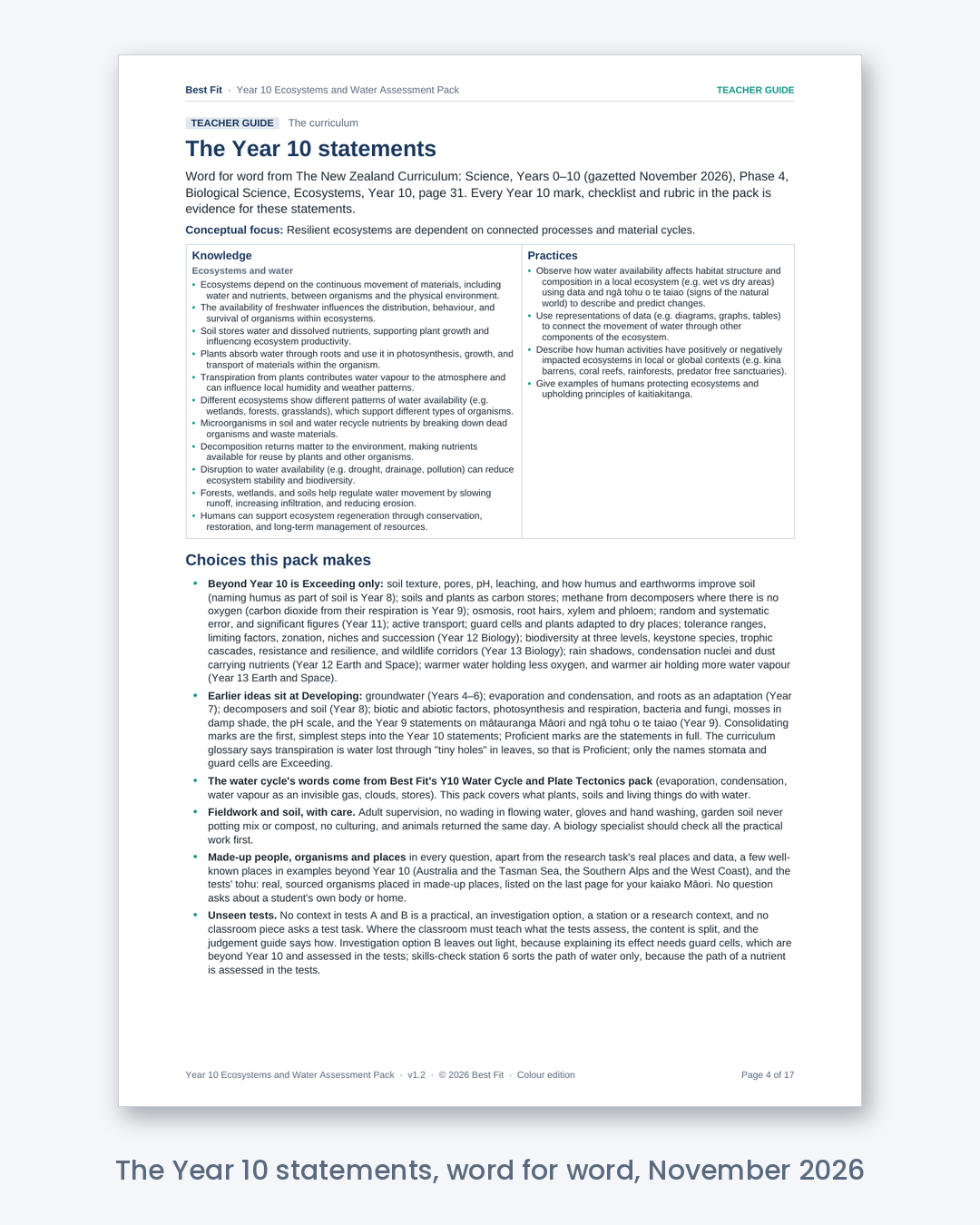
Built for Science Years 0–10 (gazetted November 2026), Phase 4, Biological Science: Ecosystems, Year 10 (ecosystems and water). Every Year 10 knowledge and practice statement is quoted word for word in the teacher guide and mapped to the evidence that shows it.
Eight sections: water and nutrients on the move · freshwater and where organisms live · soil: a store of water and nutrients · water in plants · transpiration, humidity and weather · wetlands, forests and grasslands · decomposers recycle nutrients · disruption, restoration and kaitiakitanga.
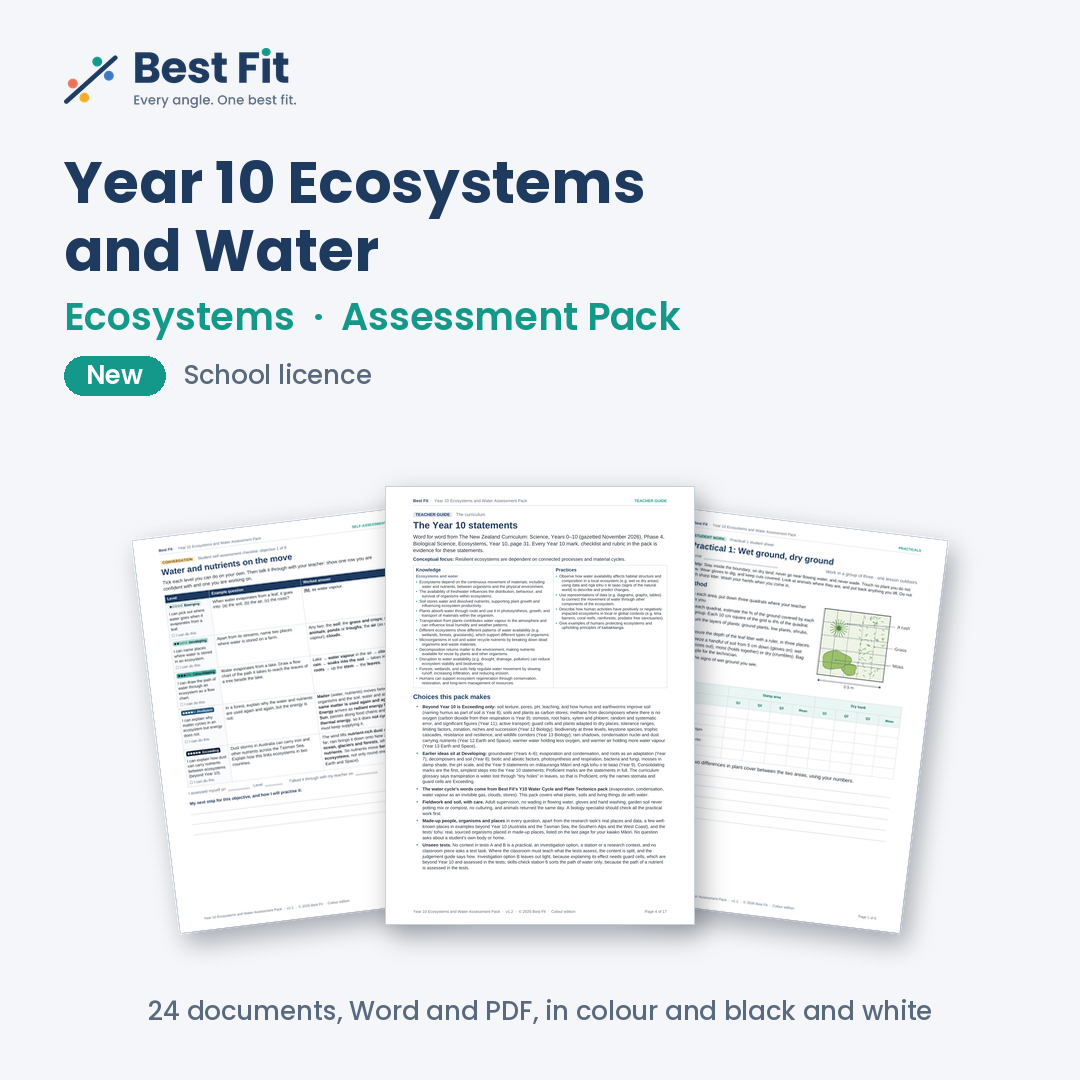
What's inside: 24 documents, each as a Word file and a PDF, in a colour edition and a black-and-white edition.
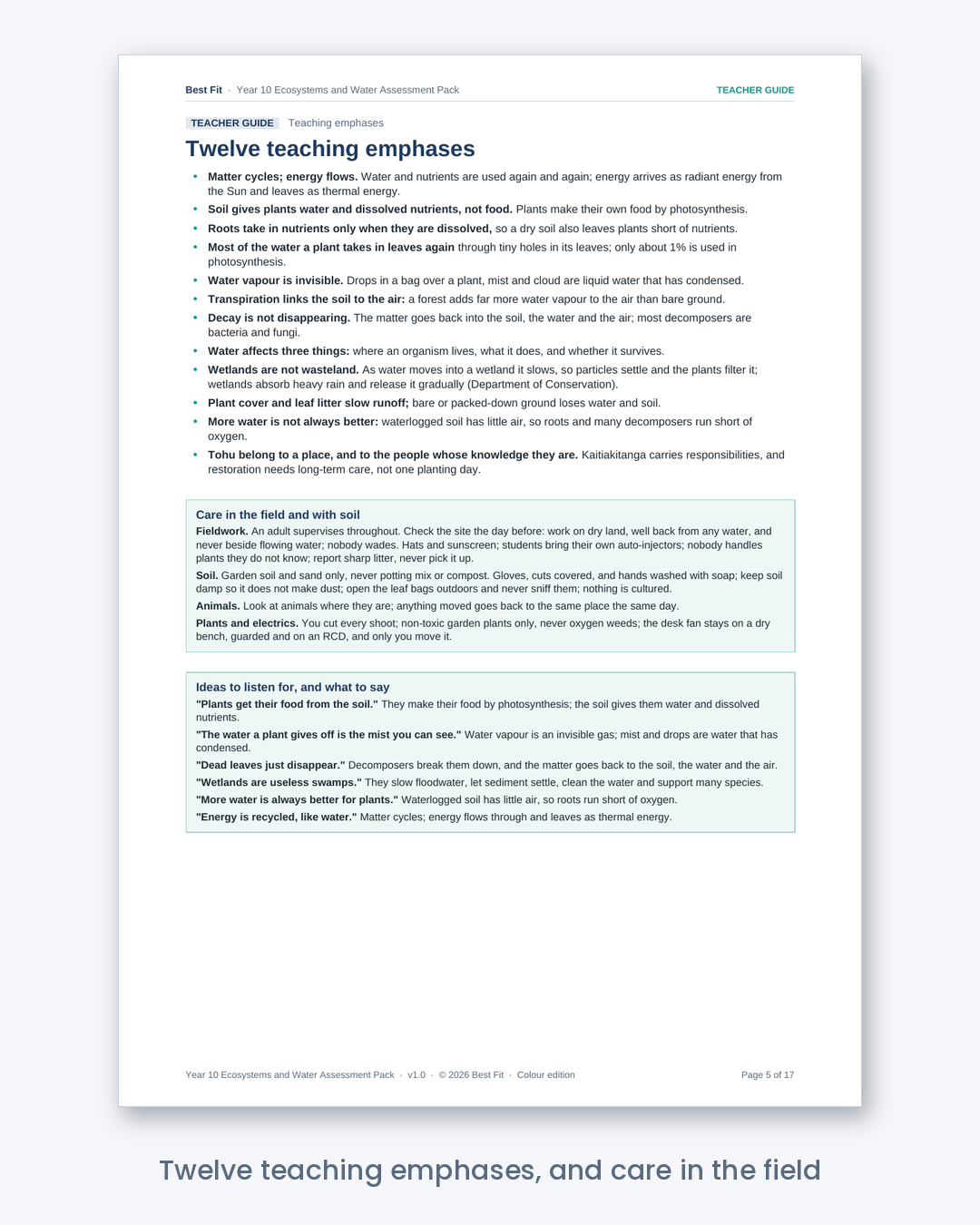
- Start here: a teacher guide with twelve teaching emphases, care in the field and with soil, descriptor indicators for every section, an evidence map, a teaching plan, judgement guides, and a list of every tohu, mātauranga Māori, place and animal line, and every te reo Māori word, for your kaiako Māori to check.
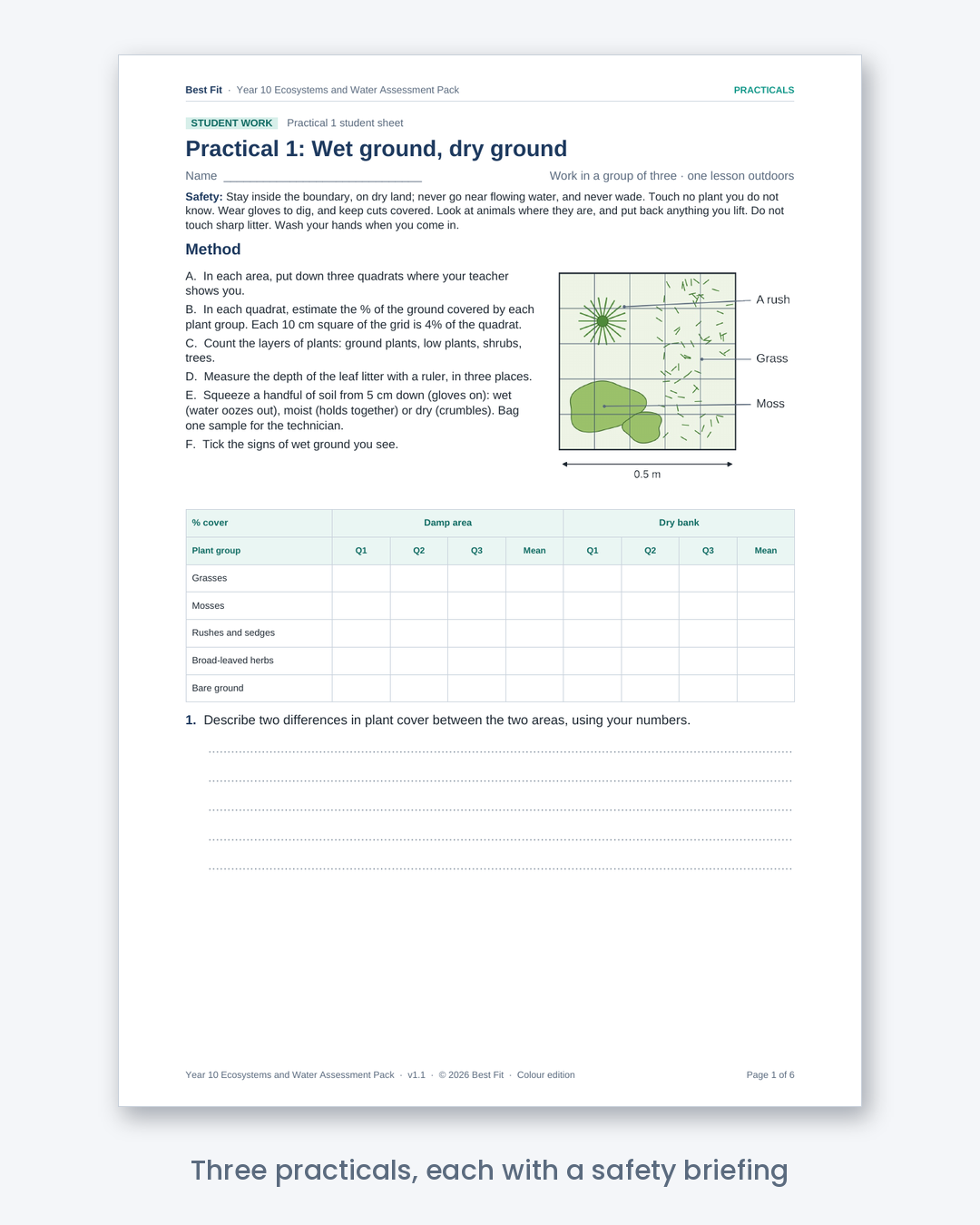
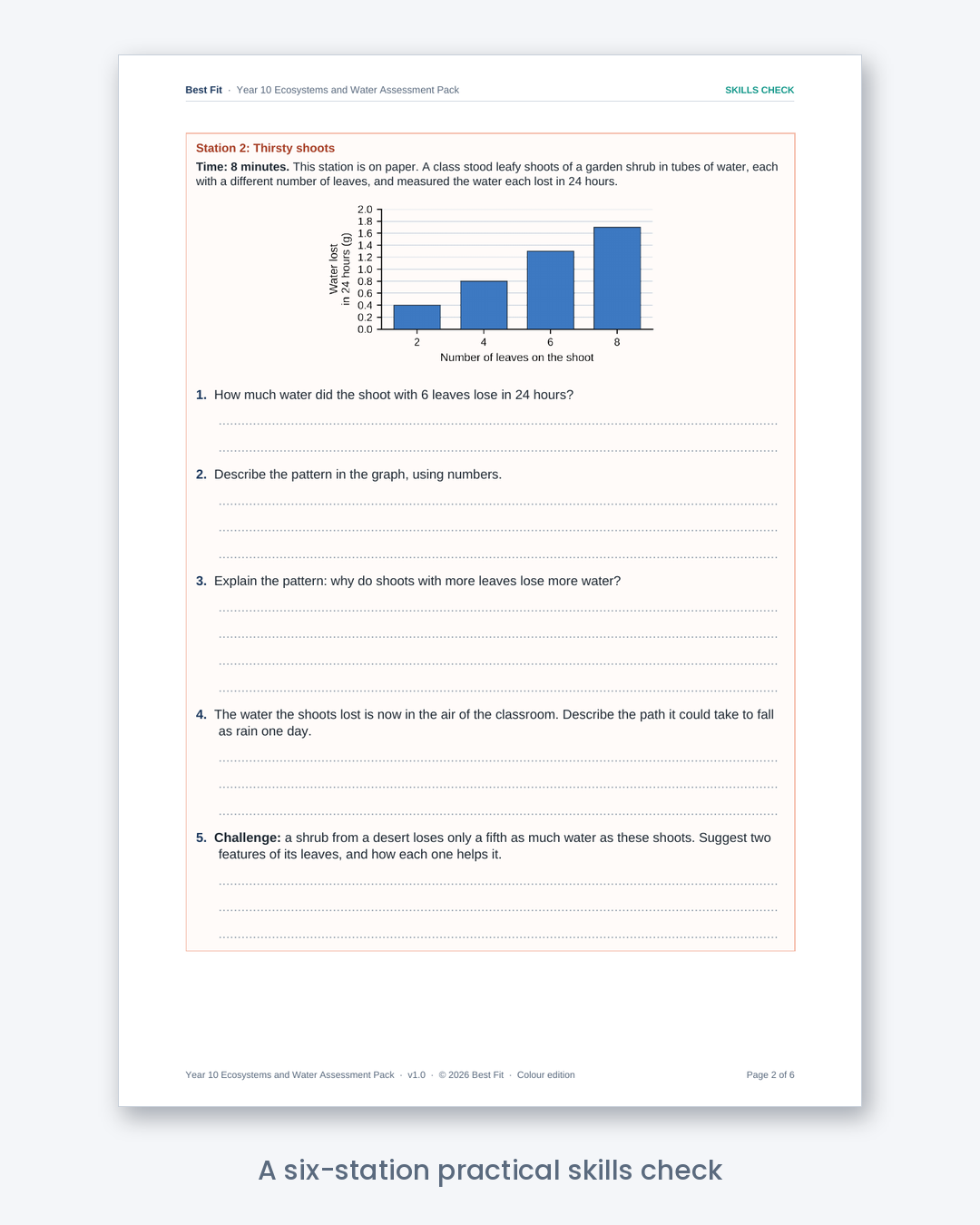
- Observation: three practicals (Wet ground, dry ground · Water through a plant · Soil at work, with buried leaf bags) with teacher notes, safety briefings, back-up results, student sheets and observation checklists, plus a six-station practical skills check with a printable card sort.
- Conversation: four prompt cards, a self-assessment (eight objectives at five levels, each with an example question and a worked answer) and an I can checklist.
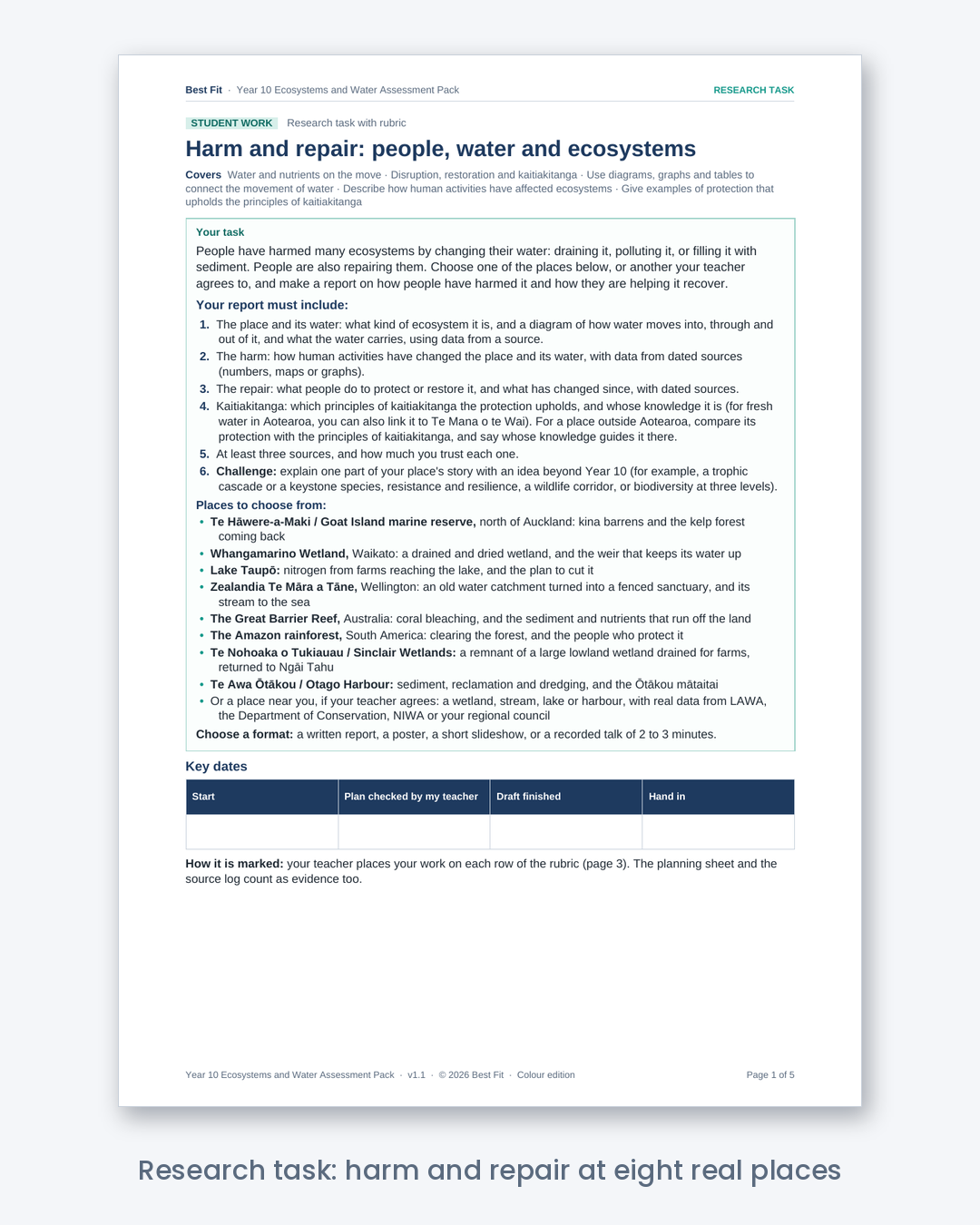
- Student work: eight exit tickets, printed two to a sheet, with teacher keys; four homework tasks with answers; an investigation in two options sharing one rubric (what slows the runoff from a tray of soil, or what changes how fast a leafy shoot loses water), with back-up class results; and a research task, "Harm and repair: people, water and ecosystems", at eight real places (Te Hāwere-a-Maki / Goat Island marine reserve, Whangamarino Wetland, Lake Taupō, Zealandia Te Māra a Tāne, the Great Barrier Reef, the Amazon rainforest, and two near Dunedin: Te Nohoaka o Tukiauau / Sinclair Wetlands and Te Awa Ōtākou / Otago Harbour, which you can swap for a place near you), with a rubric and dated starting sources.
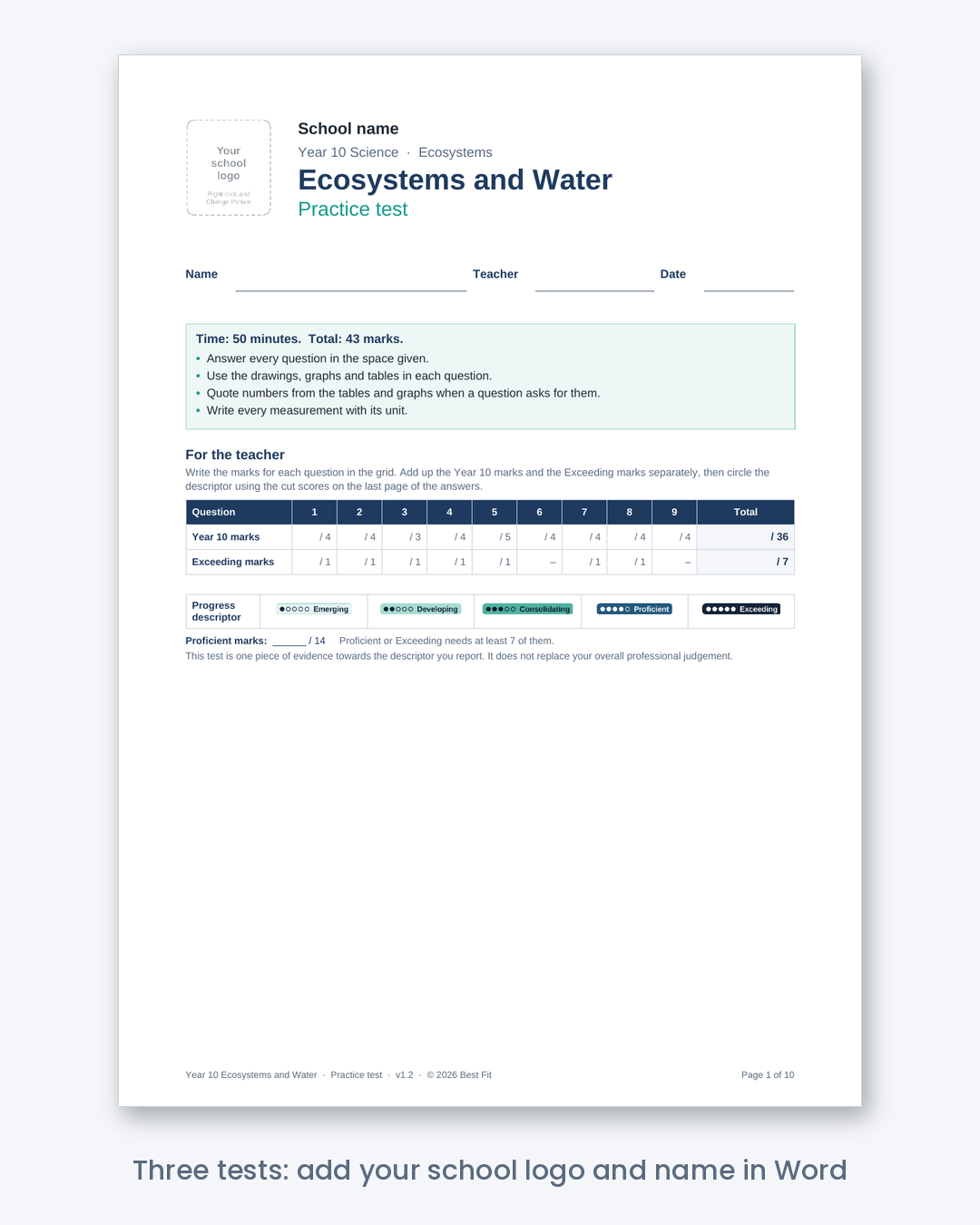
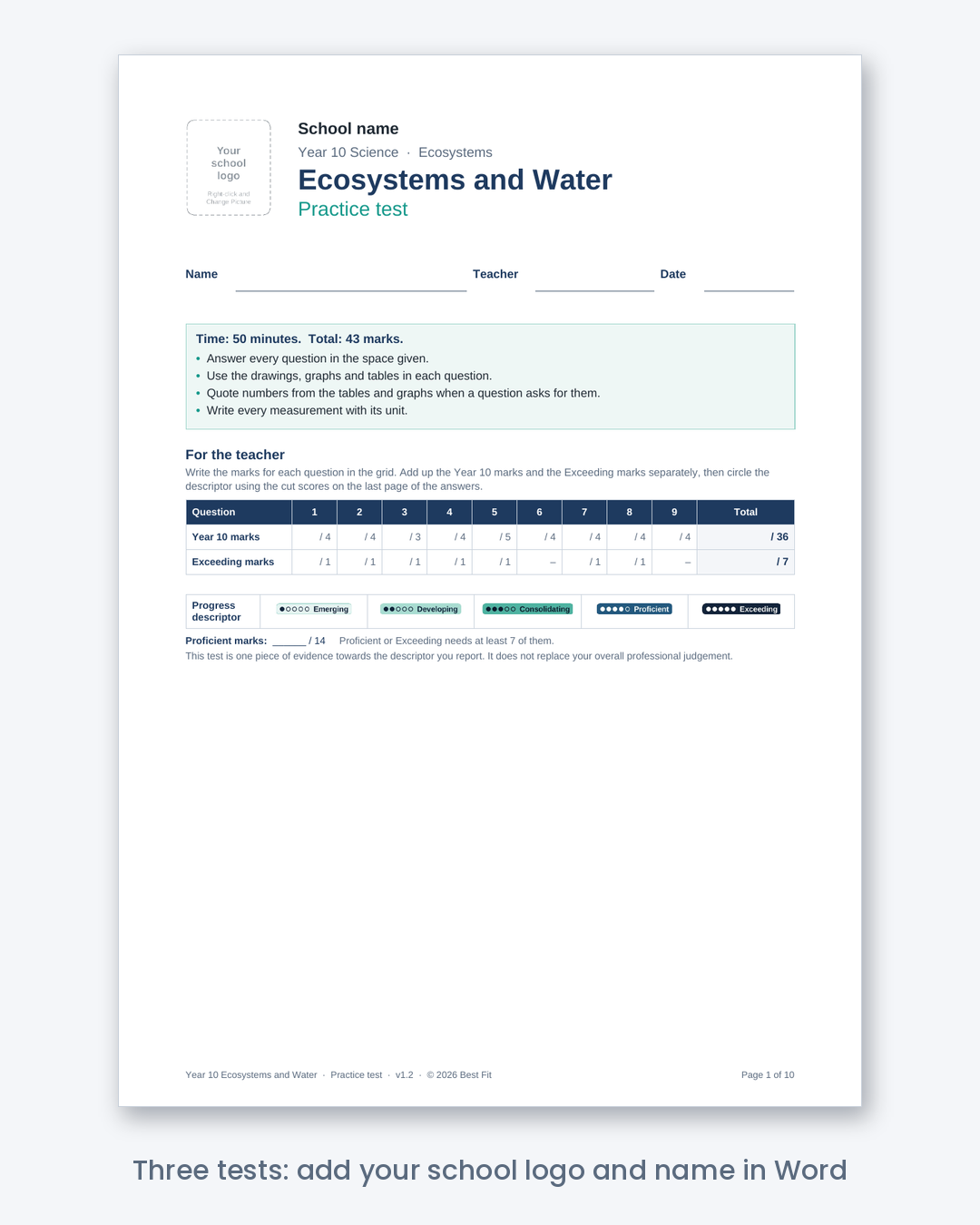
- Assessment results: a practice test and parallel end-of-unit tests A and B, each with 36 Year 10 marks and 7 Exceeding marks, marking schedules and cut scores. Editable Word copies let you add your school's logo and name.
- Tracker: an evidence tracker that brings everything together into one best-fit judgement.
Good to know
- Fieldwork and soil with care: adult supervision, no wading in flowing water, gloves and hand washing, garden soil (never potting mix or compost), nothing cultured, and animals returned the same day. Every practical is flagged for a biology specialist to check against your school's rules.
- The tests' tohu are real, sourced organisms (wātakirihi, kōura, kawau and kōtare, harakeke) placed in made-up places. Every tohu, kaitiakitanga, Te Mana o te Wai and place line, and every te reo Māori word, is listed with its source for your kaiako Māori to check before you teach.
- Ideas beyond Year 10 (soil pores and pH, osmosis, guard cells, zonation and succession, trophic cascades, wildlife corridors, condensation nuclei and more) appear only in Exceeding marks.
- Unseen tests, honestly split: tests A and B assess drought and pollution, forests and grasslands, decomposers in water, a forest's effect on humidity, a nutrient's path, and judging a made-up plan against the principles of kaitiakitanga. The classroom pieces practise drainage, wetlands, decomposers in soil, transpiration in one plant, runoff and erosion, the path of water and finding real examples. The practicals, the investigation and the research task teach the practices on both sides.
- No marks beside the questions on student papers: the marks are in the answers, and every mark names the descriptor it is evidence for.
- Free sample pages available for the Year 9 Electricity Assessment Pack so you can check them out before you buy: https://payhip.com/b/7NAoc
- Pairs with the other Y10 Science Assessment Packs or will all Junior Science Assessment Packs through the bundles.
- Add the report builder upgrade once it is released and it writes copy-ready report comments that fit your reporting system's character limits. [Free sample: https://payhip.com/b/DYCBE]
School licence: every teacher and student at one school may use and copy these files, including on your school's learning platform. Please don't share them outside your school.
Best Fit is not registered for GST.