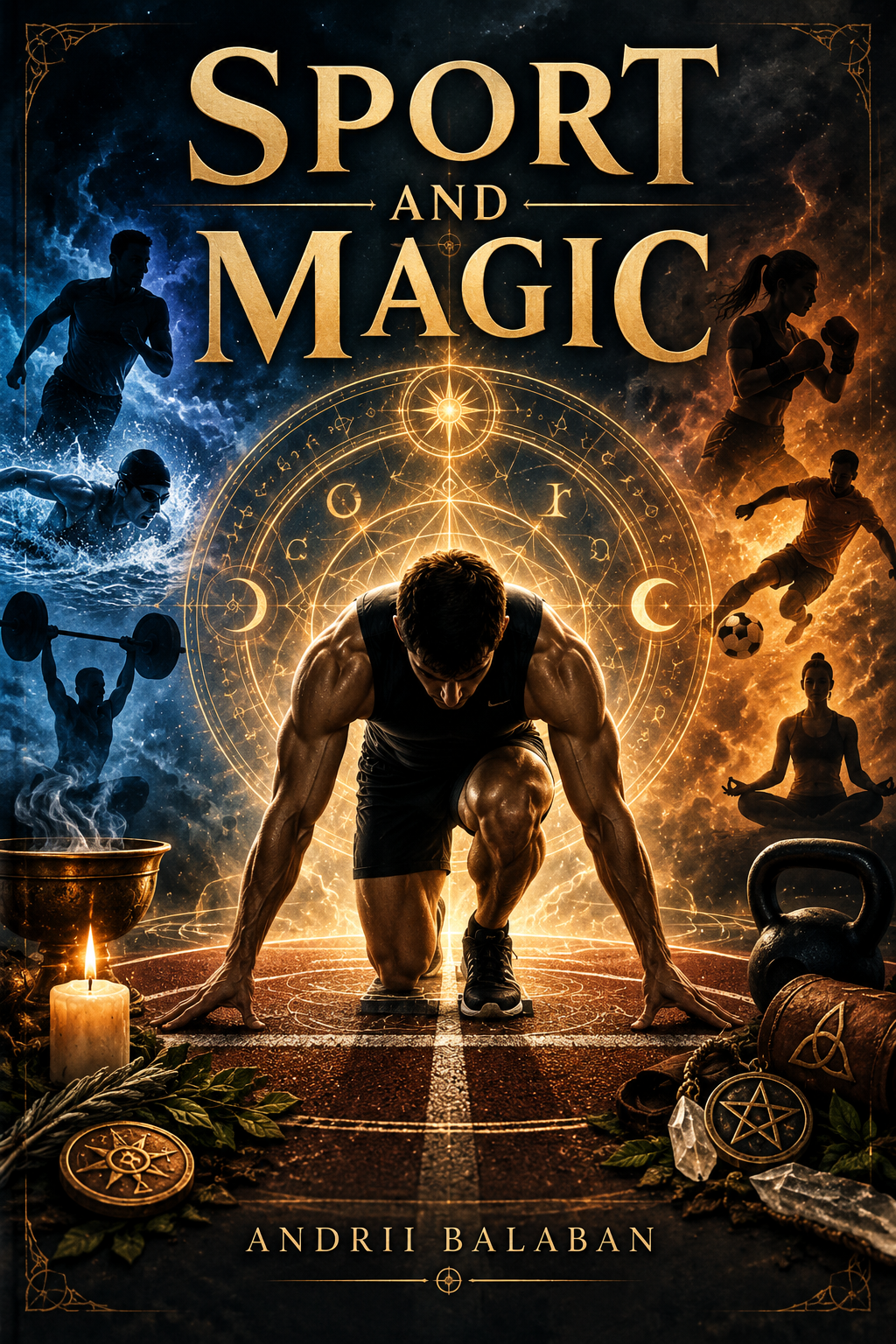
Sport and magic
Contents
1. The hidden structure of sport and magic
The ancient relationship between physical competition, ritual, sacred games, protective symbols, prayer, personal customs, and magical thinking. The athlete as a person who deliberately enters uncertainty and tests trained ability against resistance, time, distance, an opponent, or personal limits. This chapter introduces the distinction between physical preparation and symbolic preparation and establishes the central principle of the book: magic accompanies training and competition but never replaces them.
2. The body as an instrument of magical power
The body as the material foundation of athletic achievement and as a symbolic center of strength, movement, endurance, balance, and will. Magical meanings associated with breath, heartbeat, muscles, hands, feet, posture, movement, and physical presence. Rituals for establishing a respectful relationship with the trained body, consecrating athletic equipment, entering the training space consciously, and treating physical preparation itself as a disciplined magical practice without ignoring biological limits or genuine physical needs.
3. Discipline, training, and the magic of repetition
The hidden power of repetition and the transformation of ordinary training into a structured practice of intention. Rituals for beginning a training cycle, maintaining consistency, overcoming procrastination, returning after interruptions, and completing difficult periods of preparation. The magical meaning of routine, calendars, training journals, repeated gestures, personal symbols, and small ceremonies that mark progress. Discipline is presented not as punishment but as the ability to return repeatedly to meaningful action.
4. Concentration, confidence, and the athlete’s inner state
Fear before competition, performance anxiety, distraction, self-doubt, excessive expectations, and the pressure created by spectators, coaches, opponents, rankings, and personal ambitions. Magical practices for gathering attention, creating an inner boundary around the decisive moment, calming unnecessary mental noise, and entering competition with a clear intention. Rituals of breath, visualization, symbolic circles, short formulas, talismans, and pre-performance sequences designed to support concentration without becoming compulsive superstitions.
5. The magic of strength, speed, and endurance
Three fundamental expressions of athletic power and the different magical symbolism associated with each of them. Strength as stability and controlled force, speed as decisive movement and immediate action, and endurance as continuity under prolonged difficulty. Planetary, elemental, symbolic, and ritual correspondences may be used to create personal practices before training or competition. The chapter also explains why magical ideas of strength must never become an excuse to disregard exhaustion, injury, hydration, recovery, or safe training principles.
6. Protection, recovery, and the preservation of athletic power
Protective magic for the athlete understood as a disciplined relationship with risk rather than an imaginary guarantee of physical invulnerability. Talismans, seals, symbolic boundaries, cleansing rituals, and practices for mentally leaving competition behind after it has ended. Recovery as an essential part of athletic development, including sleep, rest, medical attention when necessary, emotional decompression, and the transition from intense performance back into ordinary life. The strongest protective ritual remains compatible with practical safety rather than competing with it.
7. Rivalry, opponents, teams, and the magic of competition
The opponent as an essential part of competitive sport rather than an enemy whose existence must be destroyed. Rituals for courage, composure, respect, tactical clarity, team unity, and maintaining psychological boundaries under competitive pressure. The chapter examines individual and team sports, the emotional energy created by rivalry, the influence of crowds and expectations, and symbolic practices for entering a contest without surrendering attention to anger, intimidation, or obsession with the opponent.
8. Victory, defeat, records, and the magic of achievement
Victory as an outcome to be pursued but never completely controlled, and defeat as an event that must be interpreted without allowing one result to define the athlete’s entire identity. Rituals before decisive competitions, symbolic practices for approaching personal records and major goals, and ceremonies for acknowledging genuine achievement. The chapter also examines disappointment, unsuccessful performances, lost matches, failed attempts, and the transformation of competitive experience into information for the next stage of development.
9. The athlete’s path: ambition, identity, and transformation
The deeper psychological and magical journey that occurs when sport becomes an important part of a person’s life. The difference between being committed to a sport and allowing every aspect of personal worth to depend upon performance. Rituals for transitions between seasons, changing goals, returning after setbacks, leaving one level of competition for another, and eventually confronting the end or transformation of an athletic career. Athletic identity becomes a source of strength when it supports life rather than consuming it.
10. The complete art of sport magic
The integration of physical preparation, discipline, concentration, symbolism, protection, competition, recovery, and personal meaning into one coherent magical system. A complete ritual for an important competition using a personal symbol, water, stone, candle where appropriate, athletic equipment, written intention, visualization, invocation, and a deliberate transition into actual performance. The chapter explains when rituals should be repeated, simplified, modified, or abandoned so that magical practice remains a source of structure rather than dependency. The final principle is simple: magic may prepare the athlete to meet the decisive moment, but training, skill, judgment, courage, and action are what carry the athlete through it.