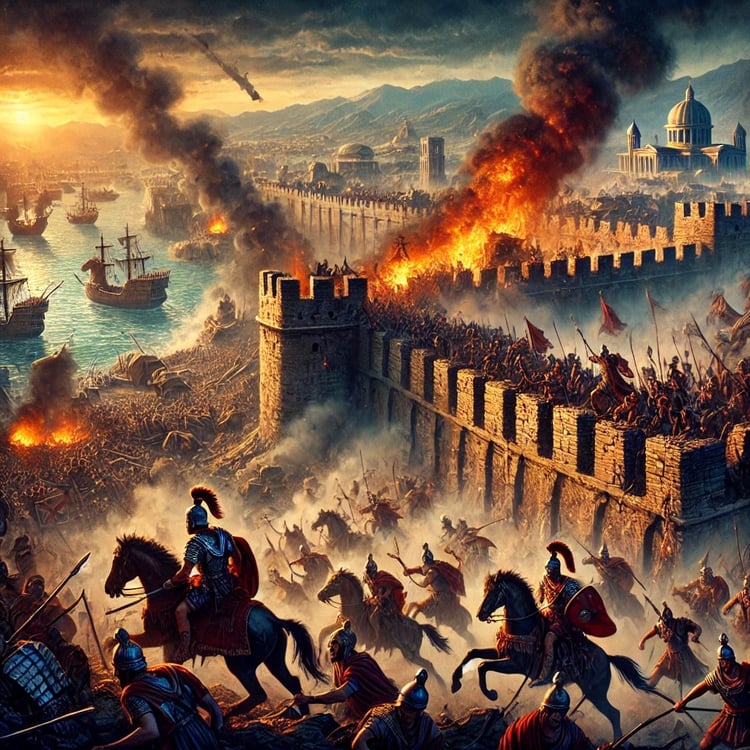
The Dragon's Ascent: The Epic Saga of the Qing Conquest - Ming Dynasty's Fall and China's Transformation (1618-1683)
Chapter 1: The Ming Dynasty's Zenith and Challenges
The Glorious Ming Dynasty
The Glorious Ming Dynasty stands as one of the most remarkable and influential periods in Chinese history, spanning from 1368 to 1644. With its grandeur, cultural achievements, and enduring legacy, the Ming Dynasty left an indelible mark on China and the world.
The Ming Dynasty emerged as a beacon of hope after the tumultuous reign of the Mongol-led Yuan Dynasty. Founded by Zhu Yuanzhang, who took the title Emperor Hongwu, the dynasty started with a dedication to restoring Chinese culture, strengthening the central government, and promoting Confucianism. The early Ming rulers implemented vital administrative reforms, revamping the taxation system, and establishing a network of schools to nurture Confucian scholars who would contribute to the empire's governance.
During the Ming Dynasty, China experienced a period of relative stability and territorial expansion. The Great Wall, a symbol of China's defense against external threats, was rebuilt and extended, showcasing the dynasty's commitment to protecting its borders. The Ming Dynasty also embarked on ambitious naval expeditions, led by the famous admiral Zheng He, which established diplomatic relations and trade networks with distant lands.
Art and culture flourished during the Ming Dynasty. The era witnessed the creation of exquisite porcelain, with the iconic blue and white ceramics becoming highly sought after worldwide. Literature thrived, producing renowned works such as "Journey to the West," "Romance of the Three Kingdoms," and "Water Margin," which have endured as classics of Chinese literature. Ming painters excelled in traditional Chinese painting, with landscapes and nature being recurring themes, and calligraphy reached new heights as an art form.
The Ming Dynasty's architectural achievements are exemplified by the construction of the magnificent Forbidden City in Beijing. This sprawling palace complex, characterized by its intricate design and stunning imperial architecture, became the political and ceremonial center of the empire. The harmonious integration of traditional Chinese architectural principles with innovative features reflected the Ming Dynasty's dedication to creating enduring structures of beauty and significance.
Despite its many accomplishments, the Ming Dynasty faced challenges that would ultimately lead to its decline. The dynasty struggled with financial issues, including the burden of maintaining the Great Wall and funding ambitious projects. Additionally, social unrest, corruption, and external threats from the north by the Manchu tribes weakened the dynasty's grip on power.
In 1644, the Ming Dynasty was overthrown by the Manchus, leading to the establishment of the Qing Dynasty. However, the legacy of the Ming Dynasty endured, as its cultural contributions continued to shape Chinese society for generations to come. The Ming Dynasty's impact on art, literature, governance, and architecture remains a significant part of China's identity, and its lessons continue to inspire and guide modern-day China.
In conclusion, the Glorious Ming Dynasty stands as a testament to China's resilience, cultural richness, and enduring spirit. Its achievements and contributions to civilization continue to captivate the world, serving as a reminder of the profound influence that historical periods can have on shaping the destiny of a nation and the course of human history.