Texturing Fundamentals in Blender
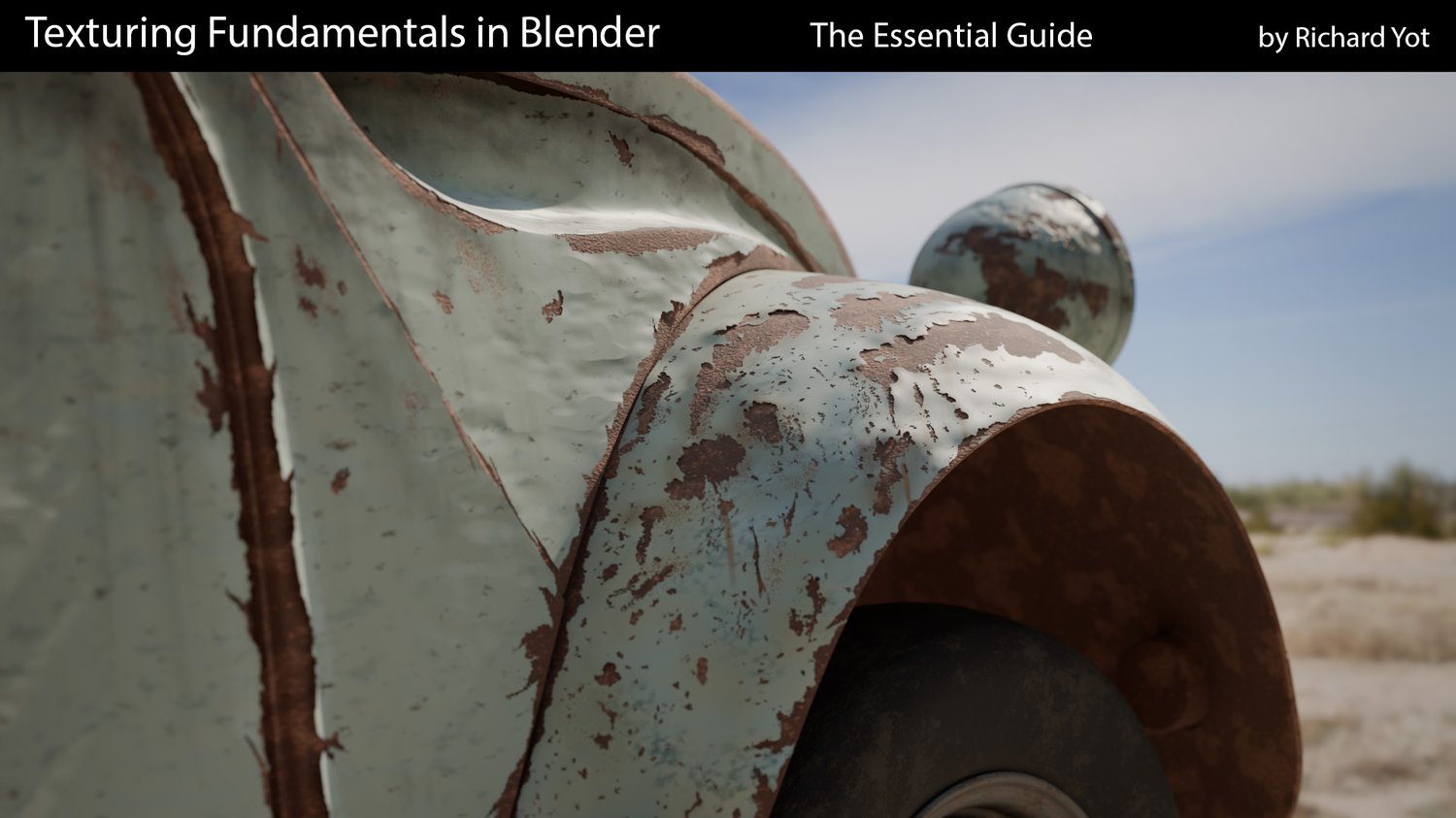
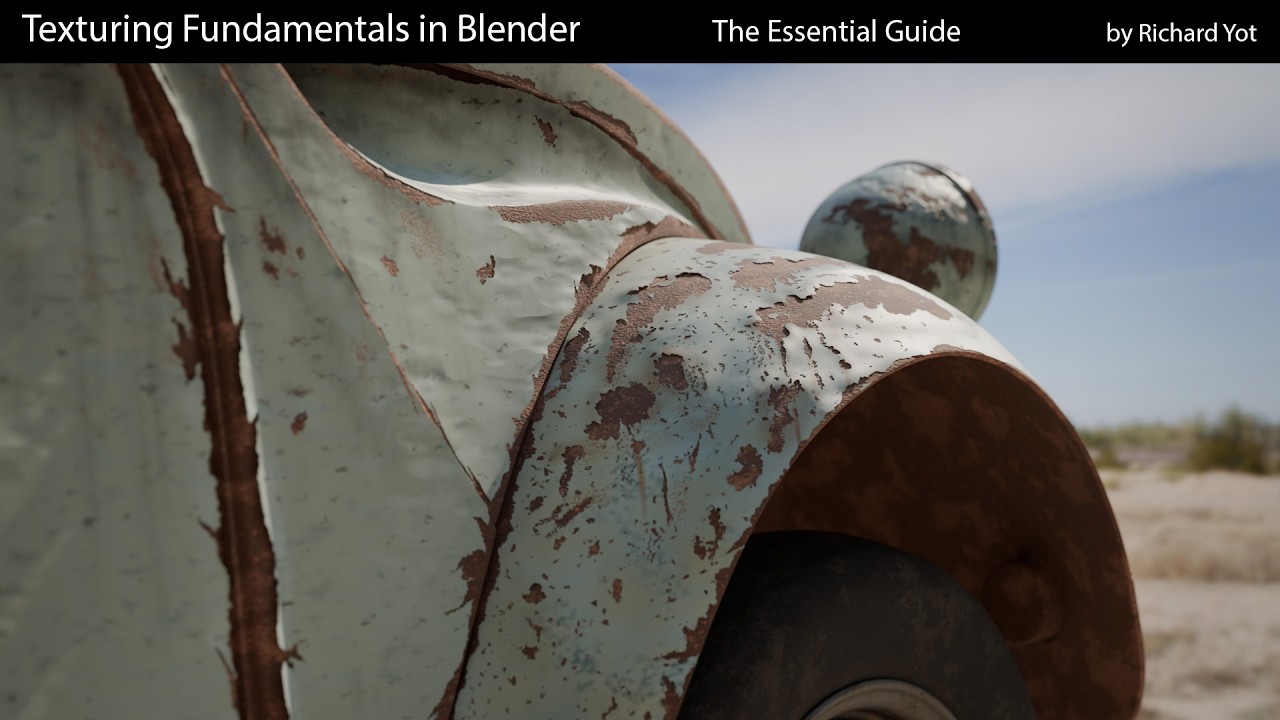
This step-by-step training will take you through a complete shading and texturing project from start to finish. My aim in creating this course was to tackle tricky compound materials, such as chipped paint peeling off a rusty car, tyres caked in a layer of dirt, and steel wheel hubs flecked with spots of rust.
Every material in the course is built entirely from scratch using procedural and hand-painted techniques. No photo-based textures with baked-in lighting. No dependency on hard-to-find assets.
By learning to create textures entirely by hand, you will gain the freedom to build materials for any situation and develop a skillset that makes you far more versatile and valuable as an artist.
Throughout the course, you’ll learn when to use procedural workflows, when to paint by hand, and how to combine both approaches effectively for maximum efficiency and control.
And you don't need to be a master painter to texture paint effectively, as long as you can hold a stylus without dropping it, and do some basic scribbling, you should be good to go. Good observation matters far more than perfect brushwork.
Blender has an excellent texture-painting engine that is capable of delivering professional results. You can either use the vanilla version, or enhance it with the free Ucupaint add-on that comes bundled with Blender.
Ucupaint adds useful features such as a layer stack and workflow enhancements, but it’s completely optional. The course clearly demonstrates both approaches, so whether you prefer vanilla Blender or an enhanced workflow, you’ll be fully covered.
Either way, you will learn how to layer details, how to combine hand-painted and procedural textures, and how to mix multiple materials effectively. The course also tackles how to use painted masks to create the effect of paint peeling off a surface, as well as the use of displacement and bump to enhance that effect.
The course will also cover how to create custom brushes, create layered procedural textures, iterate and revise your work, and take you all the way to the final render with lighting and compositing.
By the end of the course, you’ll know how to:
- Create layered procedural materials from scratch
- Combine procedural and hand-painted textures effectively
- Build convincing wear, dirt, rust, and peeling paint effects
- Paint custom masks for material blending
- Use bump and displacement to enhance surface detail
- Create and customise your own brushes
- Iterate and refine textures effectively