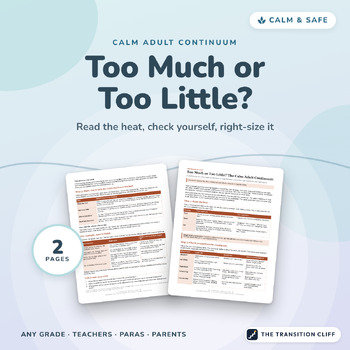
De-escalation Guide: Overreacting vs Underreacting, Calm Adult Continuum, High School
One adult calls the office because a kid is muttering. Down the hall, another adult watches a kid throw a chair and says, "He does that." I have watched that happen in schools for more than 20 years. Nobody is wrong on purpose. We just are not looking at the same thing, and the response ends up too big or too small for the moment.
What's included:
• A three second Cool, Warm, Hot read for the room, one kid, and yourself
• The Calm Adult Continuum: five places an adult response can land, from Missed It to Took the Bait, with what each looks like, sounds like, and usually leads to
• Why we overreact, why we underreact, and the one thing that fixes both
• The four Calm the Room steps written for the moment: Read the room, Own your calm, Offer a Calm Move, Mend and reconnect
• A sub day example start to finish, with the right sized move and the likely miss at each point
• Team discussion questions
How I'd use it:
Most de escalation guides are about the kid. This one is mostly about the adult, because that is where I have seen rooms get calmer fastest. Hand it out before a staff meeting and ask one question: where do you land on a tired Thursday? People are honest about it, and the conversation that follows is worth more than any poster. It also works for co teachers and paras who keep seeing the same moment differently.
Who it's for: Teachers, paras, administrators, and families. Any grade level.
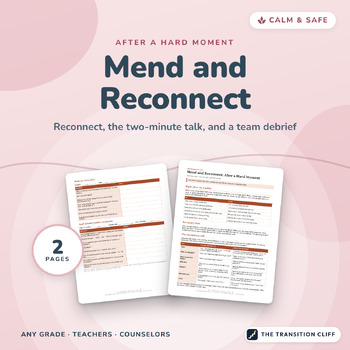
What you download: one printable PDF, 2 pages, US Letter.
This is an educational resource. It does not replace your school's crisis plan, safety procedures, or any training your district requires.
Made by Jeremy D. Gooch, special education teacher and transition coordinator. Drafting and layout had AI assistance; every page was checked by me.