
The Science Behind Supporting Speech Access
The Science Behind Supporting Speech Access — Part 3: Support & Recovery
Reducing pressure, supporting communication and helping the nervous system recover.
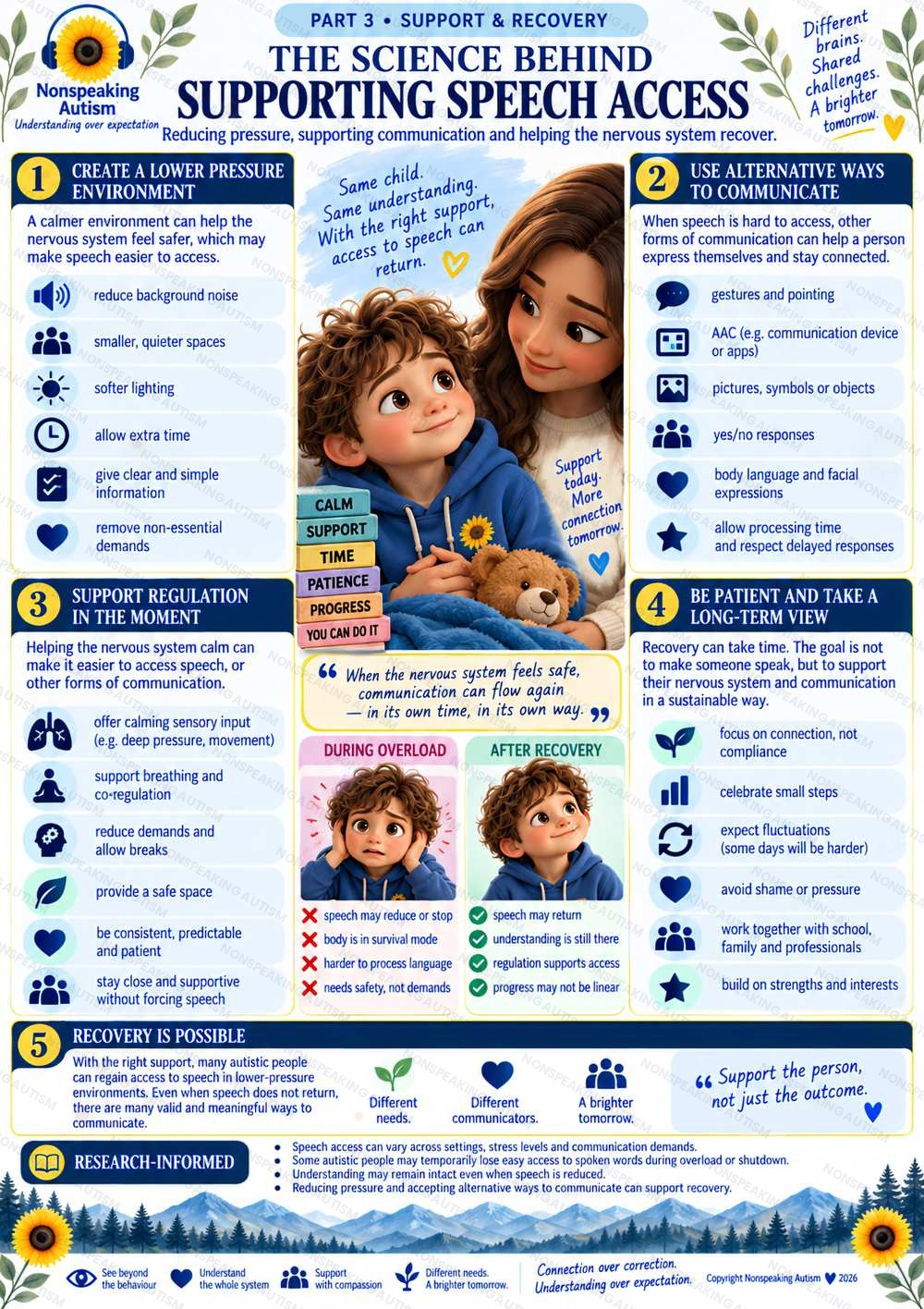
When speech becomes difficult to access, the goal should not be to push harder for spoken words. For some autistic people, reducing pressure, supporting regulation and accepting different forms of communication can make it easier to stay connected while the nervous system recovers.
This research-informed educational poster is Part 3 of the Situational Speech Loss series and focuses on what adults can actually do when speech becomes reduced, delayed or temporarily unavailable.
💙 Same child. Same understanding. With the right support, access to speech may return.
🌿 Create a Lower-Pressure Environment
A calmer, more predictable environment can reduce competing demands and may make communication easier to access.
Support can include:
- Reducing background noise
- Moving to smaller or quieter spaces
- Using softer lighting where appropriate
- Allowing extra time
- Giving clear and simple information
- Removing non-essential demands
- Reducing repeated questions or prompts
- Allowing the person time to recover without pressure
The aim is not to create a perfectly controlled environment. It is to notice what may be adding to the person's load and reduce what can reasonably be reduced.
💬 Use Alternative Ways to Communicate
Communication is more than speech.
When spoken words are difficult to access, other communication methods can allow a person to express themselves while remaining connected.
These may include:
- Gestures and pointing
- AAC devices or communication apps
- Pictures, symbols or objects
- Typing or writing
- Yes/no responses
- Body language
- Facial expressions
- Allowing delayed responses
- Giving additional processing time
Alternative communication should not be treated merely as a temporary substitute that is less valuable than speech.
Communication in any accessible form is meaningful communication.
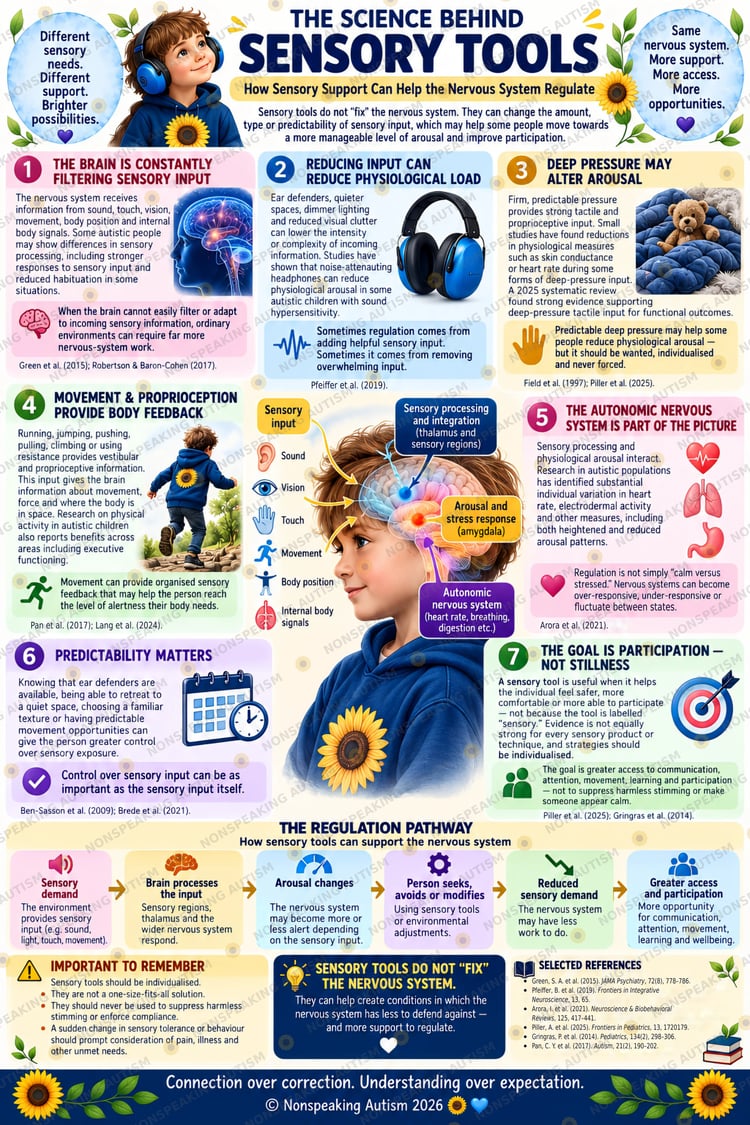
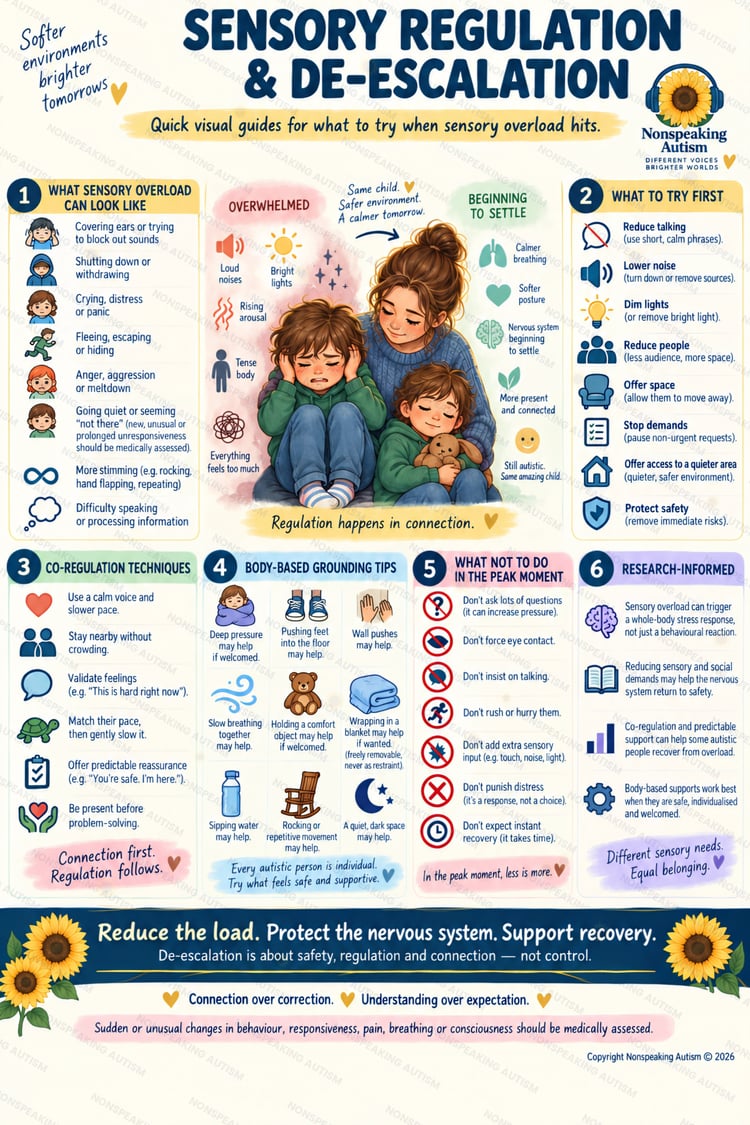
🧠 Support Regulation in the Moment
When the nervous system is overwhelmed, increasing demands may make communication even harder.
Instead, support can focus on helping the person feel safer and more regulated.
Depending on the individual, this might include:
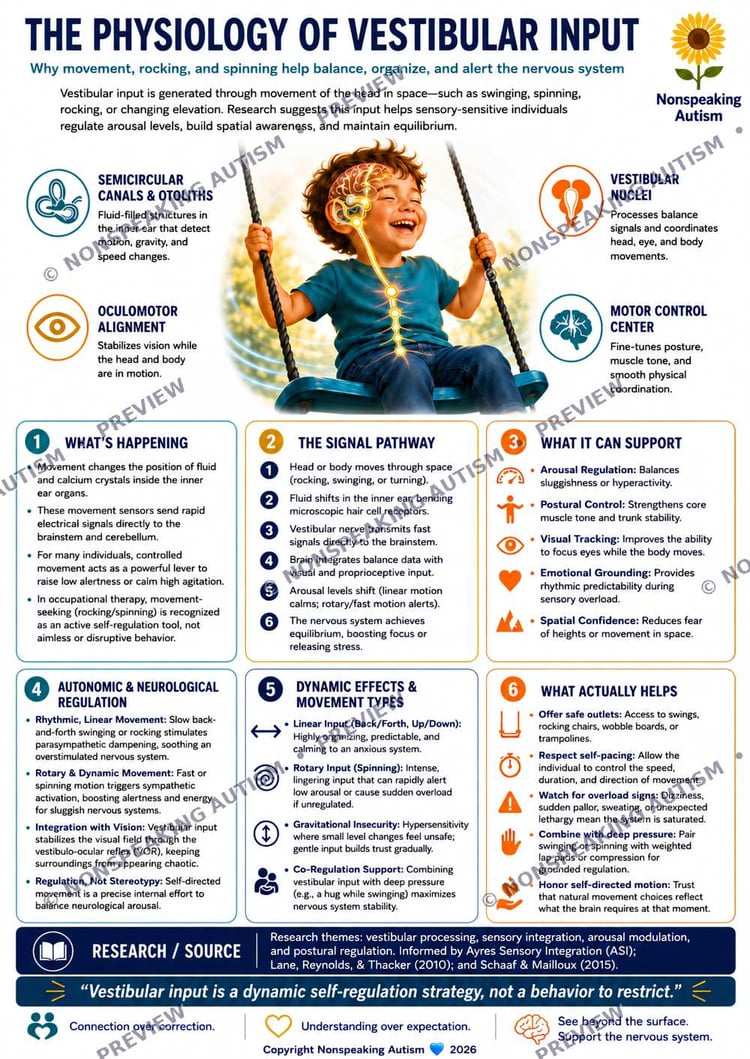
Calming sensory input — such as preferred movement or pressure where this is wanted and appropriate.
Co-regulation — providing a calm, predictable and supportive presence.
Reducing demands — allowing the person to focus on regulation rather than performance.
Offering a safe space — providing somewhere quieter or less demanding when possible.
Remaining predictable and patient — avoiding sudden increases in expectations.
Staying connected without forcing speech — presence and connection can continue even when spoken language does not.
Sensory support should always be individualised. What is calming for one person may be uncomfortable or overwhelming for another.
💙 During Overload vs After Recovery
Communication can look very different depending on the person's current level of regulation.
During overload
A person may experience:
- Speech reducing or stopping
- Greater difficulty processing language
- Reduced ability to respond
- A stronger need for safety and reduced demands
- Increased reliance on non-speaking communication
After recovery
Speech may return or become easier to access.
Understanding may have been present throughout the experience, and regulation may improve communication access.
Recovery may happen gradually, and progress does not have to be linear.
A person may communicate differently on different days or in different environments.
When the nervous system feels safe, communication can flow again — in its own time, in its own way.
🌱 Be Patient and Take a Long-Term View
Recovery can take time.
The objective is not to make someone speak as quickly as possible. The objective is to support their nervous system, communication, autonomy and wellbeing in a sustainable way.
Helpful principles include:
- Focus on connection rather than compliance
- Celebrate meaningful small steps
- Expect fluctuations
- Avoid shame or pressure
- Work collaboratively with the person, family, school and relevant professionals
- Build on individual strengths and interests
- Respect different forms of communication
- Recognise that recovery may take longer than the stressful event itself
A difficult day does not erase progress.
Likewise, speaking successfully in one environment does not mean speech will automatically be equally accessible everywhere else.
🌻 Recovery Is Possible
With appropriate support, some autistic people may regain easier access to spoken communication when they move into safer, calmer or lower-pressure conditions.
For others, speech may remain unreliable or may not return in the same way.
The important point is that meaningful communication remains possible.
AAC, gestures, typing, pointing, signs, facial expressions, body language and other communication methods all deserve recognition and respect.
The goal is communication and connection—not achieving a particular form of communication.
💛 Support the Person, Not Just the Outcome
It can be tempting to judge whether an intervention has “worked” by whether spoken language returns.
But support can still be successful even when speech does not immediately return.
Success may instead look like:
- Feeling safer
- Experiencing less distress
- Having needs understood
- Being able to communicate through AAC
- Remaining connected to another person
- Recovering without shame
- Having greater autonomy
- Knowing that silence will be respected
- Being given enough time
Different needs. Different communicators. A brighter tomorrow.
🏫 Ideal For
This educational poster may be useful for:
- Autistic people and their families
- Parents and carers
- SEND teachers
- Teaching assistants
- SENCOs
- Mainstream and specialist schools
- Speech and language settings
- AAC users and communication partners
- Occupational therapy environments
- Autism professionals
- Support workers
- Healthcare and clinical environments
- Sensory and regulation spaces
- Staff training
- Neurodiversity education
It can support conversations about what to do during and after periods when spoken communication becomes difficult to access.
🔬 Research-Informed
This poster is designed as a research-informed educational resource.
It reflects evidence and clinical understanding that speech access can vary across environments, stress levels and communication demands, and that some autistic people report temporarily reduced access to spoken words during periods of overload or shutdown.
It also reflects the importance of reducing unnecessary pressure, respecting alternative forms of communication, allowing processing time and supporting regulation and recovery.
The poster is intentionally person-centred. No single strategy will work for every autistic person, and individual communication and sensory preferences should guide support.
📦 What You Receive
Your purchase includes:
1 × The Science Behind Supporting Speech Access — Part 3: Support & Recovery
This is a digital educational poster from Nonspeaking Autism.
Your download includes:
1 × High-quality PDF — A2 size (420 × 594 mm)
Suitable for professional or home printing.
The purchased PDF is supplied clear and without the promotional preview watermark. Watermarks visible on Payhip listing images are used only for preview and copyright-protection purposes.
Digital PDF download only — no physical product will be shipped.
⚠️ Important Educational Disclaimer
This poster is provided for education, awareness and general informational purposes only.
It is not a diagnostic tool and does not replace individual medical, psychological, speech and language, occupational therapy or other professional assessment and advice.
Reduced or absent speech should not automatically be attributed to autism, sensory overload, anxiety, freeze, shutdown or nervous-system dysregulation.
Sudden or unexplained changes in speech can sometimes have a medical cause. Seek urgent medical assistance for sudden loss or alteration of speech, particularly when accompanied by weakness, facial drooping, confusion, severe headache, altered consciousness or other acute neurological symptoms.
Persistent or concerning changes in communication should be discussed with an appropriately qualified professional.
Sensory and regulation strategies should always be individualised, consensual where applicable, and appropriate for the person's needs.
The experiences and supports represented in this poster will not apply to every autistic or nonspeaking person.
©️ Copyright & Permitted Use
Copyright © Nonspeaking Autism 2026. All rights reserved.
Your purchase is intended for the purchaser's personal, educational or professional use.
You may print and display your purchased copy in your own home, classroom, educational environment, therapy space, clinic or workplace.
The digital file may not be resold, redistributed, shared as a digital download, uploaded to file-sharing websites, reproduced for commercial distribution, altered for resale or incorporated into another product for sale without permission.