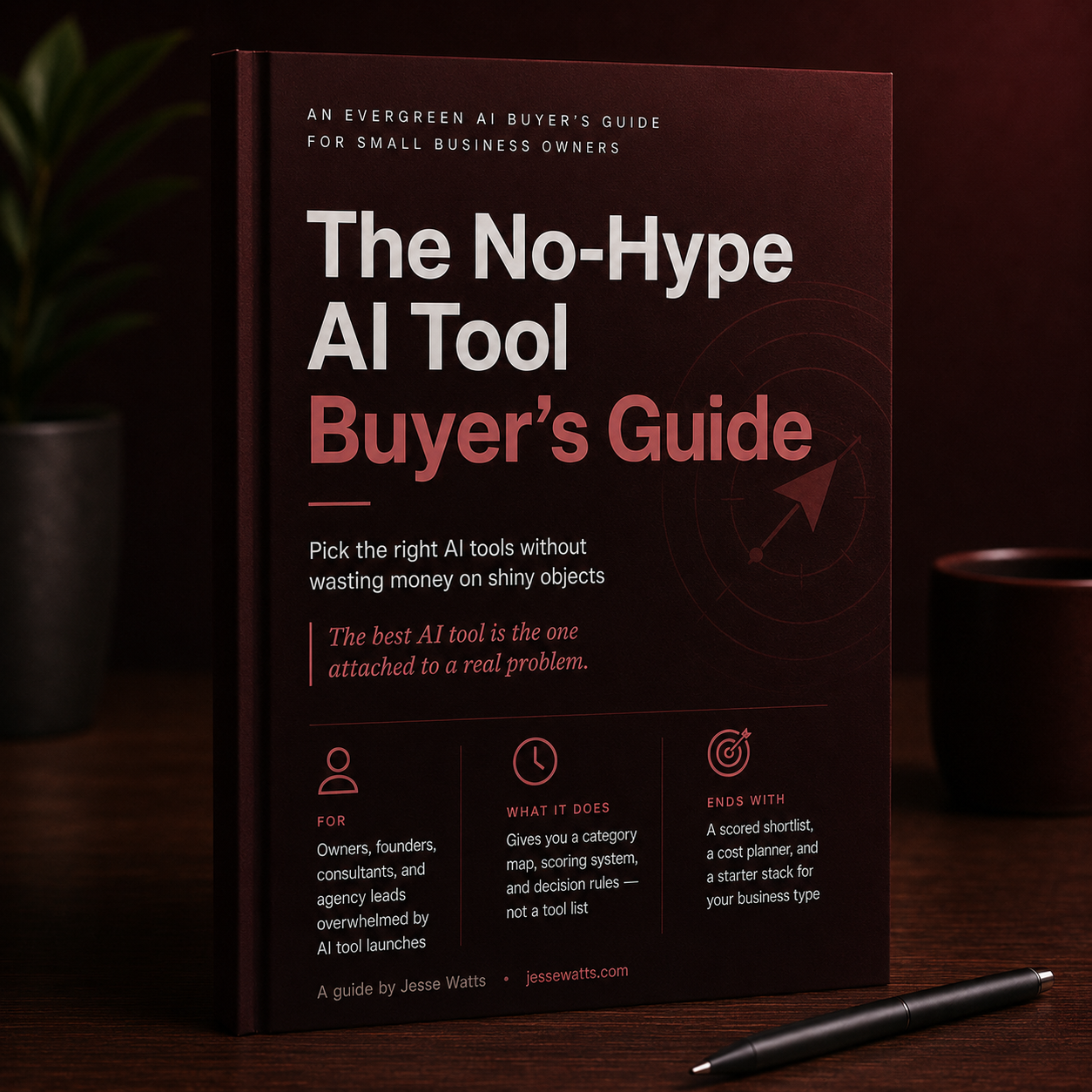
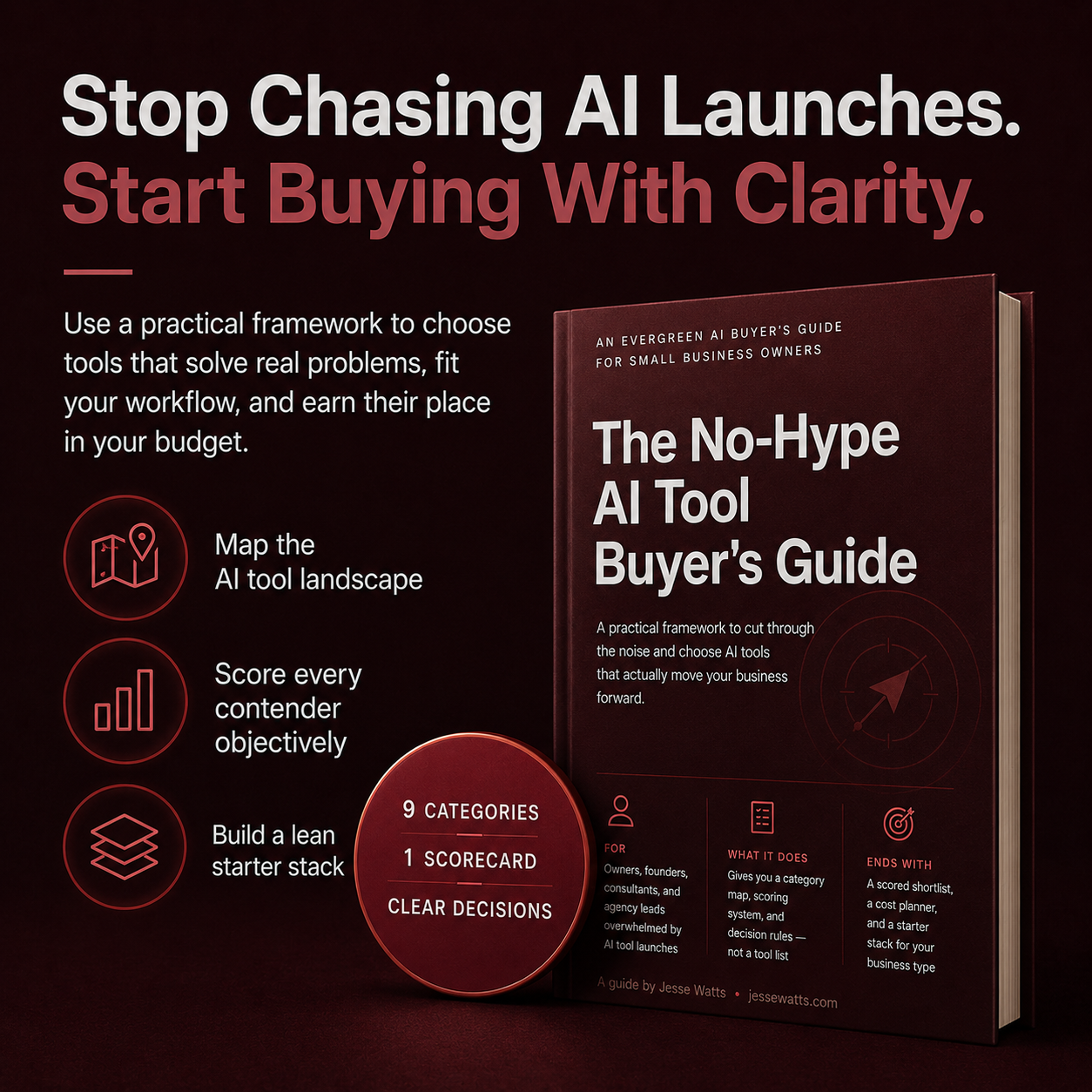
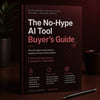
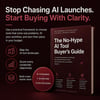
A practical guide for small business owners who want a leaner AI stack, smarter buying decisions, and fewer subscriptions they forget to cancel.
The best AI tool is not the newest one.
It is not the one your favourite creator posted about this morning. It is not the one with the flashiest demo.
The best AI tool is the one attached to a real problem in your business — a problem you would have paid to solve even if AI didn’t exist.
This guide helps you sort through the noise. You’ll start with the problem, map the major AI tool categories, score potential tools honestly, separate must-haves from nice-to-haves, plan your monthly tool costs, and build a starter stack that fits your business type.
No hype. No giant tool list. No pressure to keep up with every launch.
Just a cleaner way to decide what earns its place.
Get the No-Hype AI Tool Buyer’s Guide
Instant download · Evergreen framework · Built for small business owners
Who It’s For
This guide is built for:
Small business owners who feel overwhelmed by the constant flood of AI tool launches.
Founders and consultants who want AI leverage without creating a messy software stack.
Agency leads and service providers who need to evaluate tools for real workflows, not novelty.
Ecommerce owners who are considering tools for writing, creative, support, reporting, automation, product pages, or store operations.
Anyone paying for too many AI tools and wondering which ones actually deserve to stay.
The guide itself is aimed at owners, founders, consultants, and agency leads overwhelmed by AI launches, and it gives them a category map, scoring system, and decision rules rather than a temporary tool list.
Format & Delivery
Format: Digital PDF guide
Length: 23 pages
Delivery: Instant download after signup or checkout
Access: Delivered by email
Best used with: Your current AI subscriptions, your credit card statement, and a realistic list of the workflows you actually run
Recommended use: Free lead magnet, SEO download, bonus guide, or $9 order bump
Positioning: Broad AI entry point / tool-stack cleanup guide
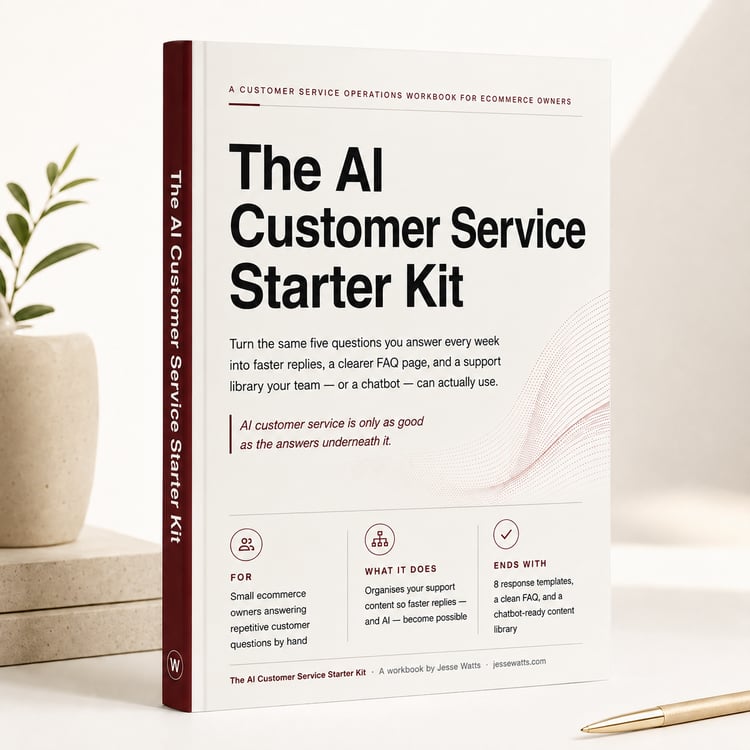
I’d avoid pricing this like the stronger workbooks. It’s a good trust-builder, but not the one I’d expect to convert cold traffic into a $39 purchase as easily as the SOP Builder or Customer Service Kit.
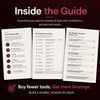
What’s Inside
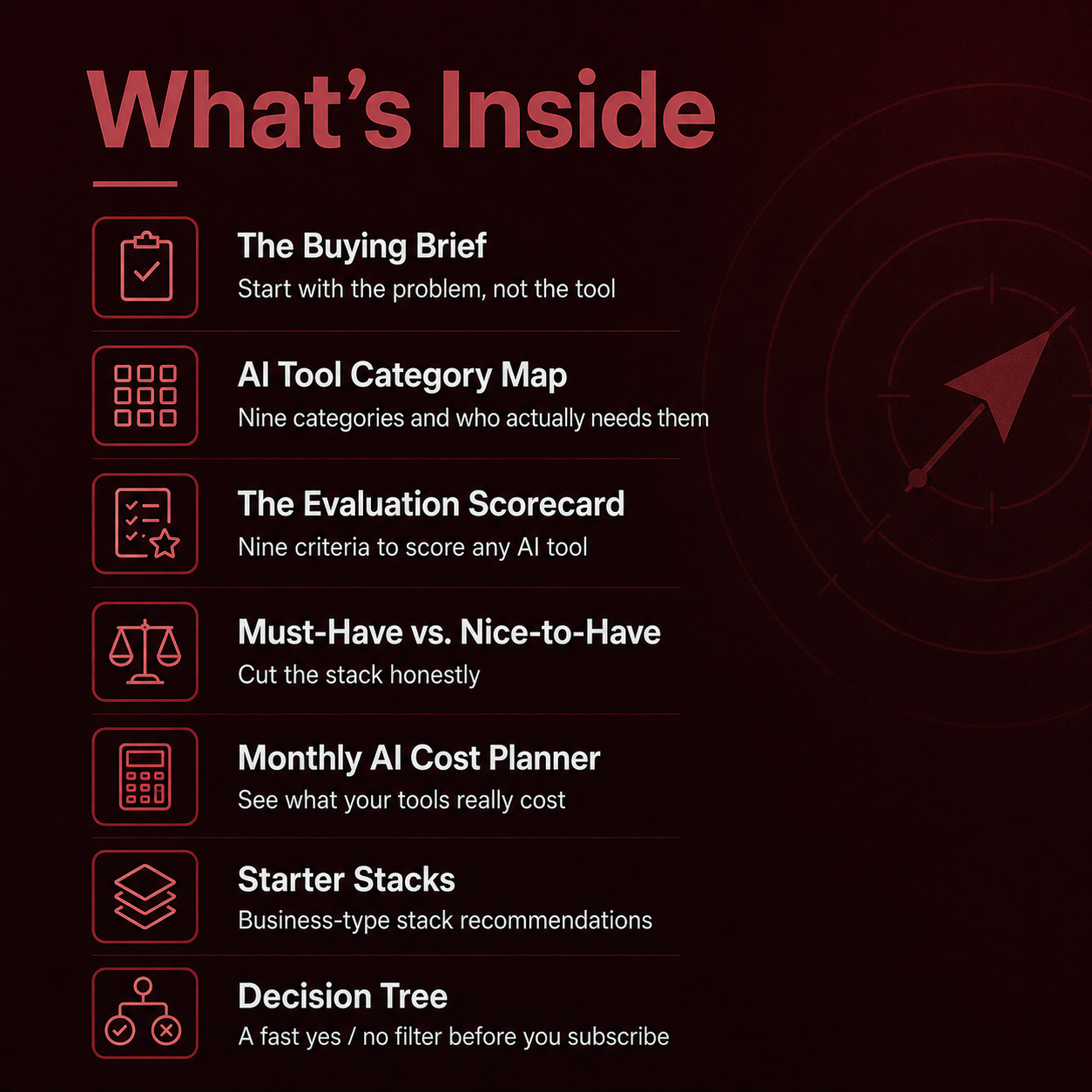
1. Start With the Problem, Not the Tool
A four-question buying brief that forces the buyer to name the actual problem before opening another tool’s website. The guide frames this as the difference between a tool you’ll still use in six months and one you’ll forget you’re paying for.
2. AI Tool Category Map
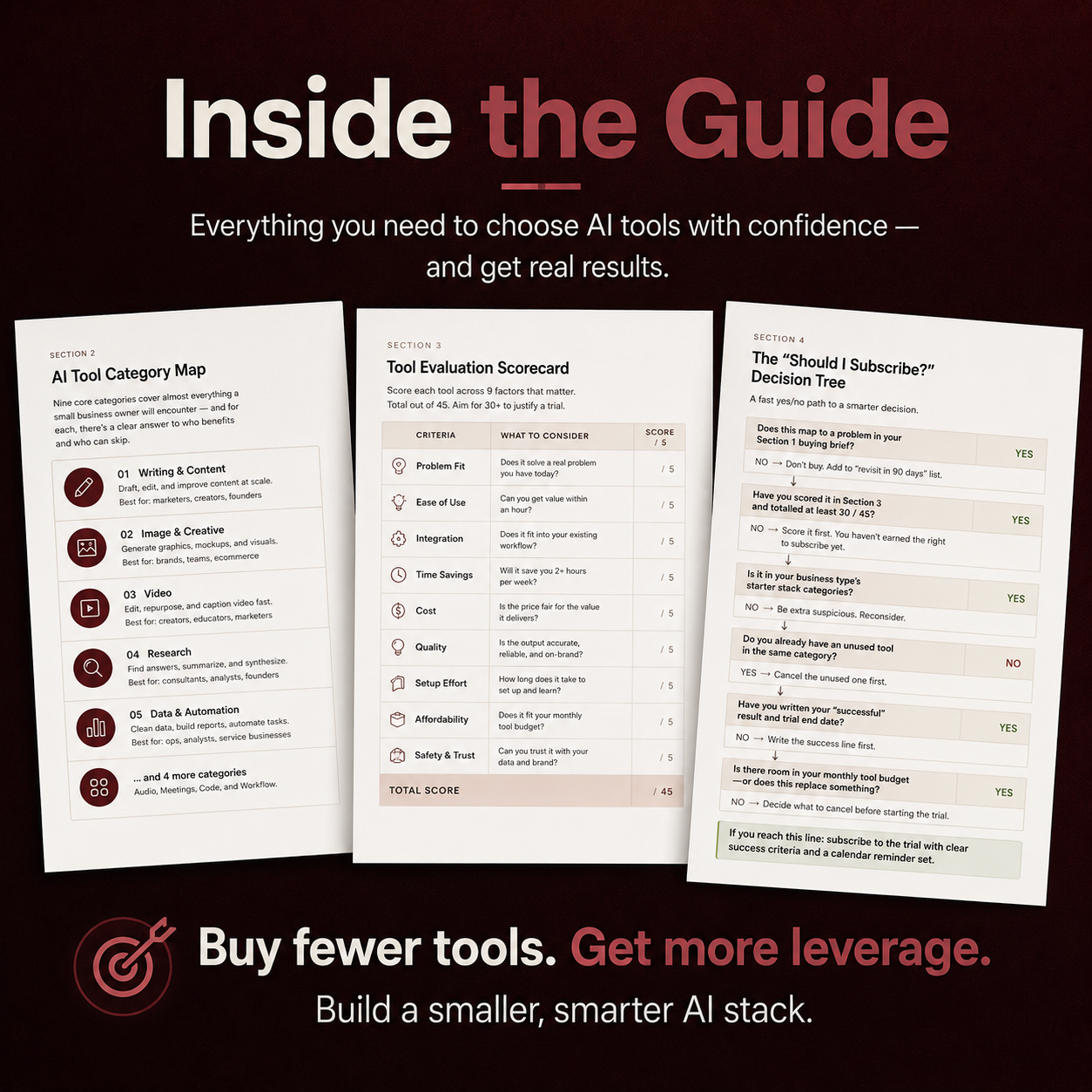
A practical overview of nine AI tool categories: writing and content, image and creative, video, customer support and chatbots, automation, data and reporting, meeting transcription, ecommerce productivity, and coding/building. The guide also explains who needs each category and who can skip it.
3. The AI Tool Evaluation Scorecard
A nine-criteria scoring system for evaluating any AI tool on real business merit: problem fit, ease of use, workflow integration, measurable time savings, cost reduction, quality improvement, setup burden, affordability, and reliability.
4. Must-Have vs. Nice-to-Have
A sorting worksheet that separates core infrastructure from pleasant-but-nonessential tools. The guide uses a simple test: if you lost access tomorrow, what would actually break?
5. Monthly AI Cost Planner
A simple planner for listing every AI subscription, monthly cost, owner, purpose, and decision. This is where users find the tools they’re paying for but no longer using.
6. Simple Starter Stacks
Category-based AI starter stacks for five business types: solo consultants, ecommerce store owners, local service businesses, small agencies or studios, and content-heavy businesses. The guide deliberately avoids naming specific brands so the advice stays useful as tools change.
7. Avoiding Shiny Object Syndrome
Four decision rules and a “Should I Subscribe?” decision tree to prevent impulse buying, duplicate tools, and subscriptions for imaginary future workflows.
Mid-Page Sales Section
Stop Building a Stack. Start Solving a Problem.
Most AI tool buying goes wrong before the free trial even starts.
The owner sees a demo, signs up, plays with features, and then tries to invent a workflow that justifies the subscription.
That is backwards.
This guide helps you make the buying decision in the right order:
First, name the problem.
Then, identify the category.
Then, score the contenders.
Then, decide whether the tool earns its place.
That process will save more money than almost any individual AI tool will.
Benefits Section
What You’ll Walk Away With
A clearer buying brief
Know what problem you’re solving before you subscribe to anything.
A map of the AI tool landscape
Understand the major categories without drowning in specific tool names.
A repeatable scoring system
Compare tools against real criteria instead of gut feel or online hype.
A leaner AI stack
Separate must-have tools from nice-to-haves, future-haves, and quiet money leaks.
A monthly cost picture
See exactly what you’re spending, who owns each tool, and what should stay or go.
A starter stack for your business type
Use category-based recommendations for consultants, ecommerce owners, agencies, local businesses, and content-heavy brands.
A decision tree for future tools
Know when to trial, when to cancel, and when to walk away.
“This Is Not” Section
This Is Not a List of Trendy AI Tools
Tool lists go stale almost immediately.
This guide does not try to predict which AI app will dominate next year. It does not rank today’s hottest tools. It does not tell you to chase whatever is launching this week.
Instead, it gives you the buying logic underneath the tool decision.
The tools will change. The categories, workflows, and buying criteria will keep mattering.
That is the point.
Make Your AI Stack Smaller, Smarter, and Easier to Defend
Before you subscribe to another tool, take a step back.
Use the guide to name the problem, score your options, plan your monthly spend, and decide what actually belongs in your business.
Get the No-Hype AI Tool Buyer’s Guide
Instant download · Practical framework · No tool-chasing required