

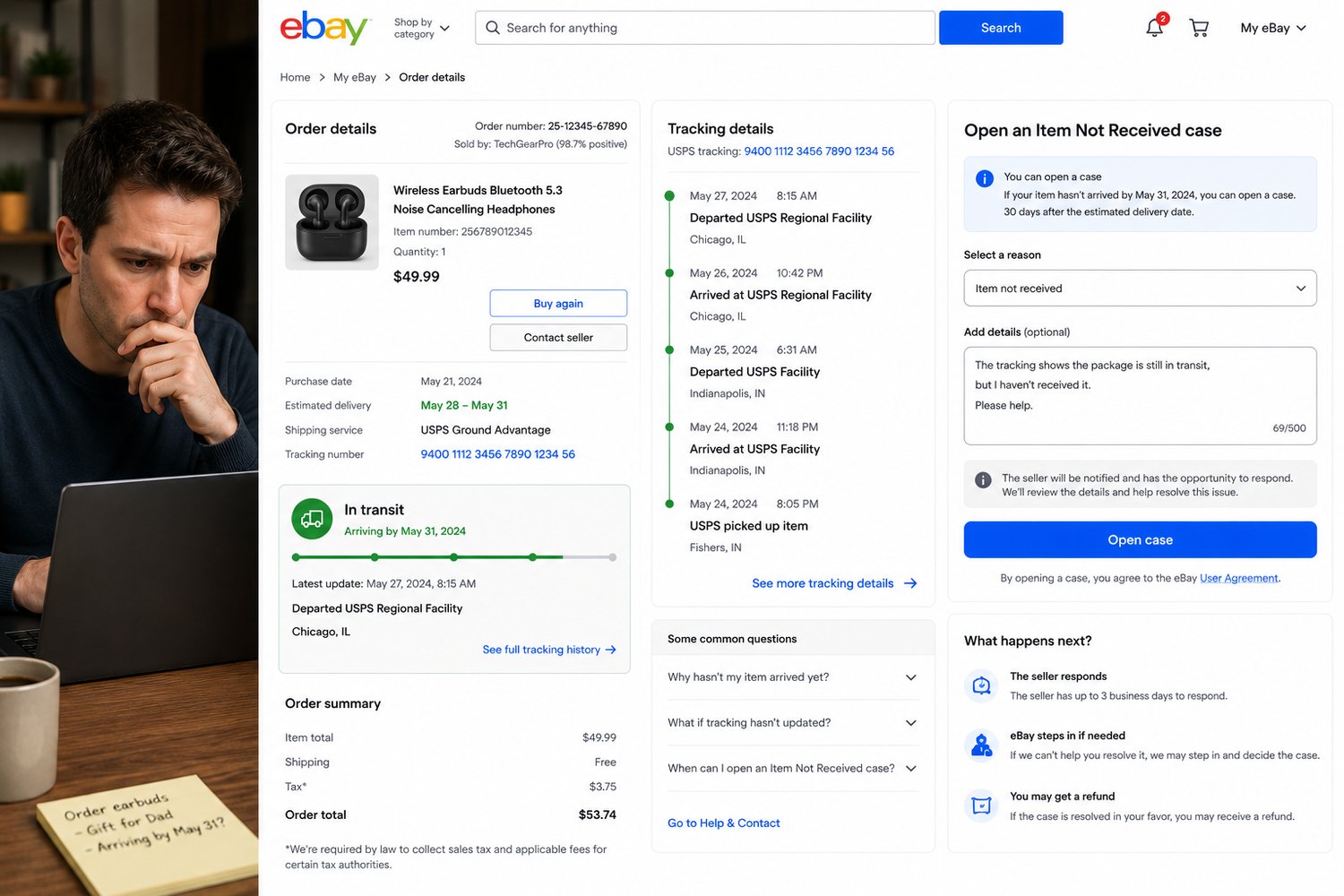
Learn why buyers open eBay Item Not Received cases even when tracking exists. Discover how tracking delays, communication gaps, and visibility issues create buyer anxiety and account risk.
"But I Uploaded Tracking..."
Every experienced eBay seller has said it at least once.
A buyer opens an Item Not Received (INR) case.
You check the order.
Tracking was uploaded.
The package shipped on time.
The carrier has possession of the item.
Everything appears normal.
Yet the buyer still opens a case.
Most sellers immediately assume the buyer is impatient.
Sometimes that's true.
But often something else is happening.
The real problem isn't shipping.
It's visibility.
And visibility problems frequently trigger disputes before actual delivery failures occur.
Tracking Exists Doesn't Mean Buyers Feel Informed
Many sellers assume tracking automatically creates buyer confidence.
In reality, buyers don't care that tracking exists.
They care whether they understand what's happening.
There's a big difference.
From the seller's perspective:
- tracking uploaded
- package accepted
- shipment moving normally
From the buyer's perspective:
- package hasn't arrived
- tracking hasn't changed
- delivery date feels uncertain
The seller sees process.
The buyer sees uncertainty.
And uncertainty creates anxiety.
The Delayed Carrier Scan Problem
One of the most common causes of eBay item not received cases is delayed carrier scanning.
The package may already be moving.
But tracking appears frozen.
Common examples include:
- "Label Created"
- "USPS Awaiting Item"
- "Shipment Received, Package Acceptance Pending"
- no movement for several days
Sellers know these events happen regularly.
Buyers often don't.
To the customer, it appears the order hasn't moved.
As days pass without visible progress, trust begins to decline.
Eventually many buyers seek reassurance through eBay's resolution process.
Buyer Anxiety Increases Faster Than Sellers Realize
Most buyers don't understand fulfillment operations.
They don't know about:
- carrier backlogs
- missed scans
- regional delays
- routing issues
- transportation bottlenecks
They simply compare expectations against reality.
Expected:
"My package should be arriving."
Reality:
"I haven't seen movement in four days."
The longer the information gap exists, the greater the buyer's anxiety becomes.
And anxious buyers are far more likely to open cases.
Not because they're angry.
Because they're looking for certainty.
Tracking Confusion Often Looks Like Delivery Failure
Many Item Not Received cases originate from tracking confusion rather than missing packages.
Examples include:
Tracking Shows Delivered
But the buyer hasn't checked with family members, neighbors, or apartment offices.
Tracking Shows In Transit
But no estimated delivery date appears.
Tracking Shows Multiple Updates
But the information is difficult to interpret.
Tracking Stops Updating
Even though the package continues moving through the network.
To sellers, these situations are common.
To buyers, they often look like problems.
The result is the same:
The buyer escalates.
Communication Failures Create Preventable Cases
Many INR cases are actually communication failures.
The package may be moving perfectly.
But if communication is missing, buyers often assume something is wrong.
For example:
A tracking delay occurs.
The seller notices it.
The buyer notices it.
Nobody communicates.
The buyer fills the information gap with assumptions.
Most assumptions are negative.
This is where many preventable disputes begin.
When buyers don't receive updates, they often turn to eBay for answers.
Why Cases Increase As Order Volume Grows
Many sellers first encounter this problem when reaching roughly 10–30 orders per day.
At lower volumes, sellers often communicate manually.
They answer questions quickly.
They proactively reassure buyers.
They monitor shipments closely.
As volume increases:
- support requests increase
- tracking exceptions increase
- communication becomes reactive
- shipment visibility becomes harder to manage
The business becomes operationally stretched.
Tracking problems that were once manageable start creating disputes.
Not because shipping got worse.
Because visibility got worse.
Operational Visibility Matters More Than Most Sellers Think
Many eBay sellers focus on shipping speed.
Fewer focus on shipping visibility.
Yet buyers often judge the experience based on what they can see.
Strong operational visibility includes:
- accurate tracking uploads
- proactive status updates
- clear delivery expectations
- fast responses to concerns
- monitoring stalled shipments
Visibility creates confidence.
Confidence reduces disputes.
Disputes protect account health.
This connection is often overlooked.
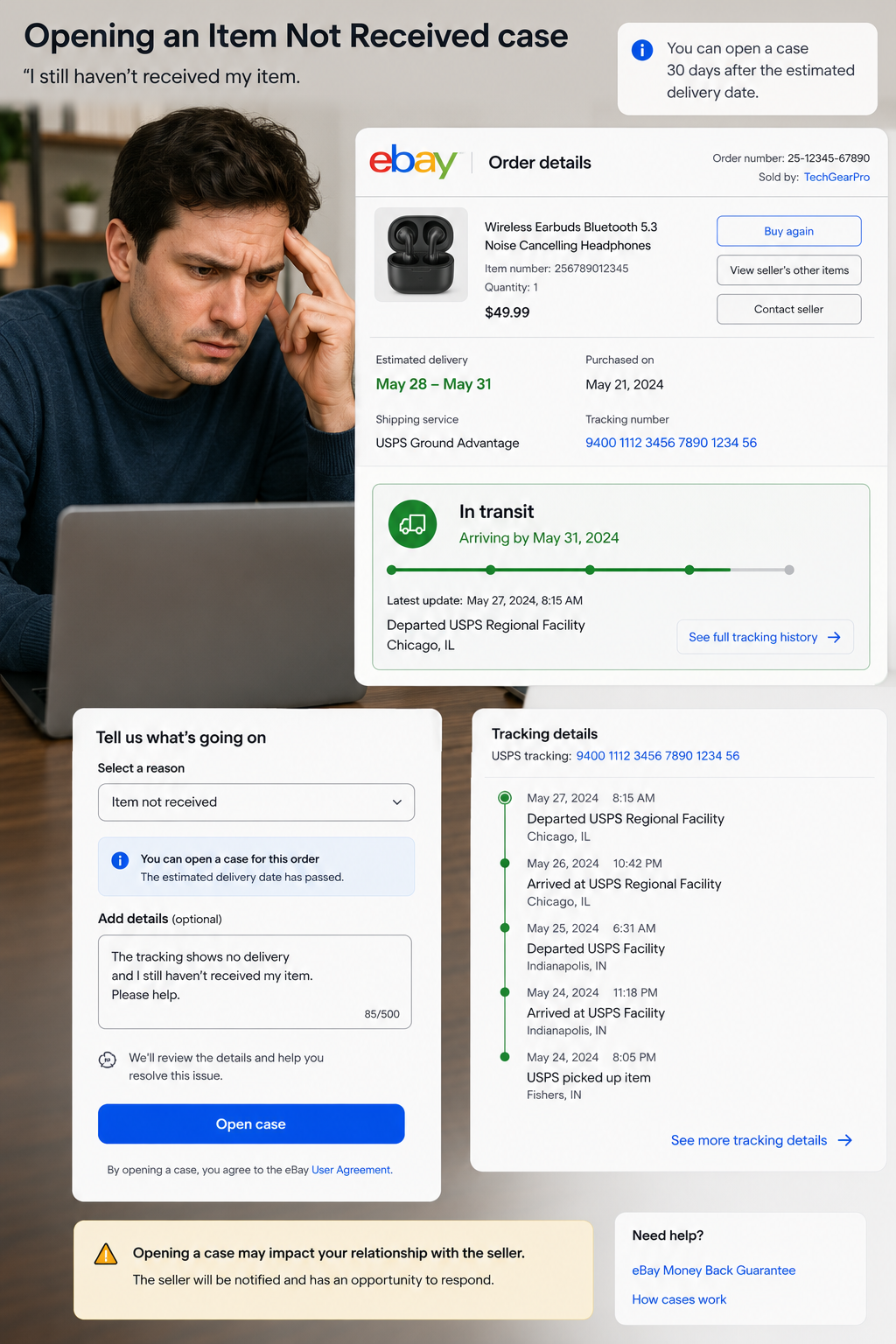
Why Some Sellers Rarely See INR Cases
The difference isn't always faster shipping.
Often it's better communication.
Strong sellers understand that buyer confidence must be managed throughout the fulfillment process.
They recognize early warning signs:
- tracking delays
- carrier scan gaps
- repeated buyer questions
- shipment exceptions
And they communicate before buyers become concerned.
This prevents many cases from opening in the first place.
The Real Problem Isn't Tracking
Many sellers believe Item Not Received cases are tracking problems.
They're usually trust problems.
Tracking simply exposes them.
When buyers feel informed:
- they wait longer
- they ask fewer questions
- they open fewer cases
When buyers feel uncertain:
- anxiety increases
- confidence decreases
- disputes become more likely
The package may be moving perfectly.
But if the buyer cannot see that clearly, trust begins to disappear.
Final Thoughts
If you've ever wondered why buyers open eBay Item Not Received cases despite active tracking, the answer is often surprisingly simple.
Tracking data alone doesn't create confidence.
Visibility does.
Most INR cases begin with:
- delayed carrier scans
- tracking confusion
- communication gaps
- expectation mismatches
- operational visibility problems
The sellers who experience fewer disputes are not always shipping faster.
They're often communicating better.
Because buyers rarely open cases when they feel informed.
They open cases when they feel uncertain.
And uncertainty is an operational problem long before it becomes an eBay case.
Related Reading
Why Buyers Skip Messages and Go Straight to eBay Resolution
Why Customer Complaints Usually Start Before Customers Complain
Why Fast Shipping Doesn't Always Create Happy Customers
Why More eBay Sellers Are Seeing Cases Reach the Issue Resolution Center
Download the Free eBay Seller Compliance Risk Audit
Many eBay disputes start long before a case is opened.
Learn how operational visibility systems help sellers reduce buyer anxiety, improve communication, and prevent avoidable Item Not Received cases before they impact account health.
👉 eBay Seller Compliance Risk Audit
 About the Author
I work with Shopify and eBay sellers to identify and stabilize operational systems before fulfillment pressure turns into customer complaints, refunds, and margin loss.
My focus is helping stores handling 10–30 orders per day build resilient workflows that scale without creating hidden operational stress.
👉 Download the free fulfillment audit: eBay Seller Compliance Risk Audit
📢 Share This
Found this useful? Share it with other operators: