
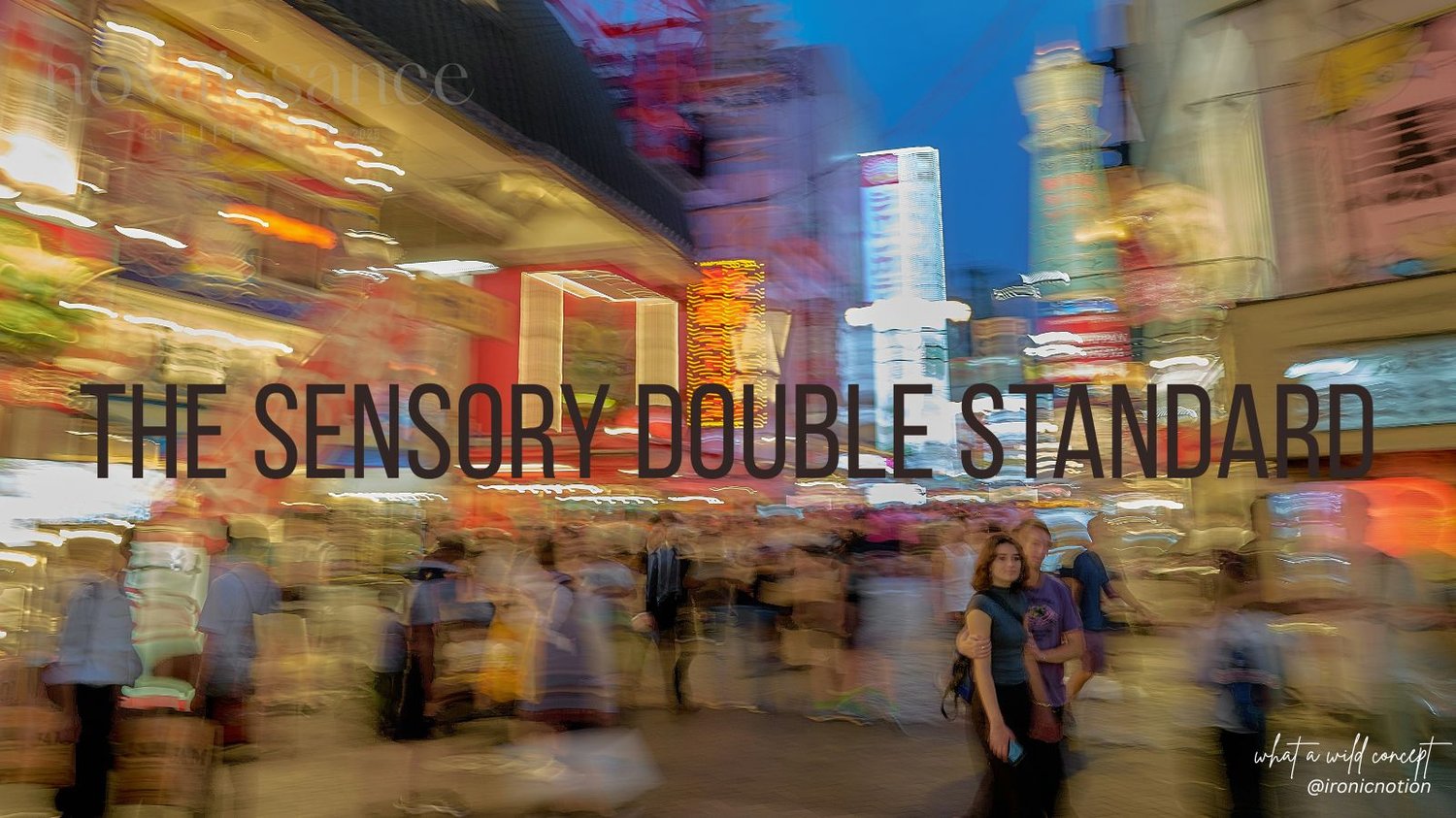
Today is one of those heavy, oppressive heat days where the whole world feels sticky and short-tempered. You can feel the collective tension in the air. People rush through tasks with a sharpness they usually hide. Small inconveniences trigger outsized reactions. Every conversation is punctuated with tired complaints about the heat, the exhaustion, and the mental fog that comes with it. And everyone accepts this. Nobody mocks the woman fanning herself in her car. Nobody shames the man in the queue who snaps because he feels drained. Nobody questions the teenager who groans that he cannot think straight. The reaction fits the discomfort, so it is treated as normal.
But here is the reality most people try very hard not to see. The way everyone feels on a day like this is the way many autistic people feel every single day. Their discomfort is not determined by the weather but by the world itself. Their sensory system takes in everything at a level of intensity that neurotypical people only experience when pushed to an extreme. And while neurotypical discomfort gets patience and compassion, autistic discomfort gets judged.
This is the double standard that needs to be pulled into the light.
Sensory Overload Is Not a Rare Event for Autistic People. It Is a Daily Environment.
What you are feeling in the heat today is a diluted form of sensory overload. Your body feels wrong, your skin is irritated, your patience is gone, and your mind struggles to hold itself together. Autistic people live with that same neurological state not once in a while but as a constant background hum. Noise hits too sharply. Lights feel too bright. Fabric textures can feel abrasive. Crowded spaces drain energy within minutes. Smells can feel suffocating. Everyday environments create a level of sensory pressure that neurotypical people only touch when external conditions become extreme.
This is not speculation. Research shows that sensory differences are central to autistic experience. In 2013, the DSM-5 officially recognized sensory processing differences as part of the core diagnostic criteria for autism. A 2015 study found that about 90 percent of autistic people experience significant sensory challenges that interfere with daily life. Neuroimaging has repeatedly shown that autistic brains process sensory input more intensely and habituate to stimuli more slowly. In simple terms, their nervous system does not filter the world the way yours does. It keeps everything turned up, all the time.
On a day like today, neurotypical people get a brief taste of what happens when the sensory load is too high. Autistic people get no break from that reality.
The Hypocrisy: Neurotypical Overwhelm Gets Sympathy. Autistic Overwhelm Gets Discipline.
Here is where things become painfully unfair. When neurotypical people are overwhelmed by heat, noise, exhaustion, or stress, society excuses their reactions. People say, “It is understandable,” or “It has been a hard day.” But when autistic people show the same reactions in response to sensory overload, the narrative changes instantly. They are told to calm down, control themselves, stop overreacting, or be less sensitive.
Same reaction, same nervous system distress, different treatment.
Because autistic people face judgement for their sensory discomfort, many of them learn to mask. Masking is not pretending or performing. It is suppressing genuine physical and emotional reactions to avoid punishment or humiliation. It is biting your tongue when your body is screaming for relief. It is forcing yourself to hold still in environments that feel like an assault. Over time, research shows that masking contributes to burnout, anxiety, depression, and suicidal ideation. The world praises autistic people for “coping well,” when in reality they are sacrificing their mental and physical health just to appear acceptable.
Meanwhile, neurotypical people cannot even handle one hot afternoon without giving themselves grace.
Why Sensory Overload Hits Autistic People So Much Harder
Sensory overload is not the same as irritation. It is not a mild emotional response or an inconvenience to be brushed off. It is a physiological overload state where the nervous system fires signals of threat. Speech can become difficult or impossible. Cognitive processing slows down. Emotional regulation collapses. The body goes into escape mode. Many autistic people experience this in situations neurotypicals barely register: supermarket lights, the hum of an air conditioner, multiple conversations happening at once, a shirt tag scratching the skin, or a sudden loud noise.
When neurotypical people reach this level of overwhelm, they often act with urgency: stepping outside, removing themselves from the situation, or shutting down conversation. But autistic people are rarely given the same freedom to regulate. They are often forced to remain in overstimulating environments because other people do not believe their discomfort is real, or at least not real enough.
The irony is that the overwhelming sensation neurotypicals feel only on extreme weather days is something autistic people manage during ordinary life. They navigate it quietly. They endure it without the validation everyone else gets.
That is not fragility. That is resilience.
Living in a World Designed for Someone Else’s Nervous System
Modern environments are built with neurotypical sensory needs in mind. Bright lighting, strong perfumes, open-plan offices, crowded shops, loud music, harsh fabrics, unpredictable social spaces, and constant sensory clutter form the baseline of everyday life. These settings do not bother most people, which is exactly the problem. They are designed for the majority, not for those whose sensory systems process differently.
Autistic people are forced to adapt. They learn strategies to survive within systems that were never built for them. They endure more physical discomfort, more noise, more unpredictable chaos, and more sensory strain than neurotypical people, and they still show up every day to participate in a world that rarely gives anything back. What looks like “coping” is often long-term endurance that comes at a great personal cost.
The strength required to function in a world that overwhelms you is never acknowledged.
The Heat Gives You a Glimpse Into Their Reality. Use It.
On days like this, people soften toward themselves. They allow themselves to be irritable, to struggle, to make mistakes. They adjust routines, hydrate, slow down, and forgive themselves for not being their best. The same grace is rarely extended to autistic people, whose sensory thresholds are different but equally valid.
If you can understand your own irritability today, then you can understand autistic irritability tomorrow. If your own overwhelm feels legitimate, then theirs is legitimate too. This moment of shared physical discomfort is one of the few opportunities for neurotypical people to feel, even briefly, what autistic sensory overload can be like.
The difference is that you get relief. They do not.
This is your window into empathy. Use it.
The Real Issue Is Not Sensitivity. It Is the Double Standard.
Here is the truth: autistic people are not too sensitive. They are not dramatic. They are not weak. They are individuals whose nervous systems respond to the world with a different intensity. And, importantly, their reactions are just as valid as yours.
The real question is not why autistic people react strongly to sensory stress. The real question is why neurotypical people believe their own reactions are acceptable, while autistic reactions deserve judgement.
If weather-related irritability is human, then autistic sensory overwhelm is human too. If your discomfort deserves patience, then theirs deserves it too. If you expect compassion on difficult days, you owe compassion to people who live through that difficulty far more often than you ever will.
Your irritability today is their everyday lived experience. They are not being dramatic. They are not broken. They are simply navigating a world that hits them harder.
And the least they deserve is the same grace you give yourself without hesitation.
@ironicnotion | Novaissance
Comments ()